We know that with the increasing growth of cyber-hacking and data breaches, investing in IT asset disposition (ITAD) is a growing necessity for companies. It is critical to ensure the safety of a company’s confidential live and stored data on all of its assets, ranging from computers, phones, servers, and hard drives. If breached, a company’s reputation, consumer base, finances and future viability are all at risk. What happens to data and technological gear after it is retired can be equally as critical as the current live data and in-service equipment. Proper disposal is not only important to the integrity and success of the company, its partners, and clients, but it may also protect the environment. While some sectors have strict regulations and requirements regarding ITAD, others do not, but whatever the case, the ethical obligation is huge.
The Cost of Hacking and Breaches
Akamai Technologies’ State of the Internet report showed that “hacker attacks on websites went up 75% in the final quarter of 2013, with hackers in China responsible for 43% of all attacks.” More recently, in 2014 the Cost of Cyber Crime Study was conducted by Ponemon and sponsored by HP. It found that crimes are more expensive, happen more frequently, and require more time to resolve than ever. It also found that crimes happened across various sectors (see below).
The average annualized cost of cyber crime was $12.7 million, with a range of $1.6 million to $61 million; an increase of 9 percent or $1.1 million over the average cost reported in 2013.
There are an average of 138 successful attacks per week, compared to 50 attacks per week when the study was initially conducted in 2010.
The average time to detect a malicious or criminal attack by a global study sample of organizations was 170 days. The longest average time segmented by type of attack was 259 days, and involved incidents concerning malicious insiders. The average time to resolve a cyber attack once detected was 45 days, while the average cost incurred during this period was $1,593,627 – representing a 33-percent increase over last year’s estimated average cost of $1,035,769 for a 32-day period.
ITAD: A Growing Business
According to TMR as reported in IT: Connect and Expand, the ITAD market will expand to $41 billion by 2019 on 141 million tons of used equipment. With the heavy responsibility that goes with ITAD in terms of proper wiping, disposal, reusing and recycling, more companies are working with 3rd-party service providers who specialize in ITAD. According to Business Wire 65 percent of companies larger than 10,000 workers, and up to one third of all businesses, are turning to 3rd-party service providers to manage end-of-life assets.
What if something goes wrong?
It makes sense with the increase of cyber crime that there would be cyber insurance. This may be one solution to protect yourself, however, according to observations made on the site Dark Reading, “cookie-cutter” cyber insurance might not be everything you need.
When it comes to IT Asset Disposal here are 5 must-ask questions for third-party providers.
When the industry thinks of data breaches it raises the specter of a savvy hacker lurking very far, and yet very close, intermingling with a larger organization of internet criminals, breaking into our technology and gathering most private information: credit card and bank account details, social security numbers, and personal health and income data. The recent breaches at Anthem insurance and the retail giant Target make users worry about the trail they leave when they swipe a card or populate a form with personal information. This is how individuals think identities might be exposed. Individuals often don’t think about what happens when a company retires old servers, computers, printers, copiers, and scanners. What happens to confidential data? This is something businesses must think about.
ITAD
Receipt, processing, destruction and disposal of hardware and software are a necessary and growing business. The Blumberg Advisory Group’s 2014 ITAD Trends Report shows that data security is the number one reason why companies implement an IT asset disposition (ITAD) strategy. News reports highlight examples of sensitive data being found on retired assets, frompersonal photos and information to matters of national security. The costs associated with data breaches and with the improper disposal of IT assets are great. They include financial implications such as penalties, the loss of customer loyalty, and the tarnishing of one’s reputation. To mitigate risk, asset recovery management is critical to companies operating in today’s global supply chain.
According to Transparency Market Research (TMR) as reported inElectronics Purchasing Strategies, ITAD represents an estimated $9.8 billion handling 48 million tons of discontinued or excess technology gear. According to TMR, by 2019 the predicted market will grow to $41 billion made on 141 million tons of used equipment. Concerns about data security have resulted in companies becoming more aware of the need for ITAD and the need to budget for it. In 2014, 87 percent of companies reported having an ITAD budget; 38 percent more than in 2012.
Outsourcing this complex work can be a necessity for many companies who don’t understand the intricacies, regulations, labor and cost of asset disposition. Electronically stored data is subject to stringent HIPAA/HITECH, FACTA, SOX, GLB, and FERPA regulations, complicating responsible disposal. Secure and thorough “wiping” of data is critical, and the environmental impact of retired assets is also a vital concern.
More and more companies, 65 percent of companies larger than 10,000 workers and up to one third of all businesses, are turning to 3rd-party service providers to manage end-of-life assets. The factors seen as most important in selecting a 3rd-party service provider include: adoption of industry-recognized compliance standards (97 percent); a well-documented and enforced chain of custody (95 percent); and high-quality, thorough client reporting (95 percent).
Reduce, Reuse, Recycle
ITAD is expensive and it can be risky. It is, therefore, important to find a 3rd-party service provider who can ensure as much safety and security as possible. Many ITAD companies have a split business model working with upstream partners to collect and process retired material, then turning to downstream partners who are looking to purchase used technology gear. Given this model, your server could be someone else’s server one day. Ensuring proper receipt and processing is critical.
It’s common to think of the people who work for a company as “employees”, but reframing language and thinking could be critical to your supply chain. Start considering your employees as “talent”. The word employee has the connotation of working for someone or under someone. It implies being one of many, whereas the word talent has a positive connotation, implying that a person has depth, value, and potential. The term talent empowers both employees and companies to be the best and seek the best in their work and their search for other skilled people.
Reframing is an important step, but it doesn’t fix common problems that plague supply chain managers and human resource departments. It’s important to think about hiring processes as a long undertaking that extends beyond an ad, job interview, and offer letter. Companies should always be thinking about retention and promotion. This is called succession planning.
According to a study conducted by supply chain management researchers at Auburn University and Central Michigan University, 37.5% of surveyed companies had no engagement in succession planning, 27% had just started to work on planning, 23% engaged in informal planning, while only 12.5% engaged in formal succession planning.
Acquire
The supply chain is notorious for having a dearth of talent. The area is growing and more talent will need to be acquired for businesses to compete. As job titles expand and shift, due to the rapid changes in supply chain management and technological requirements, many people won’t be qualified for their own job title. Looking towards universities who are teaching supply chain management, and looking to other business sectors could be critical to find the right, flexible kind of talent the supply chain will need. Considering women for these traditionally male-dominant roles will also be important as women tend to be strong in many of the soft skills needed for the future of SCM. According to Shanton J. Wilcox, vice president, North America, and lead for logistics and fulfillment at Capgemini, “many so-called tactical jobs will be replaced by positions requiring more interpersonal and relationship management skills.”
Develop
As more and more money floods into the supply chain, it will be important to avoid the Silicon Valley problem of poaching, or talent leaving for larger and larger salaries elsewhere. Investing in current employees in a meaningful, attentive way, could make all the difference. Think about their future and next steps within your company. They probably have a plan for their future, and you should as well. Make sure those plans align and be open to assisting their journey to meet their goals.
Instead of conducting exit interviews, try conducting “stay” interviews. Ask specific questions about what it takes to create the environment that would help encourage your talents’ best performance. Ask what works, and also ask what doesn’t work. Be specific and ask what causes your talent anxiety or stress. You may find a trend and be able to fix it before people leave, rather than after. Investment is a big part of development. It helps talent feel like part of a bigger picture. If you invest in them they will invest in you.
Advance
Consider talent from within. According to a Forbes article, many companies are getting it wrong in trying to hire from outside. Internal candidates may not seem as appealing or exciting as the unknown, external candidate, but companies need to be clear-minded in these decisions. “Internal successors are in many ways lower risk than outsiders, yet surprisingly few promotions are awarded internally. That appears to be because boards often prefer the devil they don’t know to the devil they do. Also, some find it difficult to imagine someone at the top after seeing him operate in a lesser role for years.”
Internal talent may not appear to be ready for the next level if the position they’re seeking is a promotion, whereas an external candidate going for the same job may be making a lateral move and appear more “ready”. One thing to consider is the knowledge the internal candidate holds and brings to the job. Getting external talent up to speed can take months if not years.
Don’t sit back and assume your employees are willing to be passive about their careers. See your employees as assets. Have a strategy. Be part of their team, and make them part of yours. See their talent and invest in them, otherwise they’ll find another supply chain company who will.
Consumers are using social media to help them make purchase decisions. An infographic by Invesp provides key details including that:
4 in 10 social media users have purchased an item online or in-store after sharing it or marking it as a favorite on Twitter, Facebook or Pinterest.
50% of those purchases take place within a week; 80% take place within 3 weeks.
71% of consumers are more likely to make a purchase based on social media referrals.
Twitter is the most influential for tech purchases, and the least influential for gardening and decor.
The top 2 ways Twitter helps solidify purchase decisions are: purchase location identification and product discovery.
A Consumer Electronics Association (CEA) study found similar results. CEA found that 24 percent of consumers who use social media say that they always or almost always refer to social media websites before they make a consumer electronics purchase. For high engagement users (13.5 or more hours per week) this increases to 65 percent.
Here’s how companies can use this information to reduce returns.
Inform
Use social media to give consumers the basic facts about your company and your product.
Educate
Use social media to educate consumers about your product. Specifically, social media can be used to educate the consumer about how the product can be used, the benefits that can be realized by the use of the product, and the ROI of the product.
Engage
Use social media to engage with consumers.
If a consumer is considering the product, use social media to answer questions the consumer has, or to address concerns. Similarly, if the customer has already purchased your product, you can use social media to answer questions the consumer has, or to address concerns.
Through the use of social media you can enable consumers to make more informed purchase decisions. Additionally, you can use social media to answer questions and better educate consumers on how to use your product thereby reduce no fault found returns.
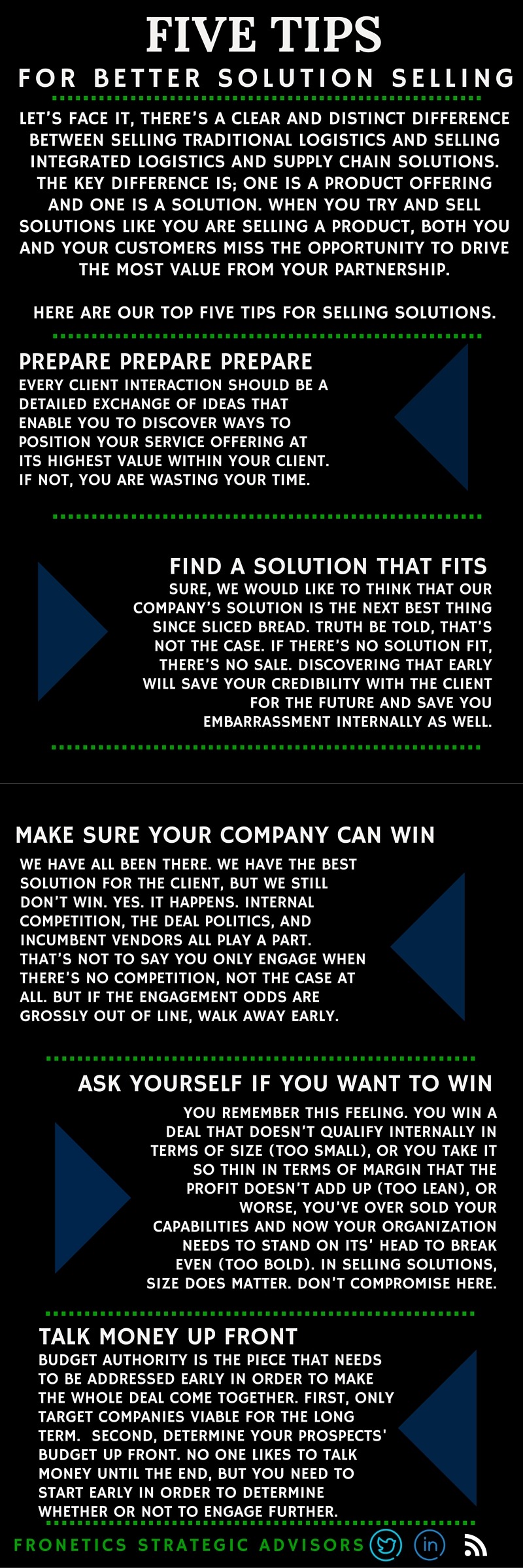
There are organizations that sell products and there are organizations that sell solutions. To be sure, both can be successful as long as products are being sold as products and solutions like solutions. The difference is that the product sale is really a commodity sale. Commodities come with an “each” price or a “per pound” pricing matrix, etc. It usually is a short or shortened sales cycle and negotiations revolve around the total price and your typical supplier performance metrics. The solution sale is much different. This sale is one that requires client discovery, isolation of unique client pain points (that only your solution can address effectively), and being able to drive distinct value for the client, and in turn, for your organization. This sales effort is highly specialized and requires selling time (sales cycle) that is much more detailed than a product sale. That being the case, you need to be sure that your close rates are high enough to justify the work load and sales cycle needed. You also need to be sure that the deals you close have a deal size that reflect the sales effort and cycle time (said another way, is the deal worth winning?)
If your sales team thrives on creating value for their customers far beyond ‘supplying’ their ‘product’ at the best price, check out our other solution selling tips below.
Fronetics is a B2B marketing agency for supply chain and logistics companies.
On October 1st the 735-foot cargo ship El Faro issued a distress call, and then vanished in the eye of Hurricane Joaquin. The search for the ship, captain, and crew has thrust the shipping industry into the spotlight.
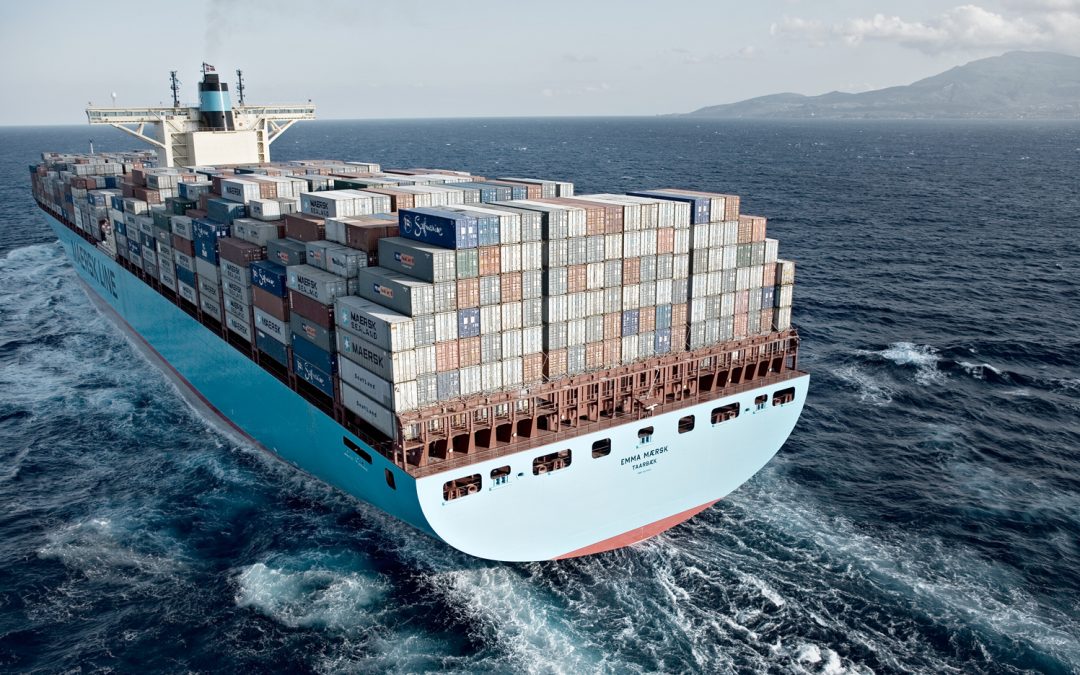
There is a common misconception that the majority of goods we purchase arrive via plane, or are transported via road. The reality is that 90% of everything we buy comes by ship – and it’s not likely that this number is going to decrease any time soon.
The race for efficiency and cost advantage is competitive. The Globe held the record for largest carrying capacity for just 53 days, and then had to relinquish the title to The Oscar. The Oscar has a capacity of 19,224 TEUs, 124 more TEUs than The Globe.
Congestion
The increase in the size and volume of ships is putting pressure on ports. At least 7 out of the 10 busiest US ports by container volume are grappling with regular congestion. Early this year, congestion crippled West Coast ports grinding activities to a halt. Although operations have resumed, it won’t be smooth sailing going forward. It is projected that congestion will only get worse as ships continue to grow in size and volume. A 2013 Department of Transportation study projects that between 2010 and 2040 the volume of the US’s container trade with Northeast Asia—which accounts for the majority of the US’s overall container trade— will more than triple.
In a recent Wall Street Journal article, Frank Layo, retail strategist at consulting firm Kurt Salmon, points to the economic costs of the congestion. He forecasts that the cumulative costs of shipping delays could reach $7 billion this year and climb as high as $37 billion in 2016. Additionally, he expects some retailers to divert shipments from Asia to more-expensive routes to avoid congested West Coast ports. This could impact consumers in the form of stock-outs and price increases.
Loss
According to a recent survey by the World Shipping Council, an average of 1,679 containers are lost overboard every year. The loss of these containers cause significant economic losses for carriers and their customers, have the potential for harming the environment and marine life, and are a hazard to those on the water (floating containers pose an off-shore danger).
The majority of time ships don’t lose their entire load overboard. Rather, a number of containers are lost. But what happens when an entire load is lost, or even worse, when an entire ship is lost?
AGCS experts believe that the industry should prepare for a loss of $1 billon or more in the future. Captain Rahul Khanna, Global Head of Marine Risk Consulting, AGCS, believes that a $2 billion container ship loss scenario is not out of the realm of possibility.
El Faro is not a megaship. Nonetheless, El Faro and her crew of 33 play a significant role in the global economy. As Hurricane Joaquin moves out of the Bahamas we can hope that El Faro, her captain, crew, and cargo will be found – safe.