Back in 2014, we called social media a “strategic weapon” for the supply chain industry. That’s still true, but the battlefield has changed. Today, a social media strategy for supply chain companies isn’t about having a Facebook page or posting company news. It’s about putting your people and your expertise in front of the shippers, manufacturers, and buying committees you want to win, on the platform where they already research vendors.
Key takeaways
- Lead with LinkedIn. It’s where B2B supply chain buyers spend their professional time.
- Your people reach more buyers than your company page does, so build the strategy around them.
- Plan content around buyer questions, not company announcements.
- Measure engagement from target accounts and sales conversations, not likes.
What is a social media strategy for a supply chain company?
A social media strategy for a supply chain company is a documented plan for who you want to reach, which platforms you’ll use, who will post, what you’ll say, how often, and how you’ll measure results. For 3PLs, carriers, warehousing providers, manufacturers, and supply chain software companies, the goal is usually the same: build trust with a small number of high-value buyers before they ever talk to sales.
Why social media is still a strategic weapon in supply chain
Supply chain purchases are made by groups, and most of the group never meets your sales team. Forrester’s State of Business Buying, 2026 found that 13 internal stakeholders and nine external participants influence the average B2B purchase. The 2025 Edelman-LinkedIn B2B Thought Leadership Impact Report found that 71% of these “hidden buyers” have little or no interaction with sales teams, and 95% say strong thought leadership makes them more receptive to sales and marketing outreach.
That’s the opening. Social media is one of the few channels that reaches the operations director, the finance lead, and the procurement manager who are shaping a decision from the background. We’ve seen how B2B buyers use social media, peers, and AI to research vendors, and supply chain buyers are no exception.
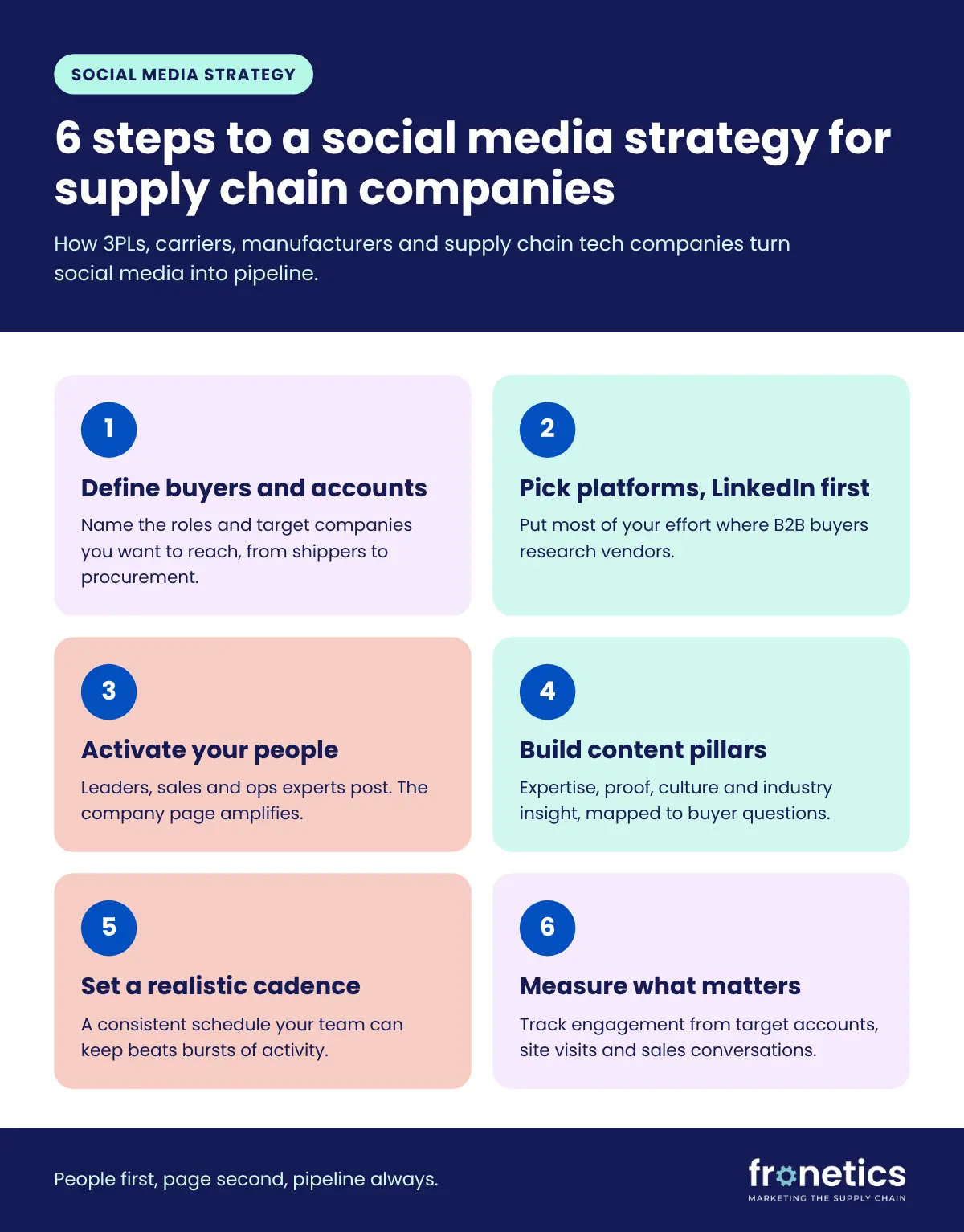
6 steps to build a social media strategy for supply chain companies
1. Define your buyers and target accounts
Start with the people, not the platform. List the roles that influence your deals, such as VP of supply chain, transportation manager, procurement lead, or CFO, and the companies you most want to win. If you run account-based marketing, use the same target account list for social.
2. Pick your platforms, starting with LinkedIn
For most supply chain companies, LinkedIn deserves the majority of your effort. Other platforms can play a supporting role:
| Platform | Best for | Priority for most supply chain companies |
|---|---|---|
| Reaching buyers, thought leadership, recruiting, account targeting | High | |
| YouTube | Facility tours, product demos, explainer videos that also rank in search | Medium |
| Facebook and Instagram | Driver and warehouse recruiting, local community, company culture | Low to medium |
| X (Twitter) | Real-time industry news and trade show conversations | Low |
3. Activate your people, not just your company page
LinkedIn typically shows people’s posts to more of their network than company page posts, and buyers trust a named expert more than a logo. Identify three to five people who can post regularly, such as your CEO, a sales leader, and an operations expert. Your company page then shares and amplifies their posts. This is the biggest shift since 2014, and it’s the core of how we approach social media marketing for supply chain companies.
4. Build content pillars around buyer questions
Content pillars keep your posts focused and give your team a steady source of ideas:
| Pillar | Example post | Who it reaches |
|---|---|---|
| Expertise | How peak season surcharges are likely to change next quarter | Shippers and transportation managers |
| Proof | A customer result, such as improved on-time delivery after a network change | Decision-makers comparing vendors |
| Industry insight | Your take on a new regulation, tariff, or technology | Executives and hidden buyers |
| Culture | A day in the life of your warehouse team or drivers | Candidates, customers, and partners |
Strong posts often start as blog posts, case studies, or webinar clips, which is why social works best alongside content marketing.
5. Set a realistic posting cadence
Consistency matters more than volume. A schedule your team can keep for a year beats a burst of daily posts that fades after a month. We break down the numbers in how often supply chain companies should post on LinkedIn.
6. Measure what matters
Likes and follower counts are easy to track but rarely tell you whether social is working. Focus on engagement from people at target accounts, website visits from social, inbound messages, and how often prospects mention your posts in sales conversations. Our guide to social media analytics for supply chain companies covers what to track and which tools help.
What mistakes do supply chain companies make on social media?
- Posting only company news. Awards and new hires matter to you. Buyers want insight they can use.
- Relying on the company page alone. Without people posting, reach stays small.
- Spreading too thin. Five half-managed platforms perform worse than one done well.
- No link to sales. If sales doesn’t know who engaged, social activity never becomes pipeline.
- Running ads with no organic base. LinkedIn ads work better when buyers already recognize your people and brand.
Where to start
If you do one thing this quarter, pick two or three people at your company and help them post consistently on LinkedIn about what they know. Then connect their activity to your target accounts and your sales team. That’s how social media becomes a strategic weapon instead of a box to check.
Want help building the program? Learn more about our LinkedIn and social media services for supply chain companies, or see our broader approach to supply chain marketing.
Frequently asked questions
Is social media worth it for B2B supply chain companies?
Yes, when it’s focused. Most supply chain buying decisions involve people who never meet your sales team, and social media is one of the few ways to reach them with your expertise before a deal starts. The return comes from trust and recognition with target accounts, not from viral posts.
What is the best social media platform for supply chain companies?
LinkedIn is the best platform for most 3PLs, carriers, manufacturers, and supply chain software companies because it’s where B2B buyers research vendors and follow industry experts. YouTube, Facebook, and Instagram can support recruiting and video content.
Should our employees post on LinkedIn, or just the company page?
Both, but employees should lead. Posts from people typically reach more of their network than company page posts, and buyers trust named experts. The company page works best as an amplifier for your team’s posts.
How do you measure social media ROI in supply chain?
Track engagement from people at target accounts, website visits and conversions from social, inbound messages and meeting requests, and deals where prospects mention your content. Follower counts and likes are secondary.