by Elizabeth Hines | May 2, 2017 | Blog, Content Marketing, Marketing, Social Media
YouTube creators focus on audience engagement, as opposed to branding, which helps them organically grow an authentic loyal following.
I recently watched a video from Truly Social President and Founder Tara Hunt about the genius of YouTube creators. She offers truly valuable insight into why people with little technology and resources have been more successful in growing a loyal audience with video than corporate campaigns with all the money and creativity in the world.
Perhaps it’s worth saying first: Yes, video can work for the supply chain. And YouTube, in particular, can be very worthwhile as part of your larger social marketing strategy. The decade-old video platform has over 1.3 billion users. 1.3 BILLION! And that’s not all: Users watch over 5 billion videos on YouTube every single day, and upload 300 hours of video every minute.
This presents a huge opportunity for your company to reach prospects in a new way. It also means that your videos really need to stand out to make an impact and avoid getting lost in the shuffle. After all, approximately 20% of people who start a video will leave after the first 10 seconds.
So how are creators attracting viewers while corporate brands aren’t?
5 ways creators are out-YouTubing brands
1. Consistency
Creators know the success behind their YouTube channels is a constant stream of content. This be can new content or simply responding to their followers, but they are active every day, around the clock. Brands tend to spend a lot of time and energy on content but are inconsistent in their posting, often abandoning their YouTube channels for days or weeks at a time. Their followers become bored with their lack of attention and move on.
2. Community
The foundation of YouTube — and most social media platforms, actually — is community and the resulting two-way dialogue between creators and their followers. The intent of a creator’s video is to engage their audience and build a relationship that is beneficial to both parties. On the other hand, brands tend to be overly focused on the attention their content stirs up, the “buzz” they are able to draw, neglecting the important process of creating and nurturing a relationship with their followers.
3. Interaction
Companies often focus on pushing their “messaging” on one (or just a few) social media platform(s). They spend an enormous amount of time and money perfecting content that reflects this messaging, hoping their followers will engage with it.
Contrarily, YouTube creators focus on interaction. They interact on multiple platforms, reaching out to their audience and taking full advantage of every opportunity to connect with their followers. What’s more, successful YouTubers don’t merely expect engagement — they ask for it. They promote hashtags, solicit video responses from viewers, and encourage feedback via social media interactions. Calls-to-action can stimulate subscriptions, shares and cross-pollination with other platforms.
4. Connection
Gone are the days of expensive and lengthy productions. Creators have captivated their audiences by creating organic, raw material that focuses on the emotional connect. The polished and professional content that brands create are void of vulnerability and lack the connection today’s followers are seeking.
5. Collaboration
Creators root for one another; they follow one another; they promote one another. YouTube creators seek the opportunity to expand their audience by collaborating with other creators who focus on the same topics and interests. Through the power of collaboration, creators expand the exposure of their content to different audiences, gaining subscribers and views.
Brands see other brands as competition. In a time when audiences prefer engagement and social awareness, this competitive attitude hurts brands’ likability and ultimately diminishes their viewership.
If companies were to focus more on audience engagement in these ways, they would have a better chance at mimicking the wild success of YouTube creators who have amassed a loyal following.
Related posts:

by Elizabeth Hines | Aug 23, 2016 | Blog, Content Marketing, Logistics, Marketing, Social Media, Strategy, Supply Chain
TotalTrax leverages content marketing to increase web traffic, generate high-quality leads, and, ultimately, grow business.
TotalTrax, Inc., is a provider of real-time vehicle, driver, and inventory tracking technologies for manufacturing and warehouse operations. Despite a decade of positive growth, the company knew it was missing opportunities for new business because of its lack of a clear digital strategy.
That’s why TotalTrax hired Fronetics Strategic Advisors. The firm created and implemented a multi-channel content marketing program designed to increase the company’s digital footprint and accelerate growth.
Content marketing can help a business elevate its brand position by producing content that demonstrates industry expertise, offers valuable information, and builds trust with their target audience. Example benefits include:
- Increased brand awareness
- Higher referral traffic
- Better lead generation and nurturing
- Improved customer loyalty and trust
- Decreased marketing cost and higher ROI
Fronetics evaluated TotalTrax’s existing digital assets. Leveraging extensive market research, the firm helped refine the company’s messaging and content distribution to better engage potential customers. Fronetics then implemented the customized content marketing strategy to help TotalTrax fully leverage its web presence to bring about new business.
The results
In a 24-month period, TotalTrax realized significant gains in web traffic, quality leads, and brand awareness. Key results included:
- 19% increase in overall web traffic
- 500% increase in traffic from social media
- 244 high-quality leads
- 30% net increase in new customers
To learn more about Fronetics’ strategy for TotalTrax, download the free case study below.

Related posts:
by Elizabeth Hines | Jun 13, 2016 | Blog, Marketing, Social Media, Talent
This is part two of a three-part series on LinkedIn for B2B businesses. See part one, LinkedIn for B2B: Getting Started, and part three, 10 Ways to Gain LinkedIn Followers.
Use these tools to help you hire talent through LinkedIn.
LinkedIn offers immeasurable opportunity for recruiting premium talent. But how do you begin weeding through the network’s more-than-433-million candidates?
Here are some techniques — both free and fee-based — on using LinkedIn to find professionals who match your company’s open positions.
Organic methods (free)
Share the job in an update
Just as you would share other content, click “Share an update” on the company page Home tab. If you only want a specific audience to see your post, click the “Share with” menu bar just below the update box, and then click “Targeted audience” to define. You can include a link to the job description on your company website or direct applicants to more information on how to apply.
If you have posted a job through the LinkedIn Jobs feature, go to the job page and click the share arrow next to the job title to share as an update.
(Note: You must be a page administrator to share updates on your company page.)
Have your employees share your opening
Encourage your employees to post the news of the open position to spread the word. Jobs that employees share get 30% more applications!
Remember employees are your best brand ambassadors, and sharing the job with their networks also works as an endorsement for your company — it’s like they are saying, “This is a great place to work!”
Make it easy for them by detailing three ways to share:
- Share the LinkedIn job post. If you have posted the job through the LinkedIn Post Jobs feature, individuals can share it with their networks (on LinkedIn and elsewhere) by clicking the share arrow next to the job title on the job page.
- Share your company update about the opening. Employees can locate the company update about the job opening by navigating to your company page and scanning through your newsfeed. Once located, click “Share” at the bottom. Your company name and a link to your company page will appear prominently at the top of their share.
- Share the link to the page on your website with the job description/application. Users can copy and paste the link into the “Share an update” box on the LinkedIn homepage, or use the social share icons (if available) on your website to post it to their newsfeeds.
Mine Group discussions
LinkedIn’s Groups offer a forum for like-minded professionals to discuss current events, industry trends, and other topics related to work life. If you actively participate in these conversations, certain users may have made an impression on you through their insights or informed opinions. You may have even thought that your company could benefit from that person’s knowledge and experience. That’s because Groups are a great source for mining talent.
Say, for example, you notice someone offering an intelligent perspective on emerging technologies in a data warehousing group discussion. It reminds you of an open position with your company. You can use the discussion to further engage with that person about the topic to gain a better understanding of his/her knowledge. And then you can view the user’s profile to learn more about related experience. Connecting with the person will give you further insight into his/her professional interests — and it will allow you to send an InMail with information about the potential fit within your company.
Conduct a good, old-fashioned search
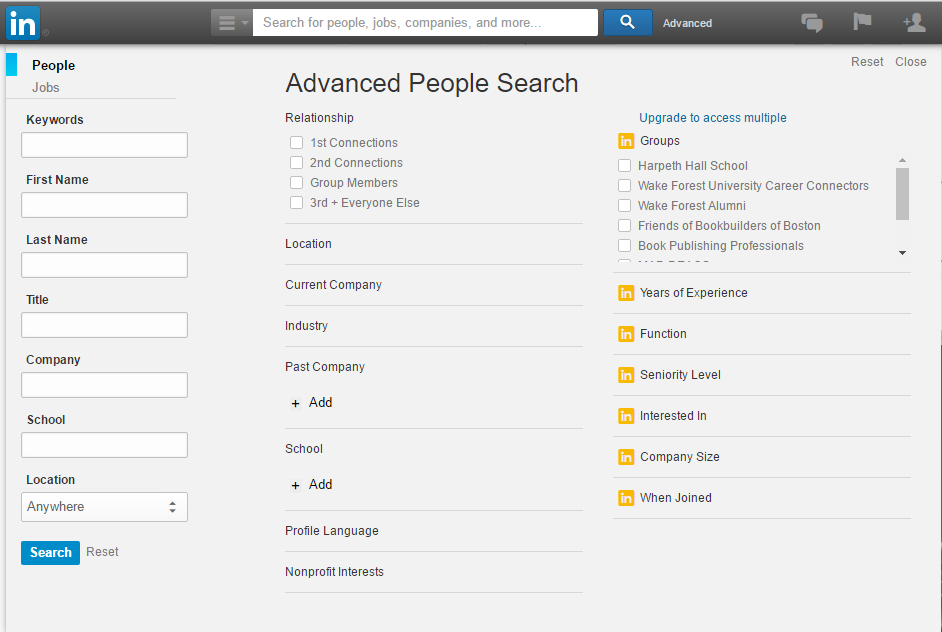
While searching by skills is no longer free, you can still conduct an “Advanced People Search.” Click on “Advanced” next to the Search box above the navigation bar at the top of the site. This allows you to search by location, current and past company, industry, school, title, language, and keywords (e.g., finance, strategy, accounting).
Create a recruitment-focused showcase page
Users who are interested in working for your company can follow this showcase page specifically to keep abreast of opportunities that match their interests. Keep them engaged by sharing company updates related to job openings, company culture, and employee testimonials.
Paid methods
Career Pages
One of the four tabs on your company page, the career page facilitates your interaction with job seekers. This is your employer brand hub, where users will go when they view your jobs or want to learn more about working for your company. You can feature your LinkedIn Job Posts, multimedia (like a video or SlideShare), and employee testimonials. What’s more, you can create dynamic content so that visitors to your page receive personalized messaging and job recommendations based on their location, industry, function, and more.
If you’ve purchased a Silver or Gold Career Page, featured jobs will be displayed on a Careers tab and they will be targeted to the viewer based on relevance to their LinkedIn profile. This is similar to job targeting on the LinkedIn Jobs page, but it only displays jobs at your company.
Learn more about optimizing your LinkedIn company page with our Visual Guide to Creating the Perfect LinkedIn Company Page.
Post Jobs
If your company only has the occasional opening to fill, Post Jobs may be your best option. Individual users can purchase 30-day job postings and then link them to a company page.
Here’s how it works: You create a job posting, making sure to select the correct company name from the dropdown menu. The company logo and link to the company page will be included in the post, and it will appear on the list of jobs on the company page. LinkedIn will automatically advertise your job posting to LinkedIn members with profiles that match, even if they aren’t active job seekers.
With your job post, you also get:
- A curated list of members who could be a fit for your hiring needs
- 5 free InMails to reach out to prospective candidates
- Management tools to filter, tag, and share candidates with your team
- Insights to see how your job posting is performing
Job Slots
Ideal for those with frequently open positions or multiple roles to fill, Job Slots are essentially recurring job posts with additional benefits. LinkedIn will automatically recommend job posts to candidates who match your open positions. And you’ll have access to management tools to review and filter candidates, take notes, and send InMail. Additionally, you can take advantage of the Feature Jobs on the homepage and on your company’s Career Page.
With Job Slots, you can also:
- Attract passive candidates via Jobs You May Be Interested In
- Receive a Suggested Professionals curated list
- Optimize your job posts with detailed analytics
- Build your employer brand with Career Page integration
- Improve applicants’ mobile experience with distribution through the LinkedIn Job Search app
LinkedIn Recruiter
LinkedIn Recruiter is the premium talent-recruitment subscription, ideal for large companies that hire for multiple positions year round. Firstly, it gives you access to the names and profiles of all 433+ million LinkedIn users. You can also send anyone messages through InMail, and you can take advantage of custom templates for candidate communications.
Recruiter allows you to use 20+ additional filters (years of experience, seniority, function, etc.) when searching for candidates. And the “Find more people like” feature lets you search for people similar to candidates you already like. You can also save searches and have LinkedIn notify you when someone new meets your qualifications.
Additionally, the Talent Pipeline Management tool lets you build, track, and manage talent searches and hiring with folders, reminders and smart to-do lists. You can also streamline your workflow and team activities with shared projects, searches, profiles, and applicant notes.
Recruiter Lite
Recruiter Lite is a more streamlined version of Recruiter, suited for individual recruiters and hiring managers. You get:
- Unlimited visibility of your 3rd-degree network
- 10 advanced search filters
- Saved searches
- 30 InMails/months
- InMail templates
- Access to the Projects function
Work with Us Ads
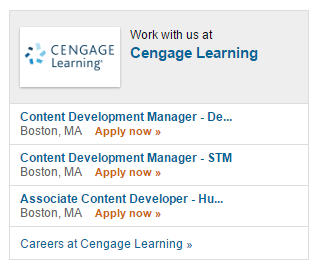
Works with Us Ads dramatically outperform typical banner ads, with up to 50 times higher clickthrough rate. How? Location.
Essentially, Work with Us Ads allow you to own all of the ad space on your employee’s profiles and your company pages. LinkedIn will display your open jobs that are relevant to each particular visitor. You can have the ad drive clickthroughs to your jobs, career page, or your website.
Referrals
Referral recommendations match your employees’ first degree connections to the open roles in your applicant tracking system. It suggests connections for the right open roles, helps your employees share jobs, and keeps them up to date through the entire hiring process.
Which tools do you use to hire talent through LinkedIn, and which do you find are the most effective for your business?
Related posts:

by Elizabeth Hines | Mar 22, 2016 | Blog, Content Marketing, Leadership, Marketing
Meet five women who are changing the face of digital marketing at their big brands.
March is National Women’s History Month, and thus we’ve been talking a lot about female leadership, the gender gap, and related issues. Today I’d like to call attention to five outstanding women behind big brands who are taking the digital marketing world by storm.
Here they are, in no particular order:
 Yin Woon Rani
VP Integrated Marketing
The Campbell Soup Company
Camden, NJ
You may have seen the commercial where a mom, pushing two wild kids in a shopping cart, exasperatedly grabs a bottle of wine and a few cans of soup as the report of an epic, school-canceling snowstorm plays over the loudspeaker. It’s part of Campbell’s Soup’s Made for Real, Real Life campaign (#RealRealLife), the brand’s first integrated advertising campaign in more than five years. The collection of 11 ads has run across TV, digital, and social channels over the last five months. As VP of integrated marketing, Yin Woon Rani has helped drive the campaign’s success as part of her efforts to modernize the marketing program.
Rani has helped reposition several of the Campbell’s Soup Company’s brands to better resonate with a contemporary audience. Overseeing the advertising, media, design, digital, and social media disciplines, she has helped accelerate the company’s digital and content marketing program. Rani also championed an increase in digital investment — which will shift to be around 40 percent of the media buy, up from 22 percent last year.
 Pamela Vaughan
Principal Marketing Manager, Optimization
HubSpot
Boston, MA
As principal marketing manager for optimization at HubSpot, Pamela Vaughan helps grow traffic and conversions from the company’s various marketing assets, with a special expertise in blog optimization. She has played a leading role in optimizing the HubSpot blog, which receives 1.5 million visitors and generates 14K+ new leads each month.
Vaughan’s recent post, Why We Unsubscribed 250K People From HubSpot’s Marketing Blog & Started Sending Less Email, illustrates her marketing-savvy and commitment to user experience. She’s definitely one to watch as content marketing continues to evolve.
 Adrienne Lofton
SVP Global Brand Marketing
Under Armour
Baltimore, MD
Adrienne Lofton leads the team that serves as Under Armour’s brand compass and communicates the company’s “underdog” attitude to millions of athletes across the globe. A former captain of the Howard University NCAA Division I women’s volleyball team, Lofton has championed the company’s focus on the athlete, rather than the apparel outright. This ethos permeates the brand’s digital presence, and is a main part of the strategy that, no doubt, has helped Under Armour become the second largest sports apparel company in the U.S.
Pushing for confident and inspirational messaging, particularly for women and young girls, Lofton has driven several marketing campaigns that have taken the company’s digital presence to new levels. Videos from the “I Will What I Want” and #RuleYourself campaigns — created in collaboration with agency Droga5 — have reached viral status on social platforms. In particular, the #RuleYourself video featuring the USA women’s gymnastics team had nearly 10 million views on Facebook in just 3 weeks.
 Alex Hisaka
Head of Global Content Marketing
LinkedIn
San Francisco, CA
Alex Hisaka has scaled LinkedIn’s content marketing efforts to impressive proportions. Her team plans, creates, and markets content for all stages of the buying process, producing daily blog posts and almost-weekly ebooks, which has had a massive impact on business. With a background in copywriting, design, and social marketing, Hisaka oversees much of the work herself — and her high standards are well known and much praised by her colleagues.
Hisaka adamantly believes in the social value and authenticity of content marketing and how it can bring audiences together in a mutually beneficial relationship. She has become a leading voice in content-led lead generation and strategy. We look forward to hearing more from this talented marketer.
 Alexandra Wheeler
VP Global Digital Marketing
Starbucks
Seattle, WA
As vice president of global digital marketing over the last decade, Alexandra Wheeler has helped Starbucks strengthen the connection between the physical and digital worlds. This bridge is a key part of the brand experience, and one that Wheeler believes deepens the company’s relationship with its customers. Starbucks is recognized as one of, if not, the most socially engaged brands in the world, and business performance has mirrored digital growth.
Wheeler cites authenticity as central to the company’s success in the digital space. For example, when the team noticed customers posting selfies with their frappuccinos, they encouraged the #sipface campaign, which boasts over 15K posts on Instagram. Leveraging an authentic customer sentiment on the platform where they were already engaging is right up Starbucks’, and Wheeler’s, alley.
Who do you admire in the digital marketing world?
Related posts:

by Elizabeth Hines | Oct 21, 2015 | Blog, Content Marketing, Marketing, Strategy, Talent
If you watch enough romantic comedies, you’ll start to recognize a pattern. It goes something like this: Boy meets girl. Girl meets boy. Movie follows antics of girl + boy, winding its way through the (oftentimes hairy) narrative. Throughout the movie we see the main characters discover what’s attractive, appealing, or annoying about the other. Eventually, these main characters end up together at the end – well versed in one another’s attributes, nuances, and idiosyncrasies.
If you think about it, the storyline of our main characters’ isn’t that different from the parallel storyline that could be drawn about lead nurturing activity in B2B marketing. When you first meet your lead, chances are they won’t be ready to purchase right away (a Marketo benchmark survey says that half aren’t). But if you spend time establishing a relationship and building trust, the moment your lead is ready to purchase, you’ll be miles ahead of your competition.
As more and more buyers are engaging with brands before they are ready to purchase, an essential function of any marketing department is lead nurturing. That is, moving leads through the sales funnel by leveraging what’s known about their needs and online behavior. Congruently, marketing software company Marketo describes lead nurturing as being “personalized, adaptive, and able to listen and react to buyer behavior in real-time.” Using a true multi-channel approach allows us to accomplish this. In a recent publication, Marketo endorsed the use of this multi-channel strategy:
“A typical buyer moves quickly from email, to social media, to your website and then back to social media, in the blink of an eye. Marketers need to prepare their lead nurturing strategy for multi-channel engagement. Buyers need to see an integrated experience across every single channel.”
Considering the multi-channel digital activity of buyers, building a multi-channel lead nurturing strategy is essential for companies that are looking to create an optimal end-user experience. Here are four tools that will help you deliver a series of targeted messages across multiple touch points and platforms to help move your leads through the buyer’s journey.
Email
Presuming that your B2B leads are derived online, email seems like a natural channel to use to connect with and nurture your leads. And it is. Create opportunities to educate your leads by sending them targeted emails that contain informational content. You’ll have to take it further than that though, or your emails will come across as spammy and annoying. Build trust with your leads by reminding them they’ve met you before – use personalization tokens (contact name, job title, etc.) within your emails. Similarly, don’t just blast the same email to your entire contact database; take the time to segment your leads based on where they stand in the buyer’s journey. A lead nurturing email you send to a lead that has only downloaded a top-level white paper should look vastly different than the email you send to a lead that has downloaded a case study, a product brochure, and a pricing guide. Above all though, make certain that the content you’re sending is valuable, relevant, and of excellent quality.
Phone
“No other interaction is more influential in the path to purchase than a phone call.” – Invoca Call Intelligence Survey
Call intelligence company Invoca has strong feelings for the telephone – and for good reason. Their analysis of 32 million phone calls found that phone calls made after parties had first engaged online had an average conversion rate between 30% and 50%. Sure, a rejection by email is less painful, but when the conversion rates are that high, you can’t afford not to pick up the phone. There are some ways to make it easier, though. Start by promoting your phone number. It sounds simple, but for those of us who work largely in the digital world, it can be easy to forget. Display your phone number in your company’s website header and throughout your site’s landing pages and blogs posts. Ensure simplicity for mobile users by making your phone number clickable on your mobile site.
Social Media
It’s not enough these days to simply post and pray, particularly on social media networks. Social media lead nurturing includes monitoring, listening, and engaging. Give your leads some love. Look for opportunities to favorite, like, or retweet the content of your leads. Monitor LinkedIn, Twitter, and Facebook for mentions of your company, similar products, or industry and then respond with activated content using both social media and a longer form of correspondence, like email. Finally, don’t discount lead nurturing activities that use paid social media ads. These ads can be particularly successful when you are nurturing leads based on specific attributes such as geographic location or company size.
Dynamic Website Content
Displaying personalized web content for visitors helps to keep leads moving forward in their buyer’s journey. Let’s say you’d gotten a great email response from a lead when you shared your product brochure earlier in the week. Displaying complementary web content, like a pricing guide, to your lead the next time he’s on your website assures alignment between your content and your lead’s proximity to purchasing. You can also use dynamic web content to target various verticals, organizations, or buyer personas.
Multi-channel lead nurturing is really about using all the tools at your disposal to meaningfully connect with your leads in order to build trust and establish credibility as you guide them on their journey to becoming a customer. Building a winning strategy does require attention to detail as there are many moving parts, but at the end of the day, if your messaging is credible and consistent it becomes less about channel and more about content. And ultimately, high-converting lead nurturing campaigns are only as good as the content they’re built around.