by Elizabeth Hines | Dec 25, 2014 | Blog, Content Marketing, Marketing, Strategy
Fronetics Strategic Advisors is a management consulting firm focused on strategy and inbound marketing. When it comes to inbound marketing we take a different approach than other firms. This is because of our business experience and background. We know ROI is important, so our approach is data driven and produces results.
What is inbound marketing?
Inbound marketing is very different from traditional, or outbound, marketing. Inbound marketing focuses on creating quality content that attracts people to your company and product. By aligning the content you publish with your customer’s interests, you attract the right traffic – traffic that you can then convert, close, and delight over time. Outbound marketing, in contrast, uses methods including: buying ads, buying email lists, and cold calling.
Inbound marketing works
Research conducted by HubSpot found that inbound marketing is more effective than outbound marketing:
- 200% average ROI;
- 62% lower cost head;
- 15% increase in top line revenue.
Freight logistics company Cerasis decided to make the switch from outbound marketing to inbound marketing. Within 25 months the company gained 98 new customers and increased revenue by 14%.
Our approach
Strategy matters. A 2014 study of B2B marketers found that companies who have a documented content strategy in place are more likely to consider their efforts to be effective than companies who do not have a documented strategy in place (60 percent vs. 11 percent). We work with our clients’ to develop a strategy that is right for their company. We then work with our clients’ to implement the strategy.
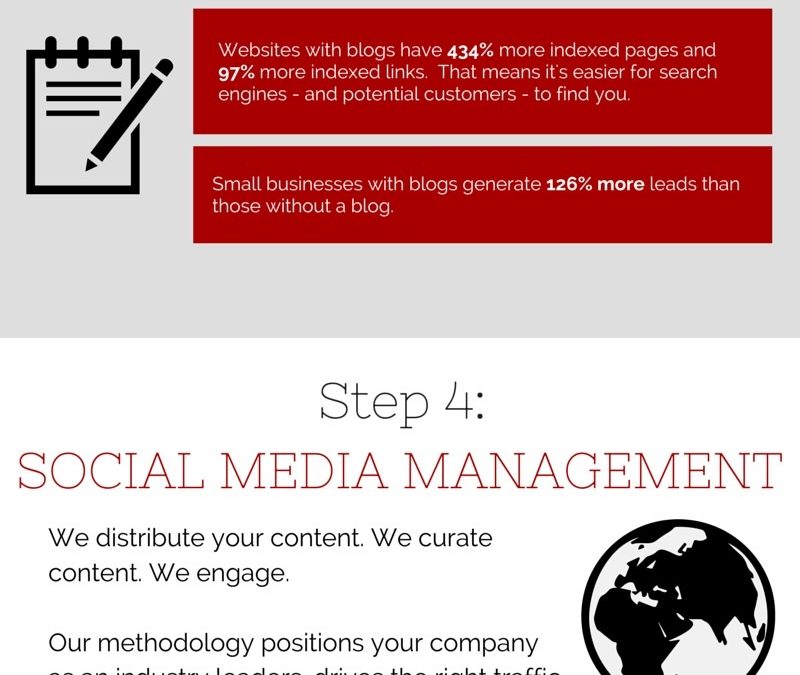
Here’s what we do:

What now?
We understand that developing and implementing an inbound marketing strategy can seem daunting. We are here to help. We are happy to take a few minutes and look at your current strategy and give you ideas on how to start, or suggestions on what you can do to make your current strategy more successful. We are also happy to talk with you about what we can do.
If you are, like many other people, stretched for time and also struggle with strategy and execution, we can also talk to you about what Fronetics does and how we can help. We know some people prefer to do it themselves, and others prefer to outsource.
We’d love to talk with you about how you can grow your business through inbound marketing.


by Elizabeth Hines | Sep 16, 2014 | Blog, Content Marketing, Marketing, Social Media, Strategy, Supply Chain
I work with companies from the supply chain and logistics industries to identify and execute strategies that will grow their business. Too often I see companies who have invested time and money into developing a B2B inbound marketing strategy and have fallen flat. Here are six reasons why inbound marketing strategies tend to fail:
The ideal customer is not being targeted
A successful inbound marketing strategy will attract and engage the “right people” – ideal customers. It is therefore essential that time is taken to understand who the ideal customer is, the needs of the customer, and the customer’s pain points. Your company’s website, social media presence, and email communications, should speak to your ideal customer.
Content is not published consistently
A common pitfall is establishing a blog, but only publishing content on a sporadic basis. To establish your company as an industry leader and gain leads, you need to publish content on a consistent basis. For example, your company needs to commit to publishing blog content every Tuesday.
Content is not quality content
All content is not equal. If you want your inbound marketing efforts to succeed, your content needs to be quality content. Your content should be well-researched, sourced, and edited. Grammatical errors and misspellings are inexcusable.
More isn’t always better
It is easy to sign up for a social media account. I’ve seen many companies who have decided to jump into social media feet first and have established many social media accounts, only to become overwhelmed. If you want your inbound marketing strategy to succeed, it is more important to be active on one social network than inactive on five.
Lack of strategy and commitment
A 2014 study of B2B marketers found that companies that have a strategy in place are more likely to consider their efforts effective than companies that do not have a stated strategy in place. Companies that do not have a strategy in place, and who do not have someone in charge of the strategy tend to fail.
A focus on sales
Content that informs and educates attracts and engages. Content that is “salesy” not only fails to attract and engage, it turns customers away.
Is your inbound marketing strategy falling flat? Assess your strategy – honestly. Has your company fallen prey to these common pitfalls?

by Elizabeth Hines | Oct 8, 2019 | Blog, Content Marketing, Logistics, Marketing, Supply Chain
Digital marketing helps increase brand awareness, convert leads, and drive measurable business value. But that doesn’t mean it’s always easy to execute. Here are 4 digital marketing failures and how to get back on track. Highlights: While digital marketing is...

by Elizabeth Hines | May 21, 2019 | Blog, Content Marketing, Data/Analytics, Logistics, Marketing, Supply Chain
Supply chain companies are increasingly recognizing the need to align sales and marketing teams through the use of analytics.
Highlights:
- Sales and marketing alignment can be aided by analytics tools.
- A content audit can ensure sales has relevant material for every stage of the buyer’s journey.
- Digital Asset Management Software acts as a unified repository for content and analytics data.
Often, when we first talk to prospects about digital marketing, their sales teams start to get the jitters. There’s a big misperception out there that inbound marketing is bound to make sales teams obsolete – but this couldn’t be further from the truth. In fact, when companies take steps to align sales and marketing teams, their efforts start to pay off in big ways.
We’ve written a lot about how to align sales and marketing, as well as the dangers that crop up when companies haven’t synchronized these departments. That’s not to say that it’s an easy task. In fact, HubSpot’s 2018 State of Inbound report found that a mere 22% of companies report that their sales and marketing relationship is tightly aligned. Increasingly, supply chain companies are finding success using analytics tools to meet the challenges of aligning sales and marketing teams.
Understand your target audience
If you’re on the marketing side, you probably have a picture of your target audience, including multiple specific buyer personae. But how familiar is your sales team with this information? Chances are, sales has knowledge about your target audience that is based as much on experience as it is on the goals your marketing department created.
If the lines of communication aren’t clear when it comes to understanding your target audience, you’re shortchanging both marketing and sales. The sales department needs clear and complete communication from marketing about the type of buyers being targeted. Meanwhile, the knowledge that sales personnel will have accrued from their on-the-ground experience can help shape future marketing efforts.
To align sales and marketing in their understanding of your target audience, web analytics tools like Google Analytics are extremely beneficial. Use analytics to track user interaction with all your digital assets and build accurate personae that are data-driven. Ideally, analytics can validate and enhance the knowledge that sales teams have built.
Align sales and marketing with content that enables sales in a digital space
One of the most frequent complaints sales teams voice is that they lack relevant materials from marketing. And on the other side of the coin, marketing departments often report that sales teams aren’t clear about their needs, nor do they use the materials they’ve provided.
To get everyone on the same page, perform a content audit to determine which of your existing content matches with each target buyer persona, as well as what content will be most useful to your sales team at each stage of the buyer’s journey. Next, put some analytics in place. You need to know how your content is performing not just from a lead-generation perspective, but from the standpoint of closing deals.
To help you develop a process for evaluating the success of your content and soliciting and incorporating feedback from sales, Digital Asset Management Software is a great resource. Tools like Canto or Bynder can be a synchronized, discoverable repository of marketing assets and their function for sales, as well as help you keep track of your analytics.
Final thoughts
As supply chain companies are increasingly recognizing the need for sales and marketing teams that work in tight alignment, analytics are an invaluable resource for synchronizing efforts across departments. And the possibilities are continuing to expand for what analytics, including artificial intelligence, can do.
Keeping the lines of communication open, and sharing analytics data will help lead to accurate, data-driven buyer personas and an optimally functioning sales team.
Related posts:

by Elizabeth Hines | Apr 11, 2019 | Blog, Content Marketing, Current Events, Logistics, Marketing, Social Media, Supply Chain
Content marketing is no longer optional. It’s essential in creating brand awareness, educating audiences, and building credibility. Here’s a look at the biggest digital marketing trends for 2019. Highlights: The content marketing industry is expected to be...