by Elizabeth Hines | Jun 12, 2017 | Blog, Logistics, Strategy, Supply Chain
These podcasts bring the latest news and thought leadership in the supply chain and logistics industries right to your earbuds.
I used to think that podcasts were a hip form of new media that millennials used to further their iPhone addictions. Fast forward a few years, and the benefits of having news and entertainment in your earbuds has converted me to a podcast fan.
Podcasts are a series of digital audio files that listeners can subscribe to. Think of it as the DVR of your smartphone. Podcasts, like cable shows, come in all shapes and sizes. Their popularity has skyrocketed since the smartphone became as necessary as car keys, giving you to-the-minute facts and information, right in the palm of your hand.
If you’re looking to increase your podcast listening, here are five that highlight topics of interest to supply chain and logistics professionals.
5 supply chain and logistics podcasts

Talking Logistics is an online video talk show and blog featuring interviews with industry thought leaders and newsmakers by supply chain and logistics analyst Adrian Gonzalez.
Gonzalez runs the show like a conversation with smart friends, making it easy to follow. Featured guests include supply chain and logistics executives from leading manufacturing and retail companies, professors from leading academic institutions, executives from third-party logistics and technology companies, and authors. The show provides supply chain and logistics professionals an interactive and engaging platform to learn and network with other practitioners and thought leaders.
Supply Chain Insights, a research and advisory firm, hosts this weekly podcast that covers a variety of topics, from global thinking to voice of the customer. Many episodes focus on technology and innovation. Nearly all of Supply Chain Insights’ podcasts feature executives and experts sharing their logistics insights. Straight Talk focuses on delivering independent, actionable and objective advice for supply chain leaders.

The SupplyChainBrain podcast features in-depth conversations with industry practitioners, academics, consultants, and other experts from every imaginable aspect of supply chain management and international trade. New episodes of the podcast have been published every Friday since its launch in 2013, touching on important topics like retail shifts, blockchain innovations, labor shortages, and the Internet of Things.
A product of the leading magazine Inbound Logistics, this podcast provides relevant information within the supply chain management world, as told by influential thought leaders in the industry. Each episode features a different special guest, who brings his/her unique opinions regarding topics such as logistics, supply chain, cargo, freight, transportation, and education.
Cranfield University School of Management in Cranfield, England, has nearly 50 years of experience educating business leaders via masters, MBA, executive education, and consultancy programs. The Centre for Logistics and Supply Chain Management is celebrating 35 years of thought leadership in logistics, procurement, and supply chain management. The free podcast, Supply Chain and Logistics Management, covers topics such as logistics and transportation management.
Related posts:

by Jennifer Hart Yim | May 30, 2017 | Blog, Logistics, Supply Chain, Talent
Is the Supply Chain talent gap problem really a talent management problem?
This guest post comes to us from Argentus Supply Chain Recruiting, a boutique recruitment firm specializing in Supply Chain Management and Procurement.
As a recruitment company completely specialized in Procurement and Supply Chain, we’re interested in following the so-called “talent deficit” in the field from all angles and perspectives. The fact is, it’s becoming harder for companies for find the talent that they need for these positions as baby boomers retire and the function evolves. As trade publication Supply Chain 24/7 puts it, “study after study has shown that for every new Supply Chain Manager entering the workforce, two (or more) are retiring.”
It’s a serious issue.
But the more you look at this issue, and the more perspectives you seek, the more you realize how complex it truly is: We’re witnessing a generational shift in the Supply Chain industry whereby more young people are entering the field. Technology has developed rapidly over the past 10 years, with big data, 3-D printing, Blockchain and automation promising to upset the apple cart completely over the next 10. It’s not just that people are retiring. It’s that finding people who have a depth of understanding of how to harness these new technologies is going to be a major driver of company competitiveness over the coming years, and they’re hard to find.
That growing demand is part of what makes Supply Chain such an attractive field for young people who are interested in business that combines global exposure, strategic problem solving, technology, and data. More universities and colleges are offering Supply Chain Management programs. But the skills required are always evolving, and how can the industry ensure that people are adequately skilled when they themselves can’t always predict the technological picture 3-5 years down the road?
Lack of talent management?
There was a thought-provoking blog post on this topic in Supply Chain Management Review this week by Supply Chain Professor Michael Gravier. Titled, “Lack of Supply Chain Talent – or Lack of Talent Management?”, the post talks about the talent deficit from the perspective of someone who’s very much in the trenches of preparing tomorrow’s Supply Chain leaders for tomorrow’s workforce.
Professor Gravier’s point is pretty simple, but pointed: “Young people who go into Supply Chain and manufacturing jobs complain that employers demand creativity during the hiring process, yet have no tolerance for new ideas in the workplace.”
In other words, companies are eager to lock down the highest-potential candidates — which only makes sense because of course you want the best talent, and of course you don’t want that talent going to your competitors. But once those candidates are placed? In Gravier’s eyes, organizations don’t necessarily take the next step and let them contribute in a creative way. For Gravier, millennial workers — especially high performers — specifically demand a higher level of engagement and skill growth than employers might be accustomed to. And, by putting these new workers in transactional roles without much opportunity for growth, companies are jeopardizing their long-term talent goals and putting themselves in danger of falling behind.
As Gravier puts it: “There’s evidence that companies show little commitment to developing and rewarding needed skills, and companies hire top-notch graduates in order to avoid having to deal with people problems later, which shows that there’s likely insufficient training and support as personnel move into supervisory positions.”
The reality for Supply Chain
A few things are worth mentioning from our perspective: for one, there’s always going to be a low person on the totem pole at any company. Workers have always had to “pay their dues” for the first couple years of their career, no matter the field, whether it’s doing dishes or preparing purchase orders. So it’s a bit unreasonable for recent Supply Chain grads to expect highly strategic roles right out the gate. For another, it makes sense for companies to want to hire the best people now, even if it means putting them in roles where they might not be developing as quickly as they would like?
On the other hand, if companies truly want to get ahead of their competitors, doesn’t it make sense to put resources into training, mentorship and skills development?
Whatever you make of his argument, it’s pretty easy to agree on one thing: Companies need to do all they can not only to attract great candidates, but to help them thrive and grow — both to keep those candidates’ eyes from wandering other opportunities, and to unlock the innovation that these candidates can provide.
But what do you think? Are companies developing junior prospects in Supply Chain well, or leaving them in entry-level positions for too long? Are you near the beginning of your career? Or does your company hire a lot of junior Supply Chain staff? Let us know in the comments!

by Elizabeth Hines | May 18, 2017 | Blog, Leadership, Supply Chain
Add these books to your summer reading list to stay on top of industry trends and jump start your professional development.
“Education is the passport to the future, for tomorrow belongs to those who prepare for it today.” Malcolm X
Nikki Vazeos, regional sales manager at Veritiv, a leading North American distribution company, requires all of her sales reps to read one book a quarter that deals with professional development, sales techniques, or distribution trends and write a brief summary on how it applies to their day-to-day business. I always have found this kind of assignment to be beneficial on many different levels: professional growth, staying on top of industry trends, and of course, continuing education outside of the office.
If you’re a supply chain professional looking to build your summer reading list, this post is for you. Here are 5 highly recommended books that will jump start your professional reading.
5 books for supply chain professionals
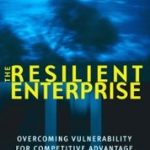 1) The Resilient Enterprise
The Resilient Enterprise by Dr. Yossi Sheffi, Elisha Gray II Professor of Engineering Systems at MIT and Director of the MIT Center for Transportation and Logistics, has become one of the most influential supply chain resiliency books since its publication. Though published back in 2005, the book is still extremely relevant using numerous case studies and cautionary tales of some of the world’s largest companies. Dr. Sheffi explores high-impact/low-probability supply chain disruptions and the tools companies can use to reduce the vulnerability of their supply chains while fostering an overarching culture of resiliency.
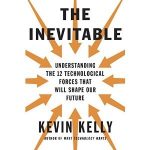 2) The Inevitable
The Inevitable by Kevin Kelly guides its readers through the 12 technological imperatives that will shape the next 30 years and transform our lives. Kelly provides an optimistic road map for the future, showing how the coming changes in our lives — from virtual reality in the home to an on-demand economy to artificial intelligence embedded in everything we manufacture — can be understood as the result of a few long-term accelerating forces. Kelly both describes these trends — flowing, screening, accessing, sharing, filtering, remixing, tracking, and questioning — and demonstrates how they overlap and are codependent on one another. These larger forces will completely revolutionize the way we buy, work, learn, and communicate with each other. By understanding and embracing them, says Kelly, it will be easier for us to remain on top of the coming wave of changes and to arrange our day-to-day relationships with technology in ways that bring forth maximum benefits.
 3) The 360° Leader
The 360° Leader by John C. Maxwell offers an in-depth look at the application of leadership principles, even when you’re not the boss. Maxwell asserts that you don’t have to be the “main” person to impact your organization. The book suggests tangible ways to influence peers and superiors and become a more valuable member of your team.
 4) Good to Great
Built to Last, a book published by Jim Collins in 1994, looks at 18 companies that have triumphed over time, and how long-term sustained performance can be built into a company’s DNA over time. In Collins’ follow-up book, Good to Great, he concludes that it is possible, but it takes a lot of hard work and dedication.
Collins and his team of researchers began their quest by sorting through a list of 1,435 companies, looking for those that made substantial improvements in their performance over time. They finally settled on 11 — including Fannie Mae, Gillette, Walgreens, and Wells Fargo — and discovered common traits that challenged many of the conventional notions of corporate success. At the heart of those rare and truly great companies was a corporate culture that rigorously found and promoted disciplined people to think and act in a disciplined manner.
 5) Executive Presence
Executive Presence by Sylvia Ann Hewlett, a noted expert on workplace power and influence, shows you how to identify and embody the Executive Presence (EP) that you need to succeed. EP is a combination of qualities that true leaders exude, a presence that shows you’re in charge or deserve to be.
Articulating those qualities isn’t easy, however. Based on a nationwide survey of college graduates working across a range of sectors and occupations, Sylvia Hewlett and the Center for Talent Innovation discovered that EP is a dynamic, cohesive mix of appearance, communication, and gravitas. While these elements are not equal, to have true EP, you must know how to use all of them to your advantage.
Related posts:

by Jennifer Hart Yim | May 17, 2017 | Blog, Current Events, Supply Chain
Legislation like the California Transparency in Supply Chains Act gives consumers tools to monitor companies who violate human trafficking and child labor standards.
This article is part of a series of articles written by MBA students and graduates from the University of New Hampshire Peter T. Paul College of Business and Economics.
The California Transparency in Supply Chains Act (hereinafter “California Transparency Act”) took effect in 2012. This state law applies to certain companies satisfying requirements as stipulated under the act. But if you are not doing business in California, does the law affect you?
The economy of California is big enough to be the 6th largest economy in the world, and her GDP is the largest in the U.S. Even though the California Transparency Act is state law, it seems inevitable that it will affect the U.S. economy in general.
Why Do We Need a Transparency Act?
Today, supply chain is a critical system in any business. The absence of one of its components could stop business production.
Such disruption can occur as a result of strikes or other work stoppages by laborers who have been trafficked or who are paid little or nothing for forced work. One good example is the Coalition of Immokalee Workers (CIW) representing tomato pickers in Florida. CIW has implemented a Fair Food Program, in which large retailers buying tomatoes pay a penny more per pound to fund better wages and to improve working conditions for tomato pickers. Since 2001, more than thirteen companies such as McDonald’s, Subway and Burger King have joined the program. But Wendy’s has not yet, causing the company to suffer criticism and boycotts from customers.
The need for such programs to improve working conditions is great, as tragedies such as Rana Plaza remind us. In 2013, the 8-story garment factory supplying to global brands collapsed in Bangladesh, killing 1,135 workers. Three months earlier, fire in another garment factory sewing clothes for Western companies killed seven workers, two of whom were just teenagers, ages 15 and 16.
Legally speaking, human trafficking and child labor are illegal in every country. 166 countries are parties to the Protocol to Prevent, Suppress and Punish Trafficking in Persons, Especially Woman and Children (aka “the Palermo Protocol”). However, violations of these laws are commonplace.
Why? In most countries, using trafficked workers and child labor is punishable under criminal law. So when it occurs, who goes to a jail? Actually, no one goes to a jail. Just a fine is imposed on the company violating of law.
In addition to the demand for cheap labor and services, the lack of meaningful law enforcement makes these practices continue. Civil liability and monitoring by good citizens are the most effective ways to decrease human trafficking and child labor. The California Transparency Act will provide a systematic process to oversee companies and to impose civil liability on illegality.
The California Transparency Act
The California Transparency Act is the first state law in the U.S. specifically addressing slavery and human trafficking in supply chains.
It applies to any business with $100 million in gross worldwide revenues that is doing business in California, and requires any subject business to disclose its efforts to eliminate slavery and human trafficking from their direct supply chains. The disclosure must provide the information of retail sellers or manufacturers, including verification of product supply chains, audit of suppliers, certifying materials, maintaining internal accountability, and training.
Those violating this act will be subject to action brought by the Attorney General for injunctive relief. If you want to see how this system works, go to a company’s website that you think does business in California, such as Trader Joe’s.
Federal Supply Chain Transparency Act
Four years after the California Transparency Act was enacted, Rep. Carolyn Maloney (D-NY) introduced a federal transparency law, the Business Supply Chain Transparency on Trafficking and Slavery Act of 2014, but it was never finalized. She reintroduced the bill in 114th Congress, but it was referred to the committee and did not go forward.
However, the federal regulation required by president Obama’s executive order titled Strengthening Protections against Trafficking in Persons in Federal Contracts was published in 2015. New FAR (Federal Acquisition Regulation) prohibits several practices for contractors, subcontractors and their agents, including denying access to the employee’s identity or immigration documents, using misleading or fraudulent recruitment practices, etc.
Transparency Act in the E.U.
In 2014, the European Parliament enacted Directive 2014/95/EU, which requires that public interest entities with more than 500 employees report information regarding efforts they are making to manage social, environmental and governance-related issues. The disclosure includes a non-financial statement on policies, outcomes and risks relating to social matters, and respect for human rights. The non-financial statement must provide a description of the policies pursued by the organization, the outcome of those policies, the principal risks related to those matters linked to the organization’s operations, and non-financial key performance indicators.
No specific penalty for failure to comply is stipulated. However, the directive instructs member states to ensure adequate and effective means for the guarantee of disclosure on non-financial information. The directive entered into force in January 1, 2017. As of December 6, 2016, most member countries had taken legislative measures to abide by the directive.
One example is the U.K. Modern Slavery Act, enacted in 2015. Part 6 of the act, entitled Transparency in Supply Chains Disclosure, imposes certain disclosure requirements on businesses. The disclosure must include information about the organization’s structure, its business and its supply chains, its policies in relation to slavery and human trafficking, its due-diligence processes in relation to slavery and human trafficking, a risk of slavery and human trafficking and its steps to manage that risk, and training available to its staff. The duties imposed on commercial organizations by this act are enforceable by the Secretary of State bringing civil proceedings.
France also enacted legislation defining a duty of vigilance for parent companies and their subcontractors in 2016, according to a promulgated document in 2017. The law applies to companies operating in full or in part on French territory with at least 5,000 employees when the head office is located in France, or 10,000 employees when the head office is located abroad. The law provides that multinational firms carrying out all or part of their activity on French territory shall establish mechanisms to prevent human rights violations and environmental damages throughout their supply chains. If the company does not prepare a vigilance plan and fails to comply with the formal judicial notice, it may be sanctioned with fines up to €10 million. The amount of this fine may reach up to €30 million if failure to develop a plan leads to injuries that could have otherwise been prevented.
Conclusion
Many legislative measures have been introduced both domestically and internationally to maintain transparency in supply chain. Regardless of a number of efforts on supply chain transparency, one question is not yet clear: how these measures will affect the transparency of supply chain.
Someone might criticize that no powerful measure has been introduced allowing governments to control supply chains. However, I wonder why we think government has more power than people and communities to maintain supply chain transparency.
We consumers can nourish or contract business. Supply chain transparency law, including the California Transparency Act, will provide a tool for consumers to monitor companies and to take action when the laws are violated. That is why I am optimistic about future of the law.
About the Author
Soyoung Yook, J.S.D., Attorney at Law, New York, is an MBA candidate at the University of New Hampshire Peter T. Paul College of Business and Economics.
Related posts:

by Jennifer Hart Yim | May 16, 2017 | Blog, Current Events, Manufacturing & Distribution, Supply Chain, Warehousing & Materials Handling
Despite significant technological advancement, drones may have a limited impact on supply chain optimization in the near future.
This article is part of a series of articles written by MBA students and graduates from the University of New Hampshire Peter T. Paul College of Business and Economics.
From the military designs of the early 20th century to modern commercial development in 2017, drones have been making their presence widely known in the market. While military drones may have paved the way for commercial drone development, they have quite different purposes.
Drones provide much value, where traditional alternatives (such as helicopters or planes) fall short. Drone usage in supply chain optimization is still in its infancy. However, I am not convinced that drones are the solution going forward.
Note: For my analysis, I will be focusing on commercial drone usage in the supply chain.
A Timeline of Major Military Drone Development
- 1918: Kettering Bug. First modern drone concept used as a “flying bomb.”
- 1935: DH82B Queen Bee. Used as target practice for anti-aircraft weapon training.
- 1964: Lightning Bug 147SC. Used for surveillance.
- 2001: MQ-9 Reaper. Used as a hunter predator.
Source
Drones provide many advantages, such as mobility, cost effectiveness, ability to move goods, and camera technology. Although drone development is rapidly advancing, many challenges currently exist. Limited battery life, constrained operational range, collision liability, proneness to hacking, and even invasion of privacy are all legitimate challenges.
Commercial Drone Fast Facts
- Made of light composite materials.
- Typically have two to five rotors.
- Controlled by either remote control or GPS.
- Flight time ranges, but generally falls between 12-27 minutes.
- Battery powered.
- Operational range varies from 200 meters to 7 kilometers.
Current Drone Usage in the Supply Chain
Large retailers such as Walmart and Amazon are already investing significant capital in drone technology. On December 6, 2016, Amazon successfully completed its first beta trial of drone package delivery, called Prime Air, in Cambridge, U.K.
Here’s how it works:
- Customers place their orders online as usual.
- The package is prepped at the regional fulfillment center.
- Drones are then dispatched from the center with the package.
- Customers place QR codes on their property to indicate the drop-off point.
- The package is delivered at the customer’s address within 30 minutes.
- The drone is operated by GPS and handles up to five pounds of cargo.
To reinforce this effort, Amazon is currently expanding Prime Air in other parts of the U.K., France, Germany, and Italy. In addition, the company is seeking up to 1,300 small warehouse locations across Europe, with a prioritization for facilities near urban areas.
Walmart, on the other hand, is taking a different approach to managing their supply chain. Instead of focusing on package delivery, Walmart is testing the use of drones to monitor inventory in their warehouses.
Employees currently catalog merchandise with hand-held scanning devices and often need to use forklifts in the warehouse. Instead, the drone could move up and down the shelves cataloging inventory at a much quicker rate. Walmart claims that the drones “could help catalog in as little as a day what now takes employees about a month.” This program is expected to begin in at least one distribution center in 2017.
What about Legal Issues?
In the United States, commercial drone usage is still pretty limited. Below is a highlight of Federal Aviation Administration (FAA) commercial drone regulations.
- Must have a Remote Pilot (no GPS allowed).
- Must be less than 55 lbs.
- Must undergo pre-flight check.
- Must keep aircraft in sight.*
- Must fly under 400 feet.*
- Must fly during the day.*
- Must not fly over people.*
- Must not fly from a moving vehicle.*
*Indicates that these regulations can be waived.
Supply chain drone usage in the United States is currently limited due to these regulations. In the future, I expect many of these regulations to ease or change outright with advancements in drone technology. When this will occur is unknown.
However, other countries such as the United Kingdom are quicker to enact regulations by virtue of the Civil Aviation Authority (CAA). As a result, companies like Amazon have already been testing drones for supply chain optimization there.
Significant Hurdles
Although drone technology is gaining much media attention, there are legitimate challenges to drone commercialization in the supply chain.
While many legislative bodies attempt to develop drone regulations, concrete legislation is lacking in many countries due to fluid technological changes. In order for the market to fully develop, a legislative framework needs to be established. Companies will be reluctant to invest significantly in drone technology until legal parameters are established.
Another challenge is in regard to insurance and liability. With potentially thousands of (unmanned) drones flying only hundreds feet above the ground, insurance will surely be required. In the event of a drone collision with individuals, property, aircraft, or other drones, who then is liable? If the drone is piloted by a human, would he/she be liable? On the other hand, if the drone is GPS-enabled, would the technology be to blame? Surely some of these questions will be answered in contracts between insurance companies and suppliers, but with such uncertainty, premiums will undoubtedly be high.
Then there’s the question of rural vs. urban delivery. Amazon Prime Air is predominately testing drone delivery in rural areas. However, 80.7% of U.S. and 90.1% of the U.K. population live in urban areas.
Package deliveries in urban areas are via mailbox, left by the door, or hidden (to avoid theft). In other words, human judgement is used to deliver the package most appropriately. For customers in large apartment buildings, drone delivery is very limited. Perhaps these limitations could be offset with designated landing areas on rooftops, despite the fact that additional effort by the customer may be needed to retrieve the package.
Last, but certainly not least, is the impact of weather conditions. Wind, rain, snow, and extreme cold/heat all impact drone performance. Since current drones are not very heavy, any significant wind will 1) blow the drone around making it harder to control, and 2) use additional battery life to remain stable. Since drones incorporate many electronic components, rain and snow increase the chance of malfunction.
Furthermore, most drones utilize Lithium Polymer batteries — these batteries are prone to weaker performance in extreme cold and heat. According to Batteryuniversity.com, most Li-ion batteries stop functioning below -4°F. Additionally, battery performance is reduced 40% at 104°F and 50% at 113°F. The combination of all these weather conditions certainly provides logistical challenges for drone delivery and supply chain usage.
Is There Any Hope for Drones in the Supply Chain?
The short answer is yes, but in a limited manner.
With the logistical and technological challenges regarding drone delivery, I just can’t see e-commerce firms effectively managing the process outside of rural areas with optimal weather conditions. In the future, this could change, but it would require significant legal, technological, and customer adjustment for the process to be superior over the current state.
However, drones open other opportunities for supply chain optimization, such as warehouse inventory management (as with Walmart), infrastructure monitoring, surveying, or even security. For example, shipping firms such as FedEx or UPS could utilize drones to monitor traffic and optimize drivers’ routes based on real-time data. Additionally, energy companies could use drones — as opposed to helicopters or planes — to monitor pipelines. Finally, engineers could use drones to inspect dams, highways, and buildings more efficiently.
I have no doubt that the drone market will continue to expand. According to Visualcapitalist.com, by 2025, the U.S. economy is expected to see an increase of $82 billion and creation of at least 100,000 jobs. However, their impact to supply chain optimization remains vague to me.
About the Author
Matt Steckowych graduated from the University of New Hampshire in 2011, with a B.S. in Business Administration and is currently enrolled in the part-time M.B.A. program. He is a Salesforce.com Administrator at John Hancock in Portsmouth, NH.
Related posts:
by Jennifer Hart Yim | May 15, 2017 | Blog, Current Events, Supply Chain, Transportation & Trucking
Autonomous vehicles will be implemented gradually, and will serve to increase a truck driver’s productivity rather than replace the driver completely.
This article is part of a series of articles written by MBA students and graduates from the University of New Hampshire Peter T. Paul College of Business and Economics.
“If I were a truck driver, I’d be looking to make a career change.” This has been my first thought when considering the future of self-driving cars, or autonomous vehicles.
It seems that the rise of autonomous trucks is inevitable. The major players in the automotive industry are heavily focused on developing autonomous vehicles, and newcomers like Apple and Uber are joining in the pursuit. The required technology is advancing every day, and the financial incentives associated with commercial transportation and vehicle services provide an opportunity that will likely result in early adoption when compared to personal vehicles.
The U.S. trucking industry
The trucking industry is massive, and the United States economy is hugely dependent upon it. Truck driving is the most popular occupation in 29 of the 50 states, with 3,500,000 truck drivers in the U.S. This means that in most of the country, one is more likely to meet a truck driver than any other occupation.
Seventy percent of total U.S. freight tonnage, an equivalent of 10.5 billion tons of freight per year, is transported via trucking. Every product you purchase, consume, or see in a store is dependent on trucking.
Amazingly, 38,000,000,000 gallons of diesel fuel are consumed each year to keep goods moving in the United States. The industry generates $750,000,000,000 in revenue each year, and is expected to grow rapidly. The shear size of this market provides an incentive for innovation, and it is expected that autonomous trucking will remove significant cost from the supply chain.
The driver shortage
Despite the importance of the trucking industry, there are fundamental problems. It is expected that almost 100,000 new truck drivers will be required every year for the next 10 years based on industry growth projections, and trucking companies have already been complaining about a driver shortage for years. Industry growth will only compound this shortage.
This has led companies to focus on recruiting and retention, but it has been difficult to attract new participants to the industry. The industry is a comparatively “old” industry. One challenge is that to obtain an interstate CDL license, one must be 21 years old. When most young people graduate high school at 18 or 19, this forces years of idle time before one is even eligible to drive a truck. As a result, the industry is not an option for new graduates, and new graduates start down other paths.
The driver shortage is increasing labor rates in the industry, and labor already constitutes a third of the costs of transport. Autonomous trucking would help remove some of these costs from the supply chain.
Autonomous-vehicle technology
Autonomous vehicles are not a new idea. The concept has existed since 1920, but it is only recently that the technology has manifested itself in a commercially viable way. LIDAR and RADAR technology has improved in recent years, and advanced cameras by companies such as MobileEye can help a human-less vehicle see.
Perhaps the largest contributor has been improvements in software development and decision-making algorithims — technology that is still in its infancy, but rapidly maturing. Vehicle-to-vehicle communications have recently advanced and have facilitated “platooning,” or a single driver commanding a platoon of vehicles. Google, Uber, Apple, Tesla, Volvo, Mercedes and others are investing in the technology. Interestingly, the market literature for the Mercedes Future Truck 2025 is adamant that the autonomous vehicles will only aid a driver, and that the driver will remain with the vehicle for the forseeable future.
Challenges
Even with rapid technological advancement, there are challenges to the adoption of autonomous trucks.
The industry is highly visible to the public, and recent technological development has sprouted a wide-spread fear of automation. It is likely that any accidents related to self-driving vehicles will receive the utmost scrutiny in a very public forum. Further, truck drivers are faced with challenging, and sometimes even life-or-death, decisions as part of their daily activities. In the event of an accident, a driver sometimes must decide how to crash, and the results of these decisions may cause death to the others involved in the accident.
Imagine, for example, a situation where the driver must choose to avoid a vehicle in the road, hit a pedestrian, or direct the truck off the road into a barrier. In each situation, someone will be hurt. If we rely on automation to make these decisions, we must program the right decision. As the computer system making the decision will be forced to make this decision with limited and imperfect information, even if the system is programmed “morally,” it will be forced to make imperfect life-and-death decisions.
Also to consider:
- Will society be comfortable delegating these decisions to automation?
- Who will purchase a vehicle that might choose to kill its passengers?
- In these type of situations, who is liable? The programmers? The truck manufacturer? The trucking company?
- If there is no individual responsible for the accident and there is no threat of imprisonment, only of fines, does this change the current traffic accident paradigm?
These questions must be confronted before the widespread adoption of autonomous vehicles.
The threat to drivers
If we accept that these challenges are resolved, it seems that the threat to truck drivers from autonomous vehicles is limited. The concept of completely driverless trucks is based on a drastic oversimplification of the trucker’s actual job. Over the road trucking has been rated toward the middle of the top 100 occupations for risk of being automated by the Brookings Institute.
Truck drivers do much more than just drive the truck, such as taking inventory, inspecting loads, manipulating loading docks, and placing orders. Many of these tasks are much more complicated than just conducting a truck on the interstate.
In the future, the truck driver will be reimagined as a logistics expert. A slogan from OTTO, the self-driving company responsible for the recent Budweiser beer run, sums up the current direction of the industry well: “We want to make it safe for the driver to sleep from exit to exit.”
The consensus amongst industry analysts is that the trucker will remain with the vehicle for the forseeable future. Even truck driver labor organizations such as ATBS are embracing autonomous vehicles as a productivity improvement in their industry.
Conclusion
Given the rapid growth of the industry, the current shortage of truck drivers and the demand for new drivers over the coming years, it seems like truck drivers should not be afraid of losing their jobs to automation in the short term. Likely, autonomous vehicles will be implemented gradually, and will serve to increase a truck driver’s productivity rather than replace the driver completely.
It is expected that over one-third of the trucks on the road in 2025 will be heavily automated, but complete autonomy is still in the distance future. Autonomous trucks may help to relieve the industry driver shortage, but they are unlikely to displace the millions of Americans that depend on driving truck for their livings.
Jacob Rossman is a manufacturing engineer at a major pharmaceutical company. His passions include futurism and technology. He lives in Rochester NH, with his wife Whitney, dog, cat and two pet rabbits.
Related posts: