by Elizabeth Hines | Mar 7, 2018 | Blog, Content Marketing, Logistics, Marketing, Social Media, Strategy, Supply Chain
Linkless backlinks, or mentions of your business without a hyperlink to your webpage, are now a more effective way to improve your ranking with search engines.
For years Google has used backlinks to rank webpages. Backlinks are any link on another website that points (or links) back to your website. Unfortunately, search engines began to use backlinks as a bit of a popularity contest: The more you had, the more popular your website became.
Businesses quickly understood the loophole in search engines’ algorithms. They could buy, influence or even create relationships with other industry businesses for the sole benefit of getting links to their websites. It didn’t take long for search engines to catch on.
Google has spent years reworking the way it ranks backlinks and trying to penalize brands that pay for or create free links through unethical relationships. But where does that leave the rest of us that are working to create high-quality content in hopes of increasing our SEO rankings?
Linkless backlinks are the future of SEO rankings
You might be asking yourself what is a linkless backlink? Good question.
Linkless backlinks are mentions of your business or brand without a hyperlink to your webpage. In a keynote speech in September 2017, Gary Illyes, a webmaster trend analyst for Google, said:
“Basically, if you publish high-quality content that is highly cited on the internet — and I’m not talking about just links, but also mentions on social networks and people talking about your branding — then you are doing great.”
It all comes down to mentions of your brand on reputable websites. And I don’t just mean backlinks to your webpage. Other sites’ tweeting about your products or mentioning you on their Facebook News Feed can all lead to increased rankings on Google and other search engines. Sounds easy, right?
How to make linkless backlinks work for you
The principles that help you gain backlinks are still true for gaining linkless backlinks. You want to focus on creating the most accurate, high-quality content you can. Create videos and infographics for your website to add visual appeal. And collaborate with other industry leaders to reach new audiences.
But there are a few other tips you can use to help boost your SEO ranking with linkless backlinks.
3 tips for building a strategy for linkless backlinks
1. Work to increase brand awareness and reputation
The foundation of linkless mentions is reputation building. Search engines are looking for authentic mentions of products and brands in content that helps build authority around an industry topic.
Increase your brand awareness by growing your social media presence, by encouraging followers and loyal customers to write online reviews of your products and services, and by participating in collaborative content marketing.
2. Track brand awareness and mentions
You’re working hard to create content that has a far reach across many platforms. It’s a key step in gaining exposure among potential customers and earning new business. This process is called brand awareness, the extent to which consumers are familiar with your brand. And for linkless backlinks, it’s imperative that you’re tracking all of your brand mentions, not just links.
There are several tools to help you track brand mentions online. Here at Fronetics, we prefer the ease of Google Alerts, which sends you a message when someone mentions your brand online. We also use Hootsuite, with which you can track brand mentions, as well as keywords and phrases, across all of your social media platforms.
3. Stay on top of negative mentions
Blog comment sections and social media channels offer an open avenue for customers to discuss their thoughts about your company for all the world to see. And, unfortunately, one negative comment can be infinitely louder than one hundred positive ones. The potential impact it could have on business is scary.
But that doesn’t mean you should delete or ignore every unfavorable brand mention. In fact, companies can use negative online comments as an opportunity to exhibit top-notch customer service and much-appreciated transparency in the way they do business.
Be diligent in monitoring brand mentions and respond quickly to resolve any issues that arise. Responding promptly and effectively to negative feedback online shows your commitment to customer service and transparency.
The art of SEO building is a tough craft to master. As algorithms evolve, it’s important for brands to stay aware of these changes and focus on what they can do to help boost their rankings.
The more buzz around your brand, the better your ranking will be. So make sure you’re utilizing all the different ways to help boost your SEO ranking, including linkless backlinks.
Need more help with SEO? We’ve done the research, so you don’t have to. Have a look.
Related posts:
by Elizabeth Hines | Mar 6, 2018 | Blog, Content Marketing, Logistics, Marketing, Social Media, Supply Chain
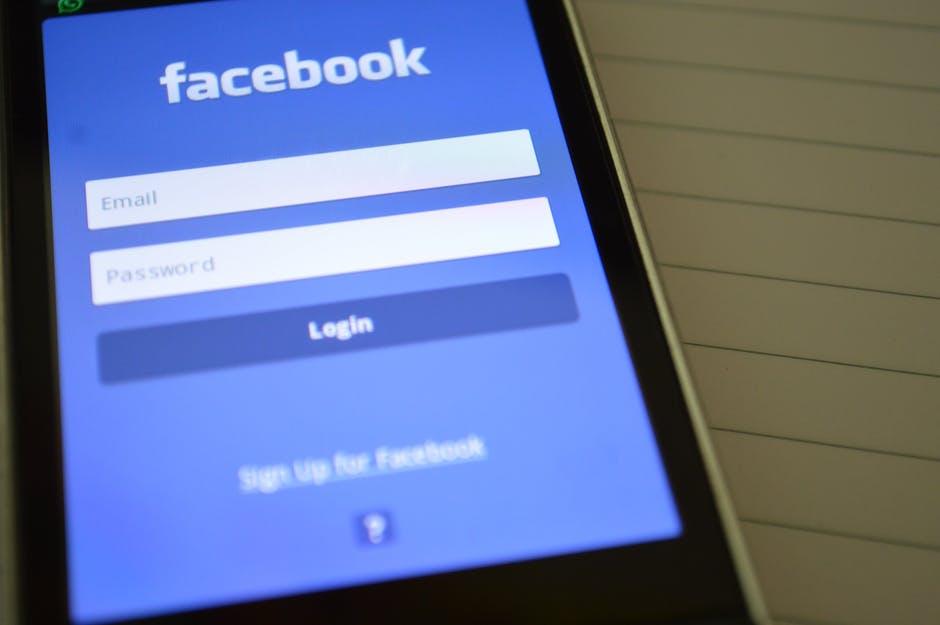
Facebook is making a lot of changes that will affect businesses’ organic reach. This video discusses these changes and what your business needs to do to stay ahead of them.
We have talked a lot about Facebook’s updates on our blog. Users are already seeing less content from businesses, brands, and media, so you need to be paying attention. Adjusting your strategy to appear on your followers’ Facebook News Feed should be a top priority.
Facebook updates
On January 11, Mark Zuckerberg announced Facebook’s new algorithm will favor posts from friends and family (over public posts) and posts that “spark conversations and meaningful interactions between people.” But the changes didn’t stop there. Less than a month after Zuckerberg’s original announcement, Facebook reported that News Feed will now prioritize local news stories and events, along with posts from family and friends. “Starting today, we’re going to show more stories from news sources in your local town or city. If you follow a local publisher or if someone shares a local story, it may show up higher in News Feed,” writes Zuckerberg.
The social media platform claims it is trying to create the best possible user experience and encourage civic involvement. But will it come at a high cost to businesses trying to reach new audiences? Could this be the end of organic reach for businesses on Facebook? Here’s what we think.
Video: How Facebook’s changes are affecting your business and what your business can do to stay on top of them
Have there been a lot of changes from Facebook? Yes. Have they impacted your business’ reach? For sure. These changes have created challenges for businesses, but not ones that are impossible to overcome.
Remember, that Facebook is working to improve user engagement, so the posts users see are informative, trustworthy and relevant. Seek to understand what your target audience is spending their time reading, and produce high-quality, original content that focuses around those topics.
If you are producing content that engages with your target audience (and hopefully some new readers), you’ll start working your way back up to the top of the News Feed.
Related posts:

by Elizabeth Hines | Mar 5, 2018 | Blog, Current Events, Logistics, Supply Chain
Companies looking to promote their supply chain transparency should consider joining the Green Supply Chain Map to reach environmentally conscious buyers.
Earlier this year, the U.S. Natural Resources Defense Council (NRDC) and the Institute of Public & Environmental Affairs (IPE) created the world’s first map publicly linking multinational corporations to their suppliers’ environmental performance. This Green Supply Chain Map shows companies’ commitment to supply chain transparency and environmental management. It will allow customers to make buying choices based on commitment to environmental sustainability.
The IPE calls the map “a leadership initiative dedicated to showcasing brands’ commitment to supply chain transparency and environmental management. It openly links brands’ supplier lists to publicly available environmental data, including real-time data for air emissions and wastewater discharge.”
Supply chain transparency, mapped
Publication of the Green Supply Chain Map is a breakthrough in transparency in the supply chain.
“The map has the potential to become a true game-changer for public environmental oversight and improvement efforts for industrial manufacturing in China,” says Ma Jun, environmentalist and director at IPE. “We hope to see more brands step up their game and join the map to connect the missing dots of accountability in the vast network of global supply chains.”
Six brands have so far joined and disclosed supplier data: Esprit, Gap, Inditex, New Balance, Puma, and Target.
The map allows users to filter by brand and to view the supply chains for individual companies. It displays water, air, and weather conditions in a factory’s location, as well as the air and wastewater pollutants each factory releases.
How brands can leverage this map
Interested brands can join the map voluntarily, demonstrating their leadership in supply chain transparency and environmental sustainability. The map’s interface allows businesses to verify and advertise their environmental compliance. It’s a potential way to attract business, as more and more savvy and environmentally conscious buyers will use this tool to make purchasing decisions.
“Until now, customers have lacked effective tools to assess the environmental impact of their favorite brands’ global operations,” says Linda Greer, senior health scientist for NRDC and founder of its Clean by Design green supply chain program. “These companies that have stepped up to put their names first on the inaugural map are showing new levels of transparency on their manufacturing abroad and are demonstrating real leadership in supply chain responsibility.”
Other companies hoping to demonstrate their supply chain transparency should consider adding their brands to the map as part of a holistic strategy to attract environmentally conscious buyers.
The future
The Green Supply Chain Map may be the first of its kind. But with the increasing availability of such data, we anticipate like organizations — or even brands themselves — will soon have similar tools for illustrating supply chain transparency.
“We hope our map can serve as a reference for other countries and regions facing similar concerns about environmental impacts of rapid industrialization within their own borders,” says Kate Logan, the IPE’s green choice outreach director.
How does your organization demonstrate supply chain transparency?
Related posts:

by Elizabeth Hines | Mar 1, 2018 | Blog, Content Marketing, Logistics, Marketing, Strategy, Supply Chain
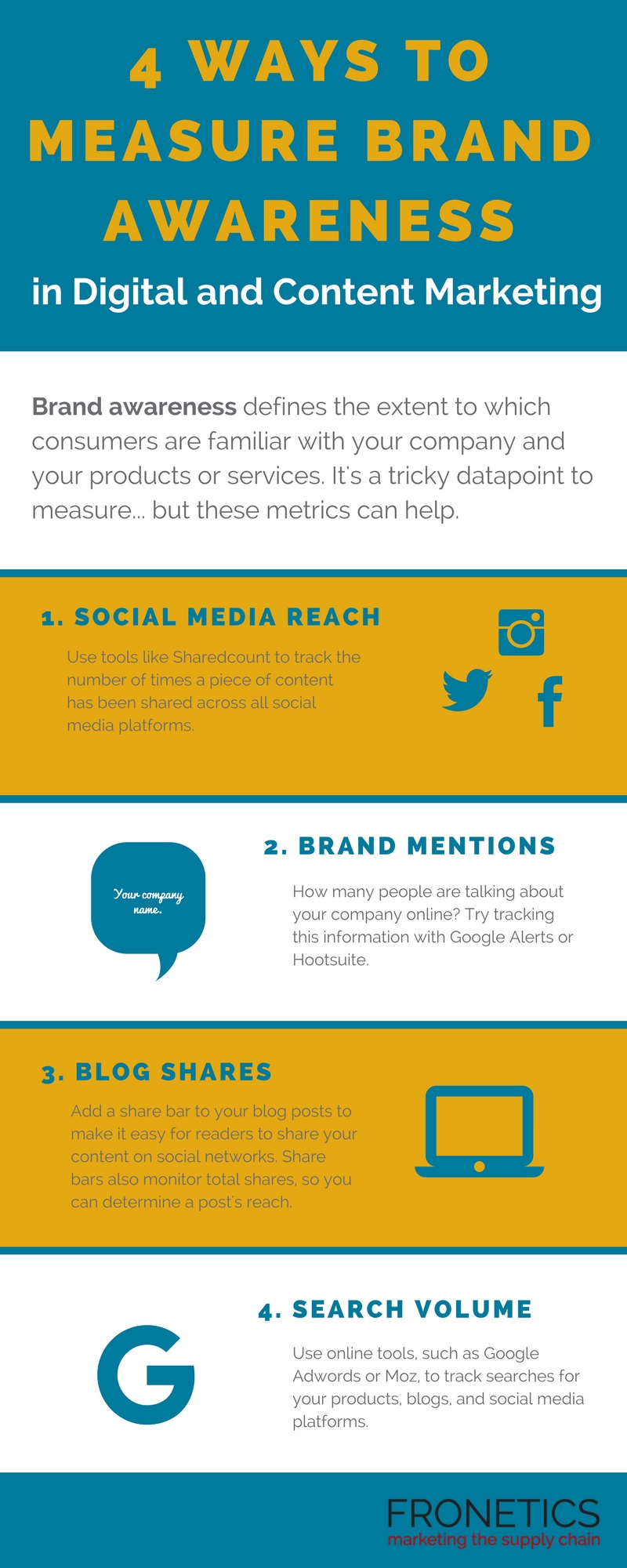
Brand awareness is key in optimizing your content marketing efforts but can be challenging to quantify. Here are four metrics to help you measure brand awareness.
Brand awareness is the extent to which potential customers recognize a brand and associate it with specific products and services. Making the public aware of your company is a long-term goal of content marketing. Through social media, blogs, and other platforms, content marketing works to create brand awareness and strengthen trust with target customers. Drawing the public’s attention to — and heightening their knowledge of — your business ultimately generates leads that turn into sales, after all, which is the end marketing objective.
But it has been notoriously difficult to quantify how effective your content marketing strategy is (and, more specifically, how far your brand awareness reaches). Unlike vanity metrics, which are easy to quantify, measuring brand awareness takes more than just a simple calculation. But that doesn’t mean you shouldn’t take the time to measure brand awareness.
Understanding the value of brand awareness gives companies insight into how well their content marketing strategy is working to generate leads and drive sales. As marketing ROI guru Jim Lenskold writes:
“The value of brand awareness is the equivalent of half of a $100 bill. Unless you know where to find the other half, there really is no value. Brand awareness does not have a financial value on its own but is part of the collective effort necessary for marketing to drive incremental sales.”
Brand awareness is key to reaching and influencing potential customers. Here are some metrics to help your measure your brand awareness.
4 ways to measure brand awareness
(Made with Canva)
Ultimately, the more aware audiences are about your brand, the more likely they are to buy your products or services. From familiarity grows trust, which only helps to strengthen your brand and create new relationships with potential customers.
Taking the time to measure brand awareness will help to maximize the success of your content marketing strategy and increase leads. These four metrics will give you a good indication of how familiar your target audiences are becoming with your company.
Related posts:

by Jennifer Hart Yim | Feb 28, 2018 | Blog, Leadership, Logistics, Marketing, Social Media, Supply Chain
For busy executives, being active on social media is kind of like networking. It’s one of those things that everyone says you absolutely have to do to benefit your career, but it’s hard to make it part of your daily routine.
This guest post comes to us from Argentus Supply Chain Recruiting, a boutique recruitment firm specializing in Supply Chain Management and Procurement.
Let’s be honest: it’s even harder for those who came of age before social media became ubiquitous. It can be tough to pin down what channels you should be on, what you should be posting, and the specific ways that a strong social media presence will bolster your career.
Supply Chain Management and its related functions (Procurement, Planning, Vendor Management, Logistics, Operations) are on the opposite end of the spectrum from functions like sales and marketing – areas where your brand is everything.
But from our perspective, there are still lots of different benefits that Supply Chain and Procurement executives can gain from building their social media brands:
- The most obvious – and relevant to a recruitment company like Argentus – is that having a strong presence on social media makes you a more attractive candidate for employers and recruiters.
- Social media activity can help position you as a thought leader in your industry, which can help connect you with new possible suppliers and strategic partners that you can bring into your Supply Chain. This is just as valuable as leads that a Sales professional might gain from being active on social media.
- Being a thought leader raises your profile in a job search, but it can also raise your profile within your company. If you feel stuck or siloed in a certain function, it can give you the opportunity to speak out about other topics within Supply Chain and Procurement. It can lead to increased responsibility and more leverage when it comes to promotions and salary increases.
- If you’re an executive (let’s say Senior Director, VP, and C-Suite), you’re a voice for your company. You can help raise the company’s profile as an employer. This is huge for attracting talent – which is a major difficulty for companies in this tight job market that favours candidates.
With all that in mind, how do you actually gain these benefits? Here are a few tips:
1. Think about goals.
How many of us have heard, “you should really get active on social, it can help your brand,” then signed up for a service, half-heartedly used it for a week and a half, and quit?
It’s important to be strategic about why you’re using social media to help further your career and brand. Are you looking to move into a new job? Are you aiming to connect with possible suppliers and partners? Are you trying to help your company seem like an awesome place to work? Are you going to offer thought leadership to be seen as an expert in the industry and widen your horizon?
When you’ve set concrete goals, it’s much easier to figure out which social media activity is going to be most effective when building your brand.
2. Streamline your channels.
This follows on the previous point. It’s easy to adopt a shotgun approach and sign up for – or resuscitate – your accounts on Twitter, LinkedIn, Facebook, Instagram, YouTube, and all the rest. But it’s best to pick one or at most two channels based on your goals. LinkedIn is always a good pick for networking and personal branding – check out what we’ve done with LinkedIn Publisher. It’s also, obviously, the best tool if you’re in the hunt for a new job and want to network with peers, recruiters and hiring managers.
Twitter is the still the best channel for industry news, whether you’re commenting on it or having conversations about it. Facebook and Instagram are more personal networks, so have less value for your professional career, but if you’re already comfortable on those platforms they can be useful places to be active. Some fields like Procurement have dedicated social media networks (we happen to really like Procurious), which will help you connect with people in the field and share best practices.
One other thing to consider is video. It’s more time – and possibly cost – intensive, but many executives have used YouTube, Vimeo or LinkedIn native video to speak about industry topics and build their personal brands. You might have to develop your video skills (modern smartphones can take videos with more than acceptable quality) or even hire outside video producers, but video has great engagement, so it can be well worth it.
3. Brand yourself.
Once you’ve chosen your channel or channels, you want to focus on creating a professional brand that resonates. This can sound intimidating, but often it just amounts to putting that little extra bit of “polish” into your social media profiles. Upload high quality pictures, include examples of your work or presentations that you’ve done. Think about your niche and the expertise you have to contribute.
4. Develop content.
The next step is to post on your chosen channels regularly. If you’re on LinkedIn or Twitter, seek out connections and follow people and publications that are active in Supply Chain and Procurement.
Picture your social media feed as a place to develop content that might be interesting to other professionals in the field. This is something that a lot of people struggle with, but it’s not too difficult once you get the hang of it. The best way to start is to re-post interesting articles with a comment. Say you’ve seen a great article about technology in Supply Planning: share it, and comment on how your organization does it. After you’ve developed a rhythm, make a quick post asking your network for best practices. Solicit advice. Shine a spotlight on people in your network or company. Make a comment on Supply Chain trends. What’s a big story in the news that has implications for how organizations manage Supply Chain or Procurement? There are so many angles, and once you get active you start seeing more. Writing out your opinions about, say, Strategic Sourcing, might actually help you discover new ideas you didn’t have before.
5. Focus on engagement rather than just numbers.
The return on investment for time spent developing a personal brand isn’t always obvious. Things to pay attention to are new followers, connection requests, or mentions. But numbers aren’t everything. Take it from us: if you’re a consistent voice on your chosen channels, people are often paying attention even if they aren’t “liking” every post. Lots of people are surprised when someone brings up their posts in conversation months later – even if that person has never given any online indication that they’re reading. The key is to focus on quality of engagement rather than quantity of views or other metrics.
Even though it’s quite a buzzword, a strong personal brand is a major asset to any executive or aspiring executive. It doesn’t have to be a chore. It can actually become an illuminating part of your work routine, and it pays off. We hope these tips are useful even if you’ve been active on social media in a professional capacity before!
Related posts:
SaveSave

by Elizabeth Hines | Feb 26, 2018 | Blog, Content Marketing, Current Events, Logistics, Marketing, Social Media, Supply Chain
The second phase of Facebook News Feed changes boosts local news to strengthen community engagement.
Facebook has been busy making lots of changes to its algorithm and prioritizing what users want from the social media platform. Our recent blog post discussed the first phase of Facebook News Feed changes early this year. The second phase was just released January 29.
Mark Zuckerberg posted, “Starting today, we’re going to show more stories from news sources in your local town or city. If you follow a local publisher or if someone shares a local story, it may show up higher in News Feed.” The new emphasis on local news will begin in the U.S. and will expand to users in other countries later this year.
Civic engagement is key.
All of recent Facebook News Feed changes have centered around user engagement. Zuckerberg’s post talks a lot about the research his company has done to provide the best possible user experience and, in turn, to push for increased involvement.
“There’s a lot of research that suggests that people who read local news are more engaged in their community and they’re more likely to engage in civic improvements. The more informed you are about issues in your community, the more empowered you are to get involved and make a change,” writes Zuckerberg.
Back in January 2017, Zuckerberg went on the “Great American Road Trip,” where the CEO traveled to 23 U.S. states to spend time with everyday people and to gain insight into how Facebook might help local communities. The result? Zuckerberg has unveiled many changes that directly reflect an emphasis on civic engagement and using the power of Facebook to improve connection with local communities.
Trustworthy news.
Zuckerberg says he has directed his product teams to prioritize news that is “trustworthy, informative, and local.” Facebook will begin to survey users on the trustworthiness of media outlets and rank news sources accordingly. These changes continue to promote what Zuckerberg refers to as “meaningful” posts.
All of these changes are a part of a broader strategy for the News Feed and Facebook community. Facebook has declared that it will be prioritizing of content from friends and family and with this new phase, local news will also top that list.
What do Facebook News Feed changes mean for your business?
Businesses have been clamoring to keep up with the decline in organic reach from the first phase of Facebook News Feed changes. With the local news now taking priority behind more personal content, business pages are falling further down the Facebook News Feed. With more of an emphasis on person-to-person interactions, there’s less room overall for Page content.
But don’t give up on Facebook just yet. For smaller businesses, these changes could potentially boost user reach because of their concentrated reader population. Stories that are opened or shared in a tight geographic area will be ranked higher in the News Feed. So, if you’re looking to increase Page visits, make sure your newer content incorporates local news and events. This will (hopefully) catch the eye of local residents and users and push your content higher up in the News Feed.
Has your business been affected the Facebook news feed changes? We’re all working to keep up with the new algorithms and how they impact our business pages. Let us know in the comments.
Related posts: