Social messaging apps have taken over the way consumers are interacting with brands. Their increasing popularity means your business needs to embrace this new trend.
No one can deny the reach of social networks. After all, Facebook has over 2 billion active users. But as marketers, we’re noticing that consumers are moving away from social networks and welcoming the popularity of messaging apps with open arms.
Social media is constantly changing, and every new app gives users a new way to engage with family, friends, and brands. With the shift toward messaging apps, your target audience is making the leap, so your business needs to as well.
Messaging apps have a strong appeal: personalized engagement. Brands are able to make a one-on-one connection with every potential customer that comes in contact with their app pages. This is an opportunity you cannot miss!
Companies reaping the messaging app benefits
Yoox Net-a-Porter, a UK-based ecommerce firm with U.S. operations, made the switch to messaging apps after the brand discovered that many of its customers preferred WhatsApp for product details and suggestions and purchases. WhatsApp easily integrated with its order management system and is currently being tested as the company’s shipping notification system.
“Realizing that consumers increasingly prefer to receive information via personal messaging services rather than email, we have been working with WhatsApp to improve the way we use the WhatsApp service with great results so far,” writes Yoox Net-a-Porter on its blog.
And Yoox Net-a-Porter isn’t the only brand making the switch. WhatsApp, a social messaging platform owned by Facebook, reported 1.5 billion active users and over 60 billion messages sent per day at the end of 2017. These numbers, continuing to grow at a staggering rate, make it hard to ignore that brands need to be investing their marketing time and dollars in messaging apps.
In our latest video, Kettie Laky, our social media director, discusses why social messaging apps are becoming so popular and the top four apps your brand should become familiar with.
Video: Top 4 social messaging apps your brand needs to be using
Takeaway
As with any new marketing effort, trial and error are a big part of the equation. In order to get the most from your time (and budget!), make sure you’re utilizing the best messaging app for your brand. Before committing to an app, ask these important questions:
Who is my target audience?
How will the app add value to my target audiences?
How do I want to deliver my content?
Do I want to use more than one app?
How frequently will I be marketing on the app?
These questions can help you find the social messaging apps that will work best for your marketing campaign and start connecting with customers in a more personalized way. These apps making sharing valuable content easier than ever.
What social messaging apps has your business tried?
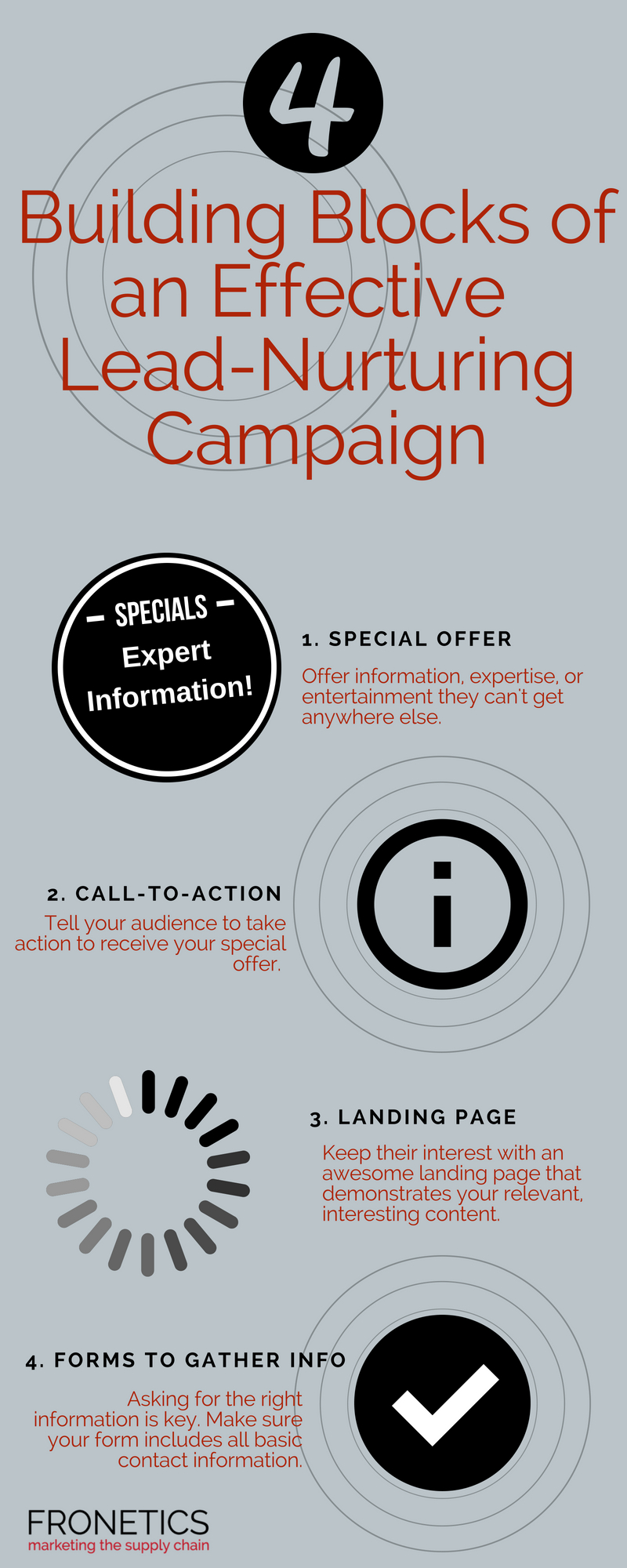
Here are 4 components of an effective lead-nurturing campaign that will entice your potential customers and have them moving down the sales funnel.
Your content marketing objectives really come down to one basic goal: to generate a high number of quality leads. These leads will help drive tomorrow’s revenue and increase sales. In fact, 85% of B2B marketers say lead generation is their most important content marketing goal.
As more and more buyers discover brands before they are ready to purchase, an essential function of any marketing department is lead nurturing. That is, moving leads through the sales funnel by leveraging what’s known about their needs and online behavior.
Marketo, a marketing software company, describes lead nurturing as being “personalized, adaptive, and able to listen and react to buyer behavior in real time.”
We know that marketers need to focus their lead nurturing strategy on multi-channel engagement. This includes utilizing email, social media, blogs, and video to interact with potential customers. A multi-channel lead nurturing strategy is essential for companies looking to optimize their user experience and bring in high-quality leads.
With so many variables contributing to a productive lead-generation campaign, it can be challenging to pinpoint what differentiates a successful campaign from a mediocre one. Here are four tools that will help you deliver a series of targeted messages across multiple touch points and platforms to help solidify your lead-nurturing strategy and increase your quality leads.
4 building blocks of an effective lead-nurturing campaign
Successful lead nurturing is really about utilizing all the tools at your disposal to meaningfully connect with your leads in order to build trust and establish credibility. Using these four key points, marketers can start building on their lead-generation efforts as they guide potential customers on their journey to becoming a client.
And don’t forget: Asking for the right information is key! If you want to nurture high-quality leads, you need to make sure you’re capturing relevant, helpful information along the sales journey.
Part four in our series on effective lead generation walks you through how to create a form that converts leads, getting you the information you need without driving prospects away.
So, what’s next? The final step in the lead generation process, and one that’s too often overlooked and undervalued, is designing a form that gets you the information you need.
It’s all in your form
When prospects get to your landing page, they’ve indicated that they’re interested in your offer. Ideally, what they find on your landing page has reaffirmed their interest. Now it’s time for them to provide you with what you’re looking for in return for the value you’re offering them: their contact information.
The information you glean from your prospects will feed into your Customer Relationship Management (CRM) or other lead management database. This means that you should essentially be retrofitting your form based on your email segmentation criteria. In other words, you want to get just the right information from your prospects that will allow you to tailor your lead nurturing to best suit their needs and interests.
Your head might be filling with visions of long and comprehensive questionnaires — not so fast. If you make your form too long or involved, prospects will abandon it out of impatience and frustration, or feel that you are exploiting them for more time or information than they’re willing to provide. An effective form strikes the delicate balance between acquiring all the necessary information and keeping the willingness and attention of your visitors.
3 characteristics of forms that convert leads
For this last and crucial step in your lead generation strategy, it’s all about capturing leads. So, what makes for an effective form?
1. Find the length that works for you.
Conventional wisdom would have you believe that the shorter your form the more leads you’ll get, whereas the longer the form, the better quality (though fewer) leads you’ll get. But that’s a bit of a simplistic and defeatist way of looking at it.
We think you can have your cake and eat it, too. The key is to design your form with your email segmentation criteria in mind.
Ask as few questions beyond the basics as possible to get you precisely the information you need. Your goal is richness of information, as opposed to lengthy, detailed questions. For more, check out HubSpot’s guide to creating a form.
2. Don’t frighten them away.
It may seem counterintuitive, but you should avoid using the word “submit” on your form. Nobody likes the idea of “submitting” their information.
Instead, use a phrase that demonstrates that your prospect is about to get something that they want by supplying their information. For example, “Get it free,” or, “Download now,” emphasizes what the prospect will receive, rather than what they will be giving.
3. Protect their privacy.
In the current climate, we’re all thinking more and more about how our data gets collected and shared. Make sure your prospects know that you’ll be a good steward of the information they provide you.
Add a privacy message or link to your privacy policy, indicating that their email or contact information won’t be shared or sold.
Creating forms that convert leads is the final step — though one of the most crucial — in effectively turning website visitors into prospects. If you can manage to create a valuable offer, entice visitors with a call-to-action, convince them to convert on a landing page, then present a form that encourages them to complete it (rather than drives them away), then you’ve done your job as a marketer.
In part three of our series on effective lead generation and nurturing, we walk you through the components of effective landing pages that convert visitors to leads.
Landing pages are crucial, and brands miss out on big opportunities when they fail to optimize them. In fact, according to HubSpot, marketers have seen an average 10% conversion rate on landing pages — that represents a huge amount of missed opportunities. Brands that have it right, those that focus on designing for conversions, reap the benefits in big ways.
Your primary objective for a landing page is to get visitors to submit their contact information in exchange for the offer. At this point in the process, your potential customer has already engaged with your call-to-action, meaning he or she is interested in your offer. When they get to your landing page, everything they find there should affirm their choice to and assure them that the content they are about to download is going to be relevant, interesting, and valuable.
Designing landing pages that convert
So what are the hallmarks of a great landing page? Starting with the basics, your landing page should briefly, simply, and clearly describe the benefits of your offer. It’s important that there be as few distractions as possible. For example, make sure the page doesn’t have a top navigation menu. Bonus points for including ways to share your offer on social media.
Additionally, you should make sure that your landing page doesn’t include links to other things on your website, as they can distract the lead and perhaps send them somewhere else on your website where they can find the information you’re presenting in your offer.
As you design your landing page, keep this checklist in mind:
Is it clean, organized, and clearly presented?
Is there any ambiguity about where or how leads should enter their information?
Does it describe the benefits of my offer?
Is it free of extraneous or distracting content or links?
Is it mobile-friendly?
Does it contain easy ways to share on social media?
If you follow these tips for landing pages that convert visitors to leads, we’re confident you’ll start to see an uptick in your website conversion rate almost immediately.
As with many things, blogs improve with age — drawing more traffic, generating more leads, and building more credibility with search engines.
The average lifespan of a tweet is around 15 minutes. And a Facebook post’s lifespan is about 6 hours. But the lifespan of a blog post averages two years. TWO YEARS.
In fact, we find that 80% of our website traffic comes from blog posts that are over six months old. HubSpot discovered a similar trend: 76% of its monthly views came from old posts, as well as 92% of the company’s monthly leads!
Why is that? Because, as with many things, blog posts improve with age. Search engines give value to older content that has had more time to accumulate social shares, likes, and referrals from other web pages. The more relevant a blog post proves itself to be to readers over time, the higher it will rank in search engine results.
Optimizing older content
Blog posts also give marketers an opportunity to dust off older content and rework it to be relevant and up-to-date to target audiences. Using analytics tools, marketers can track posts that had high traffic and conversion rates and work on optimizing the content. Updating older posts with new statistics, relevant keywords, and spruced-up calls-to-action will breathe new life into your older content.
Lead-generation tool: your blog
A blog is an excellent lead-generation tool. But, as I’ve written before, it takes time to generate leads and sales. Patience is a virtue, but it’s a particularly difficult one to keep in mind when you’re trying to grow business and keep your boss happy.
Your posts need time to start drawing traffic — and then, from traffic comes leads. Here’s why blog posts, like a fine wine, will continue to improve with age and why you shouldn’t give up on your efforts.
Video: Why blogs improve with age
Takeaway
With high-quality, relevant content, your blog will pay off. You should keep tending to your already published content, particularly those posts that prove to be a consistent source of traffic.
Update information; add links to new related posts or other relevant resources; and seek opportunities to insert or update calls-to-action to current offers and campaigns. Making sure those older, consistently popular posts continue to serve and engage your readers will increase your chances of conversion.
And, don’t forget: Something that doesn’t get a lot of views in the first week may be a huge traffic source and lead converter in a little time. Many content management systems, like HubSpot, can generate attribution reports, which tell you which web pages users most often visit before converting to a lead. Compare these pages with your high-traffic pages that don’t make the list to see how you can create more opportunities for lead conversion on the pages earning the most traffic.
Here are our most-viewed supply chain and logistics blog posts from this year as of July 1, 2018.
Throughout the year, we regularly write blog posts to help our readers stay on top of the latest news and happenings in the supply chain and logistics industries, particularly in regards to content marketing. We hope these posts provide insight, tips, and insider information on how to stay head of your competitors with the consistent publication of quality content.
We’ve covered some great stuff this year, from new trends (like chatbots) to questions that clients ask year after year (like how is the industry using social media?). Here’s a look at our most popular posts so far this year.
Top supply chain and logistics blog posts from 2018 (so far)
1. 10 Must-Follow Supply Chain and Logistics Blogs in 2018
These 10 blogs are all rich with industry news and the latest trends to keep you in the know. They cover a wide range of topics, from research to strategy, and feature some of the top thought leaders in the field. Read more.
2. 5 Must-Read Books for Supply Chain Leaders
One of the best ways to sharpen your leadership skills is by learning from other leaders’ experiences. Leadership books, especially those focused on the supply chain and logistics industries, give valuable insight into the trials and triumphs of your industry peers’ encounters. Read more.
3. Top 3 Logistics and Supply Chain Blogs of 2018
You voted, and the results are in! LTX Solution is your number one favorite blog of the year, with “Ellen’s Blog” of Women In Trucking and Apex Capital Blog coming in second and third. What remained consistent from previous years is the quality of the content and the consistency of posting by the three winners. Read more.
4. 7 Supply Chain & Logistics Professionals to Follow on LinkedIn
LinkedIn, with almost 500 million users, is the #1 networking site for professionals. Following LinkedIn members gives you access to their profiles, as well as any original or third-party posts they publish on their newsfeeds. Here are 7 supply chain and logistics professionals to follow for top posts and articles in your industry. Read more.
5. B2B Marketing Trend 2018: Influencer Marketing
One of 2018’s fastest growing marketing trends is influencer marketing. Companies will increase their influencer marketing budget to keep up with the competition. 86% of B2C marketers used influencer marketing in 2017, and 92% of marketers that tried it found it to be effective. B2B marketers, on the other hand, have been slower to adopt this new marketing trend. Read more.
6. 6 Reasons Your Supply Chain Employees Are Looking for New Jobs
With the rising demand for professionals in Supply Chain Management and Procurement, there’s a lot of employment activity, especially in short-term contracts. This guest post from Argentus covers the subtler reasons that star performers in these functions get the desire to make a move. It’s not out of a desire for more money as often as you might think. Read more.
7. Drawing Lessons from Tesla’s Supply Chain Issues
A great article last month from CIPS’ industry magazine Supply Management dove into some of Tesla’s Supply Chain woes, discussing how the company, still considered a visionary in the industry, has gotten into some challenges, as well as some optimistic scenarios for how it can get out of it. Read more.
8. Top 10 Social Media Analytics Tools
Analyzing your social media performance is critical to a successful marketing effort, especially in light of recent changes to Facebook’s News Feed. You need the tools to determine what’s working and what isn’t, as well as the best time to post your content for your target audience. Read more.
9. KFC Ran Out of Chicken in the UK: What Supply Chain Lessons Can We Learn?
More than half of the UK’s Kentucky Fried Chicken stores recently closed because they ran out of chicken. A few weeks later, reports are that a number of stores are still closed, with front-line workers being encouraged to take holidays as the company sorts out its deliveries and tries to account for the failures. This guest post from Argentus provides a look at what caused the issues and what supply chain lessons can be learned. Read more.
10. Writing for SEO: Topic Clusters and Pillar Content (NOT Keywords)
I’ve been hinting — more like, emphasizing — in our recent Writing for SEO series that trying to rank for certain keywords in each blog post you publish is a practice on the way out. You may have been wondering what you’re supposed to do instead. This post on topic clusters and pillar content is your answer. Read more.
What supply chain and logistics blog posts have you most enjoyed this year? Are there any topics you’d like us to cover? Please reach out to us and let us know!