A survey conducted by Fronetics on the use of content within the logistics and supply chain industries found that content is being used by companies as an effective marketing tool.
86% of survey respondents reported that their company uses content as a marketing tool. 79% reported that content is an effective marketing tool for their company.
For the majority of companies (58%) the strategy and execution are handled in-house. However, not all companies handle everything internally. 32% of respondents reported that their company outsources some of their content creation, while 5% reported that their company outsources all content creation.
Blog content, case studies, and white papers are the most common types of content created. 78% of respondents reported that their company creates blog content. Other types of content created include:
Case studies: 61%
White papers: 61%
Infographics: 48%
Reports: 30%
Slideshows: 26%
To learn more about content and content use within the logistics and supply chain industries, please download the report.
Fronetics conducted a survey focused on the use of content within the logistics and supply chain industries. The survey found that companies within the logistics and supply chain industries are using content as a marketing tool and are realizing results. 79% of survey respondents reported that content is an effective marketing tool.
Survey respondents reported that their company uses content to:
Strengthen overall brand awareness (96%)
Generate leads (83%)
Establish the company as an industry leader (74%).
To learn more about the role of content with the logistics and supply chain industries, download the report.
For the past three weeks we have been pretty much like this: shovel, snow blow, tackle commutes, juggle school cancellations, repeat.
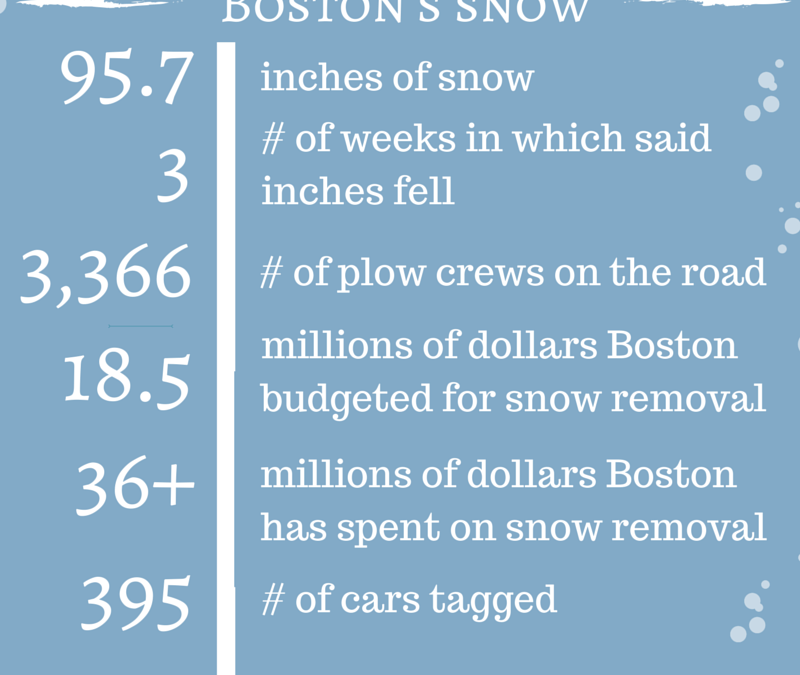
Charlotte Wilder expressed the sentiments of many when she penned A Breakup Letter to Snow From the City of Boston. 95.7 inches of snow within 3 weeks is a lot of snow. The sheer amount of snow has forced the city’s public transportation to cancel operations. Schools have been cancelled, several for two weeks or more. Cars have been buried. Businesses have been forced to close. Businesses that have remained opened have realized dismal sales. Boston has opened snow farms and has purchased melting trucks. National Guard troops have been called in to help remove snow. #snowpocalypse 2015.
The snow has complicated the logistics of life. As we, individuals and businesses, complain about the economic, physical, and mental challenges associated with the snow it is important to put things into perspective. NPR’s Barbara Howard’s Blizzard of Perspective does just that.
Reducing paper in the distribution center is good for business (and trees).
Paper isn’t a thing of the past in workplaces, but it probably should be. The reasons go well beyond simply saving trees to an even more compelling argument: it’s just better business. A 2014 survey conducted by the Association for Information and Image Management (AIIM) found that more than half of responding businesses posited that the single largest way they could improve productivity would be to remove paper from their organizational processes.
The study’s implications for companies in the supply chain industry echo a 2005 Inbound Logistics article in which Leslie Hansen Harps wrote that the speed through the distribution center is critical. “Effective operations use best practices within the four walls of the facility — and beyond.” One of the best-practices discussed in the article: reducing reliance on paper. Specifically, the article referenced moving to hands-free solutions. Denny McKnight of Tompkins Associates Inc. told Harps: “People writing numbers on pads of paper or keying strings of numbers into a keyboard is a bad sign.”
Of the companies reporting superfluous paper use as an impediment to greater productivity in the 2014 AIIM study, less than 20% have paper-reducing policies in place. This finding highlights the fact that many companies have identified the need to reduce their use of paper, but most lack a clear vision for doing so. While the shift to a paper-free distribution center can seem overwhelming and cost prohibitive, small efforts to eliminate unnecessary paper can dramatically improve efficiencies. To start, consider the identification of one organizational process where it would make sense to introduce a paper-free method and spend an hour researching how other companies have transformed similar processes and which solutions have proved to be the most successful.
No doubt, as faster, more sophisticated technology couples with a more computer literate workforce, distribution centers will see an organic shift to a paper-less work environment. Including regular reviews of ways your company could implement paperless processes ensures paper doesn’t slow you down. After all, finding ways to eliminate paper is akin to finding gains in operational efficiency.
Here are 10 (more!) reasons why your company should tame its paper tiger:
Has your company reduced its reliance on paper? If so, what benefits have you realized? If not, what barriers to the implementation of paperless processes have you experienced?
Think inbound marketing isn’t for the supply chain and logistics industries? Guess again. Here are 5 reasons companies in the supply chain and logistics industries need inbound marketing.
Companies within the supply chain and logistics industries tend to disregard inbound marketing. The reason being they do not think inbound marketing will prove successful. The common objection is that prospects and customers for these industries are not online.
Here are five reasons why companies in these industries should use inbound marketing:
1. Customers are online.
B2B buyers are online. 93% of B2B buyers report that they use search engines to research purchase decisions. These buyers go online for a number of reasons including to:
Learn about new market developments and industry practices;
Discover new solutions to address a specific problem;
Address a project or a program being undertaken by their company.
2. 60% of the sales process takes place before they engage your sales rep.
The average customer progresses nearly 60% of the way through the purchase decision-making process before engaging with a sales rep.
Before engaging with a sales rep, customers are turning to the internet and to social media for information. The 2014 UPS B2B Buyers Insight Study found that 68% percent of buyers research supply purchases via supplier website, and 52% use search engines.
3. You can present solutions to your prospects’ problems via social media and content.
When prospects go online they are looking for information and for answers. By creating valuable content and leveraging social media you can attract and engage prospects, and convert these prospects to customers.
4. Inbound marketing is more effective than traditional marketing.
Research conducted by HubSpot found that inbound marketing is more effective than outbound marketing:
Share your experience with the use of content within the logistics and supply chain industries.
The amount of content on the internet is astounding, and it is growing by the second (check out One Second on the Internet). 93% of B2B companies are using content marketing and are thereby contributing to the increasing amount of content that is out there.
How do companies within the logistics and supply chain use content? What do companies see as the most effective methods of content creation and content distribution?
Fronetics is conducting a brief survey focused on the use of content within the logistics and supply chain industries. The survey will take less than five minutes to complete. All data collected will be used in aggregate and no identifying information will be shared or reported.
A report focused on the survey results will be published in March 2015.