Having a modern, flexible supply chain is important to finding the way out of inventory dilemmas.
Imagine your irritation when you try to place an order online and are greeted by the message: “We apologize for the inconvenience, but this item is out of stock.”
However, even if the item is in stock, your mood is likely to sour if delivery will take more than a few days — and, even worse, you also have to pay for shipping. If you’re anything like me, you will quickly find an equivalent product that’s available immediately and ready to be shipped that same day.
It’s in the light of this hyper-competitive environment that the current inventory crisis should be seen. To sum it up from the perspective of warehouse owners: these are good times. Warehouse rents are hitting new highs as vacancy rates sit below five percent in many major cities.
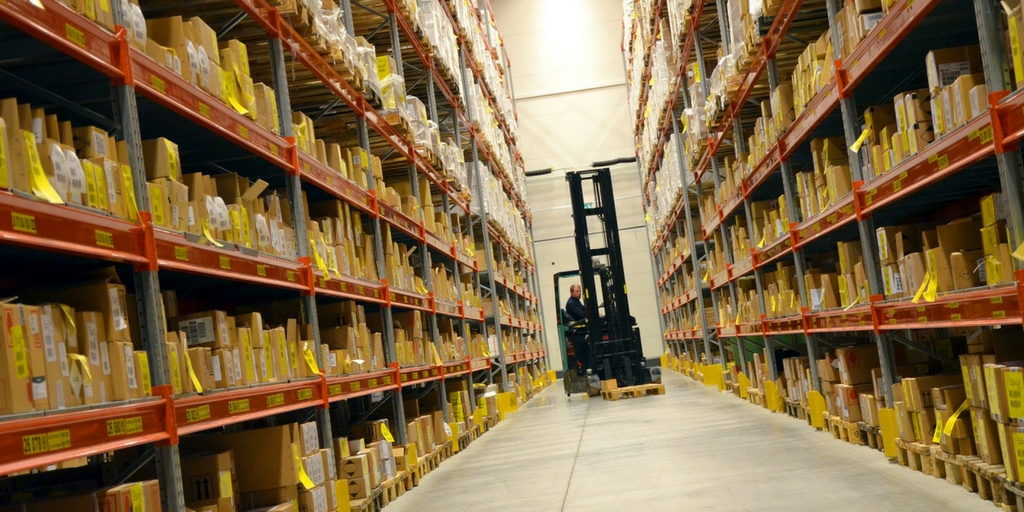
From the viewpoint of retailers, on the other hand, it’s a significant challenge. Excess inventory is building even as consumer demand remains relatively high. Well aware of the consequences of not meeting ever-rising consumer expectations, retailers have felt compelled to stock up to — at all costs — avoid that irritating “out-of-stock” disclaimer. On the other hand, a chock-full warehouse is not necessarily good for business or speedy fulfillment.
Modernity and flexibility are key
This is when the importance of having a modern, flexible supply chain really comes into play:
How quickly can the supply chain adjust to changes in demand?
What’s the visibility up and down the supply chain?
How aware is each link of what others are doing?
How fast can inventory be refocused?
Some companies like Nordstrom have invested in cloud-based supply chain services. In Nordstrom’s case, the acquisition of a minority stake in DS Co., a supply chain software firm, which links inventory management between retailers and suppliers, was designed to facilitate direct shipments from vendors to customers, thereby circumventing the need for more inventory space. When suppliers and retailers track the inventory of one another, the risk of out-of-stock disappointments is reduced and risk is shifted up the supply chain.
Put to practice, it means that an order placed on the luxury retailer’s website is routed to the manufacturer, which then ships the item directly from its warehouse to the buyer. The Wall Street Journal noted Nordstrom’s investment comes “as retailers are racing to compete with e-commerce companies such as Amazon.com Inc. to provide convenience and speedy delivery to customers while keeping costs down.”
J.C. Penney is also shifting gears to avoid inventory gluts. The new business model essentially turns part of the store into a showroom for one of its suppliers, Ashley Furniture. Instead of keeping inventory in store or in distribution centers, all orders will be shipped straight to the consumer from Ashley Furniture.
Drones are not surprisingly part of solving the inventory dilemma. Walmart, for example, is testing the use of drones to catalog inventory, finishing in one day what it takes employees a whole month to get done. The intent is partly to make the giant retailer’s supply chain more efficient.
Clearly, traditional retailers are exploring new territory to meet consumer demand.
What do you think is key to solving the inventory crisis?
Research and firsthand knowledge show a very strong correlation between posting frequency and traffic/leads.
Clients often ask us, “How often should I blog?” It’s a great question that has no simple answer.
The reality is that the more often you blog, the more traffic and leads you’ll get. Search engines consider posting frequency in their rankings. What’s more, every time you post, you create a new opportunity to be found, to be shared, and to be linked to by other sites.
The trouble, of course, is balancing resources so that you’re publishing frequently but maintaining value and quality within your content. So while there’s no universal magic number, there may be a sweet spot for the amount of posts your organization is able to publish to maximize traffic and leads.
Let’s look at some data that makes the case for frequent blog publication.
The more you publish, the more they’ll read.
There is a high correlation between publishing frequency and web traffic/leads. This is evident in a number of recent studies:
HubSpot’s latest benchmarking data shows that blogs that published 16+ times per month received 3.5x more traffic than those that published weekly or less often.
From the same report, companies that published 16+ blog posts per month got about 4.5X more leads than companies that published between 0-4 monthly posts.
If you’re a small business, you may be thinking, “Sure. Those successful blogs are all run by big brands with endless resources!” Not so, friends.
Two-thirds of the best-in-class blogs (with 10,000+ views per month) from the Curata study were run by small companies. The Hubspot report found that increasing posting frequency had the biggest impact on smaller businesses: Companies with 10 or fewer employees that published 11+ posts per month had almost 3X more traffic than companies publishing 0-1 monthly posts, and about 2X as much traffic as those publishing 2-5 monthly posts.
Will blogging one more time per week really make a difference?
We often encourage our clients to increase their blogging cadence by just one more post per week. Though some are skeptical of the impact this will have on their traffic and lead-generation efforts, they inevitably find that such a small step can make a big difference.
Take one client of ours for example. We suggested moving from publishing one post to two posts per week. The client was unsure this would have any impact, especially for a company in the supply chain industry. But the immediate results spoke for themselves. After just one month, traffic increased by 23%, sales leads doubled, and the client landed a new customer.
How often does your company blog? Have you ever experimented with posting frequency to determine how your resources are best spent?
Keep these four trends in mind when planning out your marketing efforts in 2017.
Marketo recently revealed its predictions for upcoming marketing trends for 2017. It’s a list of technologies, strategies, and tactics that the marketing software automation company believes will be important to focus on over the next year.
We culled through these predictions to highlight what the supply chain industry needs to know. Below are four trends marketers should have on their radars.
4 marketing predictions to watch out for
1. Customer-Centric Marketing
For B2B companies, customer-centric marketing means buyer-centric marketing. Because the cost of switching vendors is increasingly low, and the buyer is faced with endless choices, it’s likely that 2017 will see “an aggressive shift in attention toward increasing customer spend.”
This means increasing your focus on building and cultivating relationships. Marketo suggests that companies balance their marketing spend to “invest in building engagement, brand loyalty, and advocacy with current customers rather than just finding new ones.”
It’s likely that technology will play a big role in this 2017 trend. Your company needs marketing team members who are tech-savvy and who know how to analyze and respond to customers’ digital signals.
Focusing on the customer also means building authentic connections and a move toward “giving as much as you get, if not more.” We’ll see more and more customer advocacy, which means that marketers need to focus on taking relationships beyond the transactional. Marketo recommends “providing them with opportunities to showcase their expertise and be recognized by their peers as leaders and innovators.”
The key takeaway: 2017 is the year of building quality relationships.
2. A New Generation of Marketers
We used to live in a marketing climate where specialization was the key to success — no longer is that the case. Your business needs leaders who are “full-brain marketers,” multi-talented generalists who are comfortable handling challenges from the creative design to demand generation — and beyond.
It’s time to abandon thinking in silos. Marketo recommends that your marketing team be in constant connection with other teams within the company. “B2B marketers can now use technology to ensure their sales team have visibility and participation in programs — versus being isolated from critical activities.”
This kind of structural shift requires openness and humility. Marketers need to be willing to take questions and ask them, and to be open to making changes based on increased intra-business collaboration.
Marketo predicts that 2017 will see the perfect storm hit the marketing world, bringing an intersection between fulfilling customer needs, storytelling, and digital interactions. Your company needs to look at its organization and build deep expertise across these three functions. “Any marketing organization that’s missing one of these three functions is destined for failure,” warns Marketo.
This new generation of marketers means that top-performing B2B companies will be making optimal use of technology and data. You need to be investing in resources and technology to drive data enrichment and data governance activities to set a good foundation for your account-based marketing strategy. This also means working closely with sales to understand their thought process for lead prioritization and acceptance.
Here, the key to success is open communication within your organization.
3. Techniques
Marketo has laid out a new equation for how marketers will incorporate techniques to engage buyers at every stage of the cycle:
Inbound + Broad-based lead generation + Account-based marketing + Paid media personalization + Direct marketing = Successful customer engagement
What does this mean for the supply chain? Your company can use a combination of these strategies to engage prospects. For example, combining account-based marketing (ABM) strategies with broad-based strategies will allow marketers to build long-term customer relationships, while bridging their advertising and marketing technologies to demonstrate ROI.
All this focus on ABM solutions will allow marketers to become more efficient, taking advantage of cutting-edge technologies. Marketo suggests creating a detailed ABM plan for all departments, which includes creative marketing ideas to test, as well as new technologies.
It’s time to harness the technology at your fingertips.
4. Content & Channels
2017 is likely to usher in a return to value over volume, both in content assets and in content distribution channels. It’s time to stop creating content for the sake of creating content and to shift toward “deeply listening to and understanding the customer.” This will allow you to cull some of the content and channels that aren’t benefitting your business.
It’s easier than you might think to put this trend into practice. Marketo suggests starting by “deeply understanding the content you already have, and taking the time to evaluate what resonates and what doesn’t.” Next, you can create a plan to keep your content strategy going forward in a meaningful way.
As far as channels go, user experience, particularly for mobile, is going to be increasingly important. You can prepare for this by adding structured data to your site, and by providing valuable content. It’s important to keep a watch on the changing user behavior and expectations, as it will be the biggest driver of change in SEO.
As algorithms continually change, and chronological timeline updates increasingly being phased out, social media channels will put more focus on individuals over brands — this means an absence in brands showing up in feeds organically. You can rise to this challenge by making real-time engagement a priority.
We’ll also see ad inventory becoming tighter and more expensive across social platforms. This means you’ll need to become more specific about the audiences you target, and make your offers increasingly personalized and relevant. Marketo adds the hopeful prediction that “advertisers will benefit from more ways to track offline conversions and non-immediate revenue.”
As email technology advances, email campaigns will begin to predict the content you want and really need. The end result here is “targeted, personalized communications optimized for each person, based on their online and email behaviors.”
The takeaway for content in 2017 is: quality over quantity.
Turn to these 7 Twitter accounts for news, insights, and thought leadership in the supply chain space.
Twitter is a platform for socializing, entertainment, breaking news, lead prospecting, and much more. But Twitter is only as useful as the people you follow. So how do you choose between the 317 million monthly active users?
We compiled our list of the must-follow Twitter accounts for the supply chain professional in 2017. These users and companies have a lot to offer in terms of news, insights, and thought leadership. They also are active posters, meaning you’ll see frequent content from them, and are listed in no particular order.
Are you following these 7 Twitter accounts for supply chain thought leadership?
Tania Seary was recently named “Influencer of the Year” by Supply Chain Dive and is an active poster on all things relating to supply chain logistics, with a particular commitment to procurement development. Based in London, Seary is the founder of Procurious, The Faculty, and The Source Australia.
Lora Cecere is the founder of Supply Chain Insights, an industry research group. A prolific writer, Cecere focuses on the changing face of enterprise technologies. Her current research interests include the digital consumer, supply chain sensing, demand shaping and revenue management, market-driven value networks, accelerating innovation through open design networks, the evolution of predictive analytics, emerging business intelligence solutions, and technologies to improve safe and secure product delivery.
Steve Banker is a veteran supply chain analyst who writes for Logistics Viewpoint and Forbes. Based outside of Boston, Banker heads up the Supply Chain & Logistics consulting team at ARC Advisory Firm. His technology focus areas include transportation management, managed transportation services, warehouse management, and supply chain planning.
Procurious is a business network and resource for progressive procurement professionals founded by Tania Seary. Content ranges from networking and career advice to thought leadership pieces and industry news.
Logistics Management offers editorial content aimed at executives, managers, and other professionals in the logistics and supply chain industries. It recently hosted virtual conference on streamlining logistics and supply chain operations.
Logistics News is an independent, global source for news related to transport, shipping, trucking, or logistics.
Are you following us? @fronetics distributes original content and curates interesting, informative, and relevant content from other supply chain publishers across the Twittersphere and beyond.
Supply chain professionals should be following these eight blogs to keep up with the latest industry news and happenings in the coming year.
Fronetics is currently conducting a survey to determine which supply chain blogs you think are the best of 2017. (You can vote for that here.) But we also wanted to weigh in with some of the blogs we’re following.
These eight supply chain blogs are great resources for industry news and trends. They cover a range of topics, from technology to strategy, and feature thought leadership by some of the brightest minds in the field.
8 must-follow supply chain blogs
Here is our selection of blogs with timely content that supply chain executives need to read, in no particular order:
1) Supply Chain Management Review
This vast website includes trending articles on supply chain and logistics strategies developments, many written by university-level professors. Read this blog.
2) Logistics Viewpoints
This blog features think pieces from three leading supply chain and logistics analysts with the mission to provide clear and concise analyses of logistics trends, technologies and services. Read this blog.
3) Supply Chain Nation Blog
Interesting news bits from “around the supply chain horn,” this is JDA Software’s blog, a powerhouse in supply chain solutions. Read this blog.
4) Supply Chain Matters
The blog of Bob Ferrari offers his expertise on all aspects of supply chain business processes and supporting information technology. Read this blog.
5) Supply Chain Brain
A portal aimed at supply chain executives featuring original and aggregated content touching on multiple industries. Read this blog.
6) Supply Chain Shaman
Lora Cecere’s blog focuses on “the use of enterprise applications to drive supply chain excellence.” Read this blog.
7) Argentus Blog
Argentus is a boutique recruitment firm specializing in supply chain management and procurement. The blog offers insight into pressing issues in supply chain talent acquisition, career management, and more. Read this blog.
8) Cerasis Blog
The Cerasis blog covers industry trends, educates, explains rules and regulations, busts myths, and has awesome infographics. Read this blog.
Bonus/shameless plug: Fronetics Blog
Our blog covers topics of interest to the supply chain industry from marketing and social media to lead generation and strategy. Read our blog.
It’s time to cast your vote for the top blog in the supply chain and logistics industries!
Fronetics is conducting its 3rd annual survey to uncover the top industry blog of 2017. Help us by voting for your favorite blog. Responses will be collected through January 25, 2017. Vote now so your voice will be heard!
All responses are confidential and will be reported in aggregate. No identifiable information (individual or company) will be attached or included. Please contact [email protected] with any questions.