“I hate my job!” and “I don’t have any questions,” top our list of things you definitely shouldn’t say in a job interview.
Today’s supply chain and logistics professionals have all kinds of varied and exciting career opportunities. And increasingly, job hopping is becoming the norm: a 2016 study by LinkedIn found that “over the last 20 years, the number of companies people worked for in the five years after they graduated has nearly doubled.”
All these opportunities mean it’s probably time for you to brush up your interview skills. There’s an art to giving a good job interview. Making a meaningful connection with the person behind the desk, and confidently communicating your unique skill set is not as easy as it looks.
Check out these 4 things you should never say in a job interview — and what to say instead:
4 things not to say in a job interview
1) “I’m nervous.”
It might seem obvious, but you’d be surprised how many interviewees are too candid about their butterflies. You don’t want your potential employer to question your ability to act with confidence and decisiveness, no matter what pressures you’re under.
Instead, say: “I’m excited to be here!” Nerves and excitement are two sides of the same coin, and you’ll do yourself a favor by steering into the more positive emotional state.
2) Any lie
We’ve all heard it: “Everybody stretches the truth in a job interview.” Well, as tempting as it is to inflate your abilities or experiences, lying in an interview can come back to bite you in big ways.
Instead, tell the truth! It may not be as impressive, but it will save you from potential embarrassment and a severely damaged reputation.
3) “I hate my job!”
Nobody wants to hire a disgruntled worker. It should be obvious that anyone interviewing for a new job is ready for something different from their current role, so there’s no need to emphasize it.
Instead say, “I’ve enjoyed my work, but I’m looking to take on some new challenges.” Your interviewer is likely to be evaluating your emotional intelligence and maturity — explaining why you’re seeking a new position emphasizes just those traits.
4) “I don’t have any questions.”
Again, it may seem obvious, but not having prepared intelligent questions about the role or company you’re interviewing for is a clear red flag to any interviewer.
Instead, go the extra mile! Put in the time and intellectual curiosity to come up with at least two intelligent questions. It’s not just about impressing the person behind the desk. You’re informing yourself and gaining insight into whether this is the right position for you.
Relationships take time and trust to fully develop, and lead nurturing is no different.
Before I got married in 2009, I spent most of my twenties in the dating pool. I would meet someone. We would exchange phone numbers. And through a series of texts and calls, we would eventually meet for dinner. One dinner would lead to another and possibly another.
Lead nurturing isn’t all that different. When you first meet your lead, chances are they won’t be ready to purchase right away. In fact, 63% of consumers requesting info on your company today will not purchase for at least 3 months. But if you spend time establishing a relationship and building trust, the moment your lead is ready to purchase, you’ll be miles ahead of your competition.
As more and more buyers are engaging with brands before they are ready to purchase, an essential function of any marketing department is lead nurturing. That is, moving leads through the sales funnel by leveraging what you know about their needs and online behavior. Marketing software company Marketo describes lead nurturing as being “personalized, adaptive, and able to listen and react to buyer behavior in real time.”
Lead nurturing, like dating, takes time to establish a relationship and move toward the ultimate goal of converting from lead to customer. Here are five tips to help nurture these relationships.
5 lead nurturing tips
1. Make a good first impression
You would never go on a date without looking and feeling your best. The same should be true for your website, your company’s online home. As part of your preparation for a lead nurturing campaign, review your website and make any necessary modifications so that it presents the best digital representation of your business. Beyond increasing conversions, having an attractive, modern website that’s free of broken links and out-of-date contact information establishes your company as a trusted resource for information.
2. Make a plan ahead of time
Where are you going to dinner? Are you making a reservation? What are you doing after dinner? Preparing for a date requires some thought and planning, especially when considering your date’s preferences. Content selection requires the same forethought. The decision about what content you’ll offer your leads will be guided by the preferences and needs of your prospects. Create content that is relevant to your leads, and make sure to identify appropriate channels of distribution in order to extract maximum value from your content.
3. It takes time
Dating tends to happen in stages that occur over weeks and months. Similarly, the lead nurturing process is intended to push content to leads in a linear fashion, with the ultimate goal being that they’ll emerge as customers. Once you’ve moved past the first date, so to speak, you’ll want to decide how to continue romancing your leads. To do that, align content with where your leads happen to be in the buyer’s journey. Leads will enter and exit your lead nurturing campaign at different points, and that’s okay. Just be certain that your content is relevant to leads in their specific stage. Regardless, each nurturing touch should be focused and specific and include a call-to-action to promote advancement in the buyer’s journey.
4. Communication is key
As with any relationship, the foundation of lead nurturing is communication. Being able to hold meaningful conversations builds a genuine interest and helps improve any relationship. In other words, don’t view the lead nurturing process as a way to blast your prospects with promotional information or marketing materials; treat it as a dialogue. The best lead nurturing campaigns are designed to help you learn as much about your leads as you would have them learn about your company.
5. Show your interest and appreciation
We all want to feel appreciated, and the same is true for your customers and leads. Whether it’s by showing gratitude to current customers for their continued support or showing appreciation to leads for their download, saying thank you goes a long way in building connections and professional relationships.
In our personal and professional lives, we want relationships built on trust over time. A successful lead nurturing campaign is constructed on these same principals. When you plan ahead, don’t rush the process and create opportunities for meaningful communication, the possibilities are endless.
Want to learn more about lead nurturing? Check out these 30 tricks and tips that will change the way you nurture leads.
More and more companies are contemplating how to cut their expenses and retain exceptional talent by offering work from home policies.
This guest post comes to us from Argentus Supply Chain Recruiting, a boutique recruitment firm specializing in Supply Chain Management and Procurement.
Time was, companies in the corporate world measured their employees’ success by time that they spent at their desks and in meetings. But over the past 10-15 years, the workplace has seen some radical transformations spurred by the rise of digital communications. Companies are becoming less formal, less rigid in their expectations, and more likely to hire on short-term contracts even for high-skilled positions. Every company is different, but today’s most successful corporate cultures are more interested in evaluating employees based on their results rather than process-oriented metrics like time spent in the office.
Companies are competing for talent by offering a more humane workplace, including an emphasis on work / life balance that allows high performers to maintain a family and hobbies as well as a demanding career without going insane. Since work / life balance became a buzzword, more companies are paying lip service to the concept. But a few big companies are stepping up and recognizing that the concept can pay dividends for companies as well as workers.
One of the biggest related growing trends in the workforce is the rise of work from home policies. Tools like Slack, Google Drive, Skype and others are making working from home (or offsite) more feasible than ever before. Companies have long offered occasional “telecommuting,” and many startup-style corporate cultures are known for their flexibility, but more major companies are offering official, codified work from home policies. IBM recently slashed its work from home policy, but organizations as large as Amazon, Xerox, GE and Dell have adopted official policies allowing employees to work offsite at least some of the time.
Anecdotally, as a recruitment firm, we’re seeing more companies include official work from home policies in their job descriptions when they’re hiring – recognizing that it’s a great selling point for people hoping to avoid lengthy commutes. The practice is growing. According to data from GlobalWorkplaceAnalytics.com, the number of individuals at corporate jobs (not self-employed) who are able to work from home has increased 115% since 2005, which is almost 10 times as fast as the rest of the workforce.
Working from home can be great for candidates with young families, those who want to avoid lengthy commutes, or who want to be able to concentrate without the distractions of a busy office environment (putting aside, for now, the distractions of the home or a 3rd party working space). Working from home is also green; it saves on greenhouse gases from commuting. But they can also offer dividends to companies themselves: a typical business can save up to $11,000 per person per year by allowing candidates to work from home at least some of the time. This is money that your company can shave off the bottom line, or put into higher salaries to try to attract even stronger performers.
It’s a great policy, and workers are demanding work from home policies more than ever before, especially passive candidates who need to be enticed to make a move. As we recently mentioned in another post, more of the candidates we speak with are asking about work from home policies when we approach them with opportunities. According to statistics, 80-90% of peoplewho don’t work from home want to start doing so at least 2-3 days a week to split their time between the kind of collaboration you can accomplish in an office, and the concentration you can achieve at home.
It’s where things are going, with more tools that make working from home easy coming online every day, and more Fortune 500 companies embracing it. Yet only 7% of corporations in the U.S. make working from home available to most of their employees. It can be a radical shift for a company to adopt a work from home policy, so it’s no wonder why so many companies are reticent. It doesn’t work for every industry and organization, but it can be an excellent strategy for talent attraction and retention.
Whether you’re a candidate thinking about looking to avoid a commute, or a company thinking about how you can save on overhead and attract exceptional talent, it’s worth thinking about working from home policies and what they have to offer the workplace.
Also in October’s 2017 social media news: Vimeo is getting in the live streaming game, Instagram doubles its ad dollars, and YouTube will be taking over America’s favorite past time.
While the fall season has many of us wrapped up in blankets with flavored lattes, social media sites are spicing things up in lots of other ways.
Shopping for the holidays just got easier thanks to Instagram. YouTube is taking over Major League Baseball. Twitter is making those Throwback Thursdays way more convenient. And Facebook wants us all to know you can’t judge a book by its cover.
Instagram Expands Shopping Capabilities on the App
Instagram is teaming with Shopify to create the capability for brands and retailers to sell products directly from their Instagram accounts. Shoppers will be able to click on the experimental tagging links and purchase products directly through the app. Instagram is working overtime to have 500,000 retailers available for the upcoming holiday season, including Black Friday and Cyber Monday. “Discovery is at the heart of the Instagram experience. Together with Shopify, we are enabling new ways to turn discovery into exploration, allowing Instagrammers to find new things from brands they love and businesses to find opportunities to build relationships with these valuable customers,” Instagram said.
YouTube Named Presenting Sponsor of the World Series
YouTube is working overtime to promote its live TV service by becoming the presenting sponsor of the MLB World Series. Kelly Merryman, YouTube’s managing director of content partnerships in America, said in a statement that the deal serves to underscore the kinds of popular sporting events that are available on YouTube TV. The multi-tiered deal serves as the first national ad campaign for the video platform and will include national TV ads, on-air mentions during each game, in-stadium branding, and more.
LinkedIn Tests Geofilters for Events and Conferences
LinkedIn is testing the ability for users to tag events and conferences with location-based filters, taking a page from Snapchat. As part of the platform’s new native video tools, LinkedIn is giving conference attendees the opportunity to add dedicated event frames to the videos they create while attending such functions. The illustrations are styled like conference badges, with the user’s profile photo in the right-hand corner. The badges also indicate the user’s role (such as a speaker, panel member, or attendee).
Facebook Tests Publisher-Information Button on Articles
Facebook is experimenting with adding a publisher-information button to articles shared in your News Feed that will provide additional information about the author and context around the article without having to navigate away from the site. The test was born out of feedback from the Facebook Journalism Project, which the ‘Book launched to ensure the credibility of content shared by its users . By creating transparency around publishers and their content, Facebook says its helping users to make more informed decisions. “Helping people access this important contextual information can help them evaluate if articles are from a publisher they trust, and if the story itself is credible,” wrote Facebook.
Twitter Adding a Bookmarking Tool
Twitter has announced its plan to add a new bookmarking tool to its app. The “Save for Later” tool will allow users to save a tweet to read later on. The feature’s impending launch was first unveiled on Twitter itself, naturally, when Head of Product Keith Coleman announced that a new way to save tweets was in the works as a result of a company HackWeek project dubbed #SaveForLater.
Vimeo Launches Live Streaming Platform
After acquiring Lifestream, Vimeo is launching its own live-streaming platform called Vimeo Live. The new platform will allow users the ability to create, edit and distribute live events. The paid membership is promoting better viewer engagement, speedy support, and in-depth analytics to track your progress.
Instagram Grows by 100 Million Users in Four Months and Doubles Advertisers
Instagram is having a pretty good year. It has reached over 800 million monthly users, with 500 million daily active users. This is a 100-million-user increase since April. And the platform’s growth doesn’t stop there. Instagram also reported it has 2 million advertisers. “Time spent watching video on Instagram is up more than 80% year over year, while the number of videos produced per day has increased by 4x from last year. With the emergence of innovative mobile video formats, like Instagram Stories, business are finding more opportunities to connect with their audiences, whether on the go or in the moment,” wrote the Instagram Business Team on its Business Blog.
YouTube Debuts New Ad Tech Tools for Brands
YouTube is making it easier for advertisers to get in front of their target audiences. Marketers can now reach potential customers based on their searches and the videos they’re already watching with four new ad tech tools:
Video Ad Sequencing, which allows advertisers to create a video funnel that moves users through a planned sequence of video ads;
Director Mix, which automatically customizes video content for different audiences;
Custom Affinity Audiences which allows advertisers to define audience targeting based on users’ YouTube searches;
Neilsen’s Matched Panel Analysis, which allows advertisers to measure the impact of video alongside other Google campaigns on offline sales.
Cities should consider Amazon’s HQ2 search criteria as a roadmap for attracting innovative companies, empowering residents, and driving a healthy local economy.
We’re living through a seismic shift in the way business transactions are being conducted. E-commerce is now king. We might be tempted to think the decline of retail equates to business transactions being moved from physical space to a digital world. Will our cities and the shops that line their streets become obsolete in the face of e-commerce?
Amy Liu and Mark Muro of the Brooking Institute’s Metropolitan Policy Program contend that if Amazon’s recent search for a second headquarters (“HQ2”) has anything to show us, it’s that America’s cities still have an important role to play in the future of e-commerce.
How cities could change
Liu and Muro suggest cities take a close look at Amazon’s selection criteria for HQ2’s location and extrapolate the best ways to “build up the fundamental assets prized by innovative firms and industries.” In this way, cities can best “garner a bigger share of high-tech growth,” and furthermore, be a part of our nation’s gaining “a competitive foothold in the digital future.”
Liu and Muro draw four main takeaways from Amazon’s city selection criteria:
Capacity to produce skilled, technical talent
Access to domestic and global markets through modern infrastructure
Connected and sustainable placemaking
Culture and diversity
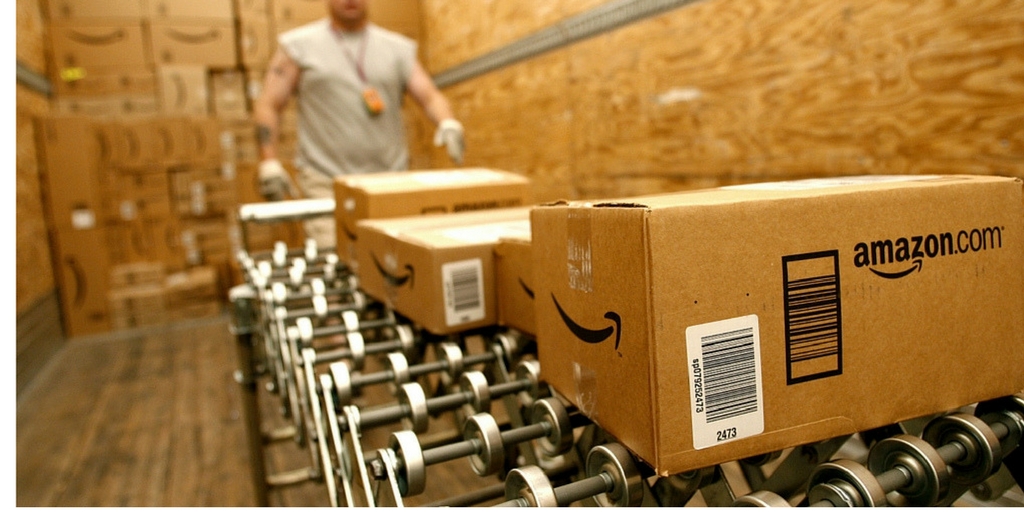
Cities that boast these characteristics will have the best chance at attracting the kind of companies that will shape the future of how we do business — e-commerce and beyond. These companies will employ and empower local talent. And not just highly skilled talent. I can’t help but think of this recent Wall Street Journal article about the impact that Amazon’s presence has had on Fall River, Massachusetts.
Such employment opportunities will attract new residents. New residents will boost the local economy. Strong local economies boost the health and well-being of the community. And the positive benefits snowball from there.
I’m speaking in generalizations here, but cities stand to gain quite a bit from considering Amazon’s HQ2 search criteria. Of course, there are plenty of negatives to making way for the Amazons of the world — the decline of Main Street being one of them. But if the digital world plays an increasingly important role in the ways we conduct business and commerce, isn’t there value in strategizing around it?
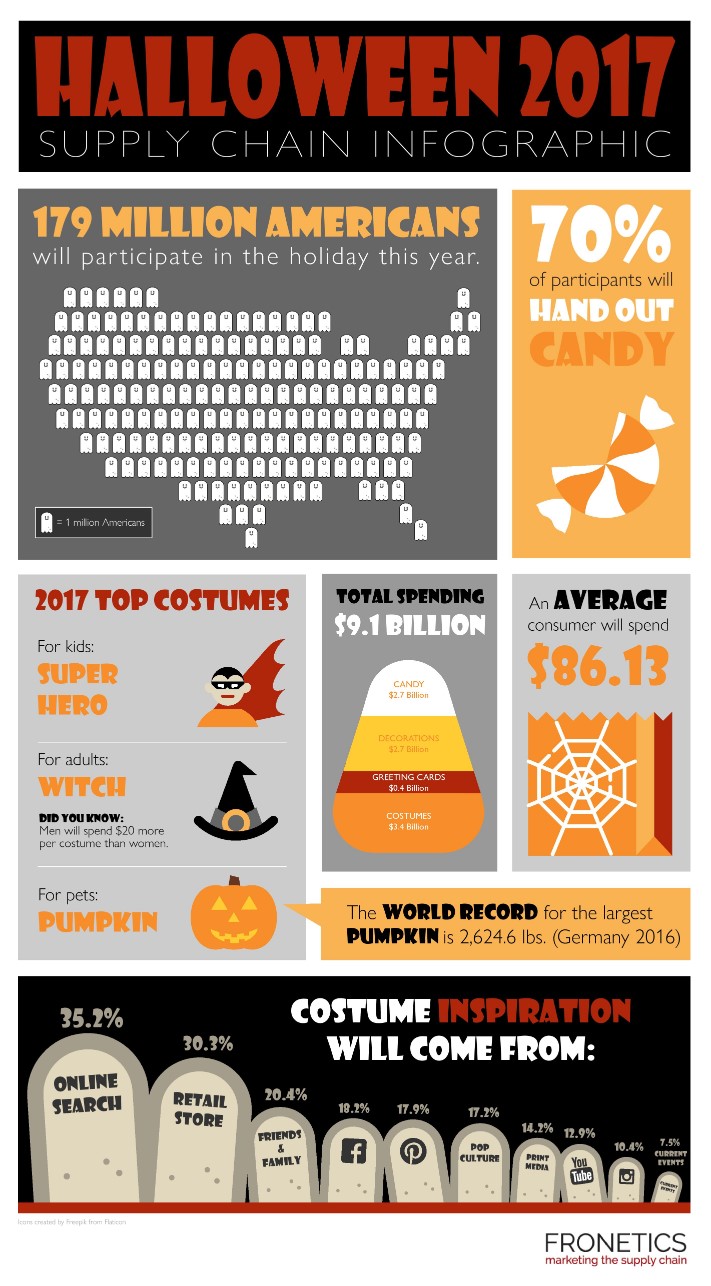
Consumers will spend a record $9.1 billion during Halloween 2017.
U.S. consumers will take to the retail markets Halloween 2017 and spend a whopping $9.1 billion on Halloween costumes, decorations, candy and more, making it the largest spending for the spooky holiday to date.
The National Retail Federation reports that consumers are preparing to be the baddest witches on the block, spending almost a billion more dollars this year on supplies than in 2016 ($8.4 billion). And the men are really stepping up their game, spending on average $20 more per costume than women.
“Americans are planning to spend more than ever as they gear up for Halloween,” NRF President and CEO Matthew Shay said. “Retailers are helping customers celebrate in style with a huge selection of costumes, candy and decorations to cater to ghosts and goblins of all ages.”
From 2017 blockbuster hits like Wonder Woman and Spiderman, it’s no wonder the most popular costumes for kids are superheroes. And let’s not forget about Fido — the most popular costume for pets for Halloween 2017 is a pumpkin.
Still need inspiration for the boo bash you’re attending? Try heading over to Instagram, a source of inspiration growing 12% year-over-year. Other consumers will get ideas from online search (35.2%), a retail store (30.3%), Facebook (18.2%), Pinterest (17.9%), and pop culture (17.2%).
Need more fun facts about Halloween to get you into the scary spirit? Check out this year’s infographic from the NRF’s survey.