In real estate sales, you want people to find your properties, like what they see, and ultimately be moved to purchase. In other words, you want to attract visitors, convert visitors to leads, and convert leads to deals. Innovative luxury real estate firms are finding ways to leverage digital tools to guide more buyers down that path to purchase.
Without a doubt, luxury real estate buyers are a diverse bunch. “One day I have to know all about feng shui, and the next I have to be able to talk to a pig farmer from Iowa,” says one luxury real estate sales executive. “I’m like a chameleon.” And luxury buyers are trending even more heterogeneous – both geographically and demographically. What’s more, they are more connected than ever before due to the proliferation of digital technologies that enable buyers and properties to connect with one another in new and different ways. It’s clear that technology is a strategic way for properties to get in front of more potential buyers; moreover, it creates competitive opportunities for luxury real estate firms that are prepared to adapt to this new landscape.
Many luxury real estate firms are already using digital and social media to carry the lifestyle brand they’ve built around their properties into the online world. With the use of inbound marketing – think of it as the intersection of valuable content, social media, and lead generation – they are creating new virtual “touch points” to connect with affluent, hyper-connected luxury buyers.
What we know about luxury buyers is that they are likely to do purchasing research online; they are influenced by peers and their interactions with websites, mobile apps, and social networks. We also know that 93 percent of all online experiences begin with a search engine, and that 75 percent of searchers don’t move past the first page of search results. Through publishing relevant, quality content, inbound marketing gives luxury real estate marketers the tools needed to make certain their properties are being found online.
According to Sprout Social’s Consumer Engagement Index, which ranks industries by which ones receive the most engagement from customers on social media, the real estate industry is second overall in terms of inbound engagement relative to audience size. But how exactly, are real estate firms using inbound marketing to sell luxury properties? The majority of real estate firms, through the use of social media and blogs, are seeking to draw visitors to a property’s website. Others are putting social media to use for functional purposes such as communicating real-time updates to potential buyers about project timelines or changes in sales office hours.
Of their recent inbound marketing efforts, the New York City-based Corcoran Real Estate Group says they have realized significant benefits. A spokesperson for the company says, “The main thing we’ve seen is that the quality of the referral traffic back into our main website has significantly improved. And not only are we seeing more traffic coming in, but visitors coming in from social media sites are staying longer and looking at more things — something we had also seen with search engines, but not in such large numbers.”
Corcoran isn’t alone in their use of emergent technology and social media strategy to ensure maximum exposure for their luxury properties. Long & Foster’s Luxury Homes e-magazine showcases luxury properties through an extensive online campaign targeting luxury clients. The online campaign drives traffic to the e-book and the website. Similarly, residential homebuilder Polygon Homes currently connects their available luxury properties to over 6,000 people through a multitude of social media platforms. The company’s social followers are linked to relevant articles, outside press coverage, and traditional marketing resources that serve to build on the lifestyle brand of each property.
Real estate firms are also recognizing value in blog content as way to attract visitors and nurture leads. For example, One Riverside Park, a newly-constructed New York City building with luxury condo units for sale, uses their blog to highlight not only their property, but also additional relevant information such as neighborhood amenities, seasonal local weather, and area restaurants.
Boston is experiencing a substantial upsurge in construction of high-end luxury residential units. The Boston Globe reports that “more than 8,000 luxury residential units are expected to be built in Boston during the next three years, doubling the supply of units built in large, luxury complexes since 1960.” And local real estate firms are using inbound marketing to sell those luxury units. Seventy percent of the luxury units at the 60-story Millennium Tower under construction in Boston’s Downtown Crossing neighborhood have been sold. Millennium Partners, the firm responsible for the marketing and sales of the luxury units, has embraced inbound marketing as part of their overall marketing strategy. The firm currently has over 13,500 likes from users on social media. Millennium Tower’s Facebook page not only shares construction progress, sales information, and related press coverage, but neighborhood amenities, industry trends, and an array of visual content that’s more often than not shared widely by followers.
Beyond increased prospect engagement and driving more traffic to their websites, other firms are using inbound marketing as a way to gauge market reception of traditional print marketing materials and the general perception of properties; knowing what resonates online through focus group-like participation is valuable information that marketers are finding bolster their offline marketing efforts. In that same vein, while real estate marketers are realizing value from creating and sharing content, they’re also recognizing the importance of analytics and measurement.
Real estate marketers are using inbound marketing metrics to determine what type of content is inspiring current customers and pulling in new leads. These firms are looking at how their online numbers compare daily, weekly, and monthly and planning content accordingly. Specifically, they’re monitoring measurements like page views, video views, document views, content downloads, and social conversations. They’re examining how sales are impacted by social media and digital content by tracking metrics such as referrals from Facebook, Twitter, Pinterest. Knowing all of these metrics allows for a more nimble real estate marketing strategy– one that’s able to rapidly adapt and engage potential buyers in real-time.
Inbound marketing is a new approach to an old strategy – one that’s putting real estate marketers in charge of the way potential buyers interact with their properties. These marketers are guiding prospects down the road of purchase through lead generation campaigns – capturing emails and other contact information through blog subscriptions and form completions for content downloads. They’re strengthening branding efforts for their properties by building robust online social communities and employing previously untapped sources of referrals. Real estate marketers who use inbound marketing are seeing their properties rank higher in search engine results pages, experiencing a steady increase in their website visitors, and increasing conversion rates of leads and sales. Taking into consideration the changing demographics and increased digital connectedness of luxury real estate buyers, firms that seek to broaden the reach of their marketing efforts through new and emergent technologies will aggressively position themselves as strong competitors in an increasingly competitive luxury property market.
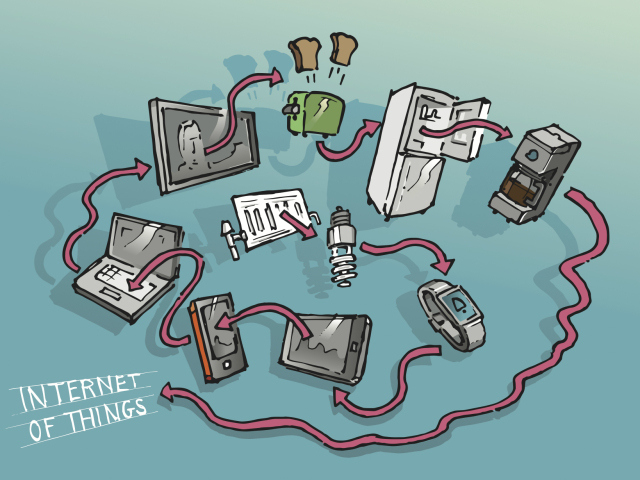
From coffee makers to urban design, the Internet of Things (IoT) is affecting change in virtually all aspects of daily life. And even though the IoT is still at the early-adopter stage, in just five years 50 billion devices are projected to be connected to the Internet, generating an estimated $2 trillion to $14 trillion in value. Expectations are running high, so high, in fact, that Gartnerranked IoT at the topof its 2014 Hype Cycle for Emerging Technologies.
Companies are naturally eager to get a piece of the action with as many as three out of four exploring how IoT technologies could fit into their business operations. Too many times, however, companies end up with mountains of data and no actionable information. Entry into the IoT should come with warnings: analyze the data or prepare to be disappointed. Or, data without analytics is nothing but noise.
But unless businessesturn the focus awayfrom pure data collection to data analysis, investments in IoT technologies are doomed to produce disappointing results. To be truly useful, the data should do more than “look pretty on a dashboard,” as Steven Sarracino, founder of Activant Capital Group, LLC, in Greenwich, Conn.,pointed out.
Vendors of sensor technologies would simultaneously be wise to take their services beyond singing the virtues of amassing data to showing their clients how to make sensor-driven decisions. In fact, the need formore guidancewas underscored in a fleet report by Tracking Automotive Technology: TU Automotive (previously Telematics Update). Vendors should, according to the report, present the data in a digestible format to assist overwhelmed end-users. While purely monitoring the performance of a forklift, for example, provides value, it is not until the data is analyzed and acted upon that maximum ROI is achieved. In the case of a forklift fleet, it might entail optimizing routes in the warehouse or performing preventive maintenance. As another example, the retail sector can apply analytics to data collected by security cameras and Wi-Fi beacons tohelp retailers understandwhat types of displays catch customers’ attention.
The adoption of IoT technologies will likelycome easier to industriessuch as manufacturing and supply chain which already connect machinery and fleets with Internet-enabled sensors or devices. Smart grid technologies also hold a lot of promise for public utilities based on current industry trends, connecting countless data points for continuous monitoring and proactive management of the power supply. However, until companies are able to adequately apply analytics to squeeze value out of their investments, it may be a while before IoT technologies reach critical mass.
Marketing that drives success and elevates brand position.
Fronetics Strategic Advisors is a management consulting firm. Since the company was founded we have worked with companies to identify and execute strategies for growth and value creation.We have advised and worked with companies on their most critical issues and opportunities: strategy, organization, talent acquisition, performance management, and M&A support.
In addition to the more traditional consulting services we offer, we have working with companies to create and execute marketing strategies that drive success and elevate their brand position within the industry. Unlike other firms, we are able to draw upon our business expertise and align marketing programs with business objectives and, through a data driven approach, are able to deliver results with a targeted ROI.
We work with clients to develop and implement effective digital and content marketing strategies and to create content including blog posts, articles, case studies, eBooks, and white papers. We also offer social media management.
The following are results realized by three of our clients:
Client A
Industry: Consulting
Timeframe: 21 months
Results:
Over the period of 21 months, Client A gained 6 customers and increased revenue by 93%
Traffic to the website increased by 11,045%. Traffic from all sources increased significantly; direct traffic and traffic driven by social media realized the greatest increase.
Source
% change
Social Media
82,900%
Direct Traffic
67,800%
Organic Search
9,380%
Email Marketing
5,900%
Referrals
1,030%
Total
11,045%
Client B
Industry: Real estate
Timeframe: 3 months
Results:
Over the period of 3 months, Client B. realized an 88% increase in inquiries and a 39% increase in home sales.
Traffic to the website increased by 248%. Traffic from social media and from referrals realized the greatest increases.
Source
% change
Social Media
894%
Direct Traffic
159%
Organic Search
157%
Referrals
360%
Total
248%
Client C
Industry: Foodservice
Timeframe: 11 months
Results:
The client has realized a visit to lead conversation rate equal to 50% above the industry average.
The client, per industry standards, realized a savings of 13% per lead.
Traffic to the website increased by 119%. Traffic generated by organic search and social media were the primary drivers of increased traffic.
Drew McElroy, founder of the start-up Transfix, is no newcomer to the trucking industry. McElroy was born into the business; his parents owned and operated the freight brokerage Andrew’s Express, affectionately naming it after McElroy.
“I remember listening to my father structure deals. As a kid, it was all utterly confusing to me,” recalls McElroy. “I finally started to get my head around the economics of the business in my teens. From that point on, I became increasingly aware of the industry’s inefficiencies.”
Not long after McElroy graduated college, his father passed away unexpectedly. McElroy, already working for the family business, took over as president. In that time, McElroy successfully increased annual revenues from $4 million to $12 million. While impressive, McElroy still struggled with how the industry traditionally operated. “It was clear that our family business wouldn’t be the platform for world domination,” laughs McElroy. “But I believed that, fundamentally, there was a better way to get things done.”
Determined to build a new foundation based on his belief in “a better way,” McElroy left the family business and set out for San Francisco. He would spend the next year and a half couch surfing and networking in order to gain the expert business and tech insight he needed to plan what would become Transfix. “I knew logistics and I knew trucking, but I knew nothing about venture capital, or how to move from idea to implementation,” says McElroy. “I decided I should try – and try big. If I fail, I fail, but at least I tried.”
In 2013, McElroy was introduced to Jonathan Salama. Salama was among Gilt’s early engineers, and was pivotal in building the flash sale giant’s infrastructure and inventory software. McElroy knew Salama would be key in taking his idea to the next level; Transfix had claimed its co-founders, and its recipe for industry-leading success.
Transfix is a fully automated marketplace that is all about getting things from one place to another. What sets Transfix apart is the company’s platform and approach is vastly more efficient than the traditional approach, and it is much more user-friendly.
Transfix takes the industry’s inefficiencies head on. Transfix is a digital on-demand freight marketplace. It provides industry-leading mobile technologies and location-based jobs offers for independent over-the-road truck drivers, as well as cloud-based management platforms for small carriers and shippers
Here’s how it works:
A customer logs into the Transfix TMS and enters a new shipment. The platform automatically identifies the best driver depending on location, size of truck, etc., sending a load offer alert to the driver or company dispatcher by mobile SMS message or email. The load is accepted by electronic signature, at which point the customer receives automatic notification and the driver becomes fully visible within the customer’s real-time dashboard. Load management from that point on becomes “as simple as Tinder.” Transfix geofences the driver with a five mile radius, immediately alerting Transfix of any issues. Once the load is delivered, the driver is paid within 24 to 48 hours, significantly faster than the industry standard.
Transfix just launched an app (iOS and Android) that is focused on truck drivers. Transfix’s app integrates with the company’s digital marketplace and is driver-centric. The app gives drivers the ability to manage loads, map their itinerary, and manage payments. The app also provides truck drivers with trip planning essentials including the location of showers, ATMs, weigh stations, fuel prices, and weather. The app is free and can be used by anyone with a valid motor carrier number – the driver does not have to associated with Transfix. “Developing this app and making it freely available to all drivers is just the right thing to do,” says McElroy. “Without drivers, this industry would not exist. We need to do right by drivers by making their lives easier.”
Things are moving fast for McElroy and Transfix. Within 15 minutes of updating his LinkedIn profile, McElroy got a call from a logistics Manager at Barnes & Noble and, before he hung up, had freight loads to manage. Fast forward a few months – with Transfix, Barnes & Noble has realized improvements in their processes and has seen their deadhead runs (times driving without cargo) cut by at least 50%.
Transfix has raised close to $2.5 million to date and is already generating several thousand a month in revenue.
McElroy and Transfix are poised for world domination – mind you, a win-win benevolent hegemony – a la Uber.
Fronetics Strategic Advisors is a leading management consulting firm. Our firm works with companies to identify and execute strategies for growth and value creation.
Whether it is a wholesale food distributor seeking guidance on how to define and execute corporate strategy; a telematics firm needing high quality content on a consistent basis; a real estate firm looking for a marketing partner; or a supply chain firm in need of interim management, our clients rely on Fronetics to help them navigate through critical junctures, meet their toughest challenges, and take advantage of opportunities. We deliver high-impact results.
This article is part of a series of articles written by MBA students and graduates from the University of New Hampshire Peter T. Paul College of Business and Economics.
Melanie Payeur graduated from the University of New Hampshire in 2007 with a degree in Mechanical Engineering. She has since worked in various roles supporting manufacturing and packaging operations in the food and beverage industry.
Do you know where your byproducts go?
Manufacturing often produces some sort of physical byproduct. Examples range from plastic strapping on a pallet of corrugate boxes to carbon dioxide collected off a tank of fermenting beer. Byproducts are the unspoken of and often neglected “cousin” of manufacturing.
Byproducts of manufacturing can be compared to the stage crew at a Broadway show or on a Hollywood movie set. They serve an important purpose. Without the lights, cameras, and curtains, there is no show. Similarly, without plastic strapping, a pallet of corrugate would fall over during transport because it wasn’t properly secured.
The stars of the show are the finished goods on store shelves. Just like people don’t stick around to see the name of the on-set hair-stylist when the credits roll at a movie, consumers often don’t think about the byproducts associated with the packaged food they eat or other goods they purchase. It’s possible that they don’t even know these things exist.
However, consumers are becoming more conscious of supply chain issues. Many have an awareness what Fair Trade is in association with sourcing of products such as coffee and cocoa beans. They discuss agricultural sourcing and the ethical (or not) treatment of animals raised to be part of the food chain. Even the effects of emissions and chemical waste on the environment are among topics of which many consumers have some awareness.
Plastic old, Plastic new
What about the plastic strapping on that pallet of corrugate though? Where does it go? Who even knows it exists other than the operator that cuts it off the pallet in the factory? Could it become a plastic bottle someday? Or a swing set? Maybe it will become plastic strapping again?
While countless other types of byproducts exist, plastic is a particularly interesting example. Fluctuations in the price of petroleum are directly correlated to the price of brand new, non- recycled plastic pellets. It is completely possible, and often realistic, that it is less expensive to create brand new plastic strapping than it is to recycle old strapping.
Trailer Bags and Trash Bowls
Creative and novel uses of byproducts are happening today. One example is a Swiss company called Freitag who produces trendy messenger bags, wallets, and purses from old side panel tarps (popular on tractor trailers in Europe). At the end of their useful life on the road, these tarps are purchased by Freitag and sewn into functional accessories.
Another example specifically related to plastic are Garbage Bowls made famous by Food Network host, Rachael Ray. These bowls are made from recycled pieces of broken plates. There’s a byproduct in there somewhere!
While these are great examples of repurposing byproducts into something new, the truth is that Freitag was originally looking for a material that would create a durable and functional product. Lucky for them, reusing something that might have otherwise been thrown away is a great marketing story. They charge an average of $200 for a standard messenger bag. Is it realistic that the reverse situation can create profits? Can we find another use for production process byproducts which would create a trendy or otherwise highly desirable product?
Can we do better than throwing our byproducts away?
If it’s not a company’s core competency, it probably shouldn’t get into the business of designing handbags. However, as supply chain professionals, we should understand all of the byproducts of our manufacturing process; especially those related to materials that we source as inputs, like plastic strapping.
It is as important to look at the waste stream from our process as it is to examine how we source raw materials. Are we recycling our byproducts? Is there someone who is looking for our ‘trash’ as an input to their process? Do we have the opportunity to have a profitable side business as a coincidental supplier to someone else? At the very least, can we do better than throwing our byproducts away?
An example of success can be seen in the food manufacturing industry. Some companies donate or sell their byproducts to the Bakery Feeds Program. This organization creates animal feed out of food byproducts such as misshapen cupcakes and other edible process waste. It might be cost neutral to dispose of waste in this way, but that is better than otherwise paying for disposal.
I challenge you to examine the waste streams associated with your process. Identify where at least one of your byproducts could go. From here to there and there to here, your byproducts could end up anywhere.
This article is part of a series of articles written by MBA students and graduates from the University of New Hampshire Peter T. Paul College of Business and Economics.
Ben Minerd received his B.S. in Computer Engineering from the University of New Hampshire in 2011 and will be completing his MBA from UNH in May 2015. When not working as a systems engineer, Ben enjoys skiing, hiking, and flying drones.
Some of you technologically curious readers may be familiar with Moore’s Law which predicted that the number of transistors in a dense integrated circuit would double every two years. What all that nerd speak (as a nerd I can use that phrase) boils down to is that the processing capability of electronic chips is increasing at a crazy rate. Like, scary fast.
On the flip side, electronics are really cheap these days. Yes, the $10,000 Apple Watch might be a tad pricey, but I’m talking about the industry as a whole. You can buy a computer that fits in your pocket for $200 that is many hundreds, maybe thousands, of times more powerful than my first computer and I’m one of those whiny millennial youngsters.
How can consumer electronics companies afford to sell their scary fast devices this cheaply? One reason is that the devices are being made by other devices (cue ominous music), as automation and electronics manufacturing are natural complements of each other. But another big factor in the cheap tech equation is the ever-increasing separation of technology development from technology manufacturing.
Contract Manufacturing
Big name companies like Apple, Google, Microsoft, and Amazon are doing less and less of their own widget building these days in favor of contract manufacturing (or CM). Contract manufacturing is essentially the outsourcing of your products’ fabrication and assembly to some other company (who is hopefully better at it than you are).
In theory, using a contract manufacturer should lower your costs and give you access to capabilities that you wouldn’t have access to otherwise. This is especially true of small businesses looking to produce physical goods (versus intangibles like software), where the up-front cost of building your own factory is immense and maybe even a non-starter. Or maybe you’re a big tech company who isn’t good at making hardware (ahem, Google) and you want to stick to your core competencies.
Whatever your reason, contract manufacturing is the unicorn that will slash your costs with its rainbow laser beam eyes. Well, maybe not entirely.
Hidden Costs
To loosely paraphrase Pee-wee Herman, every decision we make in business has a big ‘but’. For the economist reader, you can equate this with TANSTAAFL—There Ain’t No Such Thing As A Free Lunch. One action almost always leads to some other potentially unexpected outcome. Certain people have even gone so far as to say this is always the case (some guy named Isaac Newton).
One of the biggest contributors to hidden costs within contract manufacturing is the loss of control over your production processes. While this might be obvious or even desired, there may be some complications as a result of this new relationship that you hadn’t thought of previously.
Communication is always an important topic, but even more so when it comes to contract manufacturing. Not only may your production team physically reside on the other side of the globe, but things like language, culture, and time zone differences can make it difficult to keep good lines of communication open.
Quickly ramping up or ramping down production to meet changing demand can become a lot more challenging, too. This is partly due to the nature of the shared resources that you are buying access to when you team up with a CM.
A classic example of a culmination of these issues came from Cicso in the early 2000’s, back when out-sourcing was in its infancy. Cisco had been riding the surging wave of growth in the telecommunications industry which starting leading to supplier shortages. Shortly thereafter, the bottom fell out of telecom and Cisco forgot to turn off the contract manufacturing tap. Before long, Cisco’s raw-parts inventory rose by more than 300% from Q3 to Q4 2000, leading to a $2.2 billion write-off of inventory. Wall Street responded as you might expect, causing Cisco’s stock to fall by 50%.
The Human Cost
Perhaps the greatest hidden cost is one that may never make it to your company’s balance sheet: exploitation of workers in the developing countries where many contract manufacturers do business. It’s no secret that the biggest driver behind outsourcing is low labor costs. While it’s not always apples-to-apples to compare a production worker’s wage in China to one in the U.S., by any measurement the difference is more than a factor of 10 (although that number is dropping).
This dirty little secret of the consumer electronics industry came to light in 2012 when it was discovered that Foxconn, the largest electronics CM with over $100 billion in revenue and manufacturer of the Apple iPad, was mistreating some of their workers. Conditions grew so bad that in some cases workers decided to jump to their death rather than survive in that environment.
Bottom Line
Contract manufacturing might very well still be the right choice for you, just keep in mind that you may have more “unknown unknowns” than you had, well, known about. The more you can discuss with your CM candidate up front, the better your relationship will likely be. Also, some of these “gotcha’s” can be planned for in the agreement between you and your CM, so don’t skimp on the up-front work. And remember, there is no unicorn with rainbow laser beam eyes. That I know of.