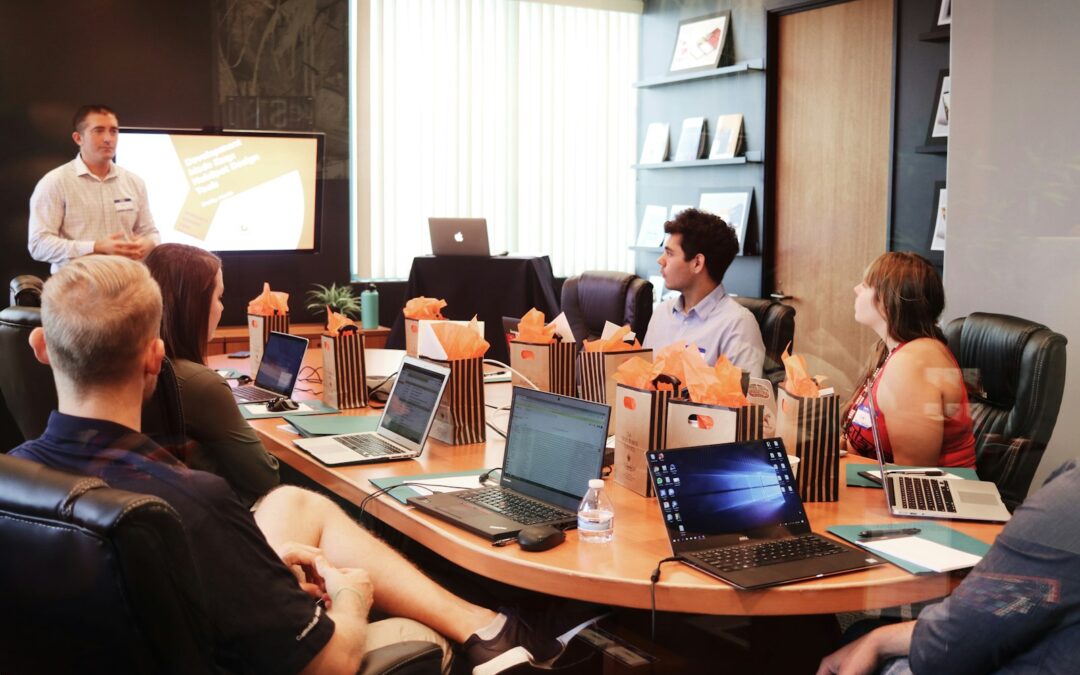
For most vendors, the supply chain software demo is the moment of truth. Marketing works for months to earn it, sales prepares for it, and the product finally gets to speak for itself. So it’s frustrating when demo numbers look healthy on a dashboard but very few turn into deals.
The problem usually isn’t the product. It’s what happens before and after the demo: who books it, what they expect, and how the conversation continues afterward. Here’s how supply chain tech companies can book more of the right demos and convert more of them. (It’s one of the most common problems we help solve in our marketing for supply chain software companies.)
Quick summary
- More demos isn’t the goal. More qualified demos is.
- Buyers want to self-educate first, so your site needs to answer questions before the demo, not save everything for it.
- Tailored demos built around the prospect’s workflows convert far better than generic tours.
- Most deals are won or lost in the follow-up, when the champion has to sell internally.
Why don’t supply chain software demos convert?
The most common reasons we see:
- Unqualified bookings. Students, competitors, and companies far outside the ideal customer profile fill the calendar.
- Mismatched expectations. The prospect wanted pricing or a quick answer, and got a 60-minute product tour.
- Generic demos. Showing every feature instead of the two or three workflows that matter to this operation.
- One attendee. The champion loves it, but finance, IT, and operations leadership never see it.
- Weak follow-up. No materials to help the champion build an internal business case.
How do B2B buyers want to evaluate software today?
Buyers increasingly want to do their homework on their own. A Gartner survey of 646 B2B buyers, published in March 2026, found 67% prefer a rep-free buying experience, and 45% used AI during a recent purchase.
For supply chain software, that means your website, content, and AI search presence need to answer the questions buyers used to save for the first call: who the product is for, how it works, what it integrates with, how long implementation takes, and roughly what it costs.
How do you book more qualified demos?
Target the right accounts
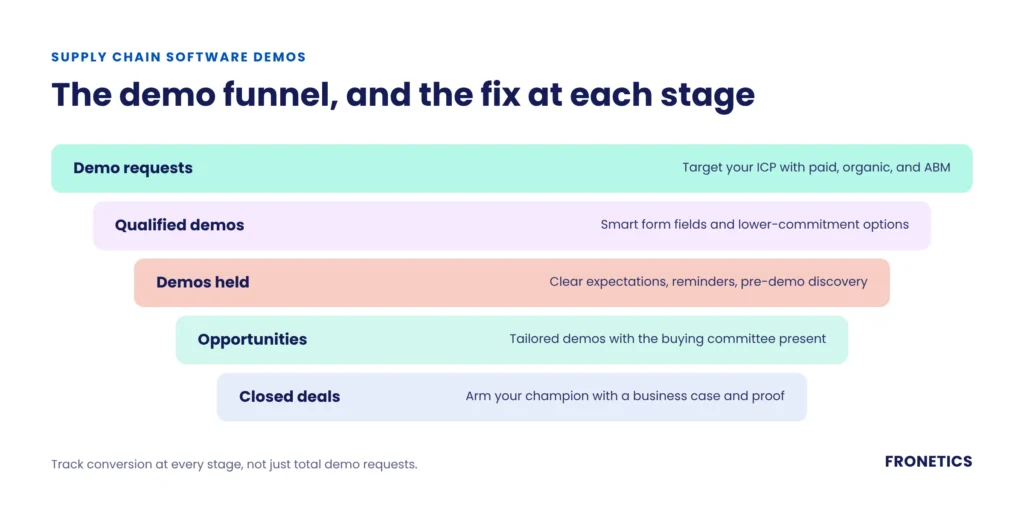
Paid and organic programs should be aimed at your ideal customer profile, not just anyone searching “WMS.” Tighter paid ad targeting and account-based campaigns focus spend on companies that can actually buy.
Offer more than one next step
Not everyone is ready for a live demo. Add lower-commitment options: a recorded product walkthrough, an interactive product tour, a pricing guide, or an ROI calculator. Prospects who engage with these and then book a demo tend to be better qualified.
Qualify on the form, gently
Ask for company size, operation type, or current system. Two or three smart fields help route leads and prepare a tailored demo without scaring buyers away.
Answer the obvious questions publicly
Integration pages, implementation timelines, security documentation, and pricing guidance (even ranges) filter out poor fits and build confidence with good ones.
How do you turn demos into deals?
Run discovery before the demo
A short discovery call or questionnaire lets your team show the prospect’s own workflows, using their terminology and, ideally, sample data that looks like their operation.
Get the buying committee in the room
Supply chain software decisions involve operations, IT, finance, and often site leadership. Encourage champions to invite them, or offer role-specific follow-up sessions.
Arm your champion
After the demo, send materials the champion can forward: a recap of what they saw, a business case template, relevant case studies, an integration overview, and security documentation.
Keep nurturing
Software decisions often take months. Ongoing content, relevant case studies, and timely check-ins keep momentum going without pestering.
Supply chain software demo metrics to track
| Metric | What it tells you |
|---|---|
| Demo request rate by source | Which channels bring buyers ready to talk |
| Percent of requests that match your ICP | Whether targeting is working |
| Show rate | Whether scheduling, reminders, and expectations are clear |
| Demo-to-opportunity rate | Whether demos are relevant and well qualified |
| Opportunity-to-close rate and cycle length | How well follow-up supports the buying committee |
From demo to deal
Booking more demos is easy. Booking the right ones and turning them into revenue takes alignment across targeting, website content, the demo itself, and follow-up. Supply chain software companies that treat the demo as one step in a well-designed journey, not the whole journey, close more deals in less time.
Want help building a demo engine that drives real pipeline? See how we help supply chain software companies grow.
FAQ
How can supply chain software companies get more demo requests?
Target your ideal customer profile with paid, organic, and account-based programs, answer key questions on your website, and offer lower-commitment options like recorded walkthroughs, interactive tours, and ROI calculators that lead to demo requests.
Why do software demos fail to convert?
Common causes include unqualified bookings, mismatched expectations, generic feature tours, missing stakeholders, and weak follow-up that leaves the champion without materials to build an internal business case.
Should supply chain software companies publish pricing?
Publishing pricing or pricing ranges often improves demo quality by filtering out poor fits and building trust. If exact pricing isn’t possible, a pricing guide that explains the factors and typical ranges is a good alternative.
What metrics should I track for software demos?
Track demo requests by source, the share of requests that match your ideal customer profile, show rate, demo-to-opportunity rate, and opportunity-to-close rate and sales cycle length.
Related reading