by Jennifer Hart Yim | Jun 12, 2019 | Blog, Marketing, Marketing Automation, Social Media
Automation can make your social media marketing more efficient and effective, allowing you more time to develop and execute other marketing campaigns. Here are 11 social media marketing mistakes to avoid.
Social media automation is quite a controversial marketing topic. The critics cry, “Social media is supposed to be social!” The supporters retort, “It’s all about efficiency!” Surely, there’s a middle ground, right? Just look at those adorable little robot eyes. Automation can’t be all bad, right?
We certainly agree. Social media automation can be done right. Just avoid the following 11 awful social media automation mistakes, and you’ll be good to go.
11 Awful Social Media Automation Mistakes Marketers Should Stop Making
1. You’re Scared of It.
Are you one of those social media automation critics we mentioned in the intro? Stop being such a fraidy cat … you’re missing out! When done right, automation can make your social media marketing more efficient and effective, allowing you more time to develop and execute other marketing campaigns and promotions. We’ve even developed a simple, customizable social media scheduling template and blog post guide to help you organize and plan your social media updates for the most popular social networks. Just avoid the rest of the mistakes on this list, and you’re golden. Guilty social automation conscience begone!
2. You’re Using Way Too Much of It.
Remember: too much of anything is usually bad, and the overuse of social media automation is usually what makes the automation critics cringe the most. First, you need to find the right balance of updates for each of the social networks you’re participating in. This involves testing and optimization to determine your ideal publishing frequency, and it usually involves pushing the limit a little bit. Try increasing the number of updates you currently publish and gauge your fans’/followers’ reactions. You might be surprised that you can update more than you thought and that you get a nice little lead bumps as a bonus!
Remember, the half-life ( the time it takes a link to receive half the clicks it will ever receive after it’s reached its peak) of a link shared on Twitter is only 2.8 hours, which means it’s acceptable to publish fairly frequently. On Facebook, updates last a little bit longer, so you don’t need to publish quite as much. Our social media publishing template recommends starting with 8 tweets a day, 4 Facebook updates, and 3 LinkedIn updates. Which leads us to our next mistake …
3. You Leave No Room for Ad Hoc Updates.
Don’t automate so much content in social media that you’re really pushing it if something last minute pops up that you really want to post an update about on your social networks. Things come up. You’re behind on your leads goal and you just created an awesome new ebook that you want to promote via social? You shouldn’t feel guilty about popping in a tweet or two about it in addition to your scheduled, automated updates. Or maybe you did some awesome newsjacking and you want your fans and followers to know about it right away. Don’t overdo it with the scheduled updates that you have to sacrifice those last-minute opportunities that arise.
4. You’re Setting it and Forgetting It.
Schedule and automate your social media updates and there’s no reason to check your social media accounts until the next batch of updates needs to be uploaded to HootSuite, right? WRONG. Do this, and you should be subjected to the wrath of social media automation critics. Just because you’re automating some updates, doesn’t mean you’re off the hook for monitoring the conversation — and participating in it. You still need to monitor the discussion happening around your content, answering your fans’ and followers’ questions, and, that’s right … engaging. In real time, or close to it. And with all the social media monitoring tools available to make it easier to do, there’s no excuse not to.
5. You’re Hiring an Agency to Manage It and Not Properly Setting Expectations.
Let’s relive the story of a former HubSpot employee who fell victim to some very unfortunate, poorly executed social media automation. What happened was, AT&T hired a marketing agency to execute its Ticket Chasers Twitter campaign for March Madness. The intent of the campaign was to target people who would be interested in the content of the program with personalized tweets: bloggers (who would get the word out about Ticket Chasers), people who live in the cities in which the Ticket Chasers promotion is occurring, and people who mention basketball or March Madness. Except what ended up happening was the agency targeting people that fit these criteria even if they weren’t followers of AT&T — and a very spammy Twitter presence.
The lesson is this: If you’re going to outsource any type of automation, make sure you set some very clear and specific expectations with your agency up front — both for what constitutes proper targeting and automation, and how frequently the campaign should be monitored so there could be a quick response if something goes awry.
6. Your Scheduled Updates Even SOUND Robotic.
Just because you’re scheduling automated updates doesn’t mean it has to sound like a robot wrote the copy. Spend some time carefully crafting your social media updates, and for goodness’ sake, infuse some personality into them! It should sound like a human took the time to craft the update because a human did take the time to create them, right?
7. Your Content Is Stale or Unremarkable.
Nothing indicates a low-quality social media presence like unremarkable content. Whether you’re manually updating your social networks or using automation to make your social media marketing more efficient, it’s all about the content of your updates. Share awesome content that your audience cares about, and they won’t mind that you may have scheduled it in advance. If you’re using HubSpot’s free social media scheduling template, keep your content repository tab stocked with a mix of awesome evergreen content that never gets stale and can be re-promoted over time, as well as new content and offers you create over time.
8. Your Timing Is Way Off.
Just scheduling updates all willy nilly without strategizing about timing? Think about it. Should that online coupon you’re sharing really get tweeted on the 12th when it expires on the 11th? Probably not. Be careful — nothing smells like stinky automation more than careless planning and timing. Should that offer, which just so happens to be targeted at your international prospects in Mumbai, be posted to your Facebook business page at 5 PM ET? Remember, it’s 2:30 AM in Mumbai. Be sure you’re scheduling your updates for times that make sense for your audience, and don’t be afraid to do some testing and experimentation to determine exactly what that optimal timing is.
9. You Treat Scheduled Updates the Same Way on All Social Networks.
Not all social networks are the same, so don’t treat your updates like they’re one-size-fits-all. Each has its own guidelines, tone, and different types of users, so make sure you tailor your updates to appeal to each social network’s nuances. For example, your Twitter updates need to fit within 280 characters, but snippets that accompany links you share on LinkedIn and Facebook can be much longer. And LinkedIn caters to a much more professional audience than, say, Facebook. And remember, you can reuse a lot of the same content across social networks; it’s how you frame and position that content that should be tweaked.
10. You’re Not Measuring Results and Adjusting Accordingly.
Trying to pick your best content for your automated updates? Attempting to determine the optimal timing and frequency of your updates for each social network? You’re probably going to need to rely on your analytics for all those things, don’t you think? Make use of your marketing analytics to identify the content and offers that tend to perform well in social media so you can promote more of the types of content that work, and nix the types that don’t. Track your leads and referral traffic from social media, coupled with qualitative data on how your fans/followers react to timing and frequency, so you can optimize those techniques as well.
11. You’re Not Adding Sharing Links to Your Content.
That’s right — think of it as social media automation enablement. Adding social media sharing links/buttons to all your content, whether it’s a web/landing page, blog post, within an ebook, in an email, makes it easy for your audience to spread your content for you, and expand your reach. It’s sort of like automating evangelism! It might sound sneaky, but your audience will probably appreciate that you’ve done some of the work involved in sharing content for them. People are always looking for social sharing fodder, and if your content is awesome, it’ll make them look like a valuable social media connection who shares great stuff!
Are you making effective use of social media automation? What else would you add to this list of social automation mistakes?
This article was written by Pamela Vaughan. Pamela is a Principal Marketing Manager, Website CRO & Copywriting at HubSpot. She is best known for introducing the concept of historical optimization, which increased organic search traffic and leads for HubSpot’s blog by more than 200%.
Related posts:


by Elizabeth Hines | May 13, 2019 | Blog, Content Marketing, Marketing, Social Media, Supply Chain
Instagram Stories offer an on-trend platform for delivering targeted content to B2B buyers, and we’re joining the fun.
We’ve written extensively about the benefits of using Instagram as a part of your social media strategy. And, though we’ve been active on Instagram for over two years, we’re now taking on Instagram Stories.
Instagram Stories are sequences of content that a user (or business) posts to Instagram over a 24-hour period. Besides photos, Stories can include videos, live and prerecorded. The content plays as a continuous feed, creating a narrative about the user’s day — hence the term “Stories.”
Audiences can view the Stories of the users they follow within the 24-hour window after they are posted. They can find users with active Stories by scrolling the user icons at the top of the app. Or users can tell their followers that they’ve posted a story by tagging them, which notifies them through a direct message.
Fronetics’ Stories will be a fun mix of breaking news, highlights of upcoming events, and live video on the latest industry trends. Ideas for Stories you’d like to see us cover? Email me at [email protected].
Related posts:
by Elizabeth Hines | May 9, 2019 | Blog, Content Marketing, Logistics, Manufacturing & Distribution, Marketing, Supply Chain
Putting your audience’s informational needs first when publishing blog content is the only way to guarantee success in the modern marketing landscape.
Highlights:
- Audiences are increasingly ignoring promotional messaging.
- Buyers are seeking value from vendors outside the sales funnel.
- Information is your best asset — publish what you know.
The latest industry research from the Content Marketing Institute indicates that nearly all (90%) of the most successful B2B content marketers have one thing in common: they prioritize their audience’s informational needs over their sales/promotional message. And that’s compared with only 56% of the least successful B2B content marketers.
Materials-handling marketers should take note when making decisions about publishing blog content. We see companies in this sector making this mistake all the time. They want to fill their blogs with information about their products. But to achieve success in today’s B2B purchasing landscape, you need to be prioritizing your audience’s needs over promotional messaging.
Sales pitches get ignored
A large reason for shifting focus is because audiences are increasingly tuning out sales pitches. This generation of buyers has been heavily marketed to their entire lives, and they don’t hesitate to swipe left at the slightest hint of someone trying to sell them something.
Think for a moment about your own personal experiences with email, social media, and even phone calls. The truth is, most of us tune out overt sales pitches, either hitting delete or scrolling past them. We’ve moved beyond a time when marketing is about pushing your products.
Your blog, therefore, should not be another channel for selling. But, what kinds of information should you publish?
Provide value by putting customer needs first
The answer is actually quite simple. What information or expertise do your buyers want? Your most valuable commodity is your unique understanding of the challenges your audience faces. If you begin publishing blog content that answers their questions, they’ll be more likely to find you, remember you, and become your customer.
As you think about publishing blog content, take a step back and think about the questions your buyers ask, either of you, on social media, or elsewhere. Examine industry publications to determine the challenges faced by your target buyer persona.
Does your content answer those questions? Does it offer value in and of itself? And does it inform your audience about how you are there to help them? If the answer to these questions is yes, then you’re taking the right steps toward materials-handling marketing with today’s B2B buyers.
Related posts:
by Elizabeth Hines | Apr 17, 2019 | Blog, Marketing, Marketing Automation
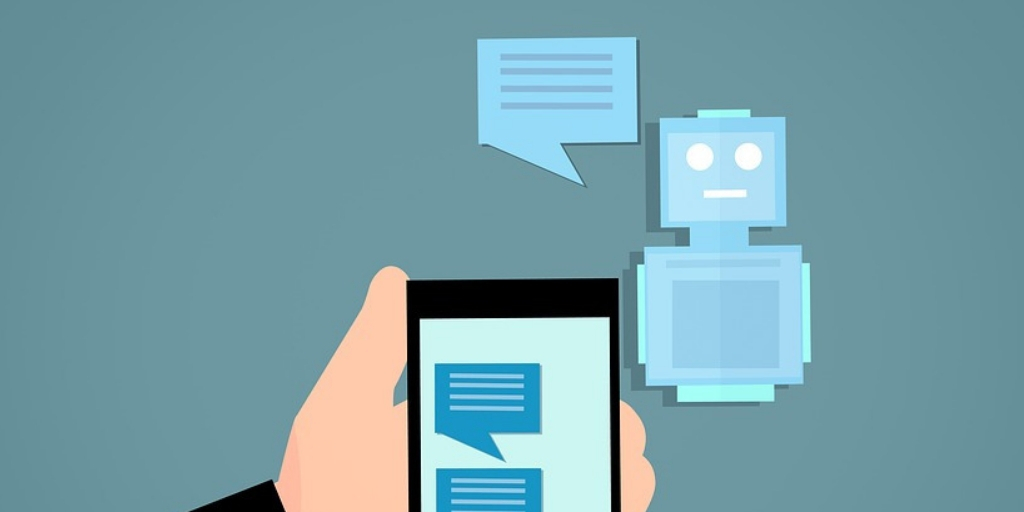
Chatbots are a must-have lead generation and customer service tool for supply chain businesses in 2019.
The newest generation of B2B buyers is increasingly dominating the two-way conversation between marketers and buyers. They prefer to gather purchasing information on their own — overwhelmingly via online searches, vendor websites, and peers and colleagues — rather than talking to sales representatives. They are unsubscribing from marketing emails at alarming rates, citing over-communication as the number-one reason why. And they are using messaging platforms to speak directly with brands when they have questions or problems.
At the same time, buyers are demanding more personalized communications, faster response times, and an improved, cohesive user experience on all of a vendor’s digital channels.
All these factors are driving the growing popularity of chatbots as a lead generation and customer service tool. But, at Fronetics, we think it’s time to stop viewing them as a trendy communication mechanism and more as a necessary part of a supply chain operation’s marketing strategy.
Chatbot applications for the supply chain
I’ve written before about the impressive implications that automation has for supply chain marketing & sales efforts. (HubSpot reports that businesses using marketing automation receive a 451% increase in qualified leads.) At Fronetics, we’re seeing chatbots as one of the most successful and easy-to-implement marketing automation tools in the current marketplace.
Chatbots are relatively inexpensive, inherently low-maintenance, and surprisingly user-friendly — to both the buyers interacting with them and the vendors setting them up. They help website visitors find the information they need quickly, while gathering user data that is useful in marketing and sales efforts, all without taxing human resources. In fact, Chatbots Life reports that businesses can save up to 30% of costs associated with servicing customer requests by using a chatbot.
Millennials, in particular, appreciate the quick, easy, and unobtrusive communication option that chatbots offer. And, as we all know, this generation comprises an increasing percentage of the B2B purchasing landscape. In a crowded marketplace, vendors that offer a pleasing user experience will have the competitive edge when it comes to winning business and growing a base of loyal customers.
A real-life example
We are recommending chatbots to clients because we have seen firsthand how effective they can be. I’ll give you an example from our own experience at Fronetics.
We recently implemented a chatbot on our website that we synced with my calendar, allowing users to schedule a time to speak with me about our services. I am not exaggerating when I say that within 24 hours, we had a lead come through the bot. I spoke with that lead at the time he scheduled, the next morning, and delivered a proposal to him the next day.
Chatbots are here — in a big way. If you’re not using one, your competitors certainly are (or will be soon). Having a chat mechanism on your website will soon be the difference between winning more business and missing out… if it’s not already.
This post originally appeared on EBN Online.
Related posts:
by Elizabeth Hines | Apr 3, 2019 | Blog, Content Marketing, Manufacturing & Distribution, Marketing, Supply Chain
Here’s why manufacturing marketers should skip the sales pitch and create content that prioritizes the needs of their target audience.
Highlights:
- Research indicates that only about half of manufacturing marketers are prioritizing their audience’s needs when creating content.
- Inbound marketing (like content marketing) is more effective than outbound marketing for B2B businesses.
- A documented strategy will help you get started creating focused, quality content.
One statistic is sticking out to me in the Content Marketing Institute’s Manufacturing Content Marketing 2019: Benchmarks, Budgets, and Trends report. According to the research, half (51%) of manufacturing marketers reported that they always or frequently prioritize their sales/promotional message over their audience’s informational needs when creating content for content marketing purposes.
Let’s think about that for a second.
A preponderance of manufacturing content marketers are, unfortunately, missing the point.
We’ve written before about why inbound marketing, like content marketing, is more effective for the supply chain than more traditional outbound marketing techniques. And while it’s true that “the supply chain is increasingly seeing the value of moving to an inbound marketing strategy,” the CMI’s research suggests that it’s taking some marketers a long time.
Why you should be putting your audience’s informational needs first
Why should you be emphasizing your audience’s informational needs over your promotional goals when creating content?
The short answer is: because your audience prefers it. One of the basic premises of content marketing is the recognition that, increasingly, your customers want much more from you than your product. For manufacturing marketers, this means that customers want value separate from and outside of the sales funnel.
Enter content marketing. Creating effective marketing content relies on accepting that your business has much more to offer than its primary products and services. In fact, your most valuable commodity, as we’ve often said before, isn’t any material or service — it’s the knowledge, expertise, and informed, unique perspectives you have to offer.
Strategize to put customers first
To successfully adjust your content marketing efforts to put your customers’ informational needs first, the first step is having a well-defined, measurable strategy — and documenting it. This means defining precisely who you’re trying to reach and developing a complete target buyer persona(s).
Once you’ve defined exactly who you’re trying to reach, it’s time to identify the unique questions, needs, and challenges this target buyer faces. Chances are, your business has not only the products to meet those needs, but also the information to answer question and offer valuable insights.
One of the benefits of a documented strategy, with clearly stated objectives, is that it allows you to set up metrics and evaluate your successes and shortfalls. This is where you can start listening to your target buyers. You can even solicit responses from them via email and social media that will allow you to target and hone your efforts in the future.
Meeting manufacturing marketers’ challenges
The CMI’s research reinforces the fact that manufacturing marketers face unique challenges. The top reported challenge was “creating content that appeals to multi-level roles within the target audience.”
According to Achinta Mitra, founder of Tiecas, an industrial marketing consultancy, “Buying decisions are made by a committee and very rarely, if ever, by an individual. Some of these stakeholders may never interact with your content or visit your site.”
Essentially, there are various types of buyers with various needs — meaning their content needs are different. Mitra advises bringing “subject matter experts to the forefront, and letting marketing do the heavy lifting in the background.” He bases his advice on the belief that “one engineer to another is a powerful concept for earning trust, gaining credibility, and winning the mindshare of engineers and industrial professionals.”
If you’re thinking beyond downloads when creating content, and truly prioritizing quality information, your content will function broadly throughout the complex manufacturing buyer’s journey.
Related posts: