by Jennifer Hart Yim | Jun 11, 2015 | Blog, Content Marketing, Marketing
This is a guest post written by Thijs Messelaar. Thijs has more than 15 years’ experience writing, developing content, and informing marketing strategy for various clients, including high tech, higher education, and highly-rated restaurants.
The best content marketing feels like a great story.
In fact, in many ways content marketing gets the most results because it IS a great story. It captures your imagination. It challenges you. It asks for your trust. And, if it’s truly tops, the payoff is big.
In order to get results from your content, a solid content marketing strategy must be in place. No doubt about it. Simply just creating incredible content and walking away from it probably isn’t going to get you what you want.
Key Content Marketing Channels
Content marketing requires a careful scientific approach in order to get results. Content needs to be curated, cajoled, packaged, posted, pruned, repurposed, prettified, shared, shorn, shifted, pushed out, and run up the flagpole.
To get results from your content, your content will have to be created for and/or distributed through key marketing channels like these:
- Your website assets
- Blog
- Landing pages
- Case studies
- Team (clout)
- Accolades and awards
- Resources
- Videos
- Surveys and quizzes
- Infographics
- E-books
- White papers
- Email
- SEO (onsite)/SEM (AdWords)
- Apps
- Social media (organic)
- Retargeted ads (web and social media)
- Social media ads, promoted posts, offers
- Webinars, trainings, and mini-courses
- Podcasts (audio and video)
You need to organize and optimize your sales pipeline by identifying your goals, audience, and your content marketing channels. And like a good scientist, you’ll have to analyze your results and revise your approach, over and again and again.
Examining all aspects of your content marketing strategy – creation, distribution, engagement – on your content marketing ROI is essential.
The Magic of Content Marketing
But without producing the most interesting, the most useful, the most delicious writing, design and ideas to place in these various channels, your content marketing will be dead in the water.
Great content marketing moves you to do something new and unfamiliar. Or it makes you understand something familiar in a new way. And like a really good story, you want to share good content with everyone. It’s affirming (or reaffirming) and engaging and makes you feel its magic. The magic of content marketing that gets results may be found in the sense of clear authority it imparts.
But the magic of a great story is something intangible. It comes from a true place within you (your soul, let’s say) – and connects with your audience (their souls).
But much of the best content marketing is built on novel, engaging, social, physical, and emotional experiences – not solely on rote data analysis.
Douglas Van Praet advances this relatively controversial take on current marketing practices. “We need to generate smiles, tears, or goose bumps—not significant differences correlated at the 95% confidence interval! These are the things that […] data tabulations will never capture, but they are also the things that make us buy brands,” he writes.
Likewise, these key content marketing attributes are also the essential characteristics of our most favorite and enduring stories.
If yours is merely content created for the sake of just churning more content – that is, if you don’t care much for what you’re writing about – your audience won’t care much either. It will curdle the moment they consume it.
Without moving your audience emotionally, you won’t have excited them intellectually, you won’t have made them care about you or gained their valuable (and venerable) trust. And surely your audience won’t hold your story “near-and-dear” to their hearts in a way that compels them to retell it to everyone and anyone who will listen.
The overall result? Well, poor results from your content marketing and ultimately a weakening of your brand’s standing.
Start your content creation from the soul by being yourself and talking about what you love. You’ll make connections and grow your audience just as the best storytellers have always done.
In the end, you’ll succeed with content marketing in ways you never might have imagined possible – and feel good doing it.
That in itself will be a story worth telling.
by Elizabeth Hines | Jun 4, 2015 | Blog, Marketing, Social Media, Strategy
When thinking about where to focus your company’s social media presence, look at the numbers. LinkedIn generates 80% of B2B social media leads, more than Facebook, Twitter, and Google+ combined. A 2013 study conducted by Demo and CEO.com shared that “LinkedIn remains the one social media platform that is actually more popular with CEOs than the general public.” Why are company higher-ups turning to LinkedIn, the top professional social media platform?
LinkedIn currently has more than 350 million users, from over 200 countries and territories, and sees 2 new members added each second. A good amount of people, 40%, check LinkedIn daily. With these impressive numbers and LinkedIn’s goal of reaching 3 billion users, a company profile is bound to get traffic, especially if the company is utilizing the publishing format to share ideas and situate itself as a leading voice in the industry.
Your own employees, current and former, most likely have their own LinkedIn profile. They list their education, and of course, their work history. If your company does not have a LinkedIn page, there will be no logo to click on, no link, no exposure for you, and perhaps a loss of credibility. In today’s tech-savvy world, being engaged in social media platforms has come to be the norm for individuals and companies. People spend 1.72 hours on social media a day; let them find you easily during that time.
Leads:
With LinkedIn being the top social media site to generate leads, why not highlight your company there? Unlike Facebook, you have the ability to see who is looking at your company’s profile, and now, with LinkedIn’s newest analytics service, users can see who has been viewing their posts. Users can also see how many people liked and shared a post, and see more detail into demographics such as viewers’ industry, location, and job titles. By understanding who is looking at your company’s page or posts, you can see which demographic you’re reaching, and which you’re missing. You can reach out to those who show repeated interest and try to find ways to tailor future content to attract the people you’re not reaching.
Credibility:
Let your former and current clients and partners advertise your expertise for you. With the “recommendations” and “endorsements” features others can help build your level of trust with potential leads.
Coaches, consultants and recruiters also comb through LinkedIn looking for company matches for their clients. According to Executive Coach and Consultant, Stephenie Girard, “I rely on companies to use LinkedIn to increase their credibility, attract quality talent and expose their product or professional services. When organizations utilize LinkedIn in full capacity we gain access to the company’s values, culture, people and products – all of which are crucial pieces to the puzzle when matching a potential employee to employer.”
Connections:
Finding leads directly might be on your mind, but finding other business people and businesses that you can follow, monitor, learn from, and partner with, can also be incredibly valuable and may, in the end, bring you some leads and great business allies.
Once you have the connections made on LinkedIn, stay in touch with your old and new connections, clients, and customers. Many companies use LinkedIn as another platform to share press releases, white papers, videos, and product announcements.
According to Business Insider article LinkedIn May Not Be the Coolest Social Network, but It’s Only Becoming More Valuable to Businesses, “LinkedIn has the advantage of being the place for white-collar professionals to network, meaning its population is highly desirable since it is a high-income and highly educated user base.” Is LinkedIn right for you? If you’re looking for intelligent professionals, perhaps it is.

by Elizabeth Hines | Apr 13, 2015 | Blog
Increasingly we demand transparency, and in the workplace there are pros and some cons.
In today’s interconnected, digital world people are able to access more information than ever, and we’re using more data, too. By next year, 2016, it is estimated that there will be 3.4 billion internet users and “1.2 million minutes of video, or the equivalent of more than two years worth, will be consumed every second.”
Why will videos be at the forefront of data streams and downloads? In addition to television and films’ migration to the internet, increasingly, people want a medium that provides a fuller picture. More and more, people want to learn and view the whole truth. This coincides with a push for transparency in politics, nutritional labeling, big bank bonuses, and data collection, to name a few.
People are also accustomed to immediate information access. You can track a flight in real-time, review medical records, pay bills, “see” a friend half way around the world, all with a few clicks of the keyboard. You can also do substantive and thorough research that had, in the past, been impossible without a library card and many hours to spare. Additionally, the rise of social media provides an outlet for those who want to share more about themselves, or gain immediate information about others.
Demand and Access in the Workplace
How are these two things: demand and access, changing the workplace? Companies, leaders, and employees are being asked to reveal information about themselves more and more. Trends in society impact business. People don’t want leaders who distance themselves and seal off information. They want leaders who are, increasingly, transparent. In a Forbes article about transparent leadership, Glenn Llopis writes, “besides the need for job security and career advancement opportunities – employees want to be a part of a workplace culture that puts a premium on delivering the truth. They desire their leaders to be proactive in sharing where the company is headed and forthright about its future.”
The hunger for transparency extends to all areas of the workplace. More than ever, employees are being monitored, open floor plans are peppering office spaces, and companies are sharing detailed financial information. However, as referenced in a Wall Street Journal article, there are drawbacks to this seemingly utopian clarity: “more transparency isn’t necessarily better. Rather, smarter transparency is better. If leaders can adopt a transparency strategy that strikes a balance between openness and privacy, that tears some walls down while leaving others in place, they are more likely to get the results they want.”
Here are some potential benefits of transparency in the workplace:
Smarter transparency is important, as there can be negative sides to complete transparency. Here are some ways in which transparency is coming to the workplace, for better or worse:
Social Media
People can often view each other’s profiles, both professional and personal. Social networking can be a way for people to package themselves, advertise, and find opportunities. However, if not properly used and monitored, social media can be detrimental. People have been fired from their jobs and some companies have deeply embarrassed themselves and alienated customers.
Employee Monitoring
Monitoring employees can increase safety, comprehension of policies, and productivity. It can also provide a system to acknowledge employees’ strengths and accomplishments that might otherwise go unnoticed. Employee monitoring can also provide feedback on errors and help save money by addressing employees who are utilizing work hours to do personal business. On the downside, employees can sometimes feel uncomfortable or resentful about being monitored. UPS workers are some of the most monitored employees out there, which brings many benefits to the company and often to the drivers, however, according to one driver, “it does feel like big brother.”
Open-Book Management
Traditionally only a few people are aware of the detailed finances of a company. Some companies are now sharing all finances so that all employees can feel like one of the “players”. According to a Harvard Business Review article, Share your Financials to Engage Employees, by being a player employees can know the rules and feel invested. With transparency, such as sharing all salaries, honest and difficult conversations will happen and, “tough conversations, over the long-term, are a good thing.”
Open Office Layout
For decades open-office layouts, where employees work side by side, have been popular. According to a New Yorker article on the open-office concept, it was originally conceived to “facilitate communication and idea flow.” The idea of employees being siloed behind closed doors seems counterintuitive when thinking of transparency. However, as modern and forward-thinking as the open-office layout seems, this trend has its faults. Many employees experience decreased productivity, and only engage with people sitting right near them. Studies have also shown that health decreases when more employees are seated together. Noise can be the largest issue of all. According to one employee who works in an open seating environment, “Headphones have replaced cubicles,” he said. “I wear them to let people know I’m busy. “
Increasingly we demand transparency, and in the workplace there are pros and some cons. Being smart about the transparency we’re seeking and providing is important, as we must remember that above all transparency comes with accountability.
by Elizabeth Hines | Apr 9, 2015 | Blog, Leadership, Strategy, Supply Chain
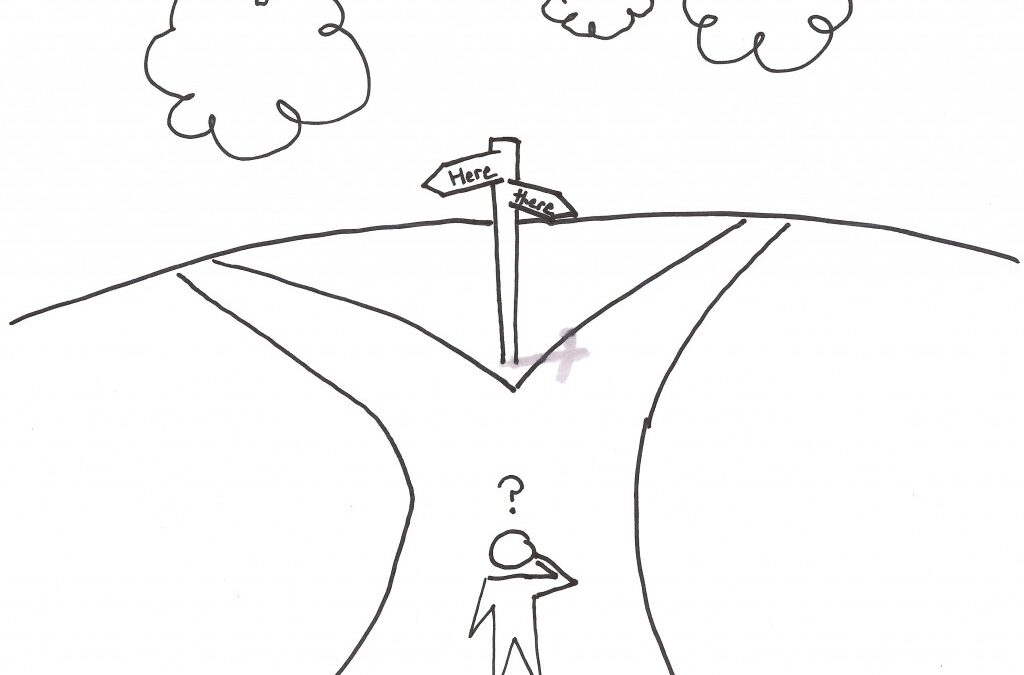
Change management is the process of taking an individual or a group of people from a current state to a more desired state. Its recent prevalence, and often necessity, is heavily due to new technology and globalization. As humans we experience change constantly, on micro and macro levels. Today alone, around 350,000 babies will be born and 150,000 people will die. Gas prices might have dropped recently or your favorite flavor of potato chips might be discontinued. Stock prices rise and fall by the second. Nearly everything changes, yet the word change is often scary or stressful, especially when applied to the workplace.
Alan L. Milliken wrote in his article The Importance of Change Management in the Supply Chain that the key components of a successful business are process, technology, and people. He terms this the “Triad of Operational Excellence.” How is this “triad” involved in change management?
Process:
Sometimes process is the reason for implementing change. Are the processes in the supply chain preventing timely order fulfillment? Can the current process ensure proper, safe, and secure delivery? Are current processes compliant with regulations, nimble enough to weather unexpected change, efficient and modern enough to match innovative competitors? These are all good points to assess. When implementing change is it critical to understand a company’s current capabilities, what needs to be changed, and whether the current systems and finances can support change.
Technology:
Often change management can be spurred by a need for technological growth. If the end-to-end supply chain has antiquated practices, and one member of the chain is transitioning to modern technology, the rest of the players involved may feel the need to change despite being resistant to new technologies or feeling overwhelming by the cost and steps required to transition.
Some companies with decades or a century of business behind them, may be nervous about shifting to a social media driven, on-demand paradigm. There are many benefits to modernizing, and seeing the long-term view of how technology and media can assist business is critical. One company that has made changes to the way they present their business is the packaging supply company, Laddawn. Overhauling their website and providing customers with new purchasing capabilities has put them at the forefront amongst competitors. According to CEO, Ladd Lavallee, “It’s difficult for manufacturers to invest in service, or service technologies, because production can easily consume our time and money. But we need to make our customers’ lives easier if we want to keep winning their business in a shrinking world.”
People:
If leaders aren’t on board with a change management process their frustration or hesitation can seep into others’ mindsets. Studies have shown that emotional contagion occurs in society, and in business. People who cultivate a positive mind-set perform better in the face of challenge. When Bert’s Bee’s was rapidly growing on the global market, then-CEO, John Replogle, worked positive emotional contagion into his workplace, realizing, “Leaders, by virtue of their authority, exert a disproportionate impact on the mood of those they supervise.” He saw this change as an opportunity for people to grow as the company was growing.
In a sweeping meta-analysis of 225 academic studies, Sonja Lyubomirsky, Laura King, and Ed Diener found that happy employees have, on average, 31% higher productivity; their sales are 37% higher; their creativity is three times higher. According to executive coach and business consultant, Sara Regan, of Common Focus Consulting, thoughtful leadership during change is critical to success and employee satisfaction, “The biggest mistake I see leaders make is that they are too late in bringing others into the process. It usually creates more work in the end since it heightens anxiety and resistance then making the leader push harder instead of listen. The way in which leaders approach change impacts the end results but also the ongoing trust and engagement of the team.”
Certainly there are times when change is not necessary in a company, but when it is, aligning the process, technology, and people are key to reaching a new, more successful and desired state.

by Elizabeth Hines | Apr 7, 2015 | Blog, Leadership, Strategy
There are times when change is good. There are also times when change is bad for business.
The phrase “If it ain’t broke, don’t fix it” is often attributed to Thomas Bertram Lance, businessman and Director of the Office of Management and Budget under President Jimmy Carter. He was quoted in the May 1977 issue of the magazine Nation’s Business, though the sentiment feels as old as human existence. If something is working, and has always worked, then why change it? There are many adages along the same lines: leave well enough alone, never change a running system, don’t change a winning team.
True, humans are always evolving, but we also like consistency and stability. In his book Handbook of Contemporary Economics, Morris Altman wrote, “Without some stability over at least the short term, it is hard to conceive of humans engaging in sustained goal-oriented activity.” Change, adaptability, and flexibility, especially in business culture and lore, have turned from buzzwords to commandments. There are some things, though, that don’t require change. Assess whether change is necessary, rather than assuming it is because it’s socially and commercially popular. Ask:
- Are there assessment tools in place to monitor the business’s success?
- Are customers reporting satisfaction?
- Do your goods match customer needs?
- Do you understand the current market and your place amongst competitors?
- Are profits growing?
- Are overall finances sound?
- Are things running efficiently?
- Are current practices meeting regulations?
- Do you have the right people to meet your objectives?
- Are employees engaged, trained, and developing?
If the answer to these questions is yes, then why change? According to Harvard Business Review change could alienate your base, confuse people, damage your brand, and lose you money. Cadbury and its parent company, Kraft, are experiencing intense backlash due to a change in the Cadbury Creme Egg recipe. People are protesting, writing letters, posting negative comments online, and accusing the company of “ruining Easter.” We’ve seen this before. According to TIME’s article on the top 10 bad beverage ideas, “April 23, 1985, stands as one of the most significant dates in business history — the date the 99-year-old Coca-Cola company announced it was scrapping its original soda formula for a newer, sweeter version.” This change brought with it over 40,000 letters of protest, not to mention the bad press. Within three months the original soda formula, Coca-Cola “classic”, was back and met with an incredibly positive reception.
Some companies opt for a subtler approach to change by expanding its traditional offering. Instead of changing the successful product line for women, Dove expanded into the male market, creating Dove Men+Care, while still adhering to their public image and mission of creating personal care products that support natural health and realistic beauty.
The Harvard Business Review lists Brooks Brothers as a company that successfully found new opportunities without changing its values, “Instead of simply sticking to selling classic clothing, and waiting for outside catalysts (such as the popularity of the fashion in the television show Mad Men) to increase its popularity, the chain innovated around the edges by offering more fashionable accessories — shoes, belts, bags and the like — while leaving its core basically unchanged.” Capitalizing on this opportunity did not drive customers away because Brooks Brothers’ base products remained.
Remember that change has a cost. Are your consumers willing to pay the cost, especially if they didn’t require the change in the first place? Will your partners in the supply chain be willing to do business with you if the change you implement doesn’t suit them or benefit them? Think about some of the elements, for example, of a brand change:
- Content
- Communication
- Collateral
- Contacts
Things such as graphic design, business cards, letterhead, social media, advertising, re-launch, etc. all require real time and money. You must assess if your change will reap real, solid benefits. You don’t want to expend the effort, time, and money to change if you don’t have to, especially if it requires reversing the change or worse, killing your business.