by Elizabeth Hines | May 6, 2015 | Blog, Leadership, Marketing, Social Media, Strategy
There’s a great deal of buzz about social media in the business world – and for good reason. Marketing and communications professionals have made it de rigueur to tap into the popularity of social media networks to extend their brands into the digital world. But when it comes to executive use of social media, the field seems much more divided. Domo and CEO.com estimated that of the 500 leaders of the biggest companies in the US, 68% have no social media presence whatsoever. By leaving the social media management to marketers, these leaders are missing opportunities to connect with followers and expand their influence.
Here’s why social media should be part of the game plan when it comes to matters of leadership.
Social media expands perspective.
Social media isn’t simply a mechanism for broadcasting company news or personal opinion. Many individual perspectives coalesce to create a social network. Asking questions of followers and participating in online discussions helps leaders gain new perspectives. Executives who do utilize social media tend to stick to LinkedIn at a rate greater than the general public, but increasing social participation beyond one network brings more heterogeneous insight and connects leaders to diverse groups.
Social media allows you to keep a finger on the pulse of industry trends and new research.
Participating digitally with like-minded professionals ties a leader into a broad network of resource-sharing. Having consistent access to relevant, curated articles about market and industry trends keeps leaders far ahead of peers who rely on just a few media outlets.
Social media connects your team.
Online social business tool Basecamp promises to help “wrangle people with different roles, responsibilities, and objectives toward to common goal.” Hosted in the cloud, Basecamp is a project management tool that helps managers and employees see exactly what’s happening with a given project. Its dashboard provides a snapshot of tasks and gives users – managers and employees – an opportunity to interact directly on the site. In addition to the real-time accountability it builds in, it also allows for real-time communication about projects, a concept that all but eliminates the need for private emails.
Social media inspires and motivates.
Hadyn Shaughnessy writes about top social media influencers in his contributing posts on Forbes.com. He believes stellar leadership is built firmly on relationships and that day-to-day operations of a business rely on a leader’s ability to connect, inspire, and mobilize employees. Leveraging social media is one way leaders are achieving that. But, he contends, passive consumers of social media – regardless of the number of followers – cannot be considered top influencers. Leaders who inspire are those who actively participate.
Social media builds relationships.
Among executives active on social media, the top benefit of maintaining “socialbility” is the direct access it provides to employees, media outlets, and the public. “Relationship building is one of the strongest skills sets related to leadership effectiveness,” says Jean Leslie, a researcher at the Center for Creative Leadership. Tying into social media networks allows leaders to establish connections with employees, building individual and collaborative relationships.
Leaders who embrace social media technologies are more agile and innovative; their companies are more likely to attract and retain top talent; and they tap more deeply into the ideas of their employees. It’s clear that there is value in social media, and for leaders looking to build the strongest brand for their company, it might not be just an option anymore.

by Elizabeth Hines | May 4, 2015 | Blog, Marketing, Social Media, Talent
Here’s why your employees should use social media.
“Come here Mr. Watson, I want to see you.” Those were the words yelled by Alexander Graham Bell over the world’s first telephone connection. Bell had no way of knowing that a little more than fifty years later there would be more than 30 million telephones in use. To be sure, the telephone served as one of the greatest tools of business communication for over a century, but we are now in the midst of a new kind of technological revolution – one that puts social media directly in the spotlight.
The proliferation of social media has spilled into every facet of our daily lives, and the business implications are complex and far-reaching. Even though 74% of online adults are reported to use social media, a study commissioned by Robert Half Technology found that about half of companies block employees from using social media websites at work. Interestingly, 92% of companies indicated social media as a priority in a 2014 study by Social Media Examiner. With most companies managing all social media at the corporate level for functions like marketing and communications, businesses are missing an opportunity to empower employees to be strong brand advocates while making them more productive, more satisfied, and more connected. That’s why businesses should consider extending social media participation beyond their marketing departments.
Social media transforms communication into content, and vice versa. While email still remains a primary vehicle for the transmission of ideas and information for many workplaces, its very nature inhibits collaboration – it’s ideally used as a tool for private two-way communication. On the other hand, social tools capture ideas and conversations of employees and create a public database of employee-generated content. Openly sharing this content, which was previously hidden behind the privacy of email, fosters inclusion and creates a culture of connectedness.
Responding to a fundamental shift in buyer behavior, sales and marketing professionals are increasingly turning to social media to drive growth. No longer are buyers responding to interruption-based sales tactics; instead, they’re listening to online conversations, engaging with peers, and performing their own research to find solutions to their problems. Companies have taken note and in doing so have transformed the way buyers and sellers now connect. Underscoring the importance for companies to adapt to this new way of connecting to potential customers is HubSpot’s finding that 73% of sales professionals using social media outperformed their colleagues who were not on social media networking sites.
While social media has transformed marketing and sales functions, it’s rewritten the rules for human resource functions. Hiring managers now have public access to a wealth of professional and personal information about potential job candidates, making recruitment efforts more comprehensive than ever. Likewise, candidates are increasingly placing more value on soft compensation like social policies and work flexibility when considering employment offers. The parameters of work and personal life are becoming more and more blurred, and employees are finding companies that embrace their use of digital technology most attractive. Companies with rigid tech policies stand to lose out on top talent.
Social media is proving equally as powerful as a tool for employee retention. Employers that choose to ban social media risk alienating Millennials, a group for which oscillating between real life and the digital world comes naturally. Staying connected is so important to this group that a 2011 study by McCann Worldgroup found that 53% would give up their sense of smell rather than their phone or laptop. Considering the increasing number of businesses actively seeking to attract and retain employees from this generation, finding a way to incorporate and leverage social media would likely prove a much better strategy than blocking access altogether.
Businesses that permit – and even encourage – employee use of social media are able to innovate quicker by monitoring and engaging in the online conversations of customers and potential buyers. With over 58% of the entire U.S. adult population on social media, you can be sure there are conversations happening about brands whether or not they choose to participate in social media. Beyond just monitoring what’s being said about a company or brand, active participation in social media allows for nimble adjustments to marketing messages and potential new product development.
Of course, in order to derive value from employee participation on networks of social media, employers must thoughtfully consider the implications of providing access and set clear expectations for employees about its use (or misuse). Rather than arbitrarily opening access to social media, Cheryl Connor, business communications expert and author of Beyond PR: Communicate like a Champ in the Digital Age, recommends managers take a more thoughtful, structured approach. She suggests managers talk through the concept of open access to social media with employees. Knowing how employees feel about social media makes it easier to accommodate their needs. It’s true that unregulated workplace access to social media won’t work for every business or every employee, but companies that manage to find a way to integrate social media into functions where it makes sense will create value and drive profitable action.

by Elizabeth Hines | Mar 12, 2015 | Blog, Marketing, Social Media
Integrate digital and social media practices into trade show routines to increase leads to drive profitable customer action.
The world became enchanted by the Koh-i-Noor diamond in 1851 when Queen Victoria opened the Great Exhibition at the Crystal Palace in London. This first of its kind exhibition, sometimes called the world’s fair, served as a platform for countries around the globe to display their innovations and achievements. Throughout the late 19th and 20th centuries, these exhibitions routinely drew millions of people and connected the world in a way that hadn’t been done before.
While exhibitions continue into the present day, some critics argue that they are becoming irrelevant as a result of globalization and increasing interconnectedness. Proponents, however, are actively working to ensure modern day exhibitions reflect the changing nature in the way humans communicate and connect with one another.
In a similar way, modern trade shows serve the purpose of connecting industries and showcasing the best of a company’s product or service offerings. Indeed, trade shows remain a staple of many marketing budgets and practices. Offering unparalleled access to leads and face to face communication with prospects and customers, trade shows prove to be a successful marketing strategy for many companies. But is your company making the most of trade shows? Companies that integrate modern digital communication practices into tired trade show routines are likely to increase lead to customer conversion rates while shortening lead and sales cycles.
Promote enhanced and continued engagement with trade show contacts by formulating your trade show social media strategy using the following approaches.
In the weeks leading up to the trade show your company is scheduled to attend, publish Facebook, Twitter, and LinkedIn posts promoting your attendance and providing pertinent information to attendees. Set up a landing page with an accompanying call to action on your website where visitors can download a brochure or RSVP to speak with you at the show. Review the list of trade show attendees and perform prospect research using social media. In the days before the event, draft relevant and timely marketing and lead nurturing email templates to be sent during and after the show. Connect with high value prospect attendees on LinkedIn to arrange a time to meet up at the event. Use the trade show’s Twitter hashtag to tease display materials and connect with other attendees.
During the show, use social media to keep the conversation going with customers and prospects. Continue your use of the show’s hashtag to monitor conversions on social media and see what’s being said about your company. Connect with LinkedIn users you meet. Post pictures of your booth on Facebook and Twitter and videos of product demonstrations or customer testimonials on Youtube. Schedule and send the lead nurturing email templates you prepared weeks ago. Make note of recurring questions from attendees and industry trends being discussed.
Following the show, prepare your company’s blog editorial calendar for the next few months using your notes on customer questions and industry trends as a guide for developing post topics. Make event presentation or speaking materials part of your lead nurturing activities by sharing them with prospects using Slideshare and automated emails. Segment contacts for enhanced communication. Continue engagement with leads through Twitter, Facebook, and LinkedIn.
Much like the way world exhibitions are being pressured to evolve in order to provide continued value to citizens of the world, trade shows should be viewed by companies as opportunities to leverage new technologies to grow prospecting opportunities and build alternative lead nurturing channels. Continuing engagement with customers and prospects through digital and social media enhances the nature of prospect follow up and customer communication, extending the value of the trade show far beyond location-specific activities.
![The Girl Scout Cookie Supply Chain [Infographic]](https://fronetics.com/wp-content/uploads/2024/10/Girl-Scout-Cookie-Supply-Chain-810x675.jpg)
by Elizabeth Hines | Jan 15, 2015 | Blog, Marketing, Supply Chain

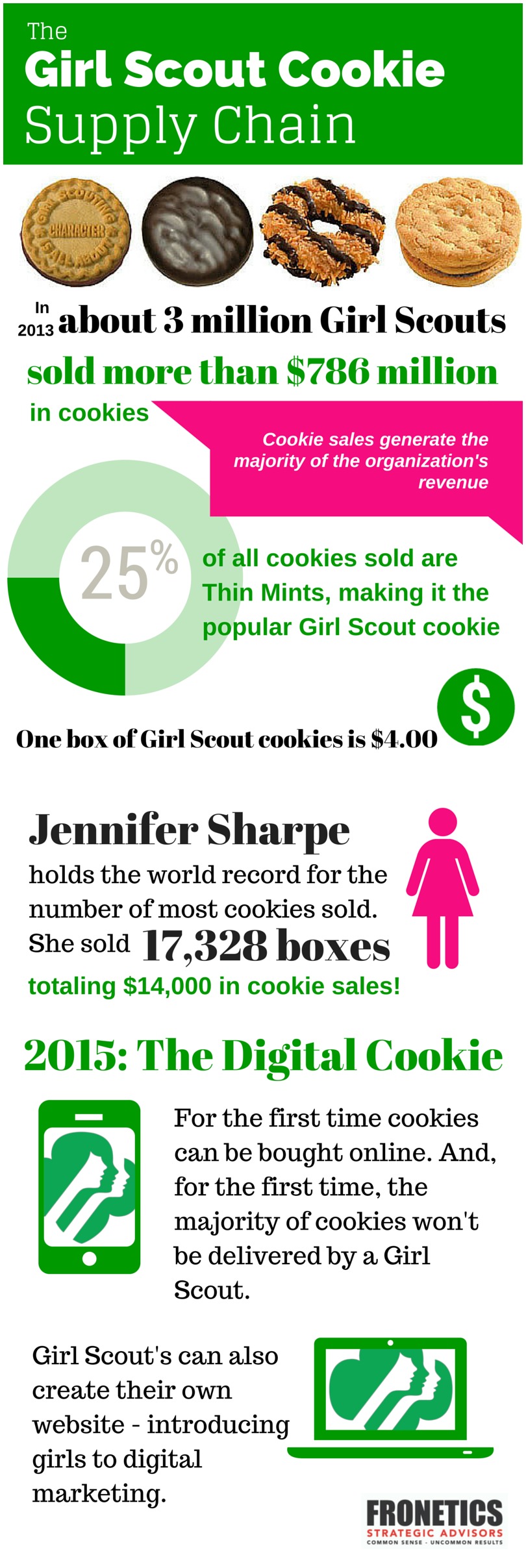
In 2015 The Girl Scouts launched the “Digital Cookie.” How will this impact the Girl Scout Cookie Supply Chain?
When the Girl Scouts of America began selling their now ubiquitous cookies way back in 1917, their operations were simple: cookies were baked in the ovens of troop members and sold in a high school cafeteria. On a mission to raise enough funds to cover the activities of their Muskogee, Oklahoma-based troop, these first cookie salesgirls unknowingly set the stage for a century-long operation that now includes over 2.8 million Girl Scouts and tops $700 million annually.
Throughout the program’s history, the Girl Scouts have made significant changes to the way they do business. To understand the evolution of their supply chain you have to look not only at the physical growth of the program, but the societal factors that have shaped their manufacturing, distribution, marketing and sales functions throughout the years.
From the cookie program’s modest beginnings in the late 1910s through the 1920s, operations were kept small and simple. Cars weren’t yet pervasive in American cities and towns, and door-to-door sales and delivery of goods were the norm. As such, each local troop of Girl Scouts baked, packaged, and priced their own cookies and then combined marketing and sales functions by going door to door. The 1930s saw the Girl Scouts professionalize their manufacturing operations by partnering with and licensing their first commercial bakery – a move concurrent with the rise of automated and commercial bakeries across the United States.
During World War II, flour, sugar, and butter shortages caused a brief stoppage of Girl Scout cookie production. In the post-war boom though, the Girl Scouts were back in the cookie business, setting up shop outside the shopping malls that had sprung up in the suburbs.
As membership rapidly grew, cookie flavors were narrowed to four types in order to standardize their product for greater manufacturing efficiency. Meanwhile, advancements within the packaging industry proved to be a boon for the marketing and sales of Girl Scout cookies as it brought extension to the shelf-life of their products. The most dramatic shift in operations came in 1978. By that time, the number of commercial bakeries involved in the manufacture of GirlScout cookies had swelled to an unmanageable amount. That year officials made the decision to limit operations to only four bakeries, showing a commitment from the organization to uniform quality, packaging, and distribution (a practice even further evidenced today by their licensing of only two bakeries).
From the 1950s through 2014 the sales and marketing strategy of Girl Scout cookies has remained almost unchanged. Each year, between January and April, thousands of girls and their parents have sold cookies by going door-to-door or by hawking their wares outside local supermarkets.
In 2015, in a move that has significant implications for their supply chain, the Girl Scouts have unveiled a new strategy that is directly influenced by yet another societal shift. “Digital Cookie” enables Girl Scouts to market and sell cookies online.
With Digital Cookie, girls are able to create personalized cookie websites and invite customers to visit their website via an email invitation. Digital Cookie also allows girls to take in-person cookie orders (at a local cookie booth for example) via mobile app.
Additional features of Digital Cookie include: campaign advertising, inventory tracking, and shipping management.
Kelly Parisi, Girl Scouts of the USA chief communications executive, points out that these changes are essential in terms of building leadership skills: “It is all about the girls and building future business leaders. They are learning about e-marketing, managing money and additionally creating their first websites.”
The Digital Cookie will have a significant impact on the organization’s supply chain. Not the least of which is that this year, for the first time, the majority of customers will have cookies delivered directly to them – the option of having a Girl Scout deliver the cookies is only available in select markets.
Hungry? Connect with your local Girl Scout or Girl Scout Troop, or try the free mobile Cookie Finder app for your iPhone or Android phone.
by Elizabeth Hines | Sep 10, 2014 | Blog, Data/Analytics, Marketing, Strategy
Metrics matter. Metrics allow you to measure success, drive strategy, and demonstrate the ROI of your marketing efforts. Conversions are one of the most important metrics to monitor.
Why conversion rates matter
What is a conversion? A conversion means action. It means that someone took some action that entered them into your funnel or moved them further down your funnel. Examples of conversions are: downloading a white paper, filling out a form, requesting information, opening an email, and becoming a customer.
By monitoring and tracking conversions you can determine what marketing efforts are paying off. Additionally, by monitoring and tracking conversions you can identify which efforts need to be re-evaluated or even discontinued. In short, conversion rates can help you measure your ROI.
Why conversion rates don’t matter
Conversion rates are not the Holy Grail of metrics. Your website should be a magnet. It should attract and engage prospective customers and current customers. Your website should serve to educate and to establish your business as an industry leader. Eighty to 90 percent of prospects are not ready to make a purchase when they first engage with your company. Conversion rates don’t capture the amount of time people spend on your website, learning, exploring, and getting to know your business. Conversion rates also do not capture the amount of time current customers spend on your website – valuing your company as a resource.
While conversion rates are an important metric to measure, remember that they are not the end all be all.
Tracking conversion rates
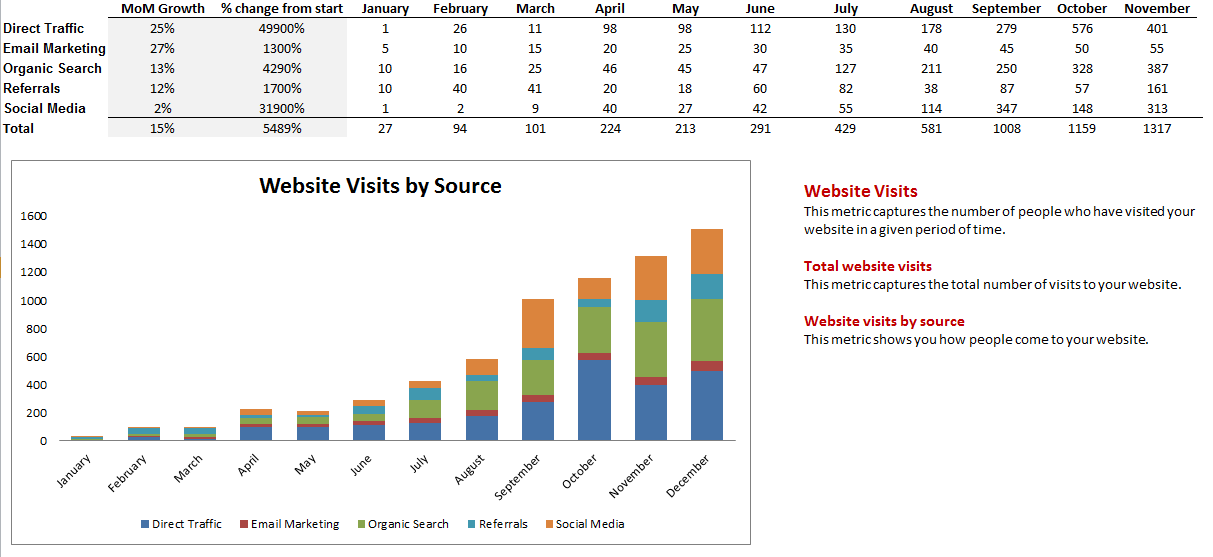
We created a template that you can download and use to track conversion rates and other critical metrics. While the template captures visitor-to-lead and lead-to-customer conversion rates, you can easily modify the template to include additional conversion rates that are useful to your business.