by Elizabeth Hines | Feb 16, 2017 | Consumer Electronics, Content Marketing, Marketing, Social Media, Strategy, Supply Chain
Here are two examples of consumer electronics companies leveraging social media to reach their target audiences, build brand awareness, and drive sales.
More and more companies are allocating budget to create a social media presence. That’s because, despite early hesitation, supply chain businesses understand that social media is an important marketing tool in today’s marketplace. The consumer electronics industry is no different: Participating in social media has never been more necessary.
Nearly 60% of consumers have taken a blog or social media post into consideration while shopping in a store. You may think — sure, that probably happens for fashion labels. But in fact, consumer electronics is the top product category influenced by social media posts, followed by fashion, then household items.
So what does this mean for you? Those dollars that you’re driving into social networking posts, tweets, and videos are reaching customers and ultimately affecting their purchasing decisions. Well, I should say, only if you’re driving them in the correct places.
To effectively leverage social media in consumer electronics, you need to have a social media strategy that aligns with your business goals. You need to be using the right channels, distributing the right content, and posting at the right time.
Let’s take a look at two companies that are doing it right and why that is.
Consumer electronics companies leveraging social media effectively
1) GoPro
GoPro designs portable, waterproof cameras that users can strap on their helmets, handlebars, or surfboards to record their experiences. The brand’s target audience includes extreme-sports lovers and daredevils who like to watch and share their adventures.
As part of their social media strategy, GoPro encourages their customers to contribute their videos to its various social media channels. It’s a win-win for both the company and users: GoPro receives tons of content that is interesting and relevant to its users, and the users get to show off their skills (or tumbles). Today, the company has over 4.5 million YouTube subscribers and more than 1.3 billion views of their videos.
Lesson: Know your target audience. GoPro understands who it is trying to reach, what they like to do with social media, and where they are active. It gives users a place to share their accomplishments, and is able to grow brand awareness and brand loyalty at the same time.
2. Beats by Dre
Beats by Dre, owned by Apple and founded by Dr. Dre, is an audio brand that sells headphones, earphones, and speakers. The company is active on several social networking platforms, but its genius lies in how it uses those platforms in different ways to reach different consumers.
On Facebook, Beats by Dre finds the most success by sharing stories and experiences that appeal to music and sports enthusiasts. Content includes inspirational photos and videos of athletes and artists using the brand’s products.
On Twitter, the company has created a dedicated support account to quickly reach customers in need of service. This helps amplify the message that the company offers excellent customer service, and the team is able to quickly and broadly share users’ positive feedback.
Pinterest is an entirely different beast for Beats by Dre. The company found its users were most likely to pin high-quality, interesting images, so that’s exactly the kind of content the brand shares via Pinterest. It also curates “mood boards” around the release of new products. It helps build excitement and awareness surrounding a product launch — and it achieves the longer-term strategy of building brand awareness through its users’ social sharing.
Lesson: What works on one social media network might not work on another. By distributing different kinds of content on different channels, Beats by Dre has been able to maximize the impact of each social media channel and engage with the segment of consumers that operates there.
Today’s consumers are more educated than ever. By understanding how to leverage your social media channels to reach and best serve your target audience, you can make your tweets, posts and videos a success.
Related posts:
by Jennifer Hart Yim | Feb 13, 2017 | Blog, Logistics, Strategy, Supply Chain
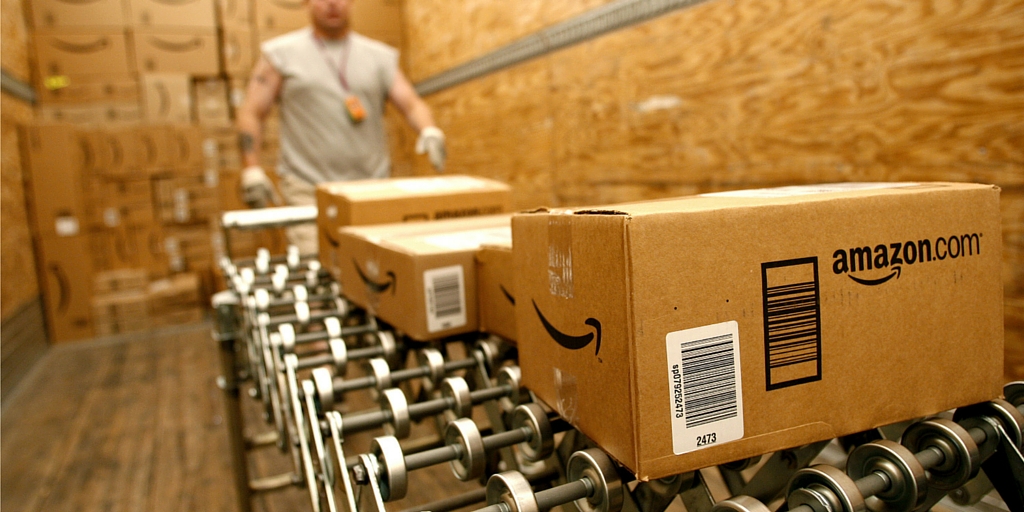
Supply chains must accept that they cannot equal the power of Amazon’s supply chain without embracing these new trends.
This guest post comes to us from Adam Robinson, marketing manager at Cerasis, a top freight logistics company and truckload freight broker.
Amazon’s supply chain continued push deeper into new and existing markets will define additional trends in the supply chain throughout the coming year. While supply chain entities struggle to stay competitive with the e-commerce giant, more organizations will look for ways to eliminate inefficiencies and boost operations. Fortunately, these five trends may alleviate some of the strains of competition by giving supply chain partners an advantage in the global market.
Top 5 Trends to Know to Compete with Amazon’s Supply Chain
1. Robotics Will Grow More Versatile.
Amazon’s purchase of Kiva Robots changed the landscape of robotics in the supply chain. However, new companies are being created and developed to fill the void. The robotics company Starship released a robot that delivers meals and groceries to people in Euro metro markets. Meanwhile, Lowe’s has created the LoweBot, which boosts customer service, explains Dan Gilmore of Supply Chain Digest.
More companies are turning to robotics to find new ways to bridge the divide between a dwindling number of customer service representatives, including store associates, and maintaining around-the-clock operations. Across the spectrum, robotics will become more versatile and accessible. In other words, robots will gain new movements, capable of picking items from shelves in warehouses and storefronts.
Per IDC Manufacturing Insights, the use of robotics will become more platform based through robot-as-a-service, reducing costs of deployment and maintenance. Furthermore, the speed of operation of robots will increase more than 30 percent by the end of 2017. Clearly, robotics will become more important in 2017 than during any previous year.
2. Technology Will Reshape Procurement Practices.
Better procurement practices translate into better overall sales, but the role of procurement in driving sales’ statistics will change throughout 2017. Today, procurement drives up to 67 percent of sales, explains Johnathan Webb of Forbes magazine, as procurement professionals look for innovative ways to produce effective, superior products.
For example, Johnson & Johnson procurement professionals actively review market trends before making purchases. Upon identifying these trends, a correct forecast of supply demands can be generated. Thus, the role of procurement has become more focused on being physically involved in market news and research, not just signing purchase orders in an office.
3. More Businesses Will Create E-Commerce Platforms.
Amazon’s supply chain empowered the e-commerce market by giving everyone an opportunity to sell their goods online, which has made competing with Amazon difficult at best. Amazon’s supply chain expansion culminated in more companies looking to enter e-commerce without giving shares to Amazon. Companies expanded e-commerce and omnichannel solutions simultaneously as well, reports Steve Banker of Logistics Viewpoints.
For example, Walmart and Kmart redesigned their mobile e-commerce interface for consumers, making shopping and purchasing online easier and integrated with major companies. A simple search for a product on Walmart.com reveals partnered listings with Wayfair and third-party sellers, much like Amazon’s current vendor options. Moreover, customers can make purchases online and have them shipped to the store or their home. At Walmart, customers can even pick up orders without ever getting out of the car now. Ultimately, more businesses will seek out partnerships with bigger companies to stay competitive with Amazon’s bare price points and ease of use.
4. User Preferences Will Enhance Mobile Management Systems.
Traditional warehouse management systems (WMS) lacked integration with other systems. Procurement strategy was not always evident. Accessibility of systems depended on in-house IT departments, and upgrading access terminals could cause extreme delays and problems in operations. However, newer management systems, such as a comprehensive transportation management system (TMS) that integrates warehouse management with transportation management, are starting to offer more accessibility and personalization options.
In other words, accessibility and personalization allow warehouse managers and staff members to define metrics relevant to new products and current operations, test new processes, and effectively manage the flow of goods. Similarly, new mobile options, ranging from Android tablets to compact barcode scanners, will reduce inconsistencies and errors across the supply chain, explains IRMS 360. Paired with the advancements of predictive analytics and the Industrial Internet of Things (IIoT), more data will result in more efficient processes, creating a positive feedback loop throughout an organization.
5. Contingency Planning Will Become a Standard Practice.
Amazon’s supply chain has proven that not planning will result in the failure of small and medium-sized businesses. Furthermore, natural disasters reap $211 billion from the global supply chain annually. Having a larger global footprint is how Amazon’s supply chain has been able to maintain operations in the face of natural or man-made disasters. This is contingency planning.
The IIoT empowers contingency planning by giving supply chain entities real-time data from an endless number of sources, which range from online browsing data to point-of-sale data. Consequently, supply chains can react appropriately and divert resources to maintain operations. But, the key to utilizing this information lies in knowing what to do and how to do it when an event occurs. In other words, more companies will diversify distribution, supplier and storage networks throughout 2017 to prepare for what might happen in the future.
The Big Picture.
Supply chains must accept that they cannot equal the power of Amazon’s supply chain without embracing these new trends. New technologies are great, but chances are Amazon has already implemented them. Rather than falling into despair, you can use these trends to re-evaluate processes and practices in your organization, which will help you stay competitive with Amazon.
The complexities of the global supply chain rely on your willingness to take advantage of new trends and technologies today, as well as tomorrow, so do not squander this opportunity.
Related posts:

by Elizabeth Hines | Feb 9, 2017 | Blog, Content Marketing, Marketing, Strategy
Time can be a blog’s best friend when it comes to gaining leads, but there are a few things you can do to accelerate lead-generation efforts.
Patience is a virtue, but it’s a particularly difficult one to mind when you’re trying to get your business off the ground.
Whether you are just starting out, are trying to turn things around, or are just looking to inject a little energy into things after some slow growth, your company has probably made an investment in your marketing efforts. Now comes the tough part, if you’re on the marketing team: The bosses are going to want to see results in the form of leads and sales.
Fair enough. Blogging is one of the best ways to boost your lead-generation efforts. The trouble is, however, that is normally takes some for those benefits to come to fruition.
I’m not going to say it’s a marathon…
But blogging is certainly not a sprint. Your posts need time to start drawing traffic — and then, from traffic comes leads. So the transitive property tells us that lead generation takes time. Here’s why.
As with many things, blog posts become more credible with age. That is to say, search engines value things that older content has had more time to accumulate, like social shares and referrals from other web pages. The more relevant a blog post proves itself to be to readers over time, the higher it will rank in search engine results.
On the other hand, new blogs without much content don’t have much to tell search engines. Search engines don’t trust them yet — and search engines’ algorithms are designed to avoid leading searchers down a stray path. So posts from new or young blogs are less likely to appear within the first page(s) of search results, which is key to sourcing organic traffic.
So what’s a marketer who is charged with generating leads to do?
Set realistic expectations
Be realistic about how quickly your blog will start generating leads when you first set your content strategy. Consider things like the length of your sales cycle. You can’t expect a reader to hasten down the sales funnel any faster than a normal prospect. And remember that the reader probably won’t catch your post on the first day it’s published. (More on that later.) So, if your sales cycle is 90 days, you might see a lead 90 days after you start publishing. But, in reality, it will probably take a little longer.
Instead of relying entirely on leads to define success, you should spend the first months focusing on the metrics that are precursors to lead generation. Increased web traffic and greater social reach and engagement, for example, are solid proof that the needle is moving in the early days of a new content marketing program. Set goals for these metrics, and communicate with leadership that they are all indicators that your content strategy is working, and that leads should follow in time.
But how can I get my blog to generate leads faster?
If you want to accelerate lead generation, it’s going to take a greater investment. But if you’re willing to commit more time and resources to speed things along, here are two things you can do.
1. Publish more frequently.
Search engines value posting frequency because it shows that your blog is a consistent source of content. The question is, how much can your organization publish without experiencing a decline in quality and relevancy? Those are other factors influencing search engine rankings, not to mention readership, leads, and conversions.
But “more frequently” doesn’t have to mean going from 0 to 60. Even publishing once more per week can make a dramatic impact. This story, for example, shows how publishing one more post per week helped a client’s web traffic increase by 23%, sales leads double, and a prospect convert to a customer — and that was just in just one month.
A HubSpot study showed a tipping point around 400 total blog posts — blogs with 401+ total posts generated twice as much traffic as those that had published 301-400 posts. And more specifically, B2B companies with 401+ total blog posts generated nearly 3X as many leads as those with 0-200 posts. The faster you can reach that 400 mark, the quicker your results.
2. Don’t neglect your old content
It’s important to keep in mind that the majority of your web traffic (aka potential leads) will first encounter your older content. Looking at Fronetics’ most-viewed posts last month, for example, 80% were published at least six months prior. In fact, 50% were more than a year old.
What does that mean? For one, you should keep tending to your already published content, particularly those posts that prove to be a consistent source of traffic. Update information; add links to new related posts or other relevant resources; and seek opportunities to insert or update calls-to-action to current offers and campaigns. Making sure those older, consistently popular posts continue to serve and engage your readers will increase your chances of conversion.
Secondly, it’s crucial that you look beyond how the posts you published recently performed. Something that doesn’t get a lot of views in the first week may be a huge traffic source and lead converter in a little time. Many content management systems, like HubSpot, can generate attribution reports, which tell you which web pages users most often visit before converting to a lead. Compare these pages with your high-traffic pages that don’t make the list to see how you can create more opportunities for lead conversion on the pages earning the most traffic.
Most importantly, if you invest the time and resources to run a blog, you owe it to yourself to see it through to success. Just because you don’t generate hundreds of leads in the first few months doesn’t mean you won’t eventually. It’s just going to take some time.
Related posts:


by Elizabeth Hines | Feb 6, 2017 | Blog, Content Marketing, Marketing, Social Media, Supply Chain
Instagram Stories offer an on-trend platform for delivering targeted content to B2B buyers and building brand awareness with potential customers.
If you haven’t considered using Instagram as part of your social media marketing program, it might be time to change your mind.
As of December 2016, Instagram had over 600 million monthly active users, about half of whom are between the ages of 18 and 29. Why should supply chain and other B2B marketers pay attention to the social networking preferences and behaviors of millennials? Because 73% of millennial workers are involved in decisions to purchase products or services for their companies. Welcome to the new generation of B2B buyers.
What’s more, Instagram’s recently launched feature, Instagram Stories, offers marketers a new platform for content delivery that is wildly popular with this generation. But unlike other networks with short-term video-sharing opportunities (ahem, Snapchat), Stories can have a polished, professional feel that well suits B2B brands.
What are Instagram Stories?
Instagram Stories are sequences of content that a user posts to his/her Instagram account over a 24-hour period. Besides photos, Stories can include videos, live and prerecorded, as well as Boomerangs, seconds-long motion clips that play forwards and backwards. The content plays as a continuous feed, creating a narrative about the user’s day — hence the term “Stories.”
Users may also customize their Stories with various design tools. Swipe to explore different filters, or add customizable stickers with time, weather, location, or even holiday greetings. You can also use a drawing tool to create your own masterpiece on your photos or videos.
Audiences can view the Stories of the users they follow within the 24-hour window after they are posted. They can find users with active Stories by scrolling the user icons at the top of the app. Or users can tell their followers that they’ve posted a story by tagging them, which notifies them through a direct message.
How you can supply chain and B2B marketers use Stories?
Instagram Stories aren’t just for friends showing friends what they’ve been up to. They’re a creative content-delivery platform that helps build rapport with followers, grow brand awareness, and educate potential buyers.
Here are 5 ways marketers might use Instagram Stories to engage their target audiences.
1. Deliver special offers and limited sales
Take advantage of this channel of communication to give special offers to followers tuning into your Stories. The time sensitivity of the 24-hour period will urge your buyers to engage with your Story and act quickly before the offer expires.
Direct followers to a special landing page or include a code right in the Story. As Social Media Examiner puts it, “The scarcity of Instagram Stories gives them power.”
JCrew’s promotion of the new Jane in Pink sunglasses offers an example of the clever use of Instagram Stories. The brand posted a combination of GIFs and photos teasing the pink sunglasses before announcing that there were a mere 50 pairs available for purchase through a link in its bio. This caused half of the merchandise to sell out in two hours.
2. Sign in for a takeover
Arrange to take over the Instagram account of a partner company or customer. It’s a fun way to draw attention from an existing, built-in audience. And it provides a mutually beneficial exchange of value for both parties.
As explained by media executive Gary Vaynerchuk, account takeovers offer a “backdoor approach to accessing new demographics.” The strategy is about “deepening relationships, gaining exposure, hacking distribution, and raising awareness.”
What’s more, account takeovers don’t require partners to hand over sensitive login information. Simply send your content to your partner to upload. It’s win-win situation that allows both parties to reach a new audience and share new content with ease.
3. Go behind the scenes
This is a great way to humanize your company and let you customers see and experience your brand personality. Capture candid photos of meetings. Take your followers on an adventure or an offsite task. Have a new product? Share a picture of the early designs or the production process. It’s a way to get followers excited and intrigued as to what happens behind the doors of your company.
Happy Socks, a Swedish sock and underwear retailer and manufacturer, does this well. It features videos of what’s going on in the office, birthday celebrations, and other candid moments.
4. Q&As
Get really personal with your customers by answering their questions via 10-second videos. One of Instagram’s community managers, Jeffrey Gerson, did this and found it to be a great success. This allows your viewers to feel as though they are really being heard since they are watching you talk about their questions as opposed to just reading typed answers online. It’s also a great opportunity to showcase the personalities of your employees and social media team while directly interacting with your audience.
4. At a loss? Ask your followers!
Give the people what they want — They may have some great ideas that you’d never considered. Survey your followers by posting a graphic of some options while leaving it open-ended as well. Have them respond in direct messages or comments with what they want to see from your social media. For example, Red Bull had their audience send the thumbs-up emoji in direct messages through Instagram Chat for the Story topic they most wanted to see published.
These five options provide your team with a starting point to begin exploring Instagram Stories. It’s an exciting tool to add some creativity and have some fun with your social media strategy.
Related posts:

by Jennifer Hart Yim | Jan 31, 2017 | Blog, Content Marketing, Marketing, Social Media, Strategy
Rival IQ’s Danica Benson discusses the importance of social benchmarking and offers three steps for getting started.
This guest post comes to us from Danica Benson, marketing communications manager at Rival IQ.
Imagine you’re on a little league baseball team. You’re up to bat. You swing and hit, sending the ball far over the second baseman’s head. You take off to first, see the outfielders running to the fences, fly past second base and onto third. The center fielder overthrows the ball as you sprint toward home, kicking dirt into sky behind you. Everyone is screaming, clapping and shouting! A home run! You feel on top of the world!
No matter which league you play in, be it little league or the MLB, a home run is successful. But, what if the pitcher walked you? In little league nobody claps, screams, or cheers. The next batter comes up, and you feel bummed out. But, not necessarily in the MLB. A walk is a strategic move. You’re on base. It’s only one base hit away from scoring position. A walk has the potential to be a game-changer and is considered a success. How is this so?
The benchmark determining success is different in the MLB than in little league. It’s the same performance in both cases, but a different interpretation of success. The same idea applies when measuring your social media activity — what is considered a successful engagement rate, number of followers, or content in one industry isn’t the same as the next.
Benchmarks require context
Benchmarks are key when interpreting data. Organizations of all kinds — large corporations, small privately owned business, nonprofits, and even sports teams — need to measure their performance to see if they’re efforts are leading to success.
Key performance indicators (KPIs) like Net Promoter Score (NPS) at a company, number of clicks on a social post, or a player’s batting average tells someone a lot about what is happening as a result of their activities. But it tells them nothing in terms of whether their efforts are successful, failing, or where to focus to close up those gaps. Why? Because benchmarks are relative.
3 steps to successful social benchmarking
Establishing benchmarks relative to your top competitors, like audience size and engagement rate, are meaningful because you are comparing to others like you who are fighting for the attention of the same audience. Without context, your metrics are what we call a “so what?” metric. We have 1,500 followers on Facebook… so what? Do we need more? Is that a good amount? These numbers only mean something if you have a benchmark for comparison.
At Rival IQ, measuring digital marketing performance begins with setting competitive benchmarks. To develop an effective social media strategy, you need contextual data. Analytics are great, but not if you don’t have context to compare your data. There are a couple of ways to do this: by comparing your organization’s metrics to itself, or by keeping tabs on your competitors. Using these methods, you can compare apples to apples and see growth in your organization, as well as how well you’re doing compared to your competitors.
Step #1: Know YOUR organization’s internal benchmarks
First and foremost, get to know your numbers. Identify your metrics and compare them to how you did last month (MoM) or last year (YoY). You always want to outperform yourself, so these benchmarks give you a base to start from and allow you to see if your activities are resulting in growth. Benchmarks can help you understand where your performance has been in the past, and help you create realistic expectations for the future.
But, what do you do if you don’t have any historical data to work with because you’re just starting up your analytics? I recommend looking at industry benchmarks, which you can find on websites such as Kissmetrics and MailChimp.
Step #2: Know your competitive benchmarks
Measuring your performance against your competitors gives you business intelligence you can use to make better decisions — especially if you’re struggling to earn social media attention. It’s too easy to think that we can just type, “What’s a good engagement rate for Instagram?” in a Google search to find a benchmark that means anything. What you will find are general figures calculated using everyone who uses the platform, which is great if your target audience is everyone who uses Instagram (not likely).
Go deeper than your industry by building your social benchmarks from scratch. Hand-select your direct competitors and look at metrics, such as:
- Which social channels do they use?
- How does the content differ between channels?
- When and how often are they posting on social media?
- What type of content are they sharing? Are they posting updates, photos, videos, live video, .gifs?
- What do their engagement rates look like?
- How many followers do they have?
Setting your social marketing strategy using your own landscape of competitors will give you a realistic, attainable goal. Accurate, relevant benchmarks are the first step in paving the way toward gaining a competitive advantage.
Step #3: Track, test & tweak
Now that you’ve reviewed your organization’s performance and can measure if it’s trending upward (or not), and you have established your benchmarks relative to your competitors, you track, test and tweak.
Track performance
By tracking your performance over time, you will be able to see if your audience is getting bored with your usual posts and may need to change your tactics. By monitoring your competitors, you can learn what content works well and take advantage of opportunities they may be missing.
Never stop testing
Social media is a great place to test things out, like new ads, campaigns, copy, contests, surveys, images, etc. Secondly, they give you feedback, fast! Find out what your audience likes on social first, then learn from your wins and failures. Take what you learn about your audience on social media and apply it to other marketing activities.
Tweak for optimization
This goes hand-in-hand with testing. Once you’ve tested a few things and have identified what’s working, tweak it and test it again to optimize it. Find the sweet spot. Social media is always changing, so there will always be more work to do.
Just as with all good strategies, you have to continually measure success and adjust based on real-world results. Competitive analytics is a great way to set social media benchmarks by basing them on companies you aspire to beat. If you aren’t beating the competition, it might be time to go back to the drawing board.
Originally from the Portland Metro Area, Danica Benson migrated north to work as a marketer in the startup arena. As the marketing communications manager at Rival IQ, she’s bringing her passion to the tech world. Outside of the office, Danica spends her free time on outdoor adventures and exploring the great city of Seattle.
Related posts: