
by Elizabeth Hines | Aug 23, 2018 | Blog, Content Marketing, Logistics, Marketing, Social Media, Supply Chain, Talent
Too many supply chain businesses are devoting inadequate resources and personnel to social media management.
Let’s be honest. It’s time for the supply chain to start taking social media management seriously. Even when we think we’re embracing the future, too may supply chain companies are stuck in the past when it comes to the way they think about marketing — and particularly the role of social media.
Case in point: the latest Social Media Marketing Industry Report indicates that for nearly two-thirds of marketers, managing social media marketing for their business is just one of their jobs.
Let’s think about that for a moment. That means that only one-third of the 5,700 businesses surveyed are prioritizing social media management to an adequate degree. For the other two-thirds, the vast and time-consuming task of social media management is squeezed into someone’s job description essentially as an afterthought.
If your business falls into that 64%, this is your wakeup call. Used to its fullest, social media is an immensely valuable set of tools for supply chain marketing. These platforms help brands increase visibility, establish themselves as thought leaders, attract new leads and customers, and much more.
If you’re not convinced (and you should be), take a look through Fronetics’ recent survey report on the benefits of social media for supply chain and logistics industries.
Social media management is no easy task
The thing about social media that so many businesses get wrong is that it’s not an easy task. Maybe you’re a marketer who’s been tasked with managing your brand’s social media efforts — on top of the rest of your responsibilities. It might have sounded like fun at first, essentially getting to scroll and post on Facebook for a few minutes out of the day. But chances are, you’re realizing that it’s a much bigger task than you thought.
A robust and effective social media strategy needs to be just that — a carefully designed and well-thought-out strategy, rather than simply something that an already overworked marketer adds to his or her plate.
For your business to truly take advantage of the benefits that social media can offer, you either need to devote adequate resources to it, or consider outsourcing it.
Is outsourcing right for you?
Supply chain companies are increasingly reaping the benefits of outsourcing their marketing efforts, particularly social media, as it allows them to focus on core competencies and improve productivity. As you consider trusting a professional with your social media, consider these 6 signs that outsourcing might be right for you.
The bottom line: if you’re frustrated that your social media management efforts are not as fruitful as you would like, chances are, you’re not giving them a chance. For social media to work for you, you need to devote the resources it demands — whether in house or out.
Related posts:

by Elizabeth Hines | Aug 20, 2018 | Blog, Content Marketing, Logistics, Marketing, Strategy, Supply Chain
Here’s a breakdown of the latest findings regarding the best time to send an email and what we recommend for getting the most of out of your email marketing efforts.
We are all inundated with daily emails. Whether it’s work emails, special offers from brands you love, or straight-up spam email, we all have inboxes full of emails – most of which will never be opened.
But, on the flip side, “email is the third most influential source of information for B2B audiences, behind colleague recommendations and industry thought leaders,” reports WordStream.
So how do you get your emails to stand out in cluttered inboxes? How do you get readers to actually open — and scroll through — your thoughtfully crafted content?
At Fronetics, we believe there isn’t a one-size-fits-all answer to what works best for email marketing. In order to be successful, you need to take into consideration:
- Who is your target audience?
- What job titles do they hold?
- What kind of devices do they use?
- When are they commuting to work?
Taking a look at the schedules and habits of your target audience will give you insight into the optimal times for readers to engage with your emails. Here’s Jennifer Hart Yim, director of strategy at Fronetics, with a look at what we recommend when trying to find your optimal time to send marketing emails.
Video: When is the best time to send an email?
Takeaway: Trial and error
As with most aspects of content marketing, there’s no universal answer to the best time to send marketing emails. The only way to truly know what works best for your company is trail and error. You’ll have to test dates and times to find the best time to send an email your target audience.
But keep in mind that there are other factors, aside from date and time, that affect open and click-through rates. You’ll also have to play around with frequency, subject lines, length of emails, and the overall look and feel of your email.
Have you tested your best time to send an email? What worked for your company?
Related posts:


by Elizabeth Hines | Aug 16, 2018 | Blog, Content Marketing, Data/Analytics, Logistics, Marketing, Social Media, Supply Chain
The latest social media statistics show growth of Instagram, more metrics for ROI, social messaging bots, and video content.
One thing that always holds true with social media platforms: they are constantly changing. Platforms like Facebook, Instagram, and Twitter have used 2018 to continue this trend of continual growth and improvement.
It’s important with all the changes to take a pause and analyze where these changes are taking us. Simple data can point us to the latest trends and show us where social media is heading.
Social Media Examiner’s 10th annual study, 2018 Social Media Marketing Industry Report, surveyed more than 5,700 marketers from across the world in a variety of industries to see how social media is changing. It offers a really comprehensive view of what’s going on in social media in our industry and beyond.
“This industry report also shows you how marketers’ organic activities have changed and what their future plans are with organic and paid social media,” write the report’s authors.
Here are 10 social media statistics from the report that reflect where social media is headed and what B2B marketers need to be paying attention to.
Infographic: 10 social media statistics for B2B marketers 2018
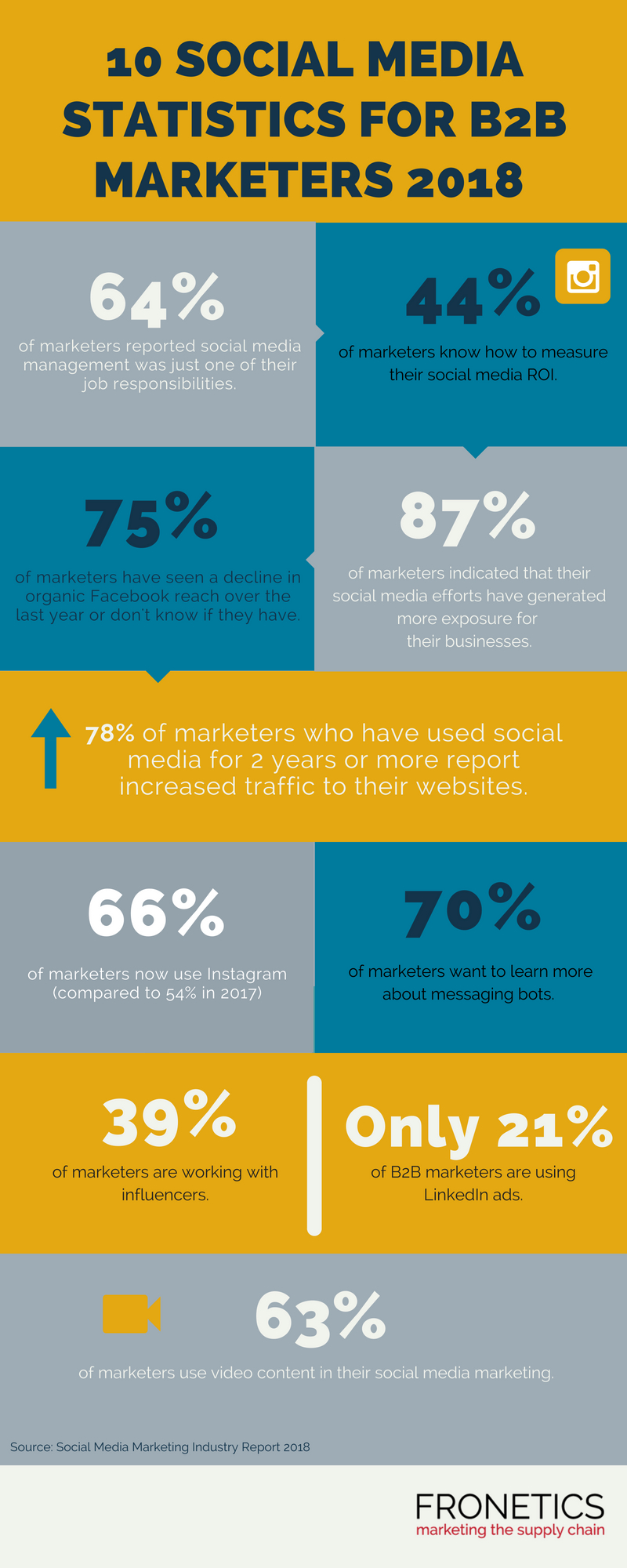
(Made with Canva)
Still want more?
I really recommend reading the 44-page report in its entirety from Social Media Examiner. There are pages and pages of interesting social media statistics that offer valuable insight into how marketers from all industries are using social media.
The report also shows how social media has changed in the last few years and even more rapidly in the past few months. With messaging bots and video content on the horizon, it’s hard not to wonder where social media will take us next.
What social media statistics are most interesting to you?
Related posts:

by Elizabeth Hines | Aug 1, 2018 | Blog, Content Marketing, Marketing
The Fronetics blog will be taking a brief summer vacation.
Starting today, the Fronetics blog will be taking a little hiatus. Don’t worry — it’s only for 2 weeks! We are working on some exciting things behind the scenes and can’t wait to share them with you.
We’ll be back with our regular posting schedule beginning Wednesday, August 15. If you find yourself missing us while we’re away, feel free to check out our ever-growing list of resources for supply chain and logistics marketers.
Or feel free to browse through our recent posts. We’ve been covering some really interesting stuff lately. There’s a little something for everyone — whether you’re looking for industry marketing trends or DIY content marketing guides. Here are a few favorites:
We hope you have a safe, wonderful, and relaxing end of summer, and we look forward to having you back in two weeks!


by Elizabeth Hines | Jul 25, 2018 | Blog, Content Marketing, Logistics, Marketing, Social Media, Strategy, Supply Chain
Here are 4 components of an effective lead-nurturing campaign that will entice your potential customers and have them moving down the sales funnel.
Your content marketing objectives really come down to one basic goal: to generate a high number of quality leads. These leads will help drive tomorrow’s revenue and increase sales. In fact, 85% of B2B marketers say lead generation is their most important content marketing goal.
As more and more buyers discover brands before they are ready to purchase, an essential function of any marketing department is lead nurturing. That is, moving leads through the sales funnel by leveraging what’s known about their needs and online behavior.
Marketo, a marketing software company, describes lead nurturing as being “personalized, adaptive, and able to listen and react to buyer behavior in real time.”
We know that marketers need to focus their lead nurturing strategy on multi-channel engagement. This includes utilizing email, social media, blogs, and video to interact with potential customers. A multi-channel lead nurturing strategy is essential for companies looking to optimize their user experience and bring in high-quality leads.
With so many variables contributing to a productive lead-generation campaign, it can be challenging to pinpoint what differentiates a successful campaign from a mediocre one. Here are four tools that will help you deliver a series of targeted messages across multiple touch points and platforms to help solidify your lead-nurturing strategy and increase your quality leads.
4 building blocks of an effective lead-nurturing campaign
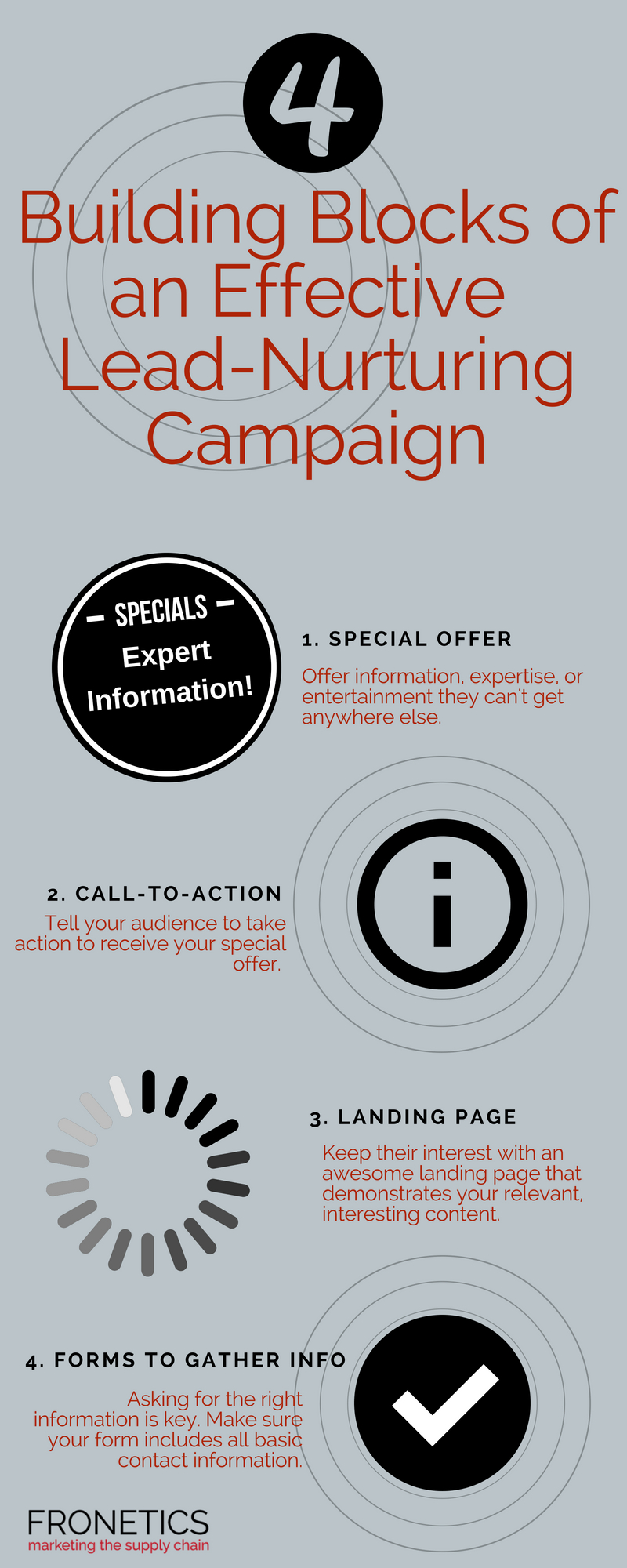
(Made with Canva)
Takeaway
Successful lead nurturing is really about utilizing all the tools at your disposal to meaningfully connect with your leads in order to build trust and establish credibility. Using these four key points, marketers can start building on their lead-generation efforts as they guide potential customers on their journey to becoming a client.
And don’t forget: Asking for the right information is key! If you want to nurture high-quality leads, you need to make sure you’re capturing relevant, helpful information along the sales journey.
Related posts:
