by Jennifer Hart Yim | Feb 27, 2017 | Blog, Supply Chain, Talent
Argentus Supply Chain Recruiting answers the question about what supply chain companies are looking for in new hires in terms of education.
This guest post comes to us from Argentus Supply Chain Recruiting, a boutique recruitment firm specializing in Supply Chain Management and Procurement.
This is the first installment of a new Argentus feature where we answer career questions. We’re starting this feature to help put our years of recruitment experience to good use, whether your questions are specific to our recruiting specialty of Procurement and Supply Chain or more general. You can find more questions and answers on our blog.
Drum-roll please for our first question:
Hello,
What value do you see in getting a Master’s Degree in Business/Supply Chain vs. some of the designations out there? (APICS, SCMA, etc.)?
Thanks, Vince C.
Thanks for the question, Vince. First of all, we aren’t experts in the curricula of both of these types of programs. Every university program is different, just as every professional designation is different. So we can’t speak to the specifics of various programs. However, we can speak to what companies are looking for in hiring, and how graduating from these programs builds your personal brand. We talk to lots of people in the field.
The short of it is that both an MBA and a Supply Chain designation such as APICS or SCMA can be a boon to your career, but your mileage may vary. It’s fairly common that a client looking to hire has designations as a requirement. It’s less common that they’ll ask for a particular designation (i.e. SCMA), although it’s certainly happened before. Companies are often looking to see that candidates are invested in their continued career development and education. A designation is a good way to establish that, and to pick up some valuable skills in the process.
It’s worth mentioning at this point that a designation is also often valuable for newcomers to North America who might have overseas Supply Chain Management experience, but haven’t yet secured that all-important first U.S./Canadian role in the field. A designation can be a great way to learn about local Supply Chain practices and increase your initial marketability while searching for that first role. While this option isn’t financially feasible for all newcomers, we’ve heard of candidates using it successfully in the past. A designation can provide networking opportunities, make you more marketable, and boost your income.
So is a designation the right move for your career?
One thing to keep in mind is that roles we get that “require” designations are typically at the sole contributor level — meaning below the “manager” level. Sole contributor roles can pay anywhere from 50k to 130k, so it’s not necessarily a roadblock, but it’s less common that leadership roles require designations. And while many designations offer strategic components to their curricula, we’ve had feedback from certain executives that a lot of the education offered is more transactional in nature — and that can be a limitation. For example, learning how to fill out a purchase order might make you a more immediately employable Procurement clerk at the junior end, but when looking for future leaders, executives want to hire people who have a holistic understanding of business strategy. Why are you filling out that purchase order? What’s the impact on the business? Should we be purchasing from someone else? Can we streamline our purchasing process? Should we be purchasing this at all?
The key to progressing into leadership is an understanding of strategy — so if that’s your goal, assess designations based on their strategic content.
Which brings us to MBAs — the coveted Master’s of Business Administration. It’s becoming more common for hiring managers to require Bachelor’s degrees, but it’s rare that they require an MBA. It’s also pretty new to have Supply Chain as an MBA specialization in the first place, and some people have used them to good effect to boost their careers.
The perception is that an MBA is going to be strategic. That they’re polished. That they have enhanced presentation ability. All of these are leadership qualities, and that’s why MBAs are seen as future leaders, even if the degree isn’t an absolute requirement to advance into business leadership — especially within Supply Chain.
However, there’s also the perception that an MBA isn’t going to be hands-on. From our perspective, an MBA isn’t going to work as a replacement for solid work experience. There’s a reason why people often work for 5-10 years in the field before pursuing an MBA: it’s going to augment your leadership potential, but it’s not going to give you leadership potential if you don’t have a variety of experience beforehand.
MBA programs encourage their students to think ambitiously, but it’s important not to let an MBA “go to your head.” We sometimes hear from recent MBA grads who expect to earn 150k+ on the merits of their degree rather than their experience, and they often find themselves in a 70k job a few years after graduating. If you’re prepared for this possibility, an MBA can be valuable, and it can help make you more marketable as a business leader.
So if you’re looking to slot into a Sole Contributor role, a designation might get you there faster. But if you’re looking to eventually climb into a Director, VP or CPO or CSCO role, an MBA might help you more. But don’t expect immediate dividends.
Again, we hope our advice is helpful! And every case is different, so take it with a grain of salt.
Oh, and send us more questions by visiting our blog and filling out a brief form. It can be Procurement and Supply Chain-specific, or it can be about any career topic.
Related posts:

by Elizabeth Hines | Feb 23, 2017 | Blog, Marketing, Social Media, Supply Chain
Here’s what supply chain and logistics marketers need to know about recent social media news as of February 2017.
Staying on top of what’s happening in the ever-changing social media world is crucial, but can be a challenge. To keep you informed of some key developments, here’s our February 2017 edition of social media news for the supply chain.
Facebook shares Q4 and full-year 2016 earnings and community updates
Facebook announced that it now has nearly 1.9 billion users, including 1.2 billion people active every day. More than 65 million small businesses use Facebook as a marketing tool. Zuckerberg emphasized to investors that the company is committed to “putting video first across [its] family of apps and making it easier for people to capture and share video in new ways.”
LinkedIn adds option to disable comments on long-form articles
The site now allows publishers to manage comments on individual long-form articles “at any time.” LinkedIn plans to add the option to turn off comments on all posts “soon.” Publishers can now also report, flag, or hide abusive or offensive comments. Read more
Facebook algorithm updates geared to show more authentic and timely stories
Updates rolled out this month are intended to prioritize “more authentic and timely” content in the new feed. Posts and topics that are already getting “a lot of engagement” or “might be temporarily important to you” are getting a boost. Read more
Facebook extends lead ads to Instagram
Marketers can now run lead ads across both Facebook and Instagram placements. The company recommends that advertisers verify that the creative complies with Instagram’s design requirements for lead ads.
YouTube expands mobile live streaming and launches Super Chat
For creators with more than 10,000 subscribers, mobile live streaming is here, and other creators will have it “soon,” according to the company. YouTube also released Super Chat, “a new live stream monetization tool that lets any fan watching a live stream stand out from the crowd and get a creator’s attention by purchasing chat messages that are highlighted in bright colors and stay pinned to the top of the chat window for up to five hours.” Read more
Related posts:
by Elizabeth Hines | Feb 21, 2017 | Blog, Consumer Electronics, Manufacturing & Distribution, Strategy, Supply Chain
Will sustainability trends from the consumer packaging industry have an impact on electronics manufacturing this year?
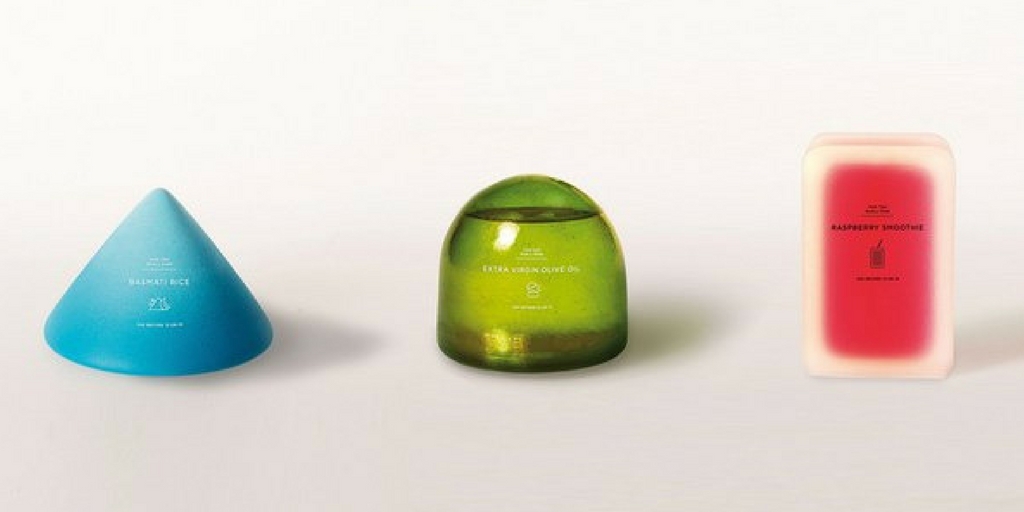
As we wrap up the first big consumer holiday of 2017, it’s interesting to think about how innovation in packaging never stops. While many of the newest ideas are hitting consumer applications first, perhaps they will point to new directions for electronics manufacturing as well.
Packaging trends suggest a wide range of startups, researchers, and big companies are committed to finding solutions that match the buzzwords du jour — sustainable, bio-degradable, natural, and eco-friendly.
Here are some sustainability trends in packaging that I think will gain momentum in 2017.
2017 packaging trends to watch
1) Multiple uses
Great packaging protects not only your product, but also your brand. But what if the packaging is part of the product itself?
That is the case with innovations such as the expandable bowl by Swedish design studio Tomorrow Machine. Using 100% bio-based and biodegradable materials, the company created a cellulose wrapper that hugs freeze-dried food and morphs into a bowl when hot water is poured into the spout. The bowl ― a sustainable packaging award winner ― is now in good company, and I expect more will follow.
2) Unconventional materials
Egg shells, fermented sugars, barley, and wheat ribbons — those were the materials used to create, in turn:
- Bio-compostable films: Nano-particles from waste eggshells helped researchers at Tuskegee University in Alabama make a plastic film that is completely sustainable and 700% more flexible than other bio-plastic blends. Film made of the new material could be used in retail packaging, grocery bags and food containers.
- A prototype PHBottle: The European PHBottle project aims to initially create a bottle, cap, and sleeve, although use in other applications (non-food packaging and non-packaging uses) will be tested. The bio-plastic material used to make the bottle comes from the transformation of organic matter found in juice processing by-products.
- Edible six-pack rings for beer: Imagine washing down the six-pack ring with your favorite beer. Although that moment is not quite here yet, the future is looking up for a piece of plastic that is notorious for ensnaring wildlife. The first bio-degradable edible six-pack ring for beer is the result of a partnership between Saltwater Brewery; We Believers, an advertising agency; and Entelequia, Inc., a small startup in Mexico. Made from barley and wheat ribbons spent grain from the brewing process, the rings are safe for wildlife to eat and sturdy enough to support the cans.
3) Reusable packaging
The throw-away culture is not for everyone. In fact, Mintel’s Global Packaging Trends 2017 shows 63% of U.S. consumers actively seek out packages they can re-use. More than half of consumers also say they would prefer to buy foods with minimal or even no packaging. With such great demand for waste reduction, innovation is bound to pick up even more momentum.
What do you think 2017 will bring in terms of sustainable packaging for the electronics industry? Let us know about promising innovations you’ve seen.
This post originally appeared on EBN Online.
Related posts:
by Elizabeth Hines | Feb 20, 2017 | Blog, Content Marketing, Marketing, Supply Chain
A recent survey of over 400 business blogs shows what the best bloggers have in common and what supply chain marketers can do to improve their blogs.
Maintaining a blog for your business can be somewhat of a guessing game. How often should you publish? Should you do all the writing in-house? Will anyone read our posts?
A recent survey of 428 marketers conducted by Curata sought to identify any patterns or trends among those with the most successful business blogs. Specifically, the authors grouped together those whose blogs had more than 10,000 views per month and compared them to those with less than 10,000 views per month.
The most successful blogs (those with over 10,000 views per month) have several things in common. The following infographic shows some highlights from the survey.
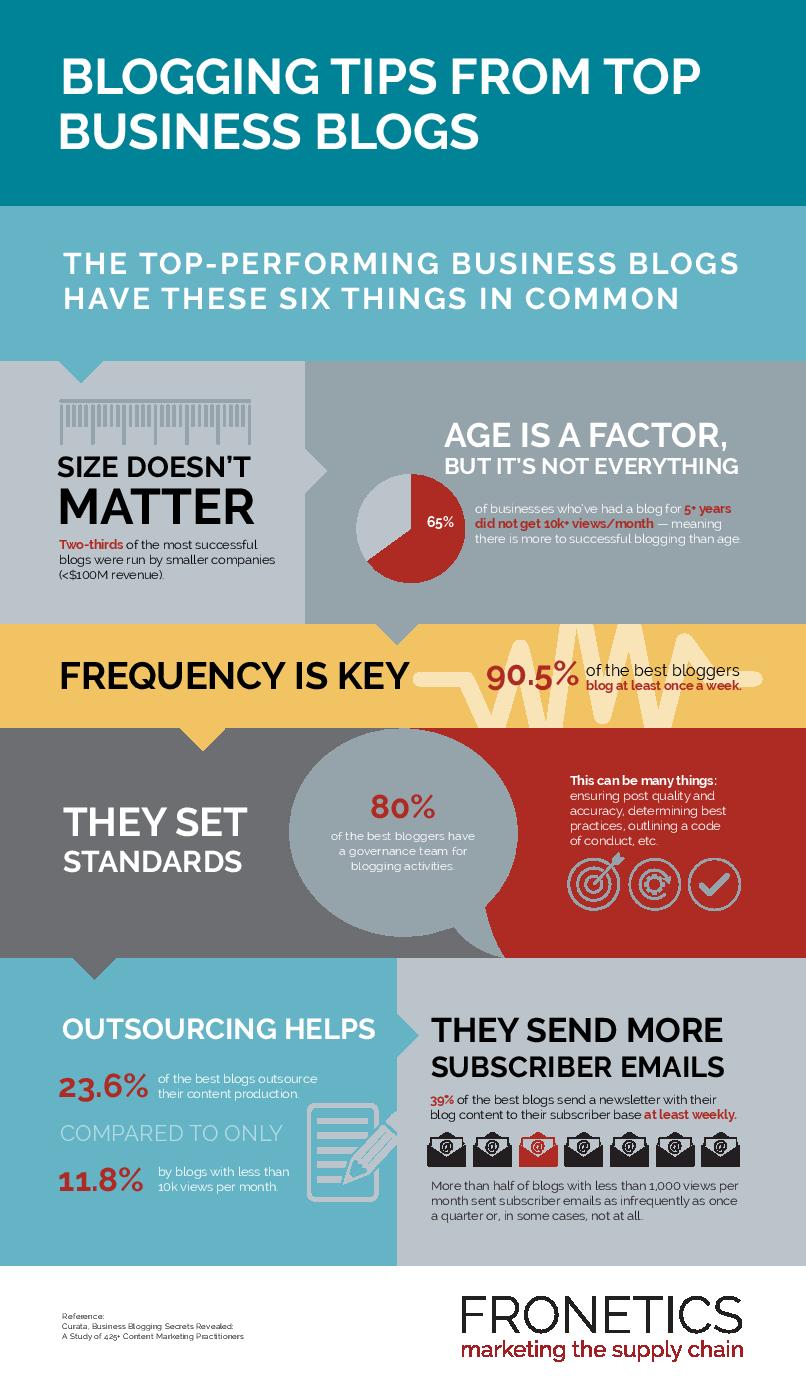
(Made with Canva)
Read the full report from Curata’s survey here to get more insight into the best business blogs. For more information and tips on blogging for your supply chain business, check out our related posts below.
Related posts:

by Elizabeth Hines | Feb 16, 2017 | Consumer Electronics, Content Marketing, Marketing, Social Media, Strategy, Supply Chain
Here are two examples of consumer electronics companies leveraging social media to reach their target audiences, build brand awareness, and drive sales.
More and more companies are allocating budget to create a social media presence. That’s because, despite early hesitation, supply chain businesses understand that social media is an important marketing tool in today’s marketplace. The consumer electronics industry is no different: Participating in social media has never been more necessary.
Nearly 60% of consumers have taken a blog or social media post into consideration while shopping in a store. You may think — sure, that probably happens for fashion labels. But in fact, consumer electronics is the top product category influenced by social media posts, followed by fashion, then household items.
So what does this mean for you? Those dollars that you’re driving into social networking posts, tweets, and videos are reaching customers and ultimately affecting their purchasing decisions. Well, I should say, only if you’re driving them in the correct places.
To effectively leverage social media in consumer electronics, you need to have a social media strategy that aligns with your business goals. You need to be using the right channels, distributing the right content, and posting at the right time.
Let’s take a look at two companies that are doing it right and why that is.
Consumer electronics companies leveraging social media effectively
1) GoPro
GoPro designs portable, waterproof cameras that users can strap on their helmets, handlebars, or surfboards to record their experiences. The brand’s target audience includes extreme-sports lovers and daredevils who like to watch and share their adventures.
As part of their social media strategy, GoPro encourages their customers to contribute their videos to its various social media channels. It’s a win-win for both the company and users: GoPro receives tons of content that is interesting and relevant to its users, and the users get to show off their skills (or tumbles). Today, the company has over 4.5 million YouTube subscribers and more than 1.3 billion views of their videos.
Lesson: Know your target audience. GoPro understands who it is trying to reach, what they like to do with social media, and where they are active. It gives users a place to share their accomplishments, and is able to grow brand awareness and brand loyalty at the same time.
2. Beats by Dre
Beats by Dre, owned by Apple and founded by Dr. Dre, is an audio brand that sells headphones, earphones, and speakers. The company is active on several social networking platforms, but its genius lies in how it uses those platforms in different ways to reach different consumers.
On Facebook, Beats by Dre finds the most success by sharing stories and experiences that appeal to music and sports enthusiasts. Content includes inspirational photos and videos of athletes and artists using the brand’s products.
On Twitter, the company has created a dedicated support account to quickly reach customers in need of service. This helps amplify the message that the company offers excellent customer service, and the team is able to quickly and broadly share users’ positive feedback.
Pinterest is an entirely different beast for Beats by Dre. The company found its users were most likely to pin high-quality, interesting images, so that’s exactly the kind of content the brand shares via Pinterest. It also curates “mood boards” around the release of new products. It helps build excitement and awareness surrounding a product launch — and it achieves the longer-term strategy of building brand awareness through its users’ social sharing.
Lesson: What works on one social media network might not work on another. By distributing different kinds of content on different channels, Beats by Dre has been able to maximize the impact of each social media channel and engage with the segment of consumers that operates there.
Today’s consumers are more educated than ever. By understanding how to leverage your social media channels to reach and best serve your target audience, you can make your tweets, posts and videos a success.
Related posts:

by Elizabeth Hines | Feb 14, 2017 | Blog, Current Events, Logistics, Manufacturing & Distribution, Supply Chain
Consumers will spend $18.2 billion on Valentine’s Day 2017, down from a record-high 19.7 billion in 2016, according to the National Retail Federation.
Did you purchase something sweet for your loved one to mark the special occasion this Valentine’s Day? You won’t be alone in your pursuit to find the perfect box of chocolates. According to staticsbrain.com, 47.5% of consumers celebrating Valentine’s Day 2017 will purchase chocolate or candy, and retailers will sell over 36 million heart-shaped chocolate boxes.
Connection between chocolate and Valentine’s Day
The history of the love of chocolate dates back to the Mesoamerican time, when it was viewed as a luxury item by the Mayan and Aztec upper-class elites. It wasn’t long until the popularity of the confection took over Europe and, centuries later, landed in America. Richard Cadbury created the first box of chocolates in 1868, and from there the commercialization of the treat grew. Chocolatier giants, such as Hersey and Russell Stover, have created a $98 billion industry.
Labor of love: chocolate and supply chain
When you purchase the little heart- shaped box of chocolates for Valentine’s Day this year, remember the labor of love that went into creating those delicious sweets. From the small cocoa farmers in Ghana and Côte d’Ivoire to the cocoa processors to the chocolate manufacturers and retailers, there are many hands that work together before the product reaches you, the consumer. These products — and gift-givers everywhere — rely on the logistics and supply chain industries each Valentine’s Day.
Valentine’s Day 2017 Infographic
Here’s a quick look at how U.S. consumers will spend — literally and figuratively — this Valentine’s Day.
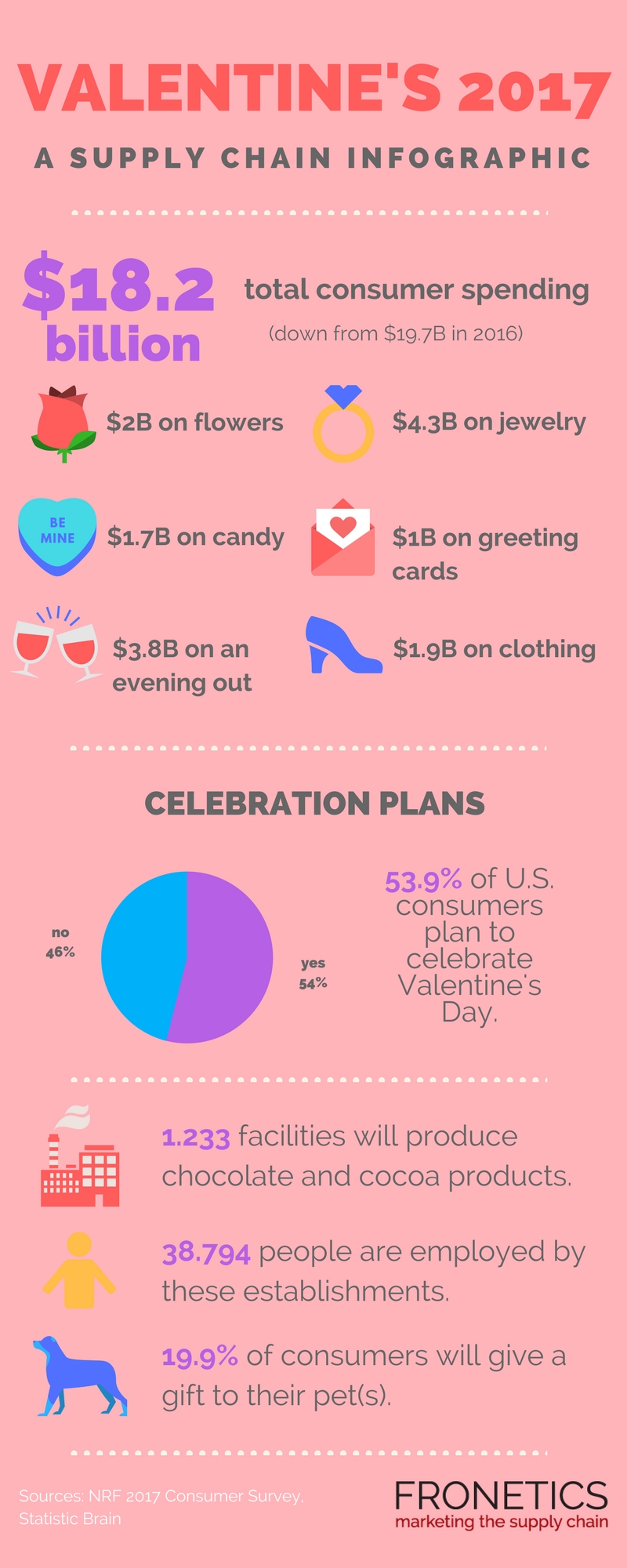
(Made with Canva)
Related posts: