by Elizabeth Hines | Oct 1, 2019 | Blog, Content Marketing, Logistics, Marketing, Supply Chain
Consumers are more likely to trust content generated by their peers, which means higher conversion rates at a lower cost for your brand. Is your brand benefitting from user generated content?
Highlights:
- User generated content is content created by users of a specific brand or on a specific platform.
- Images and video of real people using your products or talking about your services will create trust and loyalty for your brand.
- Don’t be afraid to engage with your audiences over social media, respond to comments, and answer questions.
Video transcript:
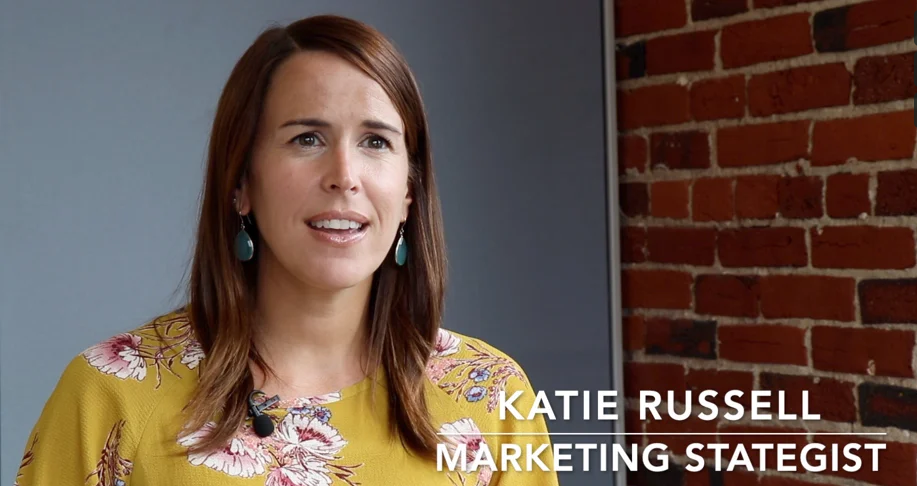
I’m Katie Russell, a marketing strategist here at Fronetics, and today I wanted to talk to you about user generated content. Also known as UGC, user generated content is one of the hottest topics in digital marketing right now, but there are many businesses that don’t know how to use this tool to their advantage.
Let’s start with the basics.
What is UGC?
User generated content is content created by users of a specific brand or on a specific platform. It’s highly effective and comes at little or no cost to your business.
With that said, a lot can qualify as UGC including: comments on your blog, testimonials on your website, social media posts, blog articles, videos, Instagram stories, The list goes on and on. What it comes down to is that UGC is really any form of content that comes from a customer or a user.
So, what are the benefits of UGC?
Authenticity
We know that consumers are more likely to trust content generated by their peers, which means higher conversion rates at a lower cost for your brand. This also means the content is authentic and genuine reviews from buyers. Does it get any better than that?
Inexpensive
Since your brand is not generating the content, you don’t have to invest in the time and resources to create it.
What’s hot in UGC right now?
Visual content
Visual content is by far the most popular among audiences, so visual UGC is a no brainer. Images and video of real people using your products or talking about your services will create trust and loyalty for your brand.
Snackable content
We all know that the attention span for content is extremely short these days. When reposting UGC, focus on short, funny and positive content. Content that leaves users feeling informed and entertained will perform best for your brand.
Enlisting influencers
Whether it’s a famous celebrity or a micro-influencer that’s respected within your industry, brands involving influential people in their marketing campaigns can expect higher ROI from UGC.
Don’t forget to follow-up
Once you’ve grabbed the attention of your community with a successful UGC campaign, it’s up to you to capitalize on the momentum. Don’t be afraid to engage with your audiences over social media, respond to comments, answer questions. Have questions about starting a UGC campaign as a part of your digital marketing strategy? Visit us at fronetics.com.
Related posts:


by Jennifer Hart Yim | Sep 25, 2019 | Blog, Leadership, Strategy, Supply Chain, Talent
New research shows Gen X business leaders are being promoted slower than their millennial and boomer counterparts. This Gen X talent looking to jump ship.
This guest post comes to us from Argentus Supply Chain Recruiting, a boutique recruitment firm specializing in Supply Chain Management and Procurement.
Much attention has been given to millennial employees over the years –what attracts them, what causes them to stay in a role, how to manage them differently than other generations of employees. It was a hot topic of discussion at the recent SCMA National Conference. At the same time, more baby boomers are beginning to retire. These two generations represent the back and front end of the Supply Chain industry’s talent pipeline, and they’ve been the industry’s focus. But of course, the demographic picture is broader and more nuanced than just these two generations.
Last week, we wrote an article about the importance of the emerging Generation Z – people born between 1997 or so and the 2010s – to companies seeking to win the war for Supply Chain talent. Hopefully, it helped fill in the generational picture even further.
Now a recent, very interesting article in Harvard Business Review has us wondering – are Gen X employees being forgotten by the industry? If so, what’s the impact on their careers, as well as organizations who employ them – the companies who stand to lose if dissatisfied Gen X’ers begin to jump ship?
At the risk of explaining the obvious, Gen X’ers are generally defined as being born between the mid-1960s and early 1980s – after baby boomers, but before millennials. They also came of age with a reputation for being “unambitious” – a reputation that’s just as outdated as some of the most famous slacker movies (classic though those movies may be).
As we said with our article about Gen Z, these generational distinctions are a bit fraught. Career motivations are different for every person. They’re too complex to paint everyone with the same brush. But when you can marshal enough data, you can start to learn some interesting high-level things about the hopes, dreams, and discontents of a particular demographic. In 2018, HBR worked with EY and The Conference Board to collect and analyze data from some 25,000 business leaders. Those surveyed were from all over the business landscape, but there’s data here that will be useful for Supply Chain organizations looking in the mirror.
Some of the results related to Gen X in the workplace were very interesting, in particular:
- The majority of Gen X leaders (66%) had either not been promoted in the past 5 years, or had only been promoted once.
- Baby Boomer and Millennial leaders were more likely to receive promotions (58% and 52% respectively). This is unsurprising for the boomer generation, but it is surprising that a generation younger than Gen X seems to be getting promoted more. It suggests Gen X employees are being “skipped” compared to their counterparts.
- The data found that Gen X employees are promoted typically 20%-30% slower than millennials are.
- Generally speaking, Gen X managers have more direct reports than millennial managers at the same level, indicating a higher workload.
This is the situation on the ground for Gen X talent and leaders. But how are they responding to this lack of advancement?
Gen X employees tend to be more loyal to their current employers, with 37% contemplating leaving their current role compared to 42% for millennials. They came of age before the 2008 financial crisis, in a time before the rise of the gig economy, which might account for their willingness to spend longer in a role.
But companies shouldn’t mistake this loyalty for complacency: according to the data, only 58% of Gen X employees feel that their careers are advancing at a good rate, which is significantly lower than the 65% of millennials who feel the same way. Almost one in five Gen X leaders surveyed reported an increased desire to leave their current role (18%).
Many organizations are beginning to reckon with the retirement of the baby boomer generation. They’re trying to attract and retain millennial talent by improving opportunities for career growth. Maybe they should also be doing more to nurture Gen X talent, to avoid losing that all-important middle group within the talent landscape.
As Stephanie Neal, the HBR writer puts it, a significant number of Gen X’ers might be reaching a “breaking point in” their careers. But she identified some key strategies for companies to avoid neglecting Gen X talent:
- Invest not only in continuing education for employees, but personalize it. Most Gen X employees have developed a broad base of skills, but individual needs and desires vary. Organizations should tailor their talent development to each person. Stay interviews, which we’ve written about recently, are a good strategy to better understand what motivates each individual in your organization.
- Give Gen X leaders opportunity for mentorship, and not just within the organization. We also recently wrote about the power of mentorship in a Supply Chain career, so we were happy to see HBR highlight the importance of mentorship as well. According to the research, a majority of Gen X leaders craved mentorship outside their organizations, which is enabled by things like industry conferences and professional groups. Investment in these opportunities not only helps with retaining Gen X leaders, it also offers chances to expand your supplier network or find new business.
- Hire and promote based on data, rather than gut feelings. Hiring managers often work hard to try to eliminate unconscious bias from the hiring process, but ageism often goes under the radar. Applying stereotypes to a certain cohort introduces bias that harms your process and leads to dissatisfaction. Neal uses the example of assuming that a millennial would be better at a digital marketing role than a Gen X employee. Decisions based on data such as assessments and quantifiable achievements will always be more successful than those based on stereotypes.
It’s a good start, but maybe this is issue deserves an even closer look. If we may add another tip: avoid stereotypes. Data surveying the preferences and mindsets of a large group of people can be instructive, but don’t assume that every Gen X employee is wired the same way.
What do you think? Are there any specific talent retention strategies for individuals in the Gen X cohort? Are you of this generation, and if so, how do you feel about your career prospects? We’d love to hear from you.
Related posts:


by Elizabeth Hines | Sep 19, 2019 | Blog, Data/Analytics, Marketing, Marketing Automation, Supply Chain
In a highly competitive B2B landscape, AI can be the strategic advantage your brand needs. Here’s everything you need to know about AI for marketing.
Highlights:
- AI enables predictive analysis – the ability to look at a large set of data and predict what steps to take to reach a desired outcome.
- Social listening powered by AI gives marketers key insights into brand perception and audience reaction.
- When considering purchasing an AI technology for marketing, consider if it includes its own Big Data source.
When we think about artificial intelligence (AI), it’s often with a twinge of unease. Whether it’s pop culture telling us that robots will take over at their earliest opportunity, or fears of human labor being replaced with machines, AI is a complex, controversial, and even mysterious topic. But when it comes to the applications of AI for marketing, there’s actually a lot to celebrate.
It’s important for marketers not only to have a thorough understanding of the uses of AI for marketing, but to be aware of industry trends, and how to determine investment to maximize ROI.
What is AI for marketing?
While it’s not necessary for marketers to be artificial intelligence and robotics experts, it’s beneficial to have a functional understanding of the technology that enables AI for marketing. In a general sense, the term “AI” refers to the area of computer science that enables the creation of software and machines that possess what we think of as intelligence. That is, they are able to work, react, and learn without being specifically programmed for each task.
AI is enabled by data science, “the practice of organizing and analyzing massive amounts of data.” When it comes to marketing, AI can be thought of as an extension and development of marketing automation. Essentially, AI for marketing is software that collects, analyzes, and reacts to large amounts of data, with increasing levels of sophistication.
According to content intelligence expert Bart Frischknecht, of Vennli, AI for marketing can be categorized in one of two ways.
- Recommending: This type of marketing software “predicts which action will have the most positive outcome in order to recommend a next step in a series of events.” Frischknecht describes these recommendations as “stepping stones on the way to fully automating a given task.”
- Automating: Software that automates is a furtherance of software that recommends. For a task to be automated, it needs to be “routine and repeatable, the goal needs to be specific, and the steps to achieve that goal must follow an exact set of rules.”
Think of data as the fuel that powers AI for marketing. As we gather more and more data, and devise increasingly sophisticated analytical methods, the possibilities for intelligent automation in marketing will continue to expand.
5 examples of AI for marketing
1) Data filtering and analysis
At Fronetics, we’ve advocated for a data-driven approach to marketing since our founding. For marketers, data is the most powerful strategic weapon in your arsenal, and AI is sharpening it even further. AI software can consolidate large amounts of data, and analyze it to determine patterns and trends.
2) Social listening
Social listening, also known as social monitoring, is the process of observing and examining social media, to identify and access what is being said about your brand. Social listening gives marketers valuable market intelligence, prospect insight, tone awareness, and competitive advantage.
Current AI software lets marketers not only engage in sophisticated social monitoring, but it also enables “sentiment analysis,” automatically generating a report of the overall attitude of your audience and perception of your brand.
3) Predictive analysis
Beyond simply filtering and analyzing data, AI for marketing goes a crucial step further: predictive analysis, the practice of applying the information extracted from data sets to predict a future outcome or trend.
This revolutionary capability of AI can be used to analyze buyer purchase behavior, for example, and determine when and how to distribute certain types of content. Social media scheduling tools, for instance, use predictive analysis to suggest the optimal times to share content.
4) Audience targeting and segmentation
As B2B buyers increasingly come to expect personalization at all stages of the buyer’s journey, it can be a challenge for marketers to deliver. However, AI makes personalization possible at a large scale, drawing on data to segment and categorize audiences.
The limits of the specificity of this segmentation are determined only by the amount of data available. In other words, the more data, the more the AI software can instantly segment a contact list and deliver personalized correspondence.
5) Chatbots
One of the most ubiquitous examples of AI for marketing, chatbots are computer programs that simulate human conversation using auditory or textual methods. Chatbots communicate with buyers within a messaging app, like Facebook messenger.
3 questions to ask when considering an investment in AI for marketing
While the possibilities of AI for marketing are virtually endless, the reality for most companies is that marketing budgets are not. When considering an investment in any technology, including AI, maximizing ROI should be top of mind. Frischknecht suggests that marketers ask the following three questions when considering an investment in AI for marketing:
- Which marketing task will this technology automate, and will doing so alleviate a significant burden for marketing staff?
- Does purchase of the tech include its own Big Data source, or do I need to provide all the data? If the latter, do I have adequate data, and can I connect my data source to the tech?
- What evidence exists of the tech making good recommendations or automating one of my tasks.
AI is revolutionizing marketing. Investing intelligently in these technologies can provide critical market insights, data processing capabilities, and predictive analysis.
Related posts:


by Elizabeth Hines | Sep 17, 2019 | Big Data, Blog, Data/Analytics, Internet of Things, Robotics & Automation, Supply Chain
Machine learning is shaping the future of supply chain and logistics management, improving accuracy, speed, scale, and more. Here’s how.
Highlights:
- Machine learning refers to an application of artificial intelligence that lets systems learn and improve automatically based on experience.
- Experts predict that 95% of supply chain planning vendors will rely on supervised and unsupervised machine learning for their solutions by 2020.
- When paired with the Internet of Things, machine learning can provide cost savings around $6 million per year.
When it comes to the future of the supply chain, machine learning is one of the most exciting applications of artificial intelligence (AI) technology out there today. Machine learning is a mode of data analysis that provides systems with the ability to learn and improve automatically from experience, without being specifically programmed.
Gartner recently projected that by 2020, 95% of supply chain planning vendors will rely on supervised and unsupervised machine learning for their solutions. Furthermore, it isn’t just expert predictions that demonstrate the impact and potential of machine learning for the supply chain. Amazon, for example, is using machine learning to improve accuracy, speed, and scale for its Kiva robotics, and DHL relies on machine learning to power its Predictive Network Management system.
So, what is it about machine learning that makes it ideally suited to meet the challenges commonly faced by supply chain companies? The answer lies in the fact that machine learning algorithms are brilliant at detecting patterns, anomalies, and predictive insights. This makes it the ideal technology to help supply chain companies forecast error rates, reduce costs, improve demand planning productivity, and increase on-time shipments.
Here’s how these remarkable technologies are already revolutionizing supply chain management.
7 ways machine learning is improving supply chain management
1) Logistic solutions
Particularly when it comes to resource scheduling systems, machine learning algorithms are driving the next generation of logistics technologies. An April 2019 report from McKinsey predicts that “machine learning’s most significant contributions will be in providing supply chain operators with more significant insights into how supply chain performance can be improved, anticipating anomalies in logistics costs and performance before they occur.”
2) Internet of Things
The Internet of Things (IoT)’s sensors, intelligent transport systems, and traffic data generate a tremendous variation in data sets. Machine learning has the potential to deliver increased value by analyzing these data sets, thereby optimizing logistics and ensuring that materials arrive timely.
Additionally, machine learning can reduce logistics costs by uncovering patterns in track-and-trace data captured through IoT-enabled sensors. A December 2018 study by Boston Consulting Group determined that pairing machine learning (specifically Blockchain) with the IoT can contribute to cost savings of $6 million per year.
3) Preventing privileged credential abuse
A recent article in Forbes points to privileged credential abuse as “the leading cause of security breaches across global supply chains.” Machine learning can prevent these abuses by verifying the identity of anyone requesting access, as well as the context of the request and, most importantly, the risk associated with the access environment.
4) Reducing fraud potential
In addition to reducing risk and improving product and process quality, machine learning can reduce the potential for fraud in the supply chain. For example, machine learning startup Inspectorio is a solution to the problems “that a lack of inspection and supply chain visibility creates, focusing on how they can solve them immediately for brands and retailers.” Their algorithm provides insights that instantaneously reduce the risk of fraud.
5) Reducing forecast errors
According to a recent report from Digital/McKinsey, “Lost sales due to products not being available are being reduced up to 65% through the use of machine learning-based planning and optimization techniques.” The same report observes that “inventory reductions of 20 to 50% are being achieved today when machine learning-based supply chain management systems are used.”
6) Detecting inconsistent supplier quality levels
Machine learning can help manufacturers combat one of the biggest problems they face today, namely a lack of consistent quality and delivery performance from suppliers. These technologies can quickly detect and address errors, as well as determine highest and lowest performing suppliers.
7) Preventative maintenance
Preventative maintenance is a tremendous strategic asset for the supply chain. And, when paired with machine learning, it “allows for better prediction and avoidance of machine failure by combining data from the advanced IoT sensors and maintenance logs as well as external sources,” according to the same Digital/McKinsey study mentioned above. Not only that, “asset productivity increases of up to 20% are possible, and overall maintenance costs may be reduced by up to 10%.”
The bottom line: machine learning is reinventing supply chain management
Not only has machine learning already realized tremendous value for the supply chain, but the very nature of this technology means that the possibilities are virtually endless. Algorithms continue to become more sophisticated, and, as new challenges arise, machine learning grows and evolves to meet them.
Related posts:

by Elizabeth Hines | Sep 5, 2019 | Blog, Logistics, Marketing, Social Media, Supply Chain
Instagram Stories offers paid advertising delivering targeted content to B2B buyers and building brand awareness with potential customers.
Highlights:
- As the number of people using stories has grown, so has the number of businesses using the format to connect with their audiences on social media.
- As more people browse Stories, you can show your ad to the maximum number of people possible using this format.
- You can get more eyes on your video content by posting videos on Instagram Stories.
Video transcript:
I’m Elizabeth Hines from Fronetics and today’s topic is paid advertisements on Instagram Stories.
Instagram Stories are the latest social media trend. As the number of people using stories has grown, so has the number of businesses using the format to connect with their audiences on social media.
Story ads represent an alternative to News Feed ads, which, though still effective, had lost a bit of novelty. Here are 3 reasons to start using Instagram Story ads:
1) Brand reach: As more people browse Stories, you can show your ad to the maximum number of people possible using this format.
2) Traffic and conversions: Send more people to your website, where they can convert to a lead.
3) Video views: Stories are a great platform for video. You can get more eyes on your video content by using it in this channel.
The rise in popularity of Instagram Story Ads tells an interesting, ahem…story. People are interacting more and more meaningfully with brands on their mobile devices and they increasingly want to do so in a format that is easy, convenient, and engaging.
If you want help setting up your Instagram Ads, visit us at fronetics.com to learn more.
Related posts:

by Elizabeth Hines | Sep 3, 2019 | Blog, Current Events, Logistics, Supply Chain
The long-rumored launch of an Amazon logistics service is unlikely to be rumor much longer. Here’s what 3PLs need to know.
Highlights:
- Amazon recently invited select shippers to use a service called Amazon Shipping.
- The retail giant boasts a global logistics footprint that covers 243.5 million square feet – and counting.
- Amazon’s hiring plans offer insights into its plans for logistics services.
Rumors of an Amazon logistics service have been swirling for nearly two years. In February 2018, the Wall Street Journal predicted that Amazon was planning to launch a “delivery service that would vie with FedEx, UPS.”
In April of this year, Amazon re-stoked discussion of its long-rumored logistics service by inviting select shippers in three major U.S. cities to use a service called Amazon Shipping. While more recent reports indicate that this Amazon logistics service may not be attractive to all shippers, it’s time to consider the possibility that Amazon is about to become a player in the logistics sector.
The growth of Amazon Logistics
Shortly before the April 2019 reports surfaced, Amstrong & Associates Inc., a logistics industry research and consulting firm, published a detailed report on Amazon Logistics. Summing up the report’s conclusions, A&A President Evan Armstrong said, “Amazon is acting increasingly like a 3PL.”
Armstrong’s report estimates that Amazon provides logistics services for 12% of B2C shipments worldwide, noting that third-party sellers account for more than half of all units sold through the Amazon platform. Eytan Buchman, vice president of marketing at Freightos, points to Amazon’s massive logistics footprint at 243.5 million square feet.
The network of warehouses and distribution centers that make up Amazon Logistics comprises 386 facilities in the U.S. alone. That includes 159 fulfillment centers, 47 inbound and outbound sortation hubs, 52 Prime Now hubs, and 115 local delivery stations, according to data compiled by Montreal-based research firm MWPVL International.
Amazon CEO Jeff Bezos has often emphasized the importance of “how fast [a product] will ship or be available for pickup,” as in his 2017 letter to shareholders. As evidence of Amazon’s focus on logistics, Buchman points to the company’s 2018 competition assessment, identifying “companies that provide fulfillment and logistics services for themselves” as competition.
Yet experts remain divided when it comes to labeling Amazon outright as a 3PL. Armstrong, for example, doesn’t place Amazon in the same category as 3PLs because logistics “is just part of their business.” On the other hand, Satish Jindel of SJ Consulting Group estimates that Amazon generated $42.5 billion in gross revenue from logistics services worldwide in 2018, making it the world’s leading 3PL.
Hiring plans for Amazon Logistics
In doing a deep dive into the nearly 17,700 full-time vacancies listed on Amazon’s website, Buchman formed some interesting insights into Amazon’s plans. Here are the key points he found:
- 920 (or 5%) of the 17,700 jobs listed are in the logistics and transportation sector.
- About half of these logistics and transportation jobs are in the U.S.
- More than half of the vacancies require at least 4 years’ experience.
- More than 10% require at least 7 years’ experience.
- 14 jobs require more than 10 years’ experience.
Based on his analysis, Buchman believes that it’s “clear exactly where the company is moving – cross-border trade and international logistics, while improving courier delivery.”
What does Amazon Logistics mean for the sector?
The Amazon effect is the subject of much discussion, speculation, and anxiety for manufacturers and distributors, and Amazon Logistics is no exception. Other 3PLs, such as FedEx, have publicly insisted that Amazon poses no threat – despite statements to the contrary from Wall Street analysts.
In contemplating where Amazon logistics leaves other 3PLs, Buchman concludes that while “few operate at the same scope as Amazon’s level of business… most do already have the expertise, physical networks, and internal technological capabilities to differentiate.” He concludes on the relatively gloomy note: “Doubling down on improving user experience had recently become the way to stay ahead. But now, it’s looking like the way not to fall behind.”
At Fronetics, we’ve written before about the challenges that the Amazon effect poses for supply chain and logistics companies – and why it’s ultimately a net positive. Amazon’s disruptions to the sector are likely to continue, and, as they do, the rest of the industry has the opportunity to refine and sharpen its practices.
Related posts: