by Elizabeth Hines | Apr 14, 2015 | Blog, Leadership, Marketing, Talent
As much as 80 percent of employee turnover is due to bad hiring decisions, which doesn’t fare well for a company since a poor hiring choice can cost from 1.5x to 3.5x of that person’s annual salary. Consider an employee who earns $50,000 a year. If that person is a bad hire it could cost a company up to $175,000. The higher the position, the higher the salary, the higher the cost is to lose or fire that person.
More than ever companies are hiring project-based professionals who provide a specific skill-set. These placements might be short-term or long-term, depending on the company’s needs. According to the Wall Street Journal, in March 2014, more than 2.8 million workers, or 2.5% of the workforce, held temporary jobs, up from 1.7 million in 2009. One reason for the spike in numbers is due to companies having to reassess their processes and spending after the recession. Some of these employees, many of whom hold multiple part-time jobs as temps or contractors, are the new semi-permanent, temporary, or “perma-temp” work force. They are in charge of their own brand, skill-set, and advancement.
Why do companies continue to lean in this direction, even while the economy is recovering?
Let’s have a look at the benefits for employers:
- Hiring a temp or contractor allows a company to meet work demand and deadlines without having to make rushed decisions about long-term, expensive, permanent staffing.
- By hiring a contractor or temp employee companies cut expensive benefit, administrative, and payroll costs, not to mention unemployment insurance.
- Bringing in temps or contractors can boost morale amongst other employees who may feel overtaxed. A temp or consultant can take some of the work overflow from other employees.
- Temporary and contracted employees are often eager to work hard to prove themselves and gain experience. Some may be coming off of a period of unemployment and anxious to get back to work. Temporary and contract workers may work creatively and tirelessly to meet their own financial obligations. They might not have the same loyalty as full-time, permanent employees, but since they have to fend for themselves, they are not complacent. According to University of Illinois professor Joe Broschak, “On average, these temporary workers displayed better performance relative to goals compared to their full-time counterparts.” When those temps were hired on as full-time employees “they continued to become better workers after becoming permanent.”
- Temp and contract workers can offer an area of specialization that a company might be lacking in current staffing. It might be less expensive to hire a new contracted employee with years of experience in a specific skill-set than to train a current employee.
Semi-permanent work is not ideal for everyone. Some employees, especially those seeking security, certainty, and the full gamut of benefits will not be satisfied with this work. One concern is how temporary or semi-permanent employees are paid and treated. If paid fairly and treated well, this paradigm will work smoothly for some people.
What are the benefits for employees?
- Many contracting and temporary positions allow for flexibility. The jobs might be part-time and allow for adjusted hours that could accommodate an employee’s home life, another part-time job, or other interests. Because these workers have a different status than permanent, full-time employees, the same “in-office face-time” expectations may not apply to a consultant or temporary worker.
- If a temporary worker or consultant is hired for a specific skill set, they are able to focus on work they’re good at and interested in. If they’ve been out of work they can use this as an opportunity to sharpen their skillset or, perhaps, learn a new one.
- Working on a short-term project might be freeing and invigorating. Having more of a sense of control over one’s own branding, hours, and projects is exciting for many people.
- This can be a wonderful opportunity for people to network, build their personal “press kit”, and garner new, current references.
- Temporary positions often turn into long-term, semi-permanent project based consulting positions. Some people find the combination of interesting work and flexibility perfect for their lives.
It is important to remember that every dollar paid to employees –temporary, semi-temporary, “perma-temp”, full-time, or part-time—is not a dollar taken away from the bottom line, but an investment in the company. Finding the right fit that benefits employers and employees is critical.
by Elizabeth Hines | Apr 9, 2015 | Blog, Leadership, Strategy, Supply Chain
Change management is the process of taking an individual or a group of people from a current state to a more desired state. Its recent prevalence, and often necessity, is heavily due to new technology and globalization. As humans we experience change constantly, on micro and macro levels. Today alone, around 350,000 babies will be born and 150,000 people will die. Gas prices might have dropped recently or your favorite flavor of potato chips might be discontinued. Stock prices rise and fall by the second. Nearly everything changes, yet the word change is often scary or stressful, especially when applied to the workplace.
Alan L. Milliken wrote in his article The Importance of Change Management in the Supply Chain that the key components of a successful business are process, technology, and people. He terms this the “Triad of Operational Excellence.” How is this “triad” involved in change management?
Process:
Sometimes process is the reason for implementing change. Are the processes in the supply chain preventing timely order fulfillment? Can the current process ensure proper, safe, and secure delivery? Are current processes compliant with regulations, nimble enough to weather unexpected change, efficient and modern enough to match innovative competitors? These are all good points to assess. When implementing change is it critical to understand a company’s current capabilities, what needs to be changed, and whether the current systems and finances can support change.
Technology:
Often change management can be spurred by a need for technological growth. If the end-to-end supply chain has antiquated practices, and one member of the chain is transitioning to modern technology, the rest of the players involved may feel the need to change despite being resistant to new technologies or feeling overwhelming by the cost and steps required to transition.
Some companies with decades or a century of business behind them, may be nervous about shifting to a social media driven, on-demand paradigm. There are many benefits to modernizing, and seeing the long-term view of how technology and media can assist business is critical. One company that has made changes to the way they present their business is the packaging supply company, Laddawn. Overhauling their website and providing customers with new purchasing capabilities has put them at the forefront amongst competitors. According to CEO, Ladd Lavallee, “It’s difficult for manufacturers to invest in service, or service technologies, because production can easily consume our time and money. But we need to make our customers’ lives easier if we want to keep winning their business in a shrinking world.”
People:
If leaders aren’t on board with a change management process their frustration or hesitation can seep into others’ mindsets. Studies have shown that emotional contagion occurs in society, and in business. People who cultivate a positive mind-set perform better in the face of challenge. When Bert’s Bee’s was rapidly growing on the global market, then-CEO, John Replogle, worked positive emotional contagion into his workplace, realizing, “Leaders, by virtue of their authority, exert a disproportionate impact on the mood of those they supervise.” He saw this change as an opportunity for people to grow as the company was growing.
In a sweeping meta-analysis of 225 academic studies, Sonja Lyubomirsky, Laura King, and Ed Diener found that happy employees have, on average, 31% higher productivity; their sales are 37% higher; their creativity is three times higher. According to executive coach and business consultant, Sara Regan, of Common Focus Consulting, thoughtful leadership during change is critical to success and employee satisfaction, “The biggest mistake I see leaders make is that they are too late in bringing others into the process. It usually creates more work in the end since it heightens anxiety and resistance then making the leader push harder instead of listen. The way in which leaders approach change impacts the end results but also the ongoing trust and engagement of the team.”
Certainly there are times when change is not necessary in a company, but when it is, aligning the process, technology, and people are key to reaching a new, more successful and desired state.

by Elizabeth Hines | Apr 8, 2015 | Blog, Leadership, Strategy
Mergers and acquisitions are increasingly popular strategies toward growth; however, 40% to 80% of mergers fail to meet objectives. M&A is complicated, and goes beyond simply “the process of buying a company.” At its heart it is a strategic selection of competencies that fill a void in a company’s offering, geography, technology, or industry area of focus. It’s wise to think about whether the time, money, and energy are ultimately going to pay off, literally and figuratively.
There are some critical things to consider before courting a merger or acquisition. Be a leader by asking the tougher questions internally rather than focusing your team on an outside “target”:
- Is there clarity around why a merger or acquisition is being considered? Will your organization reap strategic benefits or is this potential change only going to bring bonuses to the executives?
- Can your reorganization be better served by forming a strategic alliance instead? In this way, you get what you need without other non-strategic pieces that cloud merger and acquisition return on investment.
- Is there a licensing strategy that would work better than an acquisition strategy? Again, you can reach a beneficial goal without the expensive and time-consuming complications of a merger or acquisition.
- Are there other ways to access the marketplace, the capabilities, or the geography that you desire from the acquisition target?
After examining these questions, if the strategic decision points to a merger or acquisition, then strong leadership is critical. In the Deloitte report, The Leadership Premium, a survey of 400 stock market analysts ranked “senior leadership team effectiveness” as second only after “financial results” as the top criteria for judging company success. A detailed review of 94 different mergers revealed that leaders who oversaw a successful merger could:
- motivate others
- influence others
- build relationships
- develop others
- act with integrity
- show adaptability
- focus on customer needs
If acquiring leaders haven’t properly engaged with the target company before, during, and after an acquisition or merger, the likelihood of success declines. Confidence among employees of the acquiring and target companies can waiver throughout the acquisition process, and the same can happen during a merger. More than ever people will look to leadership for answers and guidance. Employees ask themselves: will I lose my job? Will I need to relocate? Will my position change? Will the workplace culture change? These answers will need to come, and for many employees, the earlier the better. A study found that “two of the top five most common reasons for M&A failure were down to management. These reasons were: poorly managed integration of people and culture (60%) and poorly managed integration of systems and processes (54%).”
From target identification to post-deal integration, leaders must become more involved with the steps necessary to make a merger or acquisition successful. Without such leaders, and their willingness to engage and guide, there could be no deal, or a very sour one.

by Elizabeth Hines | Apr 7, 2015 | Blog, Leadership, Strategy
There are times when change is good. There are also times when change is bad for business.
The phrase “If it ain’t broke, don’t fix it” is often attributed to Thomas Bertram Lance, businessman and Director of the Office of Management and Budget under President Jimmy Carter. He was quoted in the May 1977 issue of the magazine Nation’s Business, though the sentiment feels as old as human existence. If something is working, and has always worked, then why change it? There are many adages along the same lines: leave well enough alone, never change a running system, don’t change a winning team.
True, humans are always evolving, but we also like consistency and stability. In his book Handbook of Contemporary Economics, Morris Altman wrote, “Without some stability over at least the short term, it is hard to conceive of humans engaging in sustained goal-oriented activity.” Change, adaptability, and flexibility, especially in business culture and lore, have turned from buzzwords to commandments. There are some things, though, that don’t require change. Assess whether change is necessary, rather than assuming it is because it’s socially and commercially popular. Ask:
- Are there assessment tools in place to monitor the business’s success?
- Are customers reporting satisfaction?
- Do your goods match customer needs?
- Do you understand the current market and your place amongst competitors?
- Are profits growing?
- Are overall finances sound?
- Are things running efficiently?
- Are current practices meeting regulations?
- Do you have the right people to meet your objectives?
- Are employees engaged, trained, and developing?
If the answer to these questions is yes, then why change? According to Harvard Business Review change could alienate your base, confuse people, damage your brand, and lose you money. Cadbury and its parent company, Kraft, are experiencing intense backlash due to a change in the Cadbury Creme Egg recipe. People are protesting, writing letters, posting negative comments online, and accusing the company of “ruining Easter.” We’ve seen this before. According to TIME’s article on the top 10 bad beverage ideas, “April 23, 1985, stands as one of the most significant dates in business history — the date the 99-year-old Coca-Cola company announced it was scrapping its original soda formula for a newer, sweeter version.” This change brought with it over 40,000 letters of protest, not to mention the bad press. Within three months the original soda formula, Coca-Cola “classic”, was back and met with an incredibly positive reception.
Some companies opt for a subtler approach to change by expanding its traditional offering. Instead of changing the successful product line for women, Dove expanded into the male market, creating Dove Men+Care, while still adhering to their public image and mission of creating personal care products that support natural health and realistic beauty.
The Harvard Business Review lists Brooks Brothers as a company that successfully found new opportunities without changing its values, “Instead of simply sticking to selling classic clothing, and waiting for outside catalysts (such as the popularity of the fashion in the television show Mad Men) to increase its popularity, the chain innovated around the edges by offering more fashionable accessories — shoes, belts, bags and the like — while leaving its core basically unchanged.” Capitalizing on this opportunity did not drive customers away because Brooks Brothers’ base products remained.
Remember that change has a cost. Are your consumers willing to pay the cost, especially if they didn’t require the change in the first place? Will your partners in the supply chain be willing to do business with you if the change you implement doesn’t suit them or benefit them? Think about some of the elements, for example, of a brand change:
- Content
- Communication
- Collateral
- Contacts
Things such as graphic design, business cards, letterhead, social media, advertising, re-launch, etc. all require real time and money. You must assess if your change will reap real, solid benefits. You don’t want to expend the effort, time, and money to change if you don’t have to, especially if it requires reversing the change or worse, killing your business.
by Elizabeth Hines | Mar 2, 2015 | Blog, Leadership, Strategy
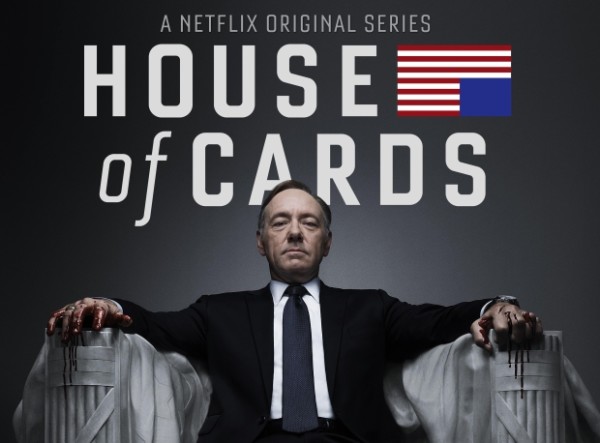
Frank Underwood and his house of cards offers up valuable business lessons.
Netflix’s Emmy-winning drama House of Card’s is one of the most binge-watched shows. Two percent of U.S. Netflix subscribers watched the entire 649 minutes of the second season in just over 72 hours. Around 6 to 10 percent of US subscribers watched at least one episode of the season the weekend it was released.
At the heart of House of Cards is Frank Underwood (F.U.), a man you hate to love. Notwithstanding Frank’s blatant disregard for morals and ethics, Frank and his house of cards offers up business lessons.
1. Relationships matter
Frank focuses much of his time on forging and nurturing relationships. He understands that relationships matter.
Relationships between individuals and relationships between organizations are what drive success. Develop and nurture relationships.
2. A strong team is essential
Frank’s team is critical to his success. This is not happenstance. Frank has assembled a team comprised of individuals with the right skillset to achieve his goals. He understands that success cannot be achieved without these individuals.
Assembling the right team is critical whether it be at the project or organizational level. A strong team is essential for success.
3. Be proactive
Frank once said: “If you don’t like how the table is set, turn over the table.” Frank does not wait for things to happen, he makes things happen.
If you don’t like how it is going (or not going), do something about it.
4. Stay true to your word
In business as in life it is important to stay true to your word. In Frank’s words: “The nature of promises, Linda, is that they remain immune to changing circumstances.”
5. Knowledge is powerful
“I don’t want to assume, I want to know”
Knowledge is critical to Frank’s success. Frank doesn’t make assumptions, rather he takes the time to learn the facts and to learn how the information he has gathered can best be used.
Do the same. Take the time to learn about what matters to those around you, to your customers, and your industry. Use this knowledge constructively.
6. Emotions matter
Not all decisions are made based on logic. Although often ignored, emotion plays a significant role in business. Understanding and speaking to the emotions of a customer or potential business partner, for example, can be the key to success. Or as Frank puts it: “I should have thought of this before. Appeal to the heart, not the brain.”
7. Change often
Remy Danton, Frank’s former Chief of Staff, gives Frank a watch inscribed with a quote from Winston Churchill: “To improve is to change. To perfect is to change often.”
Change is critical. Without change it is not possible to meet the dynamic needs of customers and of your business. Without change growth opportunities will diminish.
8. Don’t let your weaknesses be your downfall
Don’t let your weaknesses be your downfall. Work at strengthening your weaknesses so that you are not an easy target. As Frank points out: “Even Achilles was only as strong as his heel.”
9. Don’t lose sight of the details
The details often get lost in the big picture. However, it is often the details that are critical to success. As Frank puts it: “Pay attention to the fine print. It’s far more important than the selling price.”
![Get SMART about your marketing goals [Free Marketing Goals Template]](https://fronetics.com/wp-content/uploads/2024/10/marketing-goals.jpg)
by Elizabeth Hines | Jan 22, 2015 | Blog, Leadership, Marketing
Want to reach your marketing goals? It’s time to get SMART.
Do you know what it is you’d like to see your business achieve this year? It’s likely you do. In fact, most people know generally what they’d like to see happen over the course of a year because they plan. But don’t be fooled, SMART goal setting is far more than just planning.
If you aren’t yet familiar with the SMART Goal concept, it’s essentially a roadmap to success. It makes our goals Specific, Measurable, Attainable, Realistic, and Time-Bound. SMART Goals are a tool that can be applied in many settings. For example, SMART Goals can be used to reduce costs associated with order fulfillment as well as to increase your website’s monthly visits and visitor to lead conversation rate.
Let’s take a look at how one marketing manager, we’ll call him Sam, might apply the SMART goals framework to his marketing efforts.
Specific – Here Sam will describe his goal in detail. He knows he wants to increase website traffic this year, but that’s not enough, so he gets specific. Sam sets a goal of increasing website traffic by 15% by the end of this fiscal year.
Measurable – How will Sam track his progress? In order to keep Sam on track to meet his goal by target date he set, he decides to use the website performance indicators he already tracks monthly.
Attainable – Sam’s goal should be challenging, but not impossible to reach. He reviews his company’s digital media strategy and prior year website traffic reports. After reviewing those, he decides that his current goal to increase sales by $250,000 by the end of this fiscal year is challenging yet achievable.
Realistic – Sam’s company expanded its product line at the beginning of the fiscal year, so it’s likely the company will experience increased marketplace exposure – an ideal situation for his goal of increasing website traffic.
Time-Bound – Sam plans to reach his goal by the last date of this fiscal year. He will track his progress monthly using website performance indicators.
By setting a SMART goal, Sam gives himself a specific focus and builds structure to his general plan of increasing website traffic. Breaking it down into more manageable parts will give him the motivation he needs to reach his goal.
What are your marketing plans for this year? Do you have a SMART goal guiding you? Increase your chances of success by downloading our free Marketing Goals Template.