by Elizabeth Hines | Oct 14, 2015 | Blog, Marketing, Social Media, Strategy, Supply Chain
A study conducted by Accenture found that supply chain risk management is seen by companies as a priority. Seventy-six percent of companies who participated in the survey described supply chain risk management as important or very important, and 25 percent of respondents reported that they are planning to make increased investments of at least 20 percent in supply chain risk management in the next two years.
Social media is one place where an investment should be made.
Social media is not just for kids. Social media is not just for socializing. Social media is a business tool that can play an important role in supply chain risk management. Here are three reasons why your company should invest in social media.
News in real time
Social media is the new “newswire.” It has supplanted the AP, Dow Jones, and Bloomberg for breaking news. The earthquake in China, the Boston Marathon bombing, the death of Obama bin Laden, and the engagement of Prince William to Kate Middleton were all stories that broke on Twitter. Stories that played out over social media include the horsemeat scandal and Apple’s China supply chain sage.
When it comes to supply chain risk management, knowing what is happening in real time is vital. Whether it is learning about an earthquake that happened near your manufacturing facility, or monitoring the path and intensity of a hurricane – real time information will enable your company to make more informed and timelier decisions on how to manage or mitigate risk.
Identify emerging risks
In addition to providing timely information on events such as natural disasters and terror attacks, social media is a tool that can be used to identify additional risks to your company and supply chain. Specifically, social media can be used to identify risks such as weak links in your supply chain, missteps made by a supply chain partner, and customer concerns/dissatisfaction.
Managing and mitigate risks
A survey found that 89 percent of consumers began doing business with a competitor following a poor customer experience. The survey also found that 50 percent of consumers give a brand only one week to respond to a question before they stop doing business with them.
Social media is a great tool to provide customers with a great customer experience – fast. By engaging a dissatisfied customer over social media, listening to their concerns and addressing them – you are more likely to retain that customer and gain more customers. As the adage goes: “It is less expensive to retain a current customer than attain a new customer.”
Additionally, because social media allows for information to be distributed to a large number of people instantaneously, it is an effective tool for letting customers and partners know you are on top of an issue, or for altering them of an upcoming disruption.
When it comes to supply chain risk management communication and information is vital – social media is an effective tool to add to your company’s risk management toolkit. Get your company off the social media starting line.
This was previously published on Electronics Purchasing Strategies.
by Elizabeth Hines | May 5, 2015 | Blog, Marketing, Social Media, Strategy, Supply Chain
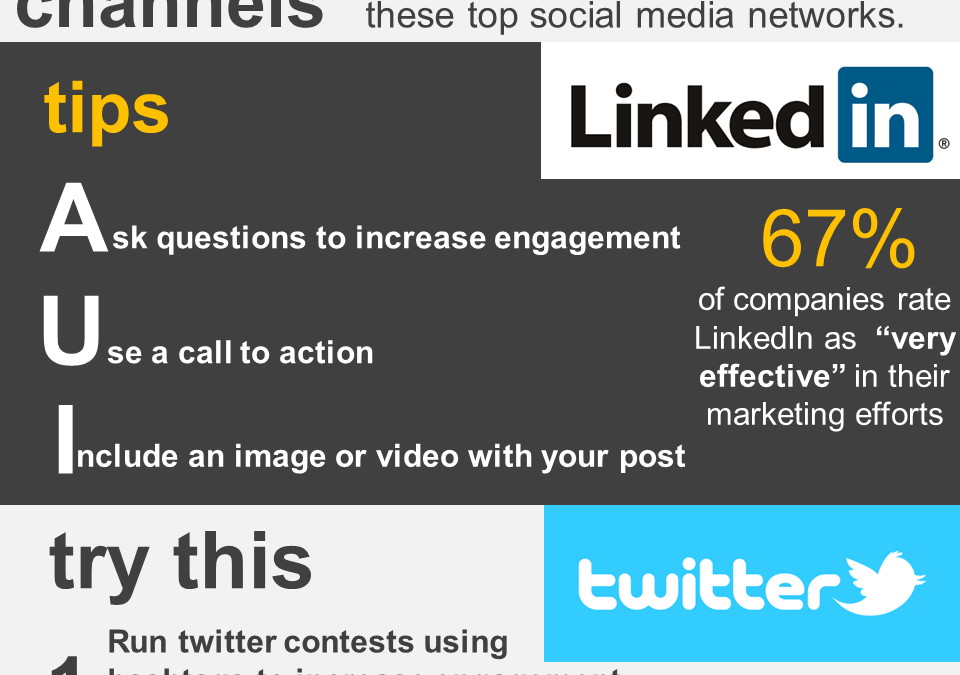
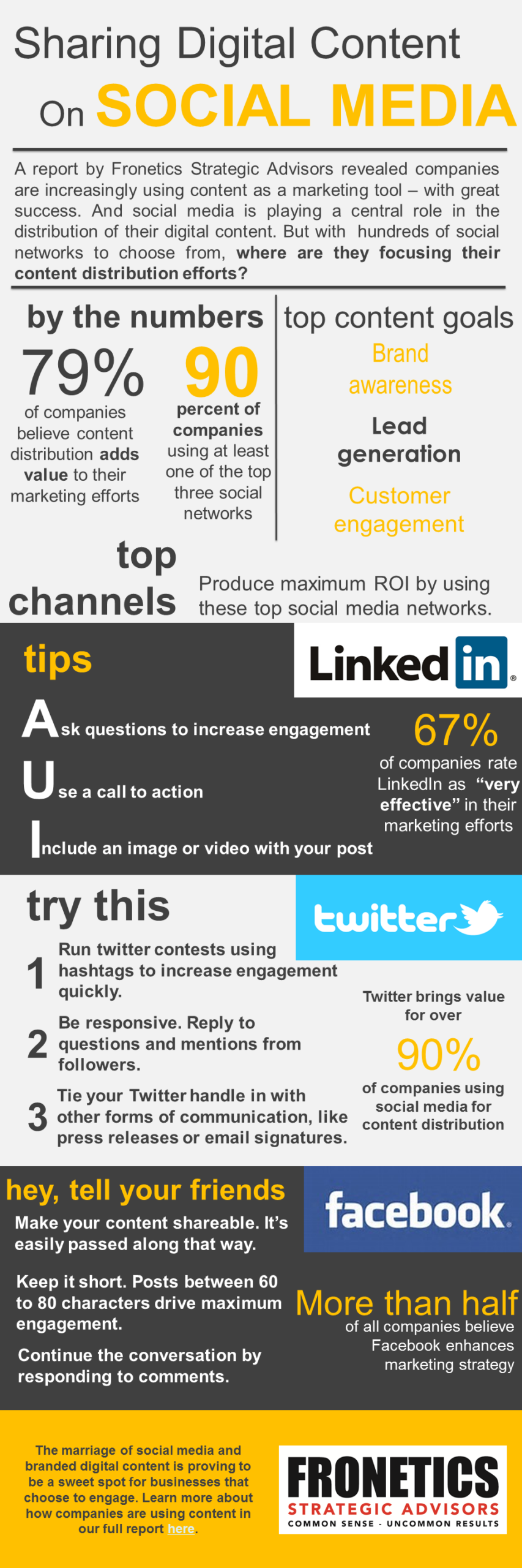
Content marketing has become a priority for many companies in recent years. But connecting branded digital content with the right audience can be tricky. A new report from Fronetics Strategic Advisors examines the relationship between social media and content distribution. The report reveals which social media networks are the most popular for content distribution and which ones add the most value for brands. Take a look at some of the key findings of the report below and then dig into the full report.
Where you should distribute your content:

by Elizabeth Hines | Oct 28, 2014 | Blog, Marketing, Social Media, Supply Chain
A recent survey conducted by Fronetics found that the three biggest challenges faced by companies within the logistics and supply chain industries with respect to their social media use are: time (48 percent), money (43 percent), and a lack of strategy (33 percent).
How can companies overcome these challenges? Here are some suggestions.
Overcoming time constraints
Prioritize and be data driven. Track and measure your marketing metrics. Which efforts are driving the right traffic to your website? Which efforts are resulting in lead generation? Customers? If there are areas where you are focusing time and money, but are not yielding results – either rework your strategy, or eliminate them.
Fronetics’ survey found that 77 percent of companies within the supply chain and logistics industries use Facebook. However, only 15 percent reported Facebook to be very impactful with respect to their business and only 35 percent reported it to be somewhat impactful.
If your efforts aren’t paying off – don’t waste your time. Prioritize.
Tackling the budget issue
Data and setting priorities are important here as well. Together they can make the use of time and resources more productive.
Another thing to consider is whether it might be more cost effective to find an outsource partner.
Creating (and sticking to) a strategy
Strategy is essential. A 2014 study of B2B marketers found that a strategy is a key to success. Companies with a documented strategy in place were found to be more likely to consider their efforts to be effective than companies who do not have a documented strategy in place (60 percent vs. 11 percent).
Put someone in charge of developing a strategy and give the person the authority to make sure that it is carried out. If you are struggling with the “how,” ask for help. Here’s a great eBook that walks you through how to put a strategy in place. Alternatively, find a partner who can help you design a strategy that will work for you (and the time and money you have available).
To learn more about social media and the logistics and supply chain industries, download the report.
by Elizabeth Hines | Oct 9, 2014 | Blog, Logistics, Marketing, Social Media, Strategy, Supply Chain
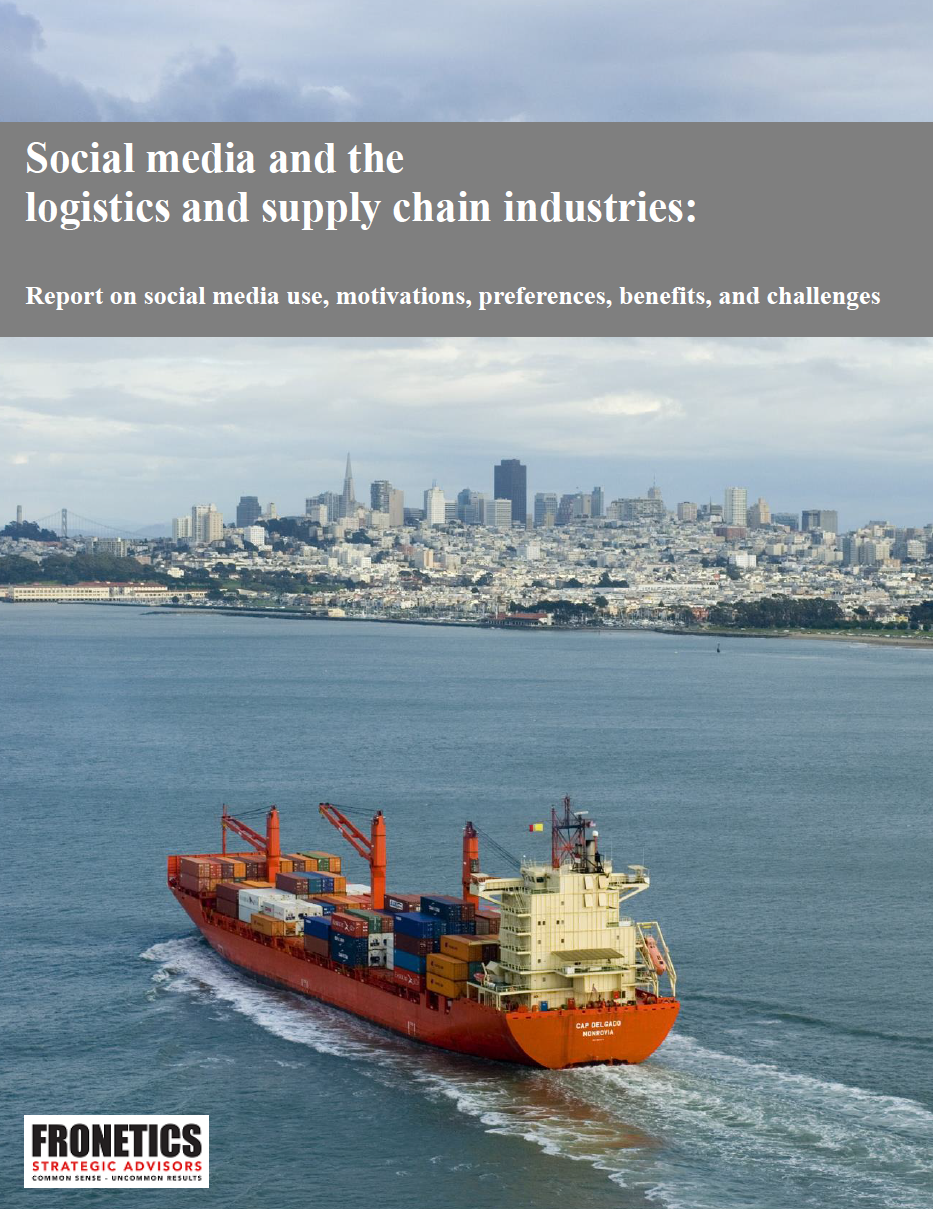
Report on social media use, motivations, preferences, benefits, and challenges.
Within the past five years companies within the logistics and supply chain industries have begun to see social media as a strategic tool and have begun to actively use and leverage social media.
A survey conducted by Fronetics Strategic Advisors looks, broadly, at the use of social media within the logistics and supply chain industries. The report discusses use, motivations, preferences, benefits, and challenges.
Key findings include:
- 68% of survey respondents report that their company has realized benefits by participating in social media.
- Increased engagement with customers, market intelligence, and business intelligence are primary benefits realized by companies.
- Companies are turning to social media to establish and advance their brand and image.
- The majority of companies are currently managing their social media strategy in-house.
- Twitter, LinkedIn and Facebook are the social networks most commonly used by companies.
- Twitter and LinkedIn are perceived to have the greatest business impact.
- Time constraints, budget constraints, and a lack of an identified strategy are the key challenges identified by respondents.
To learn more about social media and the logistics and supply chain industries, download the report.


by Elizabeth Hines | Sep 9, 2014 | Blog, Marketing, Social Media, Strategy, Supply Chain
Many companies within the supply chain industry do not participate in social media because “they can’t get past the word ‘social’ and the perception it creates.” Companies with this mindset are at a disadvantage.
The supply chain industry is, by nature, an industry that is built on relationships, partnerships, cooperation, networks, and on communication. Being social is vital to the success of companies with the supply chain industry. Social media is a platform that is well poised to meet the needs and demands of the supply chain industry – and to help companies within the industry grow their business.
Social media is a tool that can be used be the supply chain industry for: risk management, business intelligence, recruitment, lead generation, engaging with current and prospective customers, attracting new customers, improving productivity, problem solving, and establishing your company as an industry leader. Moreover, social media can be used as the foundation for a new business model.
Clara Shih, CEO and Founder of Hearsay Social, and Lisa Shalett, Managing Director and Head of Brand Marketing and Digital Strategy at Goldman Sachs, write:
Social media is perhaps best thought of as a set of new and innovative ways for businesses and customers to do what they have always done: build relationships, exchange information, read and write reviews, and leverage trusted networks of friends and experts.
Similarly, Tony Martins, President of Tony Martins & Associates, notes that:
Supply chain executives should look at the social model of collaboration that can be enabled through social media as the most significant strategic weapon in supply chain optimization today. It liberates them from the rigid framework of functional structures and client-supplier relationships. It is the best way I’ve seen to keep the supply chain moving quickly, in spite of the many problems that will always occur.
Still skeptical? Look at companies who have successfully leveraged social media. Or, as Shih and Shalett suggest: “As you contemplate the risks and rewards of social media, we would suggest that the key ingredient for evaluation is simply to experience it for yourself.”
Interested in learning more about social media and the supply chain industry? Download our white paper: “Social Media and the Logistics and Supply Chain Industries: Why Not Participating is a Risk You Can’t Afford to Take.”