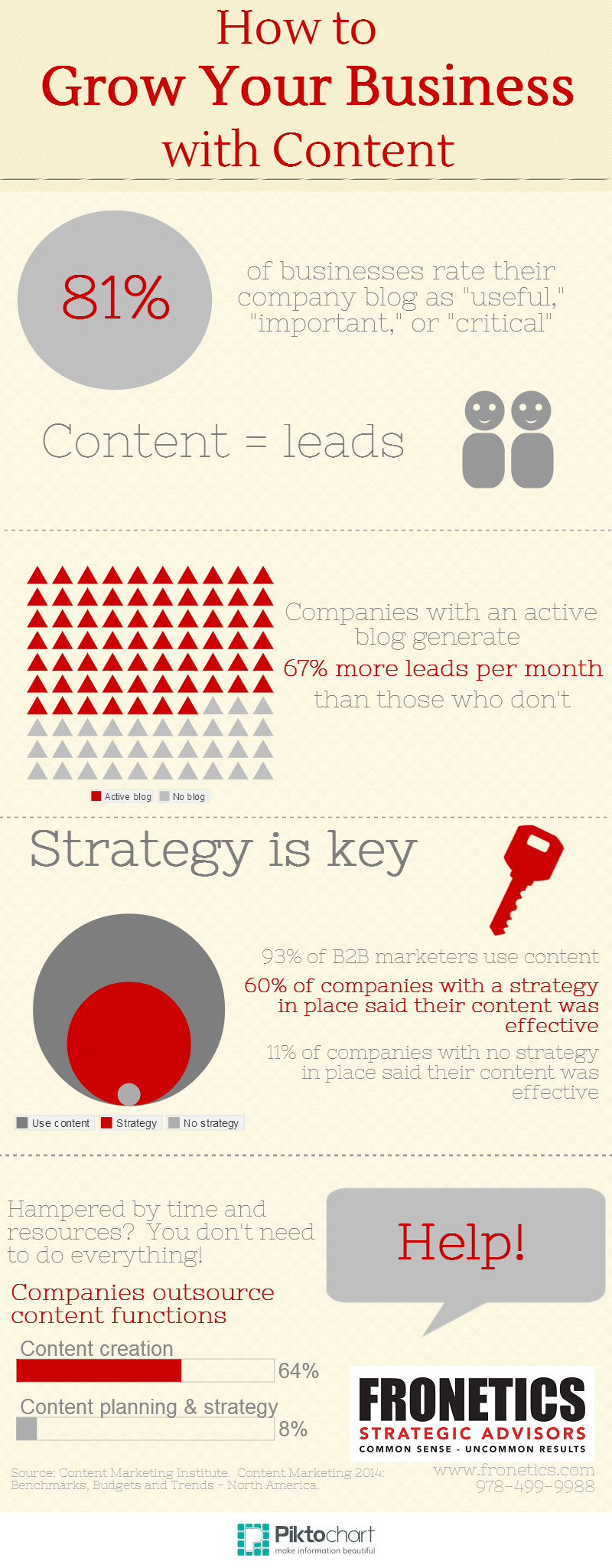
by Elizabeth Hines | Sep 24, 2014 | Blog, Marketing, Social Media, Supply Chain, Talent
“Practice makes perfect.” This is what we have been told by our parents, our teachers, Malcolm Gladwell, and researchers. And, as pointed out by Fast Company, “There’s even a Macklemore song about it, so that makes it real.”
Here’s the problem – it’s not real. A 2014 study found that practice doesn’t make perfect. Instead, reaching a mastery level of whatever it is that you are trying to reach is dictated by your personality, intelligence, and a number of other factors.
Where does that leave us? For business it reaffirms the adage: “Do what you do best, and outsource the rest.”
During a Small Business Week panel discussion Gene Marke, Inc. columnist and owner of the Marks Group, discussed the importance of strategic partnerships and outsourcing:
“One of the smartest things I’ve been seeing companies do is that they do what they do best and outsource the rest. Companies are now thinking more about partners they can work with to provide the type of technologies, services, and solutions they cannot do or don’t have time to do.”
Dan Leberman, the vice president and general manager of PayPal’s North American online small and medium business unit, expressed similar sentiments:
“It’s all about knowing your company’s core competencies. As a small business, you need to decide what you’ll build and what you’ll give to a partner.”
The supply chain and logistics industries have been slower to adopt social media and inbound marketing than other industries. Reasons for this include: a lack of understanding of the benefits, lack of experience, and both time and budget constraints. In short, inbound marketing and associated activities including content creation and social media management are great examples of what companies within the supply chain and logistics industry should consider outsourcing.
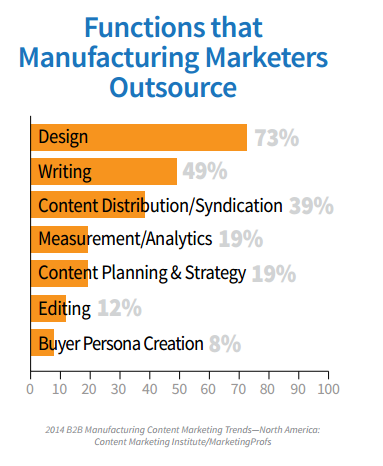
A 2014 study found that 86 percent of manufacturing marketers have adopted content marketing and that the majority (55 percent) of companies look to outsource partners for help.
As shown below, manufacturing marketers outsource a variety of content functions including writing, distribution, design, and editing.
Now that we know practice doesn’t make perfect – play to your company’s strengths and considering outsourcing the rest.
by Elizabeth Hines | Aug 19, 2014 | Blog, Content Marketing, Leadership, Marketing, Strategy, Talent

By consistently creating, curating, and distributing valued and trusted content you can position your company as an industry leader.
What is valued and trusted content?
“Peer-power”
A survey by the CMO Council found that all content is not viewed equally by B2B buyers. “Peer-powered content” is more valued and trusted than non-peer content.
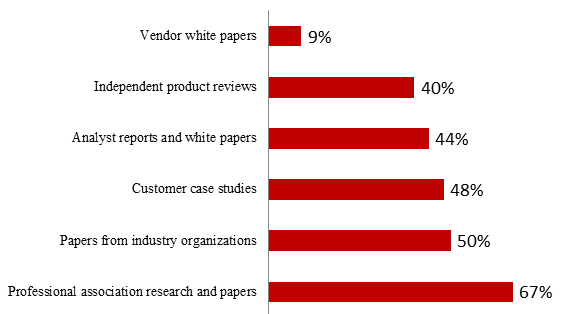
The survey found that professional association research and papers are the most valued and trusted content. Papers from industry organizations, case studies, and analyst reports and white papers were also reported to be valued. In contrast, vendor white papers were not found to be valued highly.
What type of content do you most value and trust?
Source: CMO Council
Depth not promotional
The characteristics that were found to be valued the most by B2B buyers were depth of the content (47 percent) and ease of access and readability (44 percent). Respondents reported that they do not like content that has too many requirements to download (50 percent) or is promotional or self-serving (43 percent).
Good content is shared
B2B buyers report that they share good content. Fifty-nine percent of survey respondents share content with 25 or more peers and associates, and 28 percent of survey respondents forward content on to 100 or more people.
Position yourself
To position your company as an industry leader you need to provide valued and trusted content. This means creating, curating, and distributing content that educates, informs, and addresses specific needs.
It also means avoiding the trap of self-promotion. Valued and trusted content is not content that is self-serving or promotional, rather valued and trusted content provides customers with answers, solutions, and education.
Blogging is essential, but additional content is necessary as well. Case studies and white papers are two go-to content solutions that can help you position your company as a trusted leader within your industry.
Remember that you don’t need to go it alone. More than 44 percent of B2B marketers report that they outsource content creation.
by Elizabeth Hines | Apr 23, 2014 | Blog, Content Marketing, Logistics, Marketing, Supply Chain
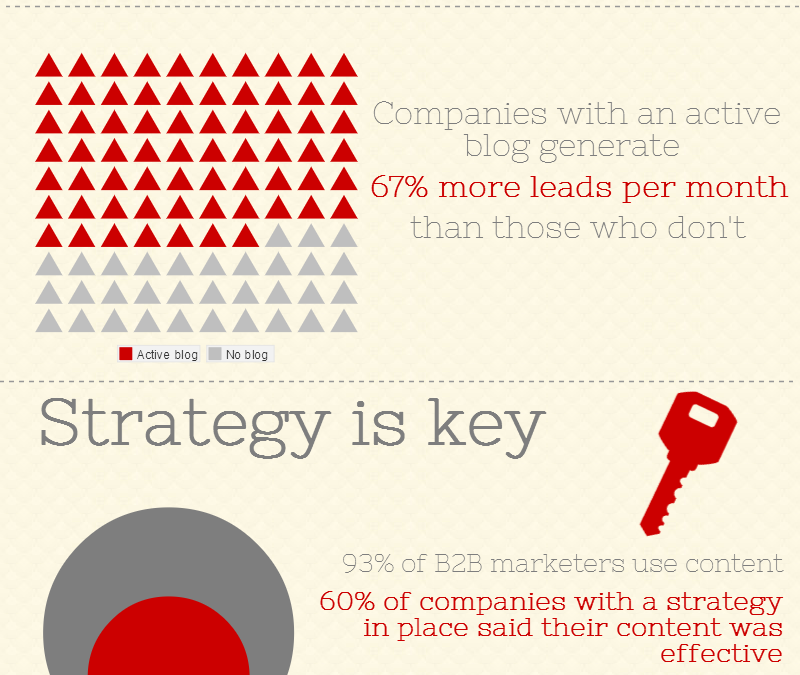
Content infographic: how to grow your business with content