by Elizabeth Hines | Jul 7, 2014 | Blog, Strategy, Supply Chain, Talent

According to Supply Chain Insights 60 percent of companies within the supply chain industry have job openings and 51 percent of companies are seeing an increase in turnover of supply chain leaders. This is now. Looking ahead, the Bureau of Labor and Statistics predicts that the number of logistics jobs are expected to grow by 22 percent by 2022 – nearly double the rate of other professions.
The shortage of supply chain talent is generally attributed to a skills gap. Specifically, that graduates with undergraduate and graduate degrees in supply chain management are not adequately prepared for supply chain jobs, and that professionals within the supply chain do not have the skill set necessary to take on management roles.
Thought leaders including Lora Cecere and David Widdifield have offered viable strategies to address the skills gap. That being said, focusing on education and training, employee retention and growth, and rethinking the talent pool itself does not address the bigger issue – the supply chain industry just isn’t perceived as sexy.
Bob Trebilcock captures this sentiment perfectly in a recent piece in the Supply Chain Management Review:
Admit it. You go to a party and someone asks you what you do for a living. You want to say: Hey, I’m the bass player for Metallica or I’m a transplant surgeon or I’m a skydiving instructor. Something with a Wow factor. Instead, a little sheepishly, with averted eyes, you say: Oh, I work in the supply chain.
Here’s the thing – the supply chain industry is perceived by those outside the industry as having no “wow” factor whatsoever. If the supply chain industry is going to attract new and qualified talent, it needs a face lift. It is time for the supply chain industry to rebrand itself.
If the supply chain industry wants to fill open positions with great talent it needs to change its image. Companies within the industry can start by redesigning their website and by becoming active in social media. Companies can also rethink their recruiting materials and talking points.
What is it that makes (or could make) the supply chain sexy? What can the supply chain industry offer great talent? How can the supply chain better showcase the supply chain of today?
If the supply chain industry can successfully rebrand itself, great talent will not dismiss the supply chain industry, instead it will come pounding at the door.

by Elizabeth Hines | Jan 14, 2014 | Blog, Leadership, Logistics, Strategy, Supply Chain, Talent
Hiring: Why you should try before you buy
Source: https://www.lethbridgemusicaltheatre.ca
I just finished reading a great post on hiring by Matt Mullenweg, founder of Automattic and the creator of open source WordPress software. The post focuses on the company’s “unorthodox hiring system” and how it has enabled Automattic to hire great talent and realize high employee retention rates. Although time consuming, I think Mullenweg and Automattic are on to something.
Before Automattic extends an offer, the candidate must first go through a trial process, on contract. The candidate is given real work and is compensated for doing the work. At the end of the trial process both the company and the candidate have a better picture of each other and if they are a good fit. Or as Mullenweg puts it: “There’s nothing like being in the trenches with someone, working with them day by day. It tells you something you can’t learn from resumes, interviews, or reference checks. At the end of the trial, everyone involved has a great sense of whether they want to work together going forward. And, yes, that means everyone — it’s a mutual tryout. Some people decide we’re not the right fit for them.”
Mullenweg acknowledges the “huge time commitment” of this process. But he points out the benefits and why they have not abandoned the system for an easier one: the process is able to identify great talent that works well within the company’s culture, the process weeds out candidates that are not a good fit before they become a part of the team, and the process had led to consistently high retention rates.
In my experience, too often both companies and candidates are guilty of moving their relationship forward faster they should – and regretting it later. For this reason “auditioning,” as Mullenweg calls it, or “try before you buy” as I think of it, is an hiring strategy that should be embraced more often.
What do you think of this hiring strategy? What are the advantages and disadvantages do you see?
by Elizabeth Hines | Jan 7, 2014 | Blog, Leadership, Strategy, Talent
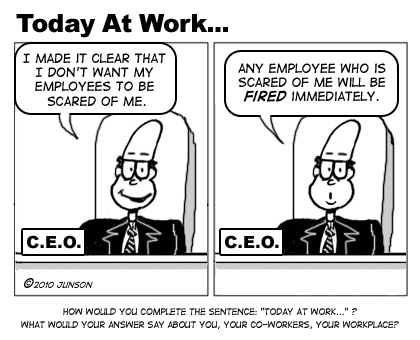
how to hire a leader
Businesses don’t fail, leaders do – a lot. Studies have shown that the rate of failure of executives coming into new companies ranges from 30 to 40 percent after 18 months. The costs and implications of a poor leadership hire are enormous. Given the odds, how can you hire a leader – a true leader? Here are five tips:
Ask the right question
Just one interview question can give you enormous insight into the abilities and qualifications of the candidate. The question: “Tell me about the last person you fired.” According to Marc Barros, co-founder and former CEO of Contour, this question and the discussion that will follow will give you the “strongest indicator of the candidate’s leadership ability.” Specifically, the candidate’s response will shed light on their communication style and skills, their willingness and ability to admit mistakes, and the candidate’s level of empathy and emotion.
Conduct your own due diligence
When it comes to finding the next leader for your company, don’t leave due diligence in the hands of someone else. Take the time to learn about the candidate, talk to people who have worked with the candidate in the past, and gather as much information on the person as you can.
Go beyond the typical interview
Going beyond the typical interview is revealing in that enables you to see the candidate outside of the canned interview environment (an environment which many have mastered). Some ideas: have the candidate give a presentation, facilitate a meeting, or write up their thoughts on how to tackle a specific problem.
Opinions matter
Have the candidate meet with employees of various positions and levels within the company. After each person meets with the candidate get their feedback – and listen. It is amazing how often a candidate will let their guard down when they perceive they are meeting with someone that “doesn’t matter.” The truth is that these meetings do matter as they can provide you with some of the best insight into the candidate and their leadership style.
Hire from inside
When you hire from inside your company, you will get a leader who knows how to succeed in the company’s culture.

by Elizabeth Hines | Dec 11, 2013 | Blog, Leadership, Strategy, Talent

Source: CrossFit Full Potential
CrossFitters recognize that good outcomes only come with hard work, and lots of it. For that reason, it generally attracts people who are willing to make sacrifices and go the extra mile to get results both in the gym and at work.
If you want to hire top performers who have staying power hire people who do CrossFit. Here are eight reasons why CrossFitters make great employees.
1. They are able to work with a variety of people
In business it is essential to be able to work with a variety of different people – people within different departments, at different levels within the company, even across various industries. However, many employees don’t have this capability and they fall flat. CrossFitters excel in this area. On a typical day a CrossFit class is comprised of people who have attended just one class and people who have been religiously attending CrossFit for several years, ex-Marines, pregnant women, people in their 20’s, and people in their 70s. There are people who have been athletes their whole life and people for whom CrossFit is their first foray into an active lifestyle. Because there are such a variety of people at CrossFit, when team or partner work comes into play it is essential to, seamlessly, be able to work with anyone and everyone.
2. They are willing to try new things
Business is ever evolving. In order to stay competitive it is essential that your business is willing to try new things, to be inventive, to be creative, and to be able to be willing to change. An employee who is unwilling to try new things becomes a barrier to change and to the evolution of your company. CrossFit is about trying new things and not getting bogged down with routine; CrossFitters train to be ready for the “unknown and unknowable.”
3. They are willing to go beyond their comfort zone
A step beyond trying new things is stepping outside of the comfort zone. Going beyond the comfort zone involves risk and can lead to failure. Because of this, many employees are unwilling to go beyond their comfort zone. However, employees who are willing to take this leap are typically those who bring creativity, drive, and innovation to the company. CrossFit encourages people to go beyond their comfort zone and, by nature, the majority of CrossFitters leap at this chance.
4. They can recognize their limits
Everyone has their limits. An employee who is able to recognize his or her limits is much more effective and efficient than an employee who cannot recognize their limits. If your employee knows the right time to ask for help your guidance you are lucky. CrossFitters are adept at knowing their limits; in CrossFit knowing your limits is essential in that going beyond can result in injury.
5. They are willing to tackle seemingly insurmountable problems
Many employees tackle the small problems and leave the big ones alone hoping someone else will take them on. Or, even worse, some employees are so focused on the small problems they don’t even notice that there are bigger problems which need to be addressed. Each workout of the day (WOD) presents seemingly insurmountable problems. That CrossFitters choose to do an activity which consistently presents participants with seemingly insurmountable problems tells you a lot about the drive of CrossFitters.
6. They like challenge
Employees who like to play it safe and easy are not going to be top performers. If you want top performers, look for employees who embrace challenge. CrossFitters embrace challenge. For example, a couple weeks ago the WOD was to, as a team of three, deadlift 25,000 pounds. My team was comprised of an ex-professional hockey player, a woman in her 30’s who was relatively new to CrossFit, and me (5’1” and not easily mistaken for the world’s strongest woman). Faced with a big challenge and a diverse team (see #1) – we dove in…headfirst.
7. They work hard
Dan Vadala, business consultant and owner of CrossFit Full Potential, describes the work ethic of CrossFitters: “CrossFitters recognize that good outcomes only come with hard work, and lots of it. For that reason, it generally attracts people who are willing to make sacrifices and go the extra mile to get results both in the gym and at work.” Moreover, Vadala notes that he sees positive transformations in those who do CrossFit: “CrossFit has the capacity to transform people into the types of performers and self-starters that employers are finding harder and harder to recruit.”
8. They are supportive
A good employee will support others through the good and the bad. A supportive employee will be the first to recognize their peers for a job well done, and be the first to provide guidance to those who appear to be struggling. A supportive employee is good for morale and good for your company. CrossFitters are a supportive bunch. I have never participated in another activity in which there has been so much support from so many people. “Nice work!”, and “Well done!” is heard over and over again as are little tidbits of information such as “That looks great, but if you try moving your grip a little you’ll be amazed by what you can do.”

by Elizabeth Hines | Nov 19, 2013 | Blog, Leadership, Strategy, Talent
Career Builder identified Supply Chain Manager as a Top Growth Job for 2013. Why did supply chain manager make the short list (just 18 jobs made the list)? Supply chain manager has experienced an 8 percent job growth since 2010 and there is just one active candidate for every five posted jobs. Colleges and universities have recognized the demand – and opportunity. The Wall Street Journal recently reported that supply chain management is the “hot new MBA” and that “more than a half-dozen universities have recently introduced undergraduate majors, M.B.A. concentrations and even entire degree programs dedicated to procurement, inventory management and global supply-chain strategy.”
Finding the right person for a job opening is essential. Hiring the wrong person is a costly mistake not only financially, but also in terms of team morale and productivity. Given the demand for supply chain talent, the dearth of experienced talent, and an increasing number of newly graduated talent entering the job market – how do you find and hire the right person? Here are a few tips on how to hire.
Look across the industry
Look across the industry and identify individuals who are a good match to your company and the role.
Look within the company
Look inside your company. Is there someone who would thrive in a new role – even if the role is outside of their current field?
Look outside the industry
While this may seem counter intuitive, bringing in a talented professional from outside the industry could provide the fresh ideas and insight that your company.
Work with colleges and universities
Develop a relationship with colleges and universities. Work with the schools to identify upcoming or recent graduates who are/were stars. Another option is to establish an internship program with a school.
Work with a strategic advisory firm
Working with a strategic advisory firm is an option as well. This type of partnership, such as the ones I build with our clients, can make identifying the right talent for the right position easier. An advisory firm often has the pulse on where the most talented people are in the supply chain and logistics industry. This type of partner can launch a successful candidate search process, get new hires up and running, and help retain talent for the long run.
Be creative and have vision
Throughout the hiring process remember that creativity and vision are key.
Offer an out
Here is a great example of offering an out. Zappos pays new employees to quit. You read that right – the company pays new employees to quit their jobs. Once new employees have completed their 4 wee training program they are given “The Offer.” That is, they can choose to remain with the company or quit. If they choose to quit they will be paid for the time they worked and given an additional $3,000. The employee has 24 hours to decide. Why does the company do this? If the employee is not happy in the new position and not committed, it makes sense for both parties to cut and run.