
by Elizabeth Hines | Aug 26, 2014 | Blog, Content Marketing, Marketing, Strategy

A 2013 survey of B2B marketers by LinkedIn found that when it comes to lead generation, customer testimonials and case studies are considered the two most effective content marketing tactics. Why are customer testimonials and case studies so effective? Because they are content that is valued and trusted by B2B buyers.
How can you write a B2B case study that generates leads?
Here are five elements of an effective case study.
- A case study is a story. Case studies that read like a story succeed. Case studies that are written, for example, as a sales pitch fall flat and fail to attract and engage prospective buyers.
- Case studies are not a sales pitch. Inform and educate through the sales pitch, but do not “sell.” An effective case study will generate new customers and sales.
- Prospective buyers turn to case studies for concrete examples. Make it easy for the reader to obtain the information desired. Bullet points, quotes, and lists are all examples of how you can deliver the highlights.
- Keep it short and sweet. A case study should provide the prospective buyer with enough information, but should not go into the minutia.
- Include these three components: the challenge, the solution, and the results.
by Elizabeth Hines | Aug 19, 2014 | Blog, Content Marketing, Leadership, Marketing, Strategy, Talent

By consistently creating, curating, and distributing valued and trusted content you can position your company as an industry leader.
What is valued and trusted content?
“Peer-power”
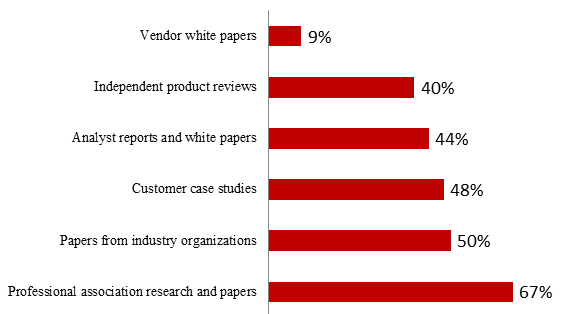
A survey by the CMO Council found that all content is not viewed equally by B2B buyers. “Peer-powered content” is more valued and trusted than non-peer content.
The survey found that professional association research and papers are the most valued and trusted content. Papers from industry organizations, case studies, and analyst reports and white papers were also reported to be valued. In contrast, vendor white papers were not found to be valued highly.
What type of content do you most value and trust?
Source: CMO Council
Depth not promotional
The characteristics that were found to be valued the most by B2B buyers were depth of the content (47 percent) and ease of access and readability (44 percent). Respondents reported that they do not like content that has too many requirements to download (50 percent) or is promotional or self-serving (43 percent).
Good content is shared
B2B buyers report that they share good content. Fifty-nine percent of survey respondents share content with 25 or more peers and associates, and 28 percent of survey respondents forward content on to 100 or more people.
Position yourself
To position your company as an industry leader you need to provide valued and trusted content. This means creating, curating, and distributing content that educates, informs, and addresses specific needs.
It also means avoiding the trap of self-promotion. Valued and trusted content is not content that is self-serving or promotional, rather valued and trusted content provides customers with answers, solutions, and education.
Blogging is essential, but additional content is necessary as well. Case studies and white papers are two go-to content solutions that can help you position your company as a trusted leader within your industry.
Remember that you don’t need to go it alone. More than 44 percent of B2B marketers report that they outsource content creation.

by Elizabeth Hines | Aug 5, 2014 | Blog, Content Marketing, Marketing, Strategy

The amount of content on the internet is tremendous – and is growing by the second. With 93 percent of B2B companies using content marketing, and with more than $16.6 billion dollars being invested annually by B2B companies in digital content publishing – how can your content and your business stand out?
The CMO Council, Content ROI Center, and Netline conducted a survey of 352 senior-level B2B buyers, influencers, and decision makers with the objective of determining content’s role in influencing B2B buyers in the purchase process. The results of the survey can be used as a guide for creating content that will help you grow your business by driving profitable customer action.
Why do buyers consume content?
Sixty-two percent of B2B buyers turn to content in order to learn about new market developments and industry practices. Sixty percent turn to content to discover new solutions to address a specific problem. 52 percent look to content to address a project or a program being undertaken by their company.
Why do buyers value content?
Fifty-four percent of B2B buyers report they believe content keeps them current on new techniques. Forty percent say that it helps identify partners and solution providers. Thirty-eight percent of B2B buyers believe content provides strategic insights and shapes their purchase specifications. Thirty-seven percent of B2B buyers report that content educates them about industry issues, problems, and challenges.
Content that will grow your business
Content that will draw customers to your website and to your business is content that educates, informs, and addresses specific needs.
So that your business does not get lost in the clutter, you need to create and curate content that educates consumers about the industry, technology, and new market trends. Moreover, your content should address the needs and pain points of your target customer. Therefore, your content should answer questions, provide solutions, and provide strategic insight.
If you consistently create and curate content that B2B buyers find valuable, you will realize results.
by Elizabeth Hines | Jul 1, 2014 | Blog, Content Marketing, Manufacturing & Distribution, Marketing, Strategy, Supply Chain
Think like a manufacturer
Gartner’s Jake Sorofman wrote a great piece about building a content supply chain. His advice for understanding what it takes to use content as a tool to grow your business: think like a manufacturer.
Why? Sorofman connects the dots:
Manufacturing is actually an instructive example for what it takes to scale and sustain a content marketing program. Why? Because content marketing requires a replenishing pipeline of engaging content—a content supply chain—that helps feed the beast every day.
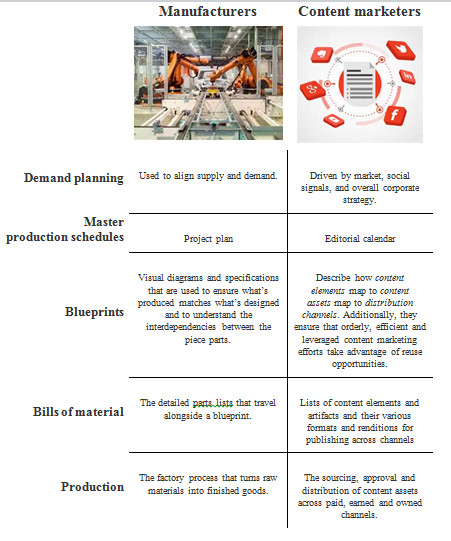
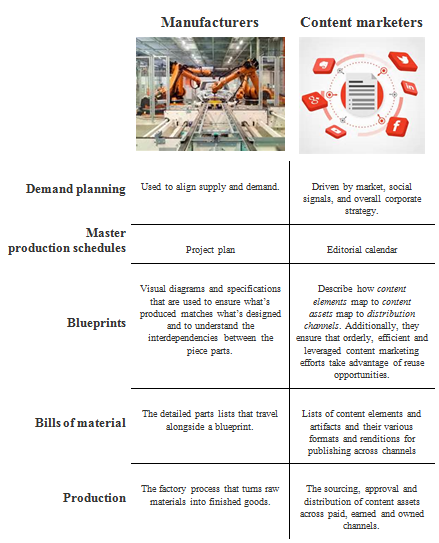
The following table (adapted Sorofman’s article) further illustrates the parallel between manufacturing and content marketing.
How can you successfully replenish your content supply chain and grow your business?
Strategy. As in manufacturing, strategy is essential when it comes to content. Without a strategy in place your content efforts will fall flat and will not help you grow your business. Want to learn more about creating a content strategy that will drive profitable customer action? Download our eBook: Grow your business with content: 12 steps to a content strategy.

by Elizabeth Hines | Jul 1, 2014 | Blog, Content Marketing, Marketing, Strategy
Content can grow your business.
How can content such as blog posts, white papers, eBooks, newsletters, infographics, podcasts, webinars, and video grow a business? Content can grow your business by increasing your search engine ranking, positioning your company as an industry leader, attracting new customers, and helping you retain current customers.
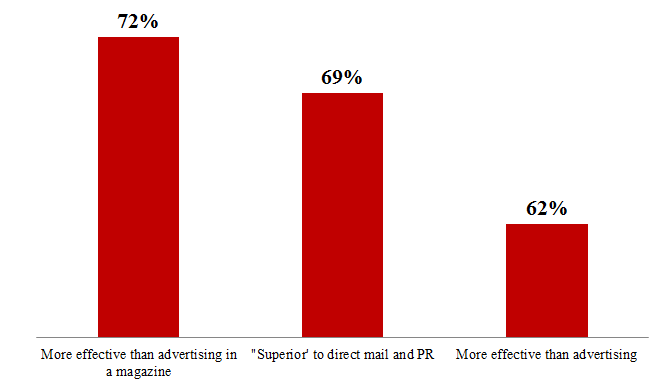
Not convinced? B2B companies with an active blog generate 67% more leads per month than those who don’t. What’s more, a study by the Custom Content Council found that 72% of marketers believe branded content is more effective than advertising in a magazine, 62% believe it is more effective than advertising, and 69% believe it is ‘superior’ to direct mail and PR.
Not all content is equal. Not all content will help you grow your business.
Content that will move the needle for your business is valuable content. It is content that is informative, educational, interesting, and speaks to your customer’s emotions and speaks to their pain points. Valuable content is not a sales pitch. Furthermore, valuable content is content that is delivered consistently over time and at the right time.
Strategy is vital
A 2014 study of B2B marketers found that companies who have a documented content strategy in place are more likely to consider their efforts to be effective than companies who do not have a documented strategy in place (60 percent vs. 11 percent).
The 12 steps to creating a content strategy that will help your company drive profitable customer action are:
- Put someone in charge
- Define your goals
- Define your audience
- Define your metrics
- Identify the right distribution channels
- Create a publishing calendar
- Create content
- Curate content
- Distribute content
- Engage with customers and prospects
- Track and analyze metrics
- Make adjustments as necessary
Want to learn more about these 12 steps and creating an effective content strategy? Download our eBook.