by Elizabeth Hines | Sep 24, 2014 | Blog, Marketing, Social Media, Supply Chain, Talent
“Practice makes perfect.” This is what we have been told by our parents, our teachers, Malcolm Gladwell, and researchers. And, as pointed out by Fast Company, “There’s even a Macklemore song about it, so that makes it real.”
Here’s the problem – it’s not real. A 2014 study found that practice doesn’t make perfect. Instead, reaching a mastery level of whatever it is that you are trying to reach is dictated by your personality, intelligence, and a number of other factors.
Where does that leave us? For business it reaffirms the adage: “Do what you do best, and outsource the rest.”
During a Small Business Week panel discussion Gene Marke, Inc. columnist and owner of the Marks Group, discussed the importance of strategic partnerships and outsourcing:
“One of the smartest things I’ve been seeing companies do is that they do what they do best and outsource the rest. Companies are now thinking more about partners they can work with to provide the type of technologies, services, and solutions they cannot do or don’t have time to do.”
Dan Leberman, the vice president and general manager of PayPal’s North American online small and medium business unit, expressed similar sentiments:
“It’s all about knowing your company’s core competencies. As a small business, you need to decide what you’ll build and what you’ll give to a partner.”
The supply chain and logistics industries have been slower to adopt social media and inbound marketing than other industries. Reasons for this include: a lack of understanding of the benefits, lack of experience, and both time and budget constraints. In short, inbound marketing and associated activities including content creation and social media management are great examples of what companies within the supply chain and logistics industry should consider outsourcing.
A 2014 study found that 86 percent of manufacturing marketers have adopted content marketing and that the majority (55 percent) of companies look to outsource partners for help.
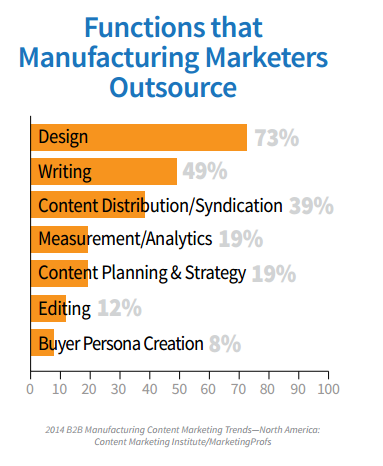
As shown below, manufacturing marketers outsource a variety of content functions including writing, distribution, design, and editing.
Now that we know practice doesn’t make perfect – play to your company’s strengths and considering outsourcing the rest.

by Elizabeth Hines | Sep 23, 2014 | Blog, Marketing, Social Media, Strategy

The number of social media channels is astounding –and is growing daily. Which of these channel(s) should your business leverage? Here is what you should consider when determining which social media channels you should use for your B2B business.
Your ideal customer
Who is your ideal customer and on which social media sites are they active? Taking time to understand who your customer is and understanding where they spend their time is invaluable. If you want to reach potential and current customers you need to be where they are – you need to make it easy for them to find you and to engage with your business.
Competition
Identify which social media channels your competition is using. Do these align with the channels your ideal customers are using?
Don’t be follower. If your research has shown that your potential customers are using a social media channel that your competitors are not using, don’t assume your competition knows something you don’t. Play where your potential customers play.
Content
What type of content do you have, and what type of content do you feel will best attract and engage potential customers? Video, for example, is better suited for YouTube than Twitter.
Finally, it is essential that your business is an active participant on social media. Only take on what your business can handle and/or consider outsourcing.

by Elizabeth Hines | Sep 17, 2014 | Blog, Marketing, Strategy, Supply Chain
At Fronetics we work with companies within the supply chain and logistics industries to reach their business and marketing goals. We work with our clients to identify and execute strategies that produce results.
As discussed in a previous post, too often I see companies who have invested time and money into developing a B2B inbound marketing strategy and have fallen flat. Reasons include: a lack of strategy and commitment; not targeting the ideal customer; not publishing content consistently; not creating quality content; and being too focused on sales.
Is your current marketing strategy working? Does your website attract and engage? Does your website generate leads? Does your company generate leads via social media?
How many times did you answer “I don’t know,” or “no?” Be honest.
We are offering a free marketing assessment. The assessment includes a discussion focused on your current goals and challenges, an evaluation of the competitive landscape, and actionable strategies to help you grow your business.
Don’t worry, there is no fine print and there are no obligations.


by Elizabeth Hines | Sep 16, 2014 | Blog, Content Marketing, Marketing, Social Media, Strategy, Supply Chain
I work with companies from the supply chain and logistics industries to identify and execute strategies that will grow their business. Too often I see companies who have invested time and money into developing a B2B inbound marketing strategy and have fallen flat. Here are six reasons why inbound marketing strategies tend to fail:
The ideal customer is not being targeted
A successful inbound marketing strategy will attract and engage the “right people” – ideal customers. It is therefore essential that time is taken to understand who the ideal customer is, the needs of the customer, and the customer’s pain points. Your company’s website, social media presence, and email communications, should speak to your ideal customer.
Content is not published consistently
A common pitfall is establishing a blog, but only publishing content on a sporadic basis. To establish your company as an industry leader and gain leads, you need to publish content on a consistent basis. For example, your company needs to commit to publishing blog content every Tuesday.
Content is not quality content
All content is not equal. If you want your inbound marketing efforts to succeed, your content needs to be quality content. Your content should be well-researched, sourced, and edited. Grammatical errors and misspellings are inexcusable.
More isn’t always better
It is easy to sign up for a social media account. I’ve seen many companies who have decided to jump into social media feet first and have established many social media accounts, only to become overwhelmed. If you want your inbound marketing strategy to succeed, it is more important to be active on one social network than inactive on five.
Lack of strategy and commitment
A 2014 study of B2B marketers found that companies that have a strategy in place are more likely to consider their efforts effective than companies that do not have a stated strategy in place. Companies that do not have a strategy in place, and who do not have someone in charge of the strategy tend to fail.
A focus on sales
Content that informs and educates attracts and engages. Content that is “salesy” not only fails to attract and engage, it turns customers away.
Is your inbound marketing strategy falling flat? Assess your strategy – honestly. Has your company fallen prey to these common pitfalls?
by Elizabeth Hines | Sep 10, 2014 | Blog, Data/Analytics, Marketing, Strategy
Metrics matter. Metrics allow you to measure success, drive strategy, and demonstrate the ROI of your marketing efforts. Conversions are one of the most important metrics to monitor.
Why conversion rates matter
What is a conversion? A conversion means action. It means that someone took some action that entered them into your funnel or moved them further down your funnel. Examples of conversions are: downloading a white paper, filling out a form, requesting information, opening an email, and becoming a customer.
By monitoring and tracking conversions you can determine what marketing efforts are paying off. Additionally, by monitoring and tracking conversions you can identify which efforts need to be re-evaluated or even discontinued. In short, conversion rates can help you measure your ROI.
Why conversion rates don’t matter
Conversion rates are not the Holy Grail of metrics. Your website should be a magnet. It should attract and engage prospective customers and current customers. Your website should serve to educate and to establish your business as an industry leader. Eighty to 90 percent of prospects are not ready to make a purchase when they first engage with your company. Conversion rates don’t capture the amount of time people spend on your website, learning, exploring, and getting to know your business. Conversion rates also do not capture the amount of time current customers spend on your website – valuing your company as a resource.
While conversion rates are an important metric to measure, remember that they are not the end all be all.
Tracking conversion rates
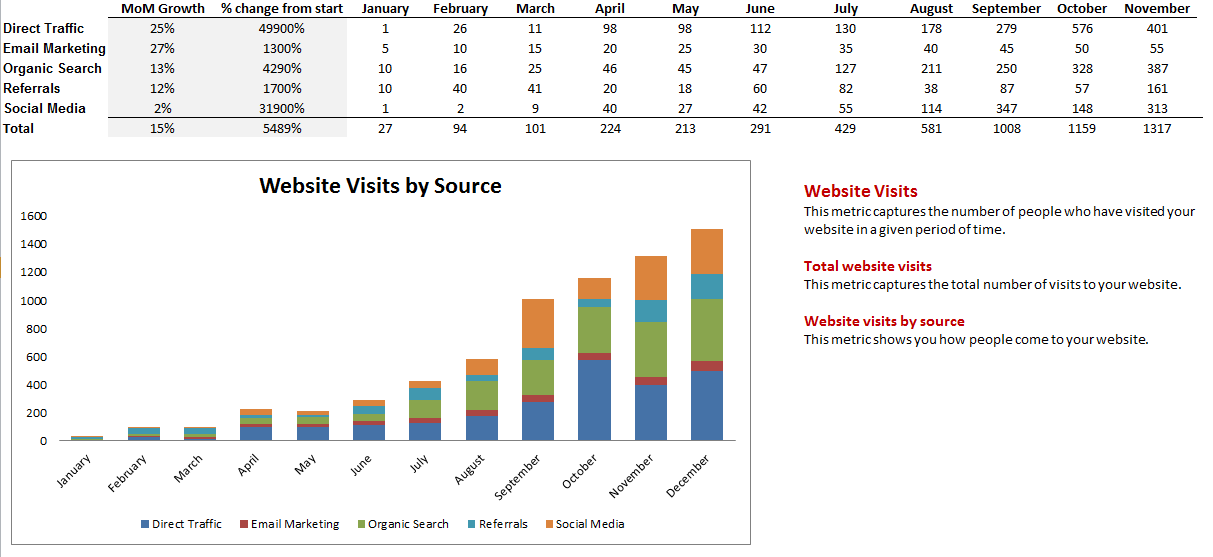
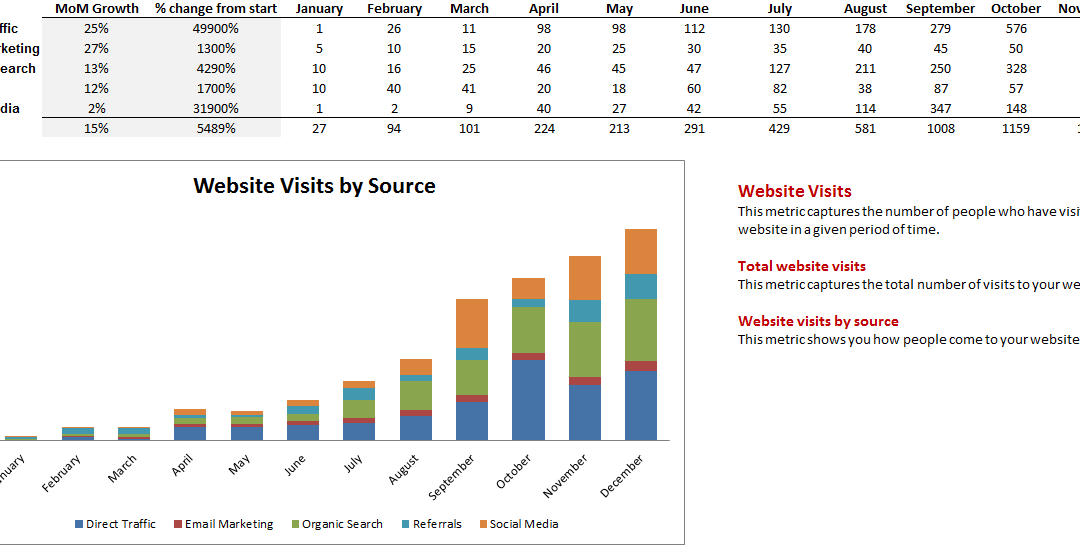
We created a template that you can download and use to track conversion rates and other critical metrics. While the template captures visitor-to-lead and lead-to-customer conversion rates, you can easily modify the template to include additional conversion rates that are useful to your business.