by Elizabeth Hines | Jul 6, 2017 | Blog, Content Marketing, Data/Analytics, Marketing
Businesses report these 3 content marketing challenges are the largest they face. Here’s how to track your progress in overcoming them.
Is content marketing working well for your business? If not, you are not alone. Though it is one of the most effective ways to grow your business, content marketing has been challenging B2B and B2C organizations since its inception.
You may think it should be simple: Write, post, get more customers. But content marketing is much more complex, demanding more time, thought, and careful strategy than churning out a few blog posts.
First and foremost, what you produce must engage readers. This is, however, one of the biggest content marketing challenges facing both B2B and B2C marketers.
In fact, the 2017 State of Inbound Report found that content creation is just the tip of the iceberg in terms of content marketing challenges that businesses face. Here are 3 marketing challenges and ways to track your progress in overcoming them.
3 content marketing challenges
1. Generating traffic and leads
Echoing their priorities, marketers today find generating traffic and leads to be their biggest challenge. In fact, 61% of those surveyed listed it as their number one challenge. ‘Content is king’ has become a marketing mantra, but how can you turn your content into actual leads that turn into sales?
Tying revenue directly to publishing and distributing content can be difficult. Thinking about social media content within the context of your entire sales funnel can make it easier to determine effectiveness. Content is typically used to attract leads, to encourage readers to subscribe to your blog, or to have prospects submit contact info to get higher-value content. Continued engagement nurtures leads and moves them further down the sales funnel.
Track this: The cost to get a lead. You can then determine the percentage of leads that move on to become qualified leads, the percentage of qualified leads that then become opportunities, and the percentage of opportunities that are ultimately won. At the end of the day, you’ll be able to calculate the revenue generated from leads that entered the funnel from your content marketing efforts.
2. Proving the ROI of marketing activities
Coming in at a close second, 43% of marketers felt that proving their ROI from content marketing activities was their biggest challenge.
Whether launching a product or a new social media campaign, we look for instantaneous numbers that will affirm we made the right choices. But here’s the problem: Not all metrics are created equal. Content marketing ROI is harder to confirm than checking a few quick numbers.
Lean-startup pioneer Eric Reis said, “The only metrics that entrepreneurs should invest energy in collecting are those that help them make decisions.” In other words, measuring your ROI will tell you if an effort was profitable so you know where to put your time and money.
ROI can help you determine whether it was worth spending your resources in a particular way. This is extremely useful on platforms like blogs and social media, where things are constantly changing. Using ROI as a litmus test, you can keep experimenting and making sure you’re using these tools effectively.
Track this: Use tools like HubSpot, Hootsuite, and built-in analytics platforms like Twitter Analytics, Facebook Insight, and YouTube Analytics to track detailed information about engagement with your content.
3. Budget
Organizations that have a documented content marketing strategy are more likely to be successful than those that don’t. But setting aside the funds to develop and implement these strategies can be tricky.
The State of Inbound Report found that 30% of marketers struggle to secure a budget for their marketing efforts. Content marketing competes with other marketing campaigns (outbound, native, etc.) for funding. The Content Marketing Institute’s latest trends report states that, on average, 29% of B2B brands’ total marketing budget is spent on content marketing, leaving a majority of funding going toward other efforts.
Content marketing is here to stay. In fact, it’s at its best when it’s integrated with your other marketing efforts, becoming a part of your entire marketing strategy.
Track this: Content marketing serves every marketing channel. Experiment with overlapping marketing budgets to increase your efforts for whitepapers, sales collateral, social media posts, and to make sure your advertisements and visual messaging are in sync. Content serves every marketing channel, so you’re wasting time claiming you don’t have the budget.
Related posts:

by Elizabeth Hines | Jul 3, 2017 | Blog, Content Marketing, Current Events, Marketing, Supply Chain
Blog aggregation site Feedspot included Fronetics’ blog on its list of the best content for the supply chain.
Fronetics is honored to learn that our blog has been included on Feedspot’s list of the top 75 supply chain blogs and websites for supply chain professionals. The blog aggregation website has indexed thousands of supply chain blogs and pulled out the most popular using search and social metrics.
Feedspot explains its methodology. “These blogs are ranked based on following criteria:
- “Google reputation and Google search ranking
- “Influence and popularity on Facebook, Twitter and other social media sites
- “Quality and consistency of posts.
- “Feedspot’s editorial team and expert review.”
We are in excellent company on this list. And we love seeing friends and frequent content collaborators like Argentus and SCM Talent Group among the best of the best as well. These are the places where we turn for supply chain thought leadership, and are humbled to be included.
Fronetics strives to be a leading industry resource for information about digital and content marketing, so it is very exciting to be recognized in this way. Thank you to Feedspot, our contributors, and all of our readers who turn to Fronetics for the latest information about content marketing, social media, and more news and happenings in the supply chain industry.
Related posts:
![What’s the Difference Between Supply Chain Management and Logistics [Infographic]](https://fronetics.com/wp-content/uploads/2024/10/Supply-Chain-Managementvs.Logistics.jpg)
by Jennifer Hart Yim | Jun 29, 2017 | Blog, Logistics, Supply Chain
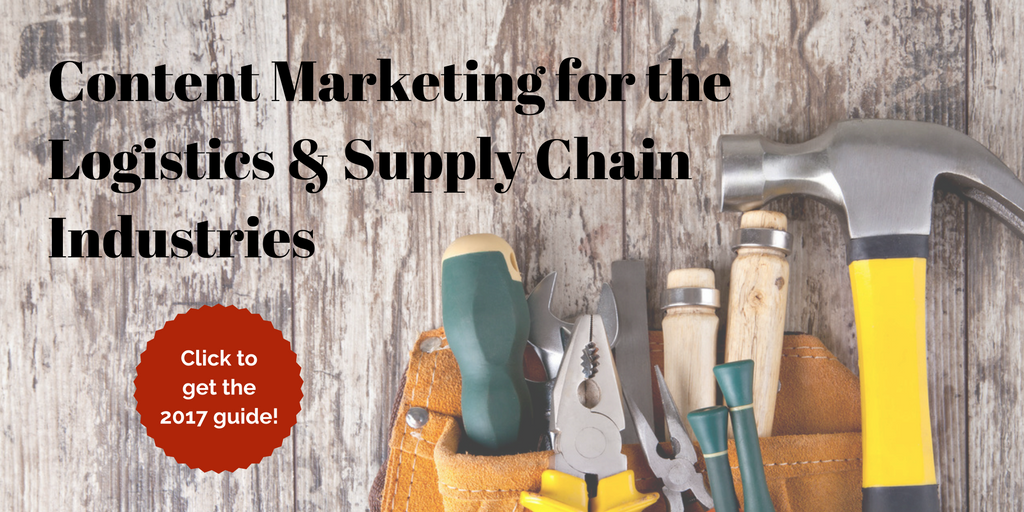
Argentus’ infographic sheds light on the differences between these often-confused functions.
This guest post comes to us from Argentus Supply Chain Recruiting, a boutique recruitment firm specializing in Supply Chain Management and Procurement.
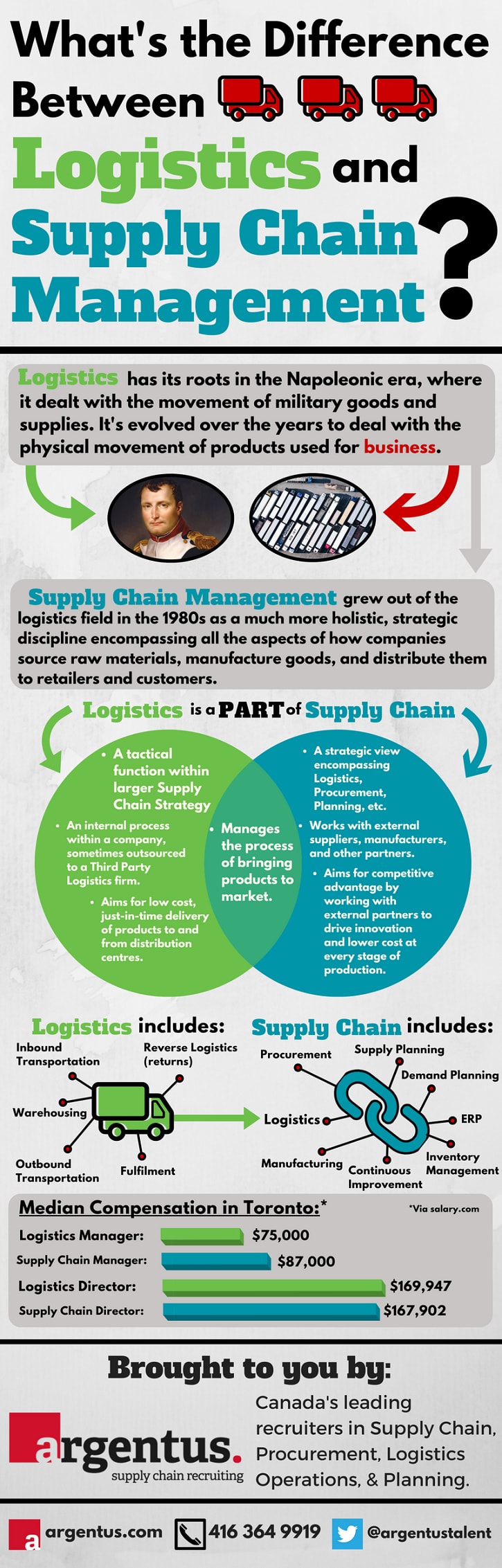
Both Logistics and the wider Supply Chain are vital to how companies run today, but the two are still so often confused. We put together an infographic outlining some of the key differences and points of overlap between them. While it may be an obvious distinction to many pros across the field, there’s still a lot of ambiguity – sometimes within companies, as well – about what constitutes Logistics, and what constitutes Supply Chain Management. As a recruitment firm with over a decade of experience specialized in this area, we figure we’d weigh in!
In short, Logistics is a part of Supply Chain Management that deals with the physical movement of goods for just in time delivery. Supply Chain, as a field, grew out of Logistics in the 80s to encompass a wider strategic consideration of everything that’s involved in bringing a product to market.
Check out the infographic below, where we dive into the topic in more detail! We’ve stepped up our game, if we do say so ourselves.
Logistics vs. Supply Chain Management
We hope you found the infographic informative! Weigh in down in the comments if there’s anything we missed, or more you have to add about the differences between these functions.
Related posts:

by Elizabeth Hines | Jun 21, 2017 | Blog, Current Events, Logistics, Manufacturing & Distribution, Supply Chain, Transportation & Trucking
This post comes to us from Kevin Jessop of Cerasis, a top freight logistics company and truckload freight broker.
The Paris Climate Agreement. Let those words hang for a moment.
Throughout the course of the 2016 election and now the Trump Administration, many Americans have expressed dissatisfaction with the Paris Climate Agreement. True to campaign promises, the new Administration has started the process of removing the U.S. from the agreement, which has major implications for supply chains and shippers around the globe. While the Trump Administration’s impact on supply chains has been discussed previously on Cerasis’ blog, the president’s decision to leave the agreement has shocked the industry, and you need to understand why and what is really going to happen over the next four years.
What Is the Current State of the U.S. in the Paris Climate Agreement?
This may come as a shock, but the Paris Climate Agreement has only been in force since November 4, 2016. As a result, the U.S. has not yet enacted changes under the agreement. The only measure that would have fallen under the Agreement’s terms is the continuation of Customs and Border Protection’s (CBP) rules for maritime statutes.
Lawmakers would have likely passed new legislation to increase environmental scrutiny of supply chains and shippers over the next few years. Moreover, the U.S. would have sent monies to Convention of Countries within the Agreement to help fund eco-conscious goals. The Administration’s actions indicate such changes are not likely to occur, but they could still happen. But, how?
What Is the Timeline for Withdrawal?
The full text of the Paris Climate Agreement is available online through the United Nations Framework Convention on Climate Change (UNFCCC). Article 28 defines the process through which a member of the original Convention may withdraw from the Agreement, and it is a surprise to many to learn that the new Administration cannot simply flip a switch.
Article 28 states that any country wishing to withdrawal may only do so after three years have passed since the agreement went into force. Since the enforcement date was November 4, 2016, a country cannot submit a notification of withdrawal until November 4, 2019. Now, there is another side of the withdrawal.
To prevent countries from withdrawing due to political changes and safeguard the longevity of the planet, any withdrawal still requires a one-year term from the date of notification. In other words, the Administration cannot effectively withdraw from the agreement until at least November 4, 2020.
The 2020 Presidential Election is scheduled for November 3, 2020. This means that if President Trump follows through with submitting a notification of withdrawal in 2019, actual withdrawal will not occur until the day after the 2020 election. Therefore, the question becomes, “How would a notification of withdrawal play out during the election? And if so, will it help or hurt his chances or re-election?”
The precedent for polarization during the previous election cycle indicates President Trump will proceed with plans to withdraw the U.S. from the Agreement when the time comes. The June announcement is merely a call to action to prepare for withdrawal over the next few years. So, what does that mean to both domestic and international supply chains?
The Impact of Withdrawal on Supply Chains.
There are only three countries on the planet, counting the U.S. intention to withdraw, that are not part of the agreement now. This means that every foreign-originating business transaction with U.S. manufacturers, distributors or other partners, except for Syria and Nicaragua, will be at risk. The governments of other countries may look unfavorably at working with U.S. companies due to the new Administration’s plans.
Multiple big-business empires, ranging from Facebook to Goldman Sachs, have condemned the move to withdraw. According to BBC News, part of their rationale is simple. The changes the Agreement dictates reflect existing concerns and actions that many U.S. businesses, including shippers, have already undertaken. Even ExxonMobil, a company whose previous CEO holds the title of Secretary of State, urged the new Administration to remain in the Agreement.
These major companies have already invested time and money in energy-efficienct, eco-conscious programs, and many of their business-to-business partners have followed the same pattern. With the overwhelming majority of the world’s countries committing to this cause, there will be an opening of the “floodgates for businesses, scientists and engineers to unleash high-tech, low-carbon” technologies. As a result, the U.S. could fall further behind the global engineering and science goal, which helps all businesses succeed. In other words, domestic companies may have a more difficult time finding the labor or technologies needed to maintain profitability in the interim.
Is There a Much Darker Side to Withdrawal?
Without getting into a discussion on the science behind global warming, it is important to note things that have happened that may continue if global warming continues. For example, sea levels had risen 2.6 inches from 1993 to 2014, reports the National Oceanic and Atmospheric Administration (NOAA). If left unchecked, numerous ports, businesses, cities and whole seaboards could be lost in the next few decades. To ensure stability and growth along long-term goals, this is a risk that must be mitigated immediately.
The rising sea level is a fact in the heavily disputed conversation about global climate change.
For shippers and supply chains, the risk of not doing anything is too great. Thus, the new Administration means well, but withdrawing from the Agreement is not a change that will impact businesses before 2020. Furthermore, the backlash from the public toward companies that abandon eco-conscious goals could be severe. Shippers could face higher tariffs and additional troubles in shipping goods domestically or abroad.
It is in your company’s best interest to pursue energy-efficiency goals, including working with well-known partners, like Cerasis, to help you reduce waste, eliminate redundancy and continue making healthy profits throughout the future, regardless of who sits in the Oval Office.
This post originally appeared on Cerasis’ blog.
Related posts:
by Elizabeth Hines | Jun 19, 2017 | Blog, Content Marketing, Marketing, Social Media
Facebook Lead Ads make it easy for both businesses to gather lead information and for prospective customers to learn more about products and services that interest them.
Only 37% of B2B marketers feel Facebook advertising is working for their business. On pace to hit 2 billion users this year, Facebook obviously has reach. So why is Facebook advertising not showing a greater ROI for your business?
Well, are you using lead ads? If not, that’s probably one of the reasons.
Facebook lead ads allow you to run lead-generation campaigns on Facebook and Instagram. This kind of social advertising shows an ad for your product or service within the news feeds of potential customers. Just set the parameters (e.g., demographics, location, etc.) for your target audience, and the network’s algorithm will identify who sees the ad based on information they’ve provided in their profiles.
But here’s the real kicker: Unlike other ad types, lead ads include a contact form that lets these potential customers show their interest in a product or service by filling out the form with their details without ever leaving Facebook (or Instagram).
Lead generation made easy
These days, people expect that everything from shopping to job searching can be done on their handheld devices. Facebook lead ads make that true for people wanting to learn more about new products or businesses.
Here’s how it works: Potential customers click on a lead ad, and their contact information automatically populates based on information from their profile. No leaving Facebook to visit the business’ website and taking the time to provide contact information necessary. Lead ads makes gathering lead information as easy as two taps on a phone: one to open the ad, and one to submit the information.
“If you want to iterate through lead forms quickly, Facebook Lead Ads are a great way to collect the information without building new landing pages and creating tons of copy,” says Tony Adams in Visible Factors. “The contact forms appear natively on Facebook and Instagram. You can easily use them to sign people up to newsletters for drip marketing campaigns or in a direct B2B campaign funnel.”
According to research from Google, B2B buyers have increased the amount of mobile research they do throughout the B2B purchase path by 91% year over year. With lead ads, Facebook has set the bar for mobile marketing by eliminating the need for customers to fill out time-consuming forms and for companies to create landing pages.
theSkimm, a news and information site, wanted to expand its reach and increase its conversion rate, with the ultimate goal of attracting more highly qualified leads and significantly increasing its subscriber pool. After testing a number of different tactics, theSkimm created a series of Facebook lead ads. The ads featured the company logo to reinforce its branding and a ‘Subscribe’ link inviting people to sign up on the spot. The result was a 22% increase in lead quality at a cost per acquisition of just $1-2.
Creating and modifying your ads
As buyers continue to turn to their handheld devices for quick, easy information, Facebook lead ads will give your brand the opportunity to capture new leads with the click of a button. But just like any form of lead generation, you need to monitor and tweak your Facebook lead ads for optimal results.
Through Facebook’s Ads Manager reporting interface, you can obtain reports about cost, impressions, and clicks. As with all marketing tools, consistent refinement is the key to success. Lead ads can easily be fine-tuned to cultivate a larger target audience.
Facebook lead ads provide B2B companies an opportunity to gain leads and a larger reach. If you haven’t tried this yet, we highly recommend switching over some of your social advertising budget.
Related posts: