by Elizabeth Hines | Nov 5, 2019 | Blog, Content Marketing, Logistics, Marketing, Social Media, Supply Chain
LinkedIn has released a new guide to using video on its platform. Here’s what supply chain companies need to know to get the most out of video on LinkedIn.
Highlights:
- Effective B2B marketing videos start with an analysis of your prospects’ unique purchasing journey and needs.
- Videos for the awareness stage of the buyer’s journey should be concise and geared to forging an emotional connection.
- Bottom-of-the-funnel video types include product demonstrations, welcome videos, webinars, and FAQ sessions.
Visual content, particularly video, is the future of social media marketing. And video on LinkedIn is no exception. A recent report from Kleiner Perkins indicates that 62% of B2B marketers rate video as an effective content-marketing tactic. Not only that, but, according to internal data from LinkedIn, users are 20 times more likely to share a video on the platform than any other type of content.
Thanks to a recent guide published by the platform, leveraging video on LinkedIn for the supply chain has never been more attainable. The Tech Marketer’s Guide to B2B Video is an invaluable resource. Whether you’re relatively new to B2B video marketing, or a seasoned video creator, the guide contains useful nuggets of information, as well as examples of effective video on LinkedIn, for marketers at any stage.
We’ve pulled out key points for you.
6 steps to approaching video on LinkedIn
It’s worth pointing out that the six steps that LinkedIn identifies to building an effective video strategy are applicable elsewhere as well. Your strategy for video on LinkedIn should likely also apply to your strategy for video content across your digital assets.
1) Analyze your buyer’s journey
Consider the unique buyer’s journey for your company. What content do prospects want to see at each stage, and what actions do you want them to take?
2) Set your marketing strategy
What medium is optimal for delivering content at each stage? Which stages are particularly conducive to video content?
3) Establish metrics and KPIs
Choosing the right key performance indicators (KPIs) and metrics will allow you to determine how your content is performing.
4) Create video content
At the stages where video content is the best way to deliver, what type of video is most effective?
5) Target your content
Use your understanding of your target audiences, in combination with the targeting capabilities of LinkedIn, to ensure that your video is reaching the right people at the right times.
6) Optimize your campaign
Keep track of your data. Note what’s working. Adjust what isn’t performing.
Using video on LinkedIn throughout the buyer’s journey
Awareness
The first stage of the buyer’s journey, the awareness stage, is particularly opportune for video on LinkedIn. At this point, your goal is to tell a story, evoke a response, and introduce your brand and products.
Videos at this stage should be concise and geared to connecting with your audience, demonstrating an understanding of their challenges, and how your company is positioned to address those challenges.
LinkedIn’s guide points out a major advantage of video: its measurability. As opposed to text-based marketing, where your knowledge of audience behavior is limited to downloads and time on page, video on LinkedIn comes with richer data. You can tell, for example, when someone has watched your video and when they stopped. This means you can adjust your video length suit the preferences of your audience.
At the awareness stage, important video metrics include how many times your video was viewed, how much of the video was watched, and how many viewers responded to your call to action.
Consideration
Using video on LinkedIn for the second stage of the buyer’s journey, the consideration stage, is about introducing your products and their features, as well as giving a sense of what it’s like to work with your business. Ideal video formats at this stage include explainers, case studies, webinars, how-to videos, and virtual tours. Your foremost goal is to be authentic and to represent your business and the solutions it offers.
Key metrics at this stage are about engagement. Keep track of the number of interactions your videos get (comments, likes, clicks, shares, etc.), compared to the number of views. Also keep an eye on your estimated cost per view (eCPV) to track the efficacy of your video budget.
Decision
Because the decision phase of the buyer’s journey is all about personalization, video has traditionally been used less here. But that’s starting to change. Authentic, trust-building videos can be a powerful asset for the decision stage, reassuring your prospects that they’re making the right decision, using testimonials from existing customers. Welcome videos, FAQ sessions, and webinars are also effective in the decision phase, as well as full-length product demonstrations.
If you’re using lead-generation forms with your video on LinkedIn, keep track of which generate the most leads, as well as the quality of those leads. Otherwise, track click-through rates to gain insights into your estimated cost per click (eCPC).
Metrics for video on LinkedIn
LinkedIn offers a robust set of metrics for videos on its platforms:
- Views: At least one second of playback while the video is at least 50% on screen on desktop, or 300 milliseconds on mobile
- Views at 25%: The number of times your video was watched at 25% of its length, including watches that skipped to this point
- Views at 50%: The number of times your video was watched at 50% of its length, including watches that skipped to this point
- Views at 75%: The number of times your video was watched at 75% of its length, including watches that skipped to this point
- Completions: The number of times your video was watched at 97-100% of its length, including watches that skipped to this point
- Completion Rate: Completions divided by views as a percentage
- View Rate: Number of views divided by impressions, multiplied by 100
- eCPV: Estimated cost per view
- Full Screen Plays: Total number of clicks to view video in full screen
Do you use video on LinkedIn for your business? Let us know your experience in the comments.
Related posts:

by Elizabeth Hines | Oct 24, 2019 | Blog, Marketing, Social Media
Facebook Messenger is the latest trend in chatbots for the supply chain. Here are powerful numbers to prove why your brand needs to be active on the messaging platform.
Patience is a virtue of the past. Today’s buyers want (and expect) marketers to actively engage with them throughout the purchasing journey. And offering them generic information won’t work — they want personalized communications based on who they are, what they have purchased in the past, and what they are interested in buying. Businesses can no longer afford a one-size-fits-all communication strategy.
The focus has shifted from passive marketing to engagement, which has marketers scrambling to be everywhere, at all times, to ensure a positive customer experience. In response, we’ve seen an increase in chatbot usage in the supply chain and logistics industries. Chatbots help improve the customer experience through automated systems that emulate human conversation.
Chatbots rely on the popularity of messaging apps. And, luckily for marketers, messaging app usage is on the rise:
- There were 2.18 billion messaging app users globally in 2019. (Statista)
- At the end of 2018, 78% of the world’s smartphone users were messaging every month. (Facebook)
- By 2021, it’s predicted that the global user base for mobile messaging apps will have risen by a further 23%. (Facebook)
- People share more than 17 billion photos on messaging apps every month. (Mobile Monkey)
And though WhatsApp has the highest percentage of users worldwide, Facebook Messenger has taken over as the most popular messaging app in the U.S. With over 1.3 billion monthly users, this powerful messaging platform holds a lot of potential for marketers.
Even though marketers know that Facebook Messenger is a platform they can no longer ignore, supply chain and logistics brands have been slower to jump on board. But if you’re questioning if you should be using Facebook Messenger to engage with audiences, the answer is yes.
Supply chain businesses can use this platform to deliver content, engage with customers one on one, and offer superior personalized customer service, all of which result in high-quality relationships and leads.
Here are some staggering numbers to back up our point.
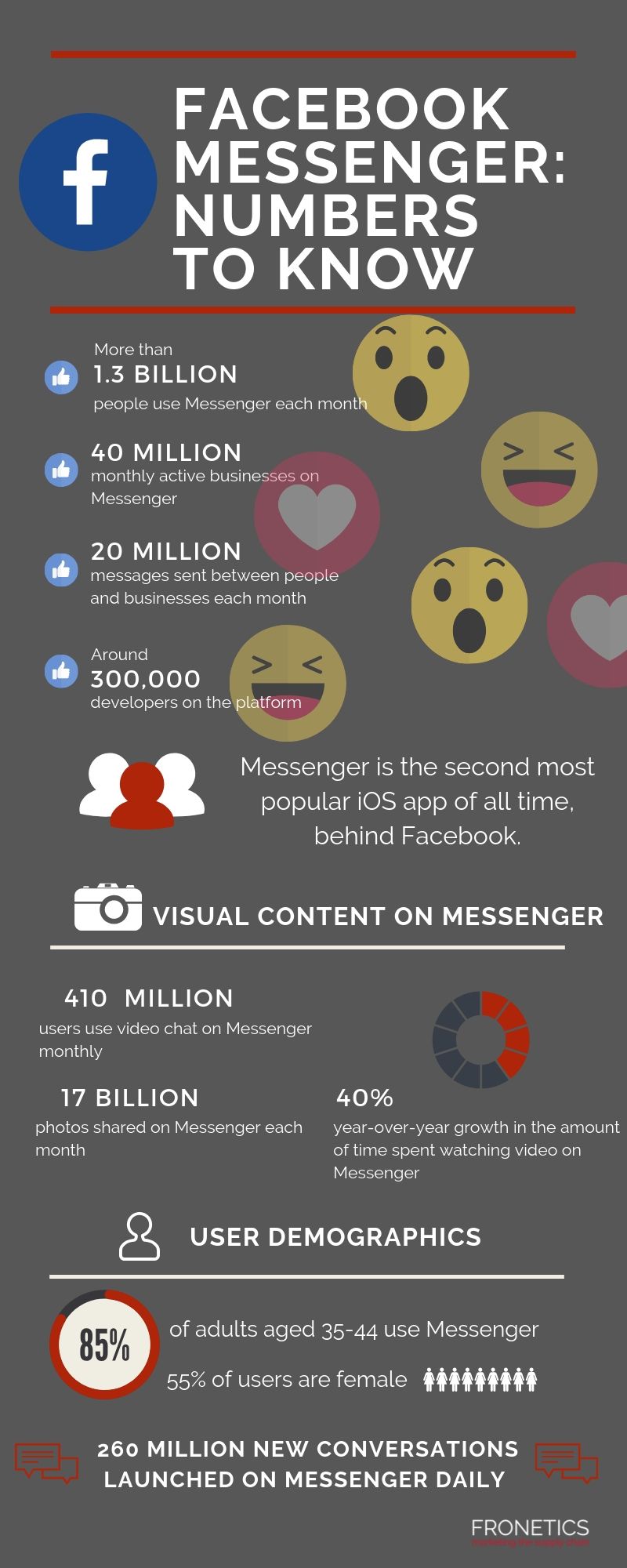
(Made with Canva)
Final thoughts
What was once thought of a teen social app, Facebook Messenger is now dominating the business world with increasing popularity and no sign of slowing down. In fact, we as a brand have found huge success using Messenger to engage with new leads. In the first 24 hours of using the platform, we were able to set up a meeting with a new prospect. That was just in the first 24 hours. This prospect turned out to be our next client, and the initial connection was all made through Facebook Messenger.
Related posts:


by Elizabeth Hines | Oct 10, 2019 | Blog, Content Marketing, Logistics, Marketing, Robotics & Automation, Supply Chain
Supply chain companies are beginning to use robotics to boost warehouse efficiency and drive profits thanks to new automated technologies.
Highlights:
- High-res cameras, pressure sensors, navigation lasers, and acoustic warning indicators allow automated devices to navigate warehouses efficiently and autonomously.
- Robotics offers enhanced efficiency for both warehouse capability and predictive supply chain management.
- After major investments in automated fulfillment centers, Amazon has seen a 50% increase in capacity when compared to facilities that don’t use robotics.
A recent Information Services Group (ISG) study suggests that something big is happening: 72% of information services (IS) enterprises plan to increase their investment in robotics by the end of the 2019. Why? Because automation and IS are a natural fit.
Leading companies worldwide are beginning to use robotics to boost their warehouse efficiency and forecasting capabilities. And an improving price-to-performance ratio associated with robotics technology means that usage is sure to continue expanding.
The advantages of automation
New automated technologies are a game-changer. Until recently, available robotic devices were stationary and couldn’t interact visually with their surroundings or respond to unexpected inputs. Today, robots are mobile and collaborative. High-res cameras, pressure sensors, navigation lasers, and acoustic warning indicators allow automated devices to navigate warehouses efficiently and autonomously.
Recent technology upgrades include software that causes a robot to cease activity temporarily if it encounters an unexpected object or input, meaning that these devices can safely work alongside humans. Whereas earlier robots were used mainly to transfer objects from one place to another, more recent technology can enhance tasks ranging from managing inventory to retrieving, assembling, and packing orders.
Industry leaders have invested in automated warehouse management systems (WMS) with undeniable results. After major investments in automated fulfillment centers, Amazon has seen a 50% increase in capacity when compared to facilities that don’t use robotics. Amazon has even acquired the company that creates its robots, indicating Amazon’s confidence that the continued production and development of automated technology will play a big part in their future.
JD.com, China’s largest online retailer, has gone even further. Boasting the world’s first fully automated e-commerce warehouse, JD has equipped the 43,000-square-foot facility with 20 industrial robots that allow the company to provide same- and next-day delivery to more than 1 billion customers. Whereas a standard warehouse of that size would require nearly 500 workers, JD employs just 5.
Streamlining operational staff offers a big pay-off. On average, a warehouse employee wastes almost 7 weeks per year in unnecessary motion, which adds up overall to $4.3 billion in labor expenses. For employees, simply walking around in the warehouse accounts for 50% of the time involved in retrieving orders and checking inventories. Coupled with the potential for human error, the superior efficiency of robots makes it a question of “when?” rather than “if?” automation will become the new norm in parcel-sorting hubs and distribution centers.
Automated guided vehicles
The robotics revolution is already underway. One of the most widespread and effective uses of robots in warehouses is the automated guided vehicle (AGV). These self-driving vehicles are rendering expensive and single-use equipment like conveyor belts and large loading vehicles obsolete. Battery-monitoring systems send AGVs back to their charging ports when necessary, maximizing the efficiency of their operation. AGVs can be directed by voice or programmed to retrieve orders, guided by physical markers, magnets, and vision systems. In addition to navigating a warehouse floor more quickly and efficiently than human employees, AGVs are also capable of lifting and transporting much heavier weights, allowing for a larger number of orders to be retrieved in the same amount of time.
The advantages of AGVs run deeper than warehouse efficiency, however, and extend to logistics operations as well. AGVs track and update inventory records in real time as they retrieve orders. Ordinarily, the immense amount of data involved in running supply chains creates inefficiency and requires additional personnel to monitor inventory levels and place orders. The AGV integrates these tasks into a streamlined operation, as it can retrieve items as soon as order data is received and updates inventory levels instantaneously, even placing automatic purchases. This allows for improved forecasting and faster inventory refill.
Effi-BOT & Sawyer
That’s all very well in theory. But how does it work in practice?
DHL has led the pack in using robots to assist employees with repetitive and physically demanding tasks. Effi-BOT, an AGV that follows employees through DHL warehouses, takes over the physical work involved in picking orders. The use of Effi-BOT has allowed DHL to move from single-order picking to a multi-order model, and helps track complex inventory dynamics.
Another robot, Sawyer, has illustrated how automation can be used in flexible ways to accommodate ever-changing purchasing and order patterns involved in e-commerce. Sawyer’s collaborative capabilities allow it to handle repetitive aspects of the co-packing process. By adding Sawyer to its existing workforce, DHL has been able to use the robot to flexibly adjust to unpredictable order data.
Managing robotics
Typically, the inventory and performance data generated by devices such as Sawyer and Effi-BOT is aggregated in a dashboard that supply chain managers can use to check inventory levels and review automated requests sent from robotic devices to purchasing departments. By integrating data recorded in real time by automated devices, dashboards make larger and larger segments of the supply chain visible, allowing managers to pinpoint the source of problems, such as a delayed order from a supplier’s factory.
Robotics thus offers enhanced efficiency for both warehouse capability and predictive supply chain management. While the regulatory policies surrounding the use of robotics in the workplace are as yet uncertain, there can be no doubt that automation is already re-shaping the supply chain. Successful companies of the future will be the ones that find ways of taking advantage of new robotics technology today.
This post originally appeared on EBN Online.
Related posts:

by Elizabeth Hines | Oct 8, 2019 | Blog, Content Marketing, Logistics, Marketing, Supply Chain
Digital marketing helps increase brand awareness, convert leads, and drive measurable business value. But that doesn’t mean it’s always easy to execute. Here are 4 digital marketing failures and how to get back on track. Highlights: While digital marketing is...
by Elizabeth Hines | Oct 1, 2019 | Blog, Content Marketing, Logistics, Marketing, Supply Chain
Consumers are more likely to trust content generated by their peers, which means higher conversion rates at a lower cost for your brand. Is your brand benefitting from user generated content?
Highlights:
- User generated content is content created by users of a specific brand or on a specific platform.
- Images and video of real people using your products or talking about your services will create trust and loyalty for your brand.
- Don’t be afraid to engage with your audiences over social media, respond to comments, and answer questions.
Video transcript:
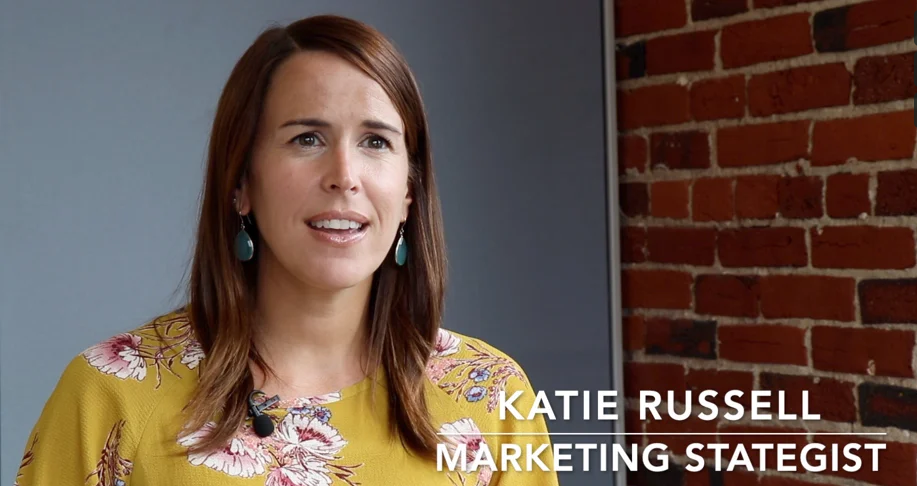
I’m Katie Russell, a marketing strategist here at Fronetics, and today I wanted to talk to you about user generated content. Also known as UGC, user generated content is one of the hottest topics in digital marketing right now, but there are many businesses that don’t know how to use this tool to their advantage.
Let’s start with the basics.
What is UGC?
User generated content is content created by users of a specific brand or on a specific platform. It’s highly effective and comes at little or no cost to your business.
With that said, a lot can qualify as UGC including: comments on your blog, testimonials on your website, social media posts, blog articles, videos, Instagram stories, The list goes on and on. What it comes down to is that UGC is really any form of content that comes from a customer or a user.
So, what are the benefits of UGC?
Authenticity
We know that consumers are more likely to trust content generated by their peers, which means higher conversion rates at a lower cost for your brand. This also means the content is authentic and genuine reviews from buyers. Does it get any better than that?
Inexpensive
Since your brand is not generating the content, you don’t have to invest in the time and resources to create it.
What’s hot in UGC right now?
Visual content
Visual content is by far the most popular among audiences, so visual UGC is a no brainer. Images and video of real people using your products or talking about your services will create trust and loyalty for your brand.
Snackable content
We all know that the attention span for content is extremely short these days. When reposting UGC, focus on short, funny and positive content. Content that leaves users feeling informed and entertained will perform best for your brand.
Enlisting influencers
Whether it’s a famous celebrity or a micro-influencer that’s respected within your industry, brands involving influential people in their marketing campaigns can expect higher ROI from UGC.
Don’t forget to follow-up
Once you’ve grabbed the attention of your community with a successful UGC campaign, it’s up to you to capitalize on the momentum. Don’t be afraid to engage with your audiences over social media, respond to comments, answer questions. Have questions about starting a UGC campaign as a part of your digital marketing strategy? Visit us at fronetics.com.
Related posts: