by Elizabeth Hines | May 1, 2014 | Blog, Content Marketing, Logistics, Manufacturing & Distribution, Marketing, Social Media, Strategy, Supply Chain

By launching a new digital, social media, and content marketing strategy, Cerasis saw a big, positive impact on its bottom line.
Companies within the manufacturing, supply chain, logistics, transportation, distribution and freight industries have been slow to create and execute digital, social media, and content marketing strategies. The primary reason: a lack of understanding of the business case or value.
These strategies utilize platforms that many within these industries perceive to be for socializing, sharing photos, and connecting with friends (e.g., Twitter and Facebook), and they turn the sales process on its head. Content marketing strategies are fundamentally different from traditional strategies employed by businesses to attract new customers, foster relationships with current customers, and grow their bottom line. Because of this, companies do not recognize how these strategies can positively impact their bottom line and therefore decide to steer clear — they feel engaging is too risky.
The reality is that not participating is risky. Like it or not, things have changed. The internet and social networks are where customers are. Content is how you can establish your company as a thought leader within the industry, and how you can attract and retain customers. If you want to grow your business you need to participate.
Looking at the manufacturing, supply chain, logistics, transportation, distribution and freight industries, there are a few companies that have emerged as leaders — companies that exemplify the business value of creating and executing digital, social media, and content marketing strategies. Cerasis, a freight logistics company, is one of them.
How Cerasis acquired 98 customers through content marketing
Cerasis was founded in 1997. For 15 years the company utilized traditional sales and marketing strategies: placing ads in industry print publications, and relying heavily on referrals. This strategy worked. The company acquired new customers, retained current customers, and realized positive growth.
There is a saying: “If it ain’t broke don’t fix it.” Cerasis ignored these words of wisdom.
In the fall of 2012, Cerasis launched a digital, social media, and content marketing strategy. The results have been impressive. For example, visits to the company website have increased by close to 670 percent, and search visits have increased by close to 2,190 percent. The company boasts an impressive number of Twitter followers, Facebook fans, and LinkedIn followers.
The business value of the strategy? Cerasis has acquired 98 customers. For the freight logistics industry, one customer can generate significant revenue; 98 new customers has a positive impact on the company’s bottom line.
Cerasis will be guest blogging for Fronetics for the next three weeks. The three-part series will begin with an overview of the company’s strategy and will discuss the results the company has realized through the execution of the strategy. The next two articles focus on how to create and execute a strategy.
When looking for best practices, Cerasis is a clear example. For companies within the manufacturing, supply chain, logistics, transportation, distribution and freight industries these articles are a great opportunity to learn why (and how) your company should create and execute a digital, social media, and content marketing strategy.
Download the case study to learn more about how Cerasis’ content marketing strategy helped the company acquire new business and increase sales.

Related posts:
by Elizabeth Hines | Apr 16, 2014 | Blog, Marketing, Social Media
For every blog post, tweet, and Facebook update, you should ask yourself: Who is listening?
Without a comprehensive social media strategy, your message may be getting lost in the chatter. There are a number of tools that will help you monitor your online influence and, effectively, make the necessary adjustments to ensure your efforts are paying off.
Here are 10 free tools to help you measure your social media ROI. The basic features of each of these tools are free.
1. Hootsuite
Considered one of the top social media management systems, Hootsuite is a web-based dashboard that enables your business or organization to execute campaigns across multiple social networks. This tool helps you identify audiences, distribute targeted messages, launch marketing campaigns, streamline workflow and much more. It also provides weekly reports on your social analytics. Social network integrations include, among others, Facebook, Twitter, LinkedIn, and Google+.
2. Facebook Insights
Sometimes the best analytics tools are built into the platform, like Facebook Insights. After your Facebook page receives at least 30 likes, Insights can be applied to break down the metrics of your content. See how people discover and respond to your posts and use the anonymized demographic data to analyze trends and tailor your message.
3. Google Analytics
By using Google Analytics you will have access to a wealth of strategic data across multiple venues such as ads, videos, websites, tablets, smartphones and social tools. The result is a complete profile of your potential customers and their needs. Learn, for example, how visitors find your site, what they like and don’t like, and what they technology they use to access the information.
4. TweetDeck
TweetDeck resembles Hootsuite but is exclusively focused on your engagements on Twitter. This real-time tracking and organizing tool allows you to customize your Twitter experience in one interface. You can manage multiple accounts, build timelines, and track hashtags, events, and topics.
5. SumAll
SumAll connects you to all the services you use in one interactive chart. SumAll enables you to monitor and measure more than 30 services (e.g. Facebook, Twitter, Instagram, PayPal, Google Analytics) – for free. SumAll is a great option for small and medium sized businesses who want to be able to monitor all of their platforms in one spot – and have reports delivered via email on a daily basis.
6. Twazzup
An ideal tool for those new to Twitter, Twazzup enables you to follow a real-time stream of updates about keywords of your choosing. The interface presents a clear look at your related real-time tweets as well as trending and user information. It also identifies the top influencers in your field.
7. IceRocket
Specializing in displaying the most up-to-the-second search results, IceRocket covers blogs, the web, Twitter, and Facebook. Find out who links to your blog posts and search the IceRocket database of 200 million blogs. Your monitoring results can be viewed on a single, easily digestible page.
8. Klout
How influential are you online? The so-called “Klout score” reveals your effectiveness on Twitter, Facebook, Google+, LinkedIn, Foursquare, Wikipedia, and Instagram. The company recently added business analytics to its list of services to assist users learn more about their online audiences.
9. HowSociable
HowSociable measures the impact of your brand across multiple social media platforms, helping you identify which one is the best fit for you. By analyzing the metrics of your presence on 36 popular social media sites, this tool produces a score between 1 and 10 to indicate the activity around your brand during a given week.
10. Addictomatic
Addictomatic is a straight-forward application to monitor your brand’s reputation and industry developments. Simply select your keywords and Addictomatic will scan a variety of platforms such as Google, Bing, Twitter, WordPress, YouTube and Flickr.

by Elizabeth Hines | Apr 10, 2014 | Blog, Marketing, Social Media
Return on investment (ROI) is not a metric which is well suited to measuring the value participating in social media can bring to a company. And, unfortunately, there is no distinct metric or formula that can completely capture the impact, value, and ramifications of participating. Because of this, many companies choose not to participate in social media. This is a mistake. While measuring social media ROI may not be as easy as pie, it can be done. And, more often than not, participating in social media will yield a positive ROI.
Investing just six hours a week in social media can yield a positive ROI
According to the 2013 Social Media Marketing Industry Report, 92 percent of respondents reported that spending as little as six hours a week on social media increased exposure to their business. Sixty-four percent of respondents reported that by spending as little as six hours a week on social media they were able to see lead generation benefits. In addition to increased business exposure and lead generation benefits, respondents also reported that participating in social media reduced marketing costs. Specifically, 38 percent of companies with 1,000 employees or more reported that social media decreased marketing expenses and 62 percent of businesses with 10 or fewer employees reported a decline in marketing expenses. Social media was also found to benefit companies with respect to gaining marketplace intelligence–71 percent of respondents who spent at least six hours per week on social media reported an increase in marketplace intelligence.
More exposure, more traffic, more leads, more customers
Turning to an example, SFJ Material Handling Equipment, a family-owned company established in 1979, is the largest stocking distributor of new and used material handling equipment in the United States. The company has more than 53,000 followers on Twitter (and is gaining 200 to 400 followers per week), more than 38,000 Facebook likes, and has more than 2,000 Google+ followers. The company reports that nearly 20 percent of their website traffic is driven by social media. Stafford Sterner, President, notes “If you’re trying to reach out to totally new markets, then you might want to do Facebook and Twitter. If you’re comfortable building that relationship with people or companies you’re close to, then it’s LinkedIn.”
Another example is that of Kinaxis, a supply chain management company. Kinaxis launched an online social media campaign with the objective of doubling leads and web traffic numbers. The campaign included two online comedy series (Suitemates and The Late Late Supply Chain Show) and the launch of the company’s 21st Supply Chain Blog. The campaign was successful–web traffic increased by 2.7 times and leads increased by 3.2 times.
When executed correctly, your company can realize a positive ROI on your investment in social media.
Not participating in social media is a mistake your company can not afford to make.

by Elizabeth Hines | Mar 24, 2014 | Blog, Marketing, Social Media

3PL provider Coyote Logistics is one of the fastest growing companies in North America. The company’s incredible growth (five-year growth: 3,585 percent) and tenacious spirit has not gone unnoticed. Forbes included Coyote in its list of Most Promising American Companies; Supply & Demand Chain Executive listed Jeff Silver, Coyote CEO, as one of their “Pros to Know;” and the company was listed as one of the best places to work by the Chicago Tribune.
There are undoubtedly many factors that have contributed to the success of the company. Coyote’s approach to social media is likely one of the company’s keys to success.
Coyote is a customer-centric company that is creative and pushes boundaries in its effort to “offer the best 3PL experience ever.” Go to Coyote’s webpage and you’ll see that it oozes the company’s culture and mission. Likewise, the company’s LinkedIn, Twitter, Facebook, and YouTube channel exemplify the company’s commitment to their culture, customers, and mission.
Coyote has leveraged social media. The company uses social media to engage with customers, to provide information about the company and the industry, and to find great talent. Coyote’s approach has personalized the company – making it stand out from competitors. The level of engagement has also helped to create relationships – relationships that are essential to growth, especially in the B2B environment.
According to Ron Faris, co-founder and CEO of a new Virgin start-up company, “Social conversation is the only way small brands can get an edge on the big boys.” Why? Faris points to the three ingredients of brand affinity: rational, cultural, and emotional. According to Faris, the rational space is where the big boys play, and the he cultural and emotional space is where there is opportunity for the small brands. More specifically, when a company focuses on the cultural and emotional it is able to capture a customer’s interest not because of what is on sale, but by being bold and engaging.
Faris writes: “Goliath will always have the luxury of being omni-present in the consumer’s field of vision. But Goliath is not nimble. And to truly win a crowd, you need to pivot to tell the right stories they want to hear at the right time.”
If you’d like to learn more about social media and what it can do for your business, get in touch. Fronetics Strategic Advisors works with companies in the logistics and supply chain industries to acquire new customers and grow their businesses by penetrating new markets and deepening their presence and impact in existing markets.
A version of this article also appeared on DC Velocity.
by Elizabeth Hines | Mar 4, 2014 | Blog, Logistics, Marketing, Social Media, Strategy, Supply Chain
Innovation is a powerful way to drive growth. However, traditional approaches taken by companies to develop innovative products and services are increasingly being found to be unsuccessful in creating growth. The traditional siloed approach to R&D is too insular for today’s rapidly changing economic environment. Moreover a top-down approach to R&D no longer works given our consumer driven marketplace, and the instant gratification consumers now demand. How then can your company successfully develop new products and services? How can your company innovate faster? How can your company innovate better? Harness social media as an innovation engine.
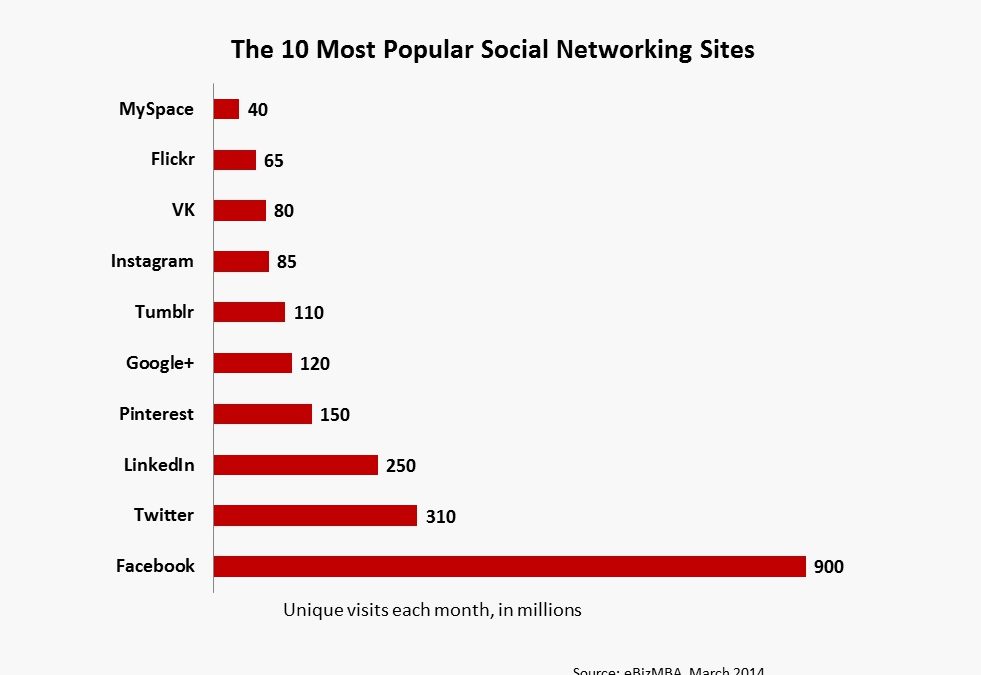
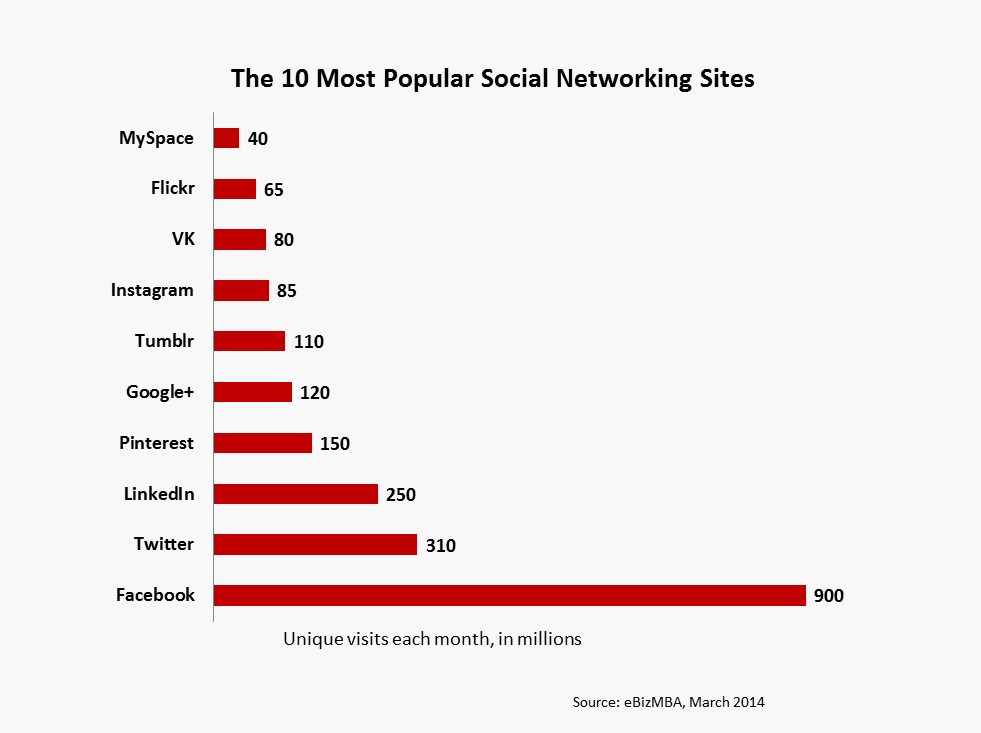
According to a March 2014 report by eBizMBA Facebook has an estimated 900 million unique users each month. Twitter has an estimated 310 million unique users each month and LinkedIn sees an estimated 250 million users monthly. Conversations are taking place on these social networks about companies and about specific products and services. These conversations can provide your company with a wealth of information and can be a source of innovation – innovation that can drive growth.
You can leverage social media an as innovation engine by monitoring the conversations taking place about your company and your products and services. What are customers saying? What do customers like? What do they dislike? Are there questions that are repeatedly being asked by customers about your company and/or a specific product or service you offer? Don’t dismiss feedback provided by customers via social media; embrace it and its honesty. Learn from the feedback provided. Engage with customers to learn more. Use the intelligence that you gain from social media to fuel innovation.
Turn to social media to learn about creative ways customers are using your products. Ikea products are constantly being “hacked” or used in ways that the company had not intended. Learning “off-label” uses for your products can help you to identify needs within the marketplace, new marketing opportunities for your products, and can generally get your creative juices flowing.
Look at social media to identify trends. Is there a way that your company can take advantage of specific trends? Can you introduce a new product or service? Can you re-purpose a product or service to meet the demands of a specific trend? Even more basic, if you already have a product or service that is trendy, make people aware that you have what they want. How to do this? One way is to engage with them on social media.
In addition to monitoring conversations focused on your company, monitor conversations that are taking place about your competitors. What are customers saying about your competitor and their products and services? What do customers like about your competitor’s products? What do they not like? Are your customers using your competitors products in an off-label way? All of this information can be used to fuel innovative for your company.
David Burkus, founder of LDRLB and assistant professor of management at Oral Roberts University, wrote that “in most organizations, innovation isn’t hampered by a lack of ideas, but rather a lack of noticing the good ideas already there.” The conversations taking place via social media offer a wealth of good ideas. Your company can capitalize on the information and intelligence provided, or you can ignore it. If you choose the former you can turn social media into an innovation engine for your company – one that will help your company grow not in spite of, but because of the current environment and customer demands.
A version of this post was previously posted on DC Velocity.