by Elizabeth Hines | May 7, 2015 | Blog, Marketing, Social Media
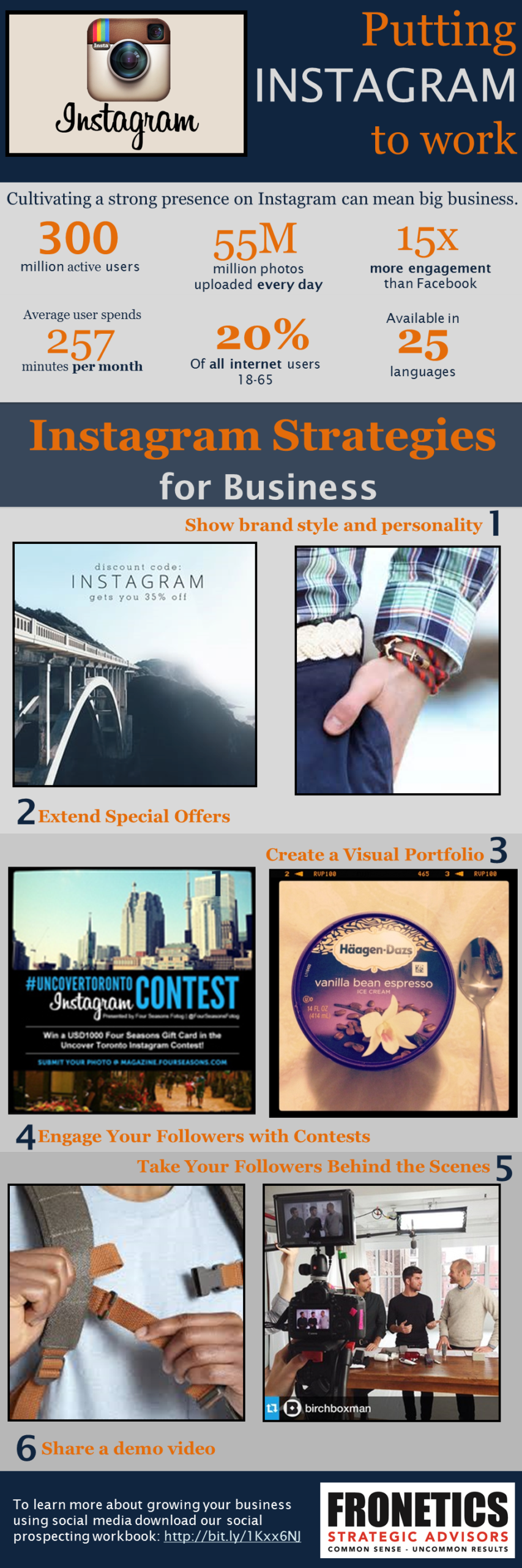
A recent study by Forrester found that Instagram users were 58 times more likely to like, comment, or share a brand’s post than Facebook users and 120 times more likely than Twitter users. Yet, in a survey of marketers, only 28% reported making it a priority. With more than 300 million active users, companies that have found a way to leverage this underutilized social network are boosting brand engagement and growing its customer base at an incredible rate. Ready to give it a try?
Stand out from the competition with these six strategies:

by Elizabeth Hines | Mar 24, 2015 | Blog, Strategy, Supply Chain

The Blumberg Advisory Group’s 2014 ITAD Trends Report shows that data security is the number one reason why companies implement an IT asset disposition (ITAD) strategy. That companies are concerned about data security is no surprise. Ongoing media reports have not only focused on data breaches, but have also highlighted examples of sensitive data being found on retired assets. The costs associated with data breaches and with the improper disposal of IT assets are great. They include financial implications such as penalties as well as the loss of customer loyalty and reputation. To mitigate risk, asset recovery management is critical to companies operating in today’s global supply chain.
Data security is viewed as an important piece of asset recovery management
Ninety-nine percent of companies surveyed by the Blumberg Advisory Group reported that “concern about data security” is either “very important” or “extremely important” with respect to motivating the creation of their current end-of-life IT disposition strategy. Other important factors include: commitment to “Green” businesses and IT practices, mitigating legal and financial risks, and redeploying assets to reduce costs (Table 1).
Concerns about data security have resulted in companies becoming more aware of the need for ITAD and the need to budget for it. In 2014 87 percent of companies reported having an ITAD budget; 38 percent more than in 2012.
Companies turn to 3rd-party service providers
The majority (63 percent) of companies reported that they use a 3rd-party service provider to manage end-of-life assets. The factors seen as most important in selecting a 3rd-party service provider include: adoption of industry-recognized compliance standards (97 percent); a well-documented and enforced chain of custody (95 percent); and high-quality, thorough client reporting (95 percent).
What to look for in a 3rd-party service provider
ITAD is expensive and it can be risky. It is therefore important to find a 3rd-party service provider who can provide as much safety and security as possible. It is also important to find a provider that takes the time to understand your business and your needs – and develops and manages an asset recovery program that is right for you rather than one that is “out of the box.”
We have put together a list of five must-ask questions. These are questions you should ask providers with whom your company is considering engaging. Before engaging, make sure that you are given answers to these questions and that you feel confident with responses.
-
What is your specialization?
3rd-party service providers are becoming increasingly specialized, particularly when comes to corporate IT take-outs. This specialization is largely being driven by data security and data breach concerns. If your company has highly specialized assets it is essential to determine what specializations, if any, the provider has.
-
Is there uniformity in the process?
Does the provider operate on a single global platform, or will it be necessary to use different platforms for different regions of operation. Uniformity in the process generally increases the ease of operation and ease of use.
-
Who would manage our relationship?
Would the provider assign one global account manager, or will it be necessary to interface with several account managers? Again, this boils down to ease of operation and ease of use.
-
How flexible are your operations?
Disruptions such as recent closure of west coast ports, natural disasters such as Hurricane Sandy, and changing standards and regulations (on a local, regional, and global scale) all impact the supply chain. Given this, it is important that flexibility be a component of asset recovery management.
-
What if something goes wrong?
This question is the most important question to ask. If something goes wrong and if ITAD does not occur as it should, what happens? Does the provider carry indemnification? If so, how much does the provider carry? Will the provider work with you to mitigate risk?
Data security, data breaches, and the improper disposal of assets are issues which global supply chain companies face on a day to day basis. The economic and social implications of the mismanagement of asset recovery are great. It is therefore important that companies operating in today’s global supply chain take the necessary steps to mitigate risk when it comes to asset recovery management.

by Elizabeth Hines | Feb 23, 2015 | Blog, Content Marketing, Data/Analytics, Marketing, Strategy
Measuring blogging ROI is crucial to your overall marketing success.
Just as with outbound marketing activities, your company’s inbound marketing efforts should be given the same attention when it comes to Return on Investment (ROI) analysis. In fact, companies who measure inbound marketing ROI are more than 12 times more likely to generate better year-over-year returns. And with blogging being reported as the number one method for increasing website traffic, it should stand to reason that calculating ROI for your blogging efforts is crucial to your overall inbound marketing success.
Calculating ROI for blogging activities isn’t as straightforward as say, ROI from click-to-conversion, but its achievements can be measured in other ways. Consider employing a blend of these four categories to measure the effectiveness of your blogging efforts.
Audience and Content Reach
According to a 2013 HubSpot report, 85% of marketers reported increased web traffic within seven months of beginning inbound marketing activities. While it’s true that building a successful blog can take some time, there are things you can do (and measure) to speed its maturity. Encourage engagement and reach by crafting relevant and interesting content for your audience. This increases the likelihood your content is shared and commented on by your readers.
Track this: Beyond noting any increases in web traffic, track both your average cost per view and the number of comments and social shares your blog content receives.
Lead Generation
Tying revenue directly to publishing and distributing blog content can be difficult. Thinking about blogging activities within the context of your entire sales funnel can make it easier to determine effectiveness. As blog content is typically used to attract leads, encourage readers to subscribe to your blog or submit contact info to get higher-value content. Continued engagement nurtures leads and moves them further down the sales funnel.
Track this: The cost to get a lead. You can then determine the percentage of leads that move on to become qualified leads, the percentage of qualified leads that then become opportunities, and the percentage of opportunities that are ultimately won. At the end of the day, you’ll be able to calculate the revenue generated from leads that entered the funnel from blog content.
Intangibles
What are you gaining from networking with industry peers? Has your blog played a role in developing and nurturing professional relationships? Could you consider your blogging activities as part of your professional development? Blogging provides benefits outside of traditional marketing ROI measurements. Time spent researching, networking, writing, and engaging with others in your industry should certainly be considered when determining overall usefulness of blogging.
Track this: Sales cycle times. Staying current with industry trends and building a reputation as the go-to industry expert can be reflected in the type of customers and clients you are attracting. Are you attracting more high-quality leads and closing more ideal customers? Thank your blogging activity.
Cost of Customer Acquisition (CoCA)
By understanding how much it costs your business to acquire a new customer, you gain valuable insight into how much your business should be investing on blogging activities.
Track this: Calculate your (CoCA) by dividing your cost to blog by the number of visits the blog. For example, let’s say your company spent $500 on writing a blog post and 100 people visited your site. Your Cost of Visitor Acquisition will be $5 ($500 divided by 100). If 5% of those blog visitors convert into a lead then your Cost of Lead Acquisition (CoA) is $100 ($500 divided by 5 customers). If 10% of those leads actually buy something from you, your final Cost of Customer Acquisition is $50. Investing in one blog post will yield one new customer for every $50 you invest.
While it can feel a little unwieldy to measure ROI from blogging activities, keeping a strong focus on blogging goals and objectives will help to lend weight to metrics that will ultimately matter the most to you and your business. What measures does your company use to measure ROI for blogging?
![Why you need an editorial calendar for your blog [Free template]](https://fronetics.com/wp-content/uploads/2015/02/editorial-calendar-template-1080x675.jpg)
by Elizabeth Hines | Feb 16, 2015 | Blog, Content Marketing, Marketing, Strategy
An editorial calendar is an invaluable tool; it will drive success.
When it comes to blogging, you may know what outcomes your company is looking to achieve, but do you have a specific plan to get there? We know post and pray isn’t an effective strategy.
Enter the editorial calendar. The use of an editorial calendar gives structure to your blogging efforts. Think of it as both a commitment to your potential customers and built-in accountability for your overall strategy.
The editorial calendar is a dynamic, internal document that will help your team determine what activities you’ll focus on (and when they’ll be completed) in order to connect and engage potential customers with your blog content. Presented in a calendar-like format, an editorial calendar makes it easy to visualize your marketing strategy, ensuring consistently scheduled blog posts and a diversity of topics. Beyond scheduling blog posts, the use of an editorial calendar keeps other essential considerations front of mind. Including related information, such as keyword assignments, target persona(s), and associated promotions or calls to action, will make your editorial calendar an indispensable guide to your blogging success.
We’ve created an editorial calendar template to guide your blogging efforts. Designed to keep you on track as you develop content that will attract and engage your prospects and customers, our template (it’s free) will help you map out your content in a strategic manner, maximize productivity, and keep you organized.


![Supply Chain: 4 Essential Year End Questions to Ask Yourself [Infographic]](https://fronetics.com/wp-content/uploads/2024/10/SupplychainSMARTgoals-1080x675.jpg)
by Elizabeth Hines | Jan 14, 2015 | Blog, Leadership, Strategy, Supply Chain

Don’t start the year without asking these 4 essential questions.
Well, another year has come and gone. Out with the old, in with the new, right? Wait, not so fast. Don’t overlook the valuable information you can glean from conducting a year end review. Use these four questions as a guide to thoughtfully assess the past year. Then, read on to see how a few simple tasks can help shape your best year ever.
1. What were my biggest accomplishments this year?
Twelve months can seem like a long time when you consider everything that happened over the course of the last 365 days. Setting aside some time to review successful projects, notes of thanks from clients, or a particularly positive performance review reminds us what we’re capable of achieving and gives us a renewed sense of accomplishment.
Try this: This year, designate a file folder near your workspace to collect any materials or notes related to your successes as they occur. Doing so will make it easier for you to recall your accomplishments and provide quick access to a list of your achievements – helpful for a healthy dose of motivation or last-minute performance reviews.
2. How satisfied are you with the past year?
Were you successful in meeting the majority of your goals? Do you feel that you worked to your highest potential? Would you have done something differently? What about missed opportunities? Examining what went right and identifying areas for growth and opportunity are powerful exercises that both prevent the recurrence of negative behaviors and reinforce our commitment to our priorities.
Try this: Adding some context to your experiences presents a more accurate picture of your year by tempering unusual highs and lows. Thinking about your experiences of the past year in sum, try to assign a value to your entire year. How would you rate your year on a scale from 1 to 10? 1 to 100? Why?
3. Is my current daily routine structured to optimize time for my priorities?
It’s easy to fall victim to time suckers, especially when they become ingrained into your routine. Has your daily 15 minute coffee break gradually morphed into 25 minutes? Are your 10 minute “headline scans” now closer to 30 minutes? These small, seemingly innocent extensions can snowball into major time loss, causing unnecessary panic as you scramble to meet deadlines.
Try this: The start of a new year is a great time to reset (or rethink) our daily routines. Build activities into your day. If you’d like to continue your now-daily 25 minute coffee break, think about extending your work day by 25 minutes. Feeling like you can’t absorb everything news-worthy in less than 30 minutes? Set your morning alarm 30 minutes earlier so you can arrive to work having already completed your scan of daily headlines. By taking a hard look at where your time is actually going and then spending a few minutes realigning your daily routine with your priorities, you’re intentionally and consciously assigning time to the things you find the most important.
4. What is it that I want to achieve next year?
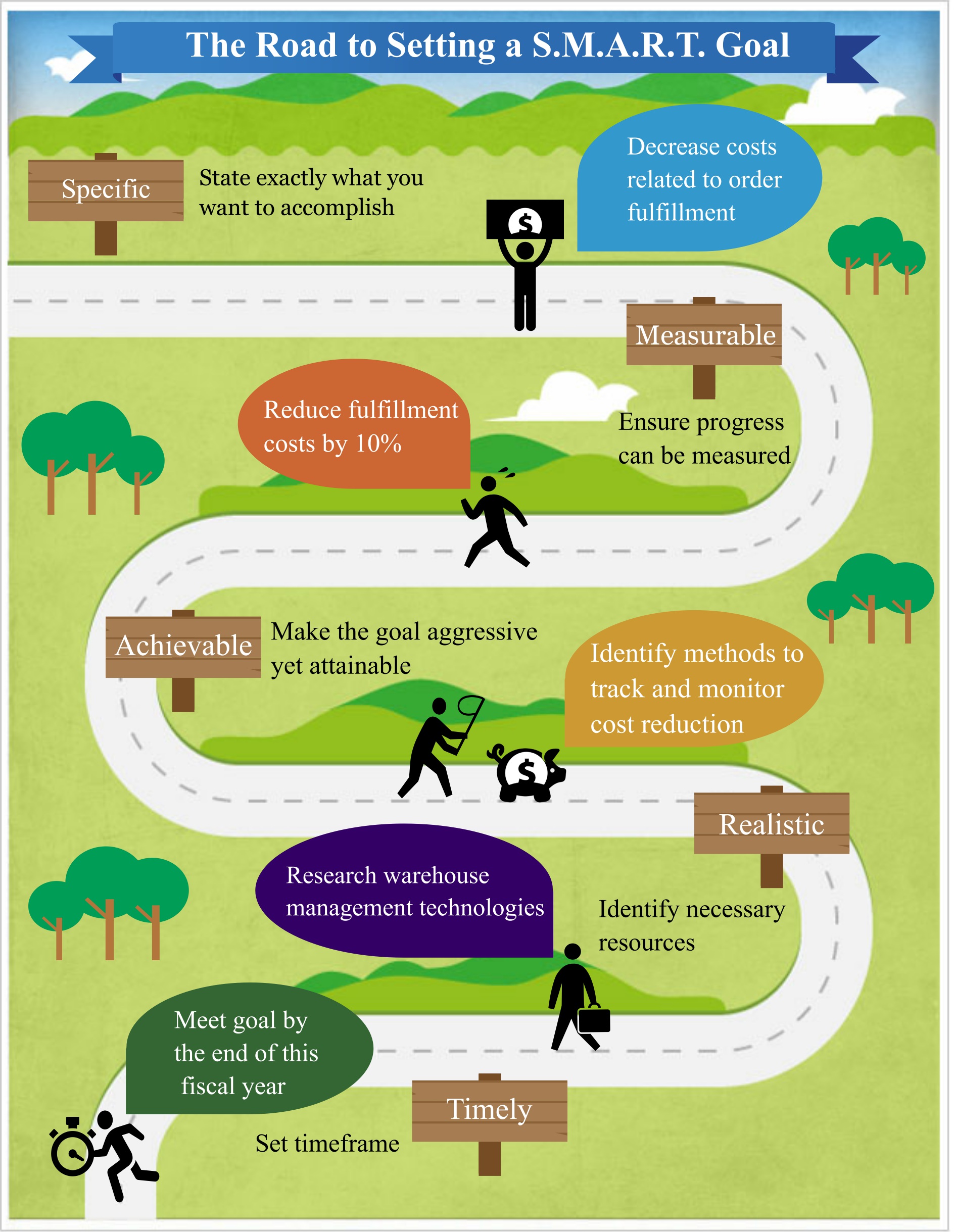
Each new year brings with it a renewed energy to being our best selves. In order to get started, we need to define our priorities and what our success will look like. Setting SMART goals, or goals that are specific, measurable, achievable, realistic, and timely, keeps us moving forward by providing detail and assigning accountability.
Try this: After reviewing your past year, set aside some time to consider what you’ll set out to achieve this year. Create a detailed roadmap to successful completion of your goals.
Use this infographic to help you set, and achieve your SMART goals.
How was your year in review? What were your biggest accomplishments? Are there any goals that you’ll carry over into the new year? Do you regularly set aside time at the close of a year to reflect? We’d love to hear what you do to reset for a new year.