by Elizabeth Hines | Jul 11, 2016 | Blog, Content Marketing, Logistics, Marketing, Social Media, Supply Chain

This is part two of a three-part series on Twitter for B2B. See part one, Twitter for B2B, and part three, How to Use Twitter Analytics.
If you’re not sure what else to tweet, try these 20 ideas.
Twitter is an excellent platform for sharing news and reaching your customers, but it sure can be a lot of work. Our recent social experiment showed us that engagement is highest for Fronetics when we tweet around 40 times a day. That takes a lot of time and energy — not to mention, a lot of content.
You, too, may find yourself frequently strapped for quality tweeting material. We’ve got some ideas to not only fill your feed but to keep your followers interested and engaged.
A few things to remember
Keep in mind the 4-1-1 rule, an idea popularized by Content Marketing Institute founder Joe Pulizzi and Tippingpoint Labs: “For every one self-serving tweet, you should re-tweet one relevant tweet and, most importantly, share four pieces of relevant content written by others.” This prevents your Twitter account from seeming too self-promoting, which quickly will turn off followers, and it reinforces your business’ position as a helpful source of information and knowledge.
Remember, also, that you don’t have to tweet just text. You can also share photos, videos, Slideshares, and links. Mix it up to keep things interesting.
With that said, here are 20 ideas to get you tweeting.
Tweet this
1) Release news.
Twitter has become the new newswire, where stories break and people turn for to-the-minute information. It’s a great place to offer updates about product releases, changes in service, or other company announcements. But also you can share news that might affect your followers or your supply chain: severe weather, acts of terror, or economic or political events.
2) Share company or industry data.
We’ve written before about the potential for data-as-content. Tweeting stats, data, and other numbers relevant to your audience is a great way to get started. You can type out the information in less than 140 characters or create a quick infographic or image.
3) Mine Reddit.
Reddit is an endless source for content of any kind. Create a multireddit with industry-specific subreddits so you can quickly browse what’s trending to share with your audience.
4) Recycle an old blog post.
Be it a week or a few years later, there’s no shame in reposting content after some time has gone by. Maybe it’s relevant to current events. Maybe it got overshadowed by another breaking story or event when it was originally posted. Maybe it did really well the first time, and it’s still relevant. Regardless, tweeting about an old post can drive new traffic to some of your best content. You can always frame it as “ICYMI” (in case you missed it) or a “Best of” post.
5) Praise your suppliers.
Sharing a positive experience with a business partner is great exposure for the partner and good karma for you. It also shows your audience that your behind-the-scenes operations are running smoothly, which reinforces confidence in your products or services.
6) Share a meme.
An internet meme is a humorous piece of media (most often a photo) shared online from user to user. Show your brand’s personality by posting one that will make your followers smile.

7) Thank inspiring speakers from an industry conference.
Did someone give a particularly interesting presentation? Tag them and thank them. Maybe they’ll follow you or retweet you, giving you lots of exposure.
8) Throw it back.
Post an old photo or an old tweet on a Thursday to participate in Throwback Thursday (#TBT). “Old” doesn’t have to mean decades ago, by the way. People frequently use content from earlier in the year — even earlier in the week.
9) Reveal your favorite follow.
Do you really enjoy news or content from another user? Share that person’s Twitter handle with a quick explanation of the kind of tweets followers can expect. You’re offering valuable information to your audience — and you’ll get excellent exposure for your business if the user has a large following and engages with your tweet by liking or retweeting it.
10) Celebrate holidays.
Wish your followers happy and safe holidays, and show photos of your employees celebrating special events. Remember holidays aren’t limited to major religious or patriotic days of observance. International Women’s Day, Bring Your Child to Work Day, and National Ice Cream Month can inspire content. Days of the Year is a great resource for little-known holidays. Did you know that July 11 is International Town Criers Day?

11) Comment on trending topics.
See what people in your network are talking about. The Trends column on the left of the homepage shows popular topics of conversation tailored to you based on your followers and accounts you follow. If a trending topic involves something you have experience with, offer insight and information to help position your company as a thought leader in the industry.
12) Retweet your executives.
Get exposure for your management team or other content spokespeople in your company by retweeting them.
13) Quote someone famous.
Everyone can relate to inspirational quotes. Tweet your favorites or create graphics to share. Or, follow leaders and thinkers you admire and retweet particularly poignant thoughts.

14) Praise an industry leader.
Tag someone to tell them that you liked their book, article, or post. Congratulate newly appointed executives of competitors and business partners. Recognize someone for a courageous business decision, successful quarter, or outstanding support of a charitable organization.
15) Hold a contest.
Build excitement about a product by asking followers to post photos of creative alternative uses with the hashtag #HowNotToUse. Have them share their best recipes using your wholesale food products. Or ask for submissions to name your newest cargo ship. (Boaty McBoatface?) Whether you give a prize or not, people are competitive by nature and will enjoy participating.
16) Answer an FAQ.
Ask your customer service team for a list of customers’ most frequently asked questions and regularly tweet out answers.
17) Ask a question.
Whether “What do you think of our new product?” or “Do you have plans for the long weekend?” there’s no better way to get a response than to ask a question.
18) Conduct a poll.
If you’re looking for a specific answer, use the poll button to see what your followers are thinking. It can be related to your business or just for fun. Try both and see where you get the most engagement!
19) Share photos of company events.
Days of service, employee milestone celebrations, executive retreats: photos help followers attach faces to your business name. It also gives them a behind-the-scenes look at company culture and builds a positive image of your employer brand.
20) Retweet what your network is sharing.
Share helpful, informative, or entertaining content from the users you follow. You not only offer value to your followers, you also let the user know you like their content and prompt them to do the same for you.
Related posts:


by Elizabeth Hines | Apr 5, 2016 | Blog, Content Marketing, Marketing, Strategy
The benefits of content marketing take more than a few months to come about.
Kate Lee, Senior Director of Strategy, recently wrote about a client who was disappointed in a newly adopted content marketing program and ready to quit — certainly they should be seeing more leads and more sales by now, right?! Since the company was just a few months in, the answer was no; that’s not how it works.
Content marketing is a long-term solution that helps businesses build brand awareness, grow their audience, and generate new leads and sales. But, like any good relationship, it takes time and effort to achieve results. You shouldn’t give up before the seeds you sow have time to bear fruit.
Just how long will it take for your content marketing strategy to yield results? Well, that really depends on your business and your goals, but you can count on at least six months. (Joe Pulizzi, founder of the Content Marketing Institute, says more like 18.) The point is, content marketing is not a magic, overnight solution. The reason reflects why content marketing is effective in the first place.
Let’s take a look:
Developing your strategy takes time.
Only 11% of companies without a documented content marketing strategy find their efforts to be successful, compared to 60% of companies with a strategy in place. (That number rises to 86% when the company designates someone to lead the strategy.) The significant increase in effectiveness can be attributed to the careful thought and research that goes into building a strategy.
You will need several months to build the foundation of your content marketing plan if it is to be effective. You need time to research the kind of content that resonates most with your audience and to truly understand the (very specific) demographic that finds value in what your company offers. Then you need time to determine and test which distribution channels will most effectively reach your target audience, to discern a plan for content production, and to build out an editorial calendar reflective of your strategy.
Without getting all of these pieces precisely right, you’ll waste an enormous amount of energy and resources working on an ineffective strategy. Take the time to evaluate the market for your business and its content marketing strategy, and you’ll realize results in time.
Becoming an authority takes time.
The goal of your content marketing efforts should be to be a consistent source of information and value to your audience, who gradually will come to trust your authority and reward you with their business when they are ready to make a purchase. And establishing yourself as an expert doesn’t happen overnight.
Consistency is key for two reasons. For one, the average B2B buyer consumes between two to five pieces of content before making a purchase decision. If your content is old, arbitrary, contradictory, or otherwise unreliable, buyers will chose a different vendor whose content is more trustworthy. Consistent and consistently good content keeps your target audience engaged and builds your credibility with them.
Secondly, search engines rank websites based on several factors, and one of the most important is consistency. If your company blogs every other month, compared to companies that post several days a week, your posts will be penalized in search results. And since very few readers click beyond the top five search results, you’re drastically reducing your organic search potential.
As a SumAll article put it, “Whether getting traffic to your blog or your content ranked in the search engines, it doesn’t happen overnight, but instead by repeatedly creating and distributing quality content on a frequent basis for the long-term.”
Building your audience takes time.
The B2B buying process is becoming longer and more complex because the majority of buyers (82%) are using more sources to research and evaluate products and services, and they are spending more time in the research phase itself. In fact, 71% of B2B researchers start with a generic search — rather than searching for a particular company — and do an average of 12 searches before even engaging with a specific brand’s site. They are 57% of the way down the sales path by this point, meaning they have already spent a fair amount of time educating themselves with the enormous amount of information available to them on the Internet.
This means you need to allow your target audience time to find you and complete thorough research about you and your competitors before you even realize that the lead exists. And likely there will be more time before a sale takes place.
Content marketing is much more about lead nurturing than producing instant results. As you build your reputation as a valuable source of information, you will simultaneously build a loyal following of readers and content consumers who continue to return to you for knowledge and, ultimately, purchases. Relationship-building is not a streamlined process, but it does foster the ever-valuable repeat business that will have a greater impact on your bottom line than a one-and-done sale.
Your sales cycle takes time.
Unfortunately, content marketing cannot decrease the length of your sales cycle. Thus, you can’t expect to see the fruits of your labors (in terms of dollars) until at least one cycle is complete.
There should be, however, hints along the way that your efforts are working. Metrics like increased website traffic, email registrations, and social reach offer clues that more potential customers are finding your business in their research. You should take these signs and continually evolve your strategy to accommodate what is working for your business.
Also keep in mind that while content marketing can have an enormous impact on generating and nurturing leads, it does not deliver sales on a silver platter. Sales teams still play a major role in building on those relationships and closing deals.
Give your relationship with content marketing time to play out, and don’t be afraid to adjust your strategy along the way if you find some things are working better than others.
Related posts:

by Elizabeth Hines | Mar 16, 2016 | Blog, Leadership, Strategy, Supply Chain
Men hold 85% of all executive officer positions within Fortune 500 companies, despite research that consistently shows when women are in positions of leadership, companies perform better. In the supply chain industry, 20% to 30% of positions are held by women, but the dearth of women in the C-suite is astounding; just 5% of top-level supply chain positions within Fortune 500 companies are held by women.
As I have written about previously, the lack of gender diversity in the supply chain is not because women do not have the skillset and ability to succeed within the industry:
“Women are as capable as men when it comes to working within the supply chain industry. Indeed, it has been put forth that women are better suited for roles in supply chain management than men. Research conducted by SCM World found that the majority of men (63%) and women (75%) believe that the natural skillsets of women differ from those of men and that these differences are advantageous for supply chain management.”
Last year I was fortunate enough to interview Cathy Morris, senior vice president and chief strategy officer at Arrow Electronics, and Mickey North Rizza, vice president of strategic services at BravoSolution, about women in the supply chain. Morris was twice named one of the “Top 50 Most Powerful Women in Technology,” and North Rizza was named a “Top Female Supply Chain Executive.” Both Morris and North Rizza shared how they got started in the industry, and the steps they took to get to where they are today. They also shared their desire to increase diversity in the supply chain.
As a woman working within the supply chain industry, I believe that it is important to discuss the lack of gender diversity and point to research highlighting why the industry needs to increase the number of women in all positions, including the C-suite. Additionally, it is just as important to highlight the incredible women who already are working within the industry.
This year I’m turning my focus to showcase the work that these trailblazing women are doing. I spoke with Kendrea Durr-Smith, director of global trade compliance at Arrow Electronics, Kelli Saunders, President of Morai Logistics, Hailey McKeefry, editor and chief at EBN, and Barbara Jorgensen, co-founder and managing editor, EPS News. I also invited Tania Seary, founder of Procurious, to share what is happening at her company, and Jennifer Cortez, director of marketing and communications at Transplace, to discuss the role of quality content within the industry. These interviews and stories will be shared over the next couple weeks.
As I share the work of even more women in the future, I look forward to continuing a dialogue that will hopefully facilitate welcoming more women to the industry.
![Supply Chain: 4 Essential Year End Questions to Ask Yourself [Infographic]](https://fronetics.com/wp-content/uploads/2024/10/supply-chain-year-end-questions-900x675.jpg)
by Elizabeth Hines | Oct 27, 2015 | Blog, Data/Analytics, Leadership, Strategy, Supply Chain

As the new year approaches, don’t overlook the valuable information you can glean from conducting a year-end review.
Don’t start the new year without asking these 4 essential questions.
What were my biggest accomplishments this year?
Twelve months can seem like a long time when you consider everything that happened over the course of the last 365 days. Setting aside some time to review successful projects, notes of thanks from clients, or a particularly positive performance review reminds us what we’re capable of achieving and gives us a renewed sense of accomplishment.
Try this: Designate a file folder near your workspace to collect any materials or notes related to your successes as they occur. Doing so will make it easier for you to recall your accomplishments and provide quick access to a list of your achievements – helpful for a healthy dose of motivation or last-minute performance reviews.
How satisfied are you with the past year?
Were you successful in meeting the majority of your goals? Do you feel that you worked to your highest potential? Would you have done something differently? What about missed opportunities? Examining what went right and identifying areas for growth and opportunity are powerful exercises that both prevent the recurrence of negative behaviors and reinforce our commitment to priorities.
Try this: Thinking about your experiences of the past year in sum, try to assign a value to your entire year. How would you rate your year on a scale from 1 to 10? 1 to 100? Why? Adding some context to your experiences presents a more accurate picture of your year by tempering unusual highs and lows.
Is my current daily routine structured to make time for my priorities?
It’s easy to fall victim to time suckers, especially when they become ingrained into your routine. Has your daily 15 minute coffee break gradually morphed into 25 minutes? Are your 10 minute “headline scans” now closer to 30 minutes? These small, seemingly innocent extensions can snowball into major time loss, causing unnecessary panic as you scramble to meet deadlines.
Try this: The start of a new year is a great time to reset (or rethink) our daily routines. Build activities into your day. If you’d like to continue your now-daily 25 minute coffee break, think about extending your work day by 25 minutes. Feeling like you can’t absorb everything news-worthy in less than 30 minutes? Set your morning alarm 30 minutes earlier so you can arrive to work having already completed your scan of daily headlines. By taking a hard look at where your time is actually going and then spending a few minutes realigning your daily routine with your priorities, you’re intentionally and consciously assigning time to the things you find the most important.
What is it that I want to achieve next year?
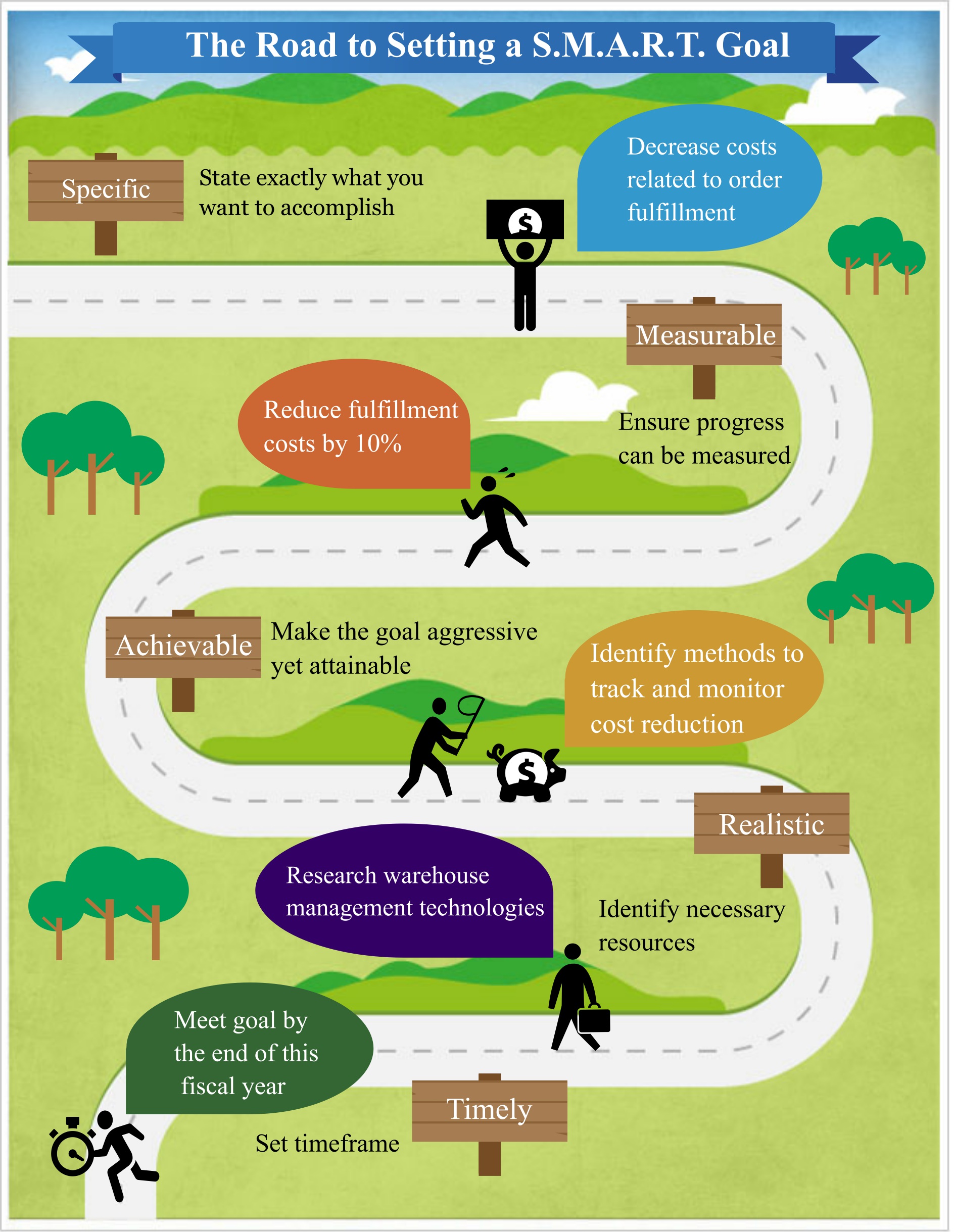
Each new year brings with it a renewed energy to being our best selves. In order to get started, we need to define our priorities and what our success will look like. Setting SMART goals, or goals that are specific, measurable, achievable, realistic, and timely, keeps us moving forward by providing accountability.
Try this: After reviewing your past year, set aside some time to consider what you’ll set out to achieve this year. Create a detailed roadmap to successful completion of your goals.
Use this infographic to help you set, and achieve your SMART goals.
How was your year in review? What were your biggest accomplishments? Are there any goals that you’ll carry over into the new year? Do you regularly set aside time at the close of a year to reflect? We’d love to hear what you do to reset for a new year.
Fronetics Strategic Advisors is a leading management consulting firm. Our firm works with companies to identify and execute strategies for growth and value creation.
We advise and work with companies on their most critical issues and opportunities: strategy, marketing, organization, talent acquisition, performance management, and M&A support.

by Elizabeth Hines | Oct 22, 2015 | Blog, Leadership, Strategy, Talent
Do we need to rethink the concept of happiness at work?
Do you like your job? It can be a complex question to answer when everything is taken into account. For some people that question is comprised of several other questions, many of which have different answers: If I could do anything with my life would I be working this job? Is this job my passion? Would I work as many hours if I didn’t have to? Do I feel productive? Is my work/life balance ok? Am I happy?
On average, Americans put in about 1,700 hours a year, which is much more than the French and Germans, but much less than the Koreans or Singaporeans. For Americans, this breaks down to 34.4 hours a week considering vacation time and holidays, however many adult, full-time employees report working more than 34 hours week. According to a Gallup poll, 4 in 10 workers reported putting in 50+ hours per week. So are all these hours bringing us happiness? First, let’s have a look at what happiness is.
People have always had a lot to say about happiness. Artistotle said, “Happiness depends upon ourselves.” Albert Camus said, “You will never be happy if you continue to search for what happiness consists of. You will never live if you are looking for the meaning of life.” The Dali Lama says, “Happiness is not something ready made. It comes from your own actions.” What is certain is that we seem to have a happiness obsession. We want it, we seek it, we’re told we need it so we believe we need it.
Harvard psychologist, Dan Gilbert, believes that happiness is not always entirely in our control and not entirely out of our control, and sometimes we feel it and sometimes we don’t. That’s ok, he says. In a TED Talk on happiness he says, “Happiness doesn’t last that long. Happiness is an emotion — it’s a feeling. The human brain isn’t built to sustain a feeling over the long term…Your emotions are a compass. They’re telling you which direction to go in. When you feel bad you turn left, you try something different in your life. When you feel good you keep on marching in the direction you’re going. What good would a compass be if it were perpetually stuck on north?”
So if we can’t feel happy all the time, and we don’t need to feel happy all the time, then why are we told we should feel happy all the time? Workplaces have been increasingly focused on employee happiness. Several studies have shown that happy employees are more productive and more loyal. Even tycoon Richard Branson is on board with this idea, “Your employees are your company’s real competitive advantage. They’re the ones making the magic happen—so long as their needs are being met.” How can the Virgin god be wrong?
A new article in the Harvard Business Review has gathered many studies and theories opposing the contemporary idea that happiness in the workplace is the key to success. The authors point to studies that show that people fail to feel happy when they are expected to be happy, that people can become emotionally vulnerable and needy when they expect their workplace to fulfill their happiness, that people may be more selfish when happy, and that people who value happiness often feel lonelier. The studies also pointed out that angry employees were better at negotiating than happy employees and better at intuiting actions of deception.
Perhaps our thinking about happiness needs to shift. Perhaps we don’t need employees bounding around the office with endless smiles. Perhaps the expectation we have for employees to be happy, and employers to be responsible for that happiness, is all too much. According to Dr. Vanessa Boute, a social psychologist, “One of the misconceptions about happiness is that happiness is being cheerful, joyous, and content all the time; always having a smile on your face. It’s not – being happy and leading rich lives is about taking the good with the bad, and learning how to reframe the bad.”
Fronetics Strategic Advisors is a leading management consulting firm. Our firm works with companies to identify and execute strategies for growth and value creation.
We advise and work with companies on their most critical issues and opportunities: strategy, marketing, organization, talent acquisition, performance management, and M&A support.