Kate Lee, noted supply chain strategist, joins DC Velocity’s team of bloggers
DC Velocity
DC Velocity

Not too long ago I did not use Twitter and I relished being able to say that I had never sent a Tweet. I believed Twitter was not applicable to me – I don’t follow celebrity gossip and whereabouts, I don’t like the idea of sharing my personal thoughts and experiences with 232 million strangers, and I have yet to take a “selfie” (much less share it with said 232 million strangers). In short, I didn’t use Twitter because I did not understand Twitter and I had no idea of its value. When I finally decided to remove my head from the sand and take stock of Twitter I was blown away not only by what Twitter really is, but also by my ignorance. Using Twitter for business is essential. If you and your business have not yet taken the plunge into the Twitter pool it is time to grab your trunks and jump.
A 2013 study conducted by the Center for Marketing Research at the University of Dartmouth found that 77 percent of Fortune 500 companies have an active corporate blog. The study also found that rank influences Twitter use – 43 percent of the Twitter accounts are held by companies in the top 200 on the list as compared with the bottom 200 which hold 43 percent of the Twitter accounts. Similarly, 67 percent of the Inc. 500 use Twitter. Looking at small businesses, in 2013 Constant Contact reported that 25 percent of small businesses use Twitter – up from only 7 percent last year.
Why is it important to know who is using Twitter? Because those who are using Twitter are more likely to gain customers than those who don’t. A survey conducted by Market Probe International found that 72 percent of those who follow a business on Twitter are more likely to make a purchase from that business and that 82 percent of followers are more likely to recommend a product or service to friends and family. The survey also found that 85 percent of respondents reported feeling a closer connection to a small business if they follow them on Twitter.
In addition to demand generation, the following are reasons why you and your business should use Twitter:
Still skeptical?
SJF Material Handling Equipment is the single largest source for new, used and refurbished material handling equipment in the US. The company has built an extensive and successful social media network – one which uses Twitter – with the objective of increasing sales. The company has 55,797 followers on Twitter (and is gaining 200 to 400 followers each week). Stafford Sterner, President of SJF, says that Twitter enables the company to cover more ground and attract customers from unexpected and often unrelated circles.
Another example is the battle for customers between AT&T and T-Mobile that played out on Twitter. The throw down began when Jay Rooney Tweeted that he was considering a switch from AT&T to T-Mobile.
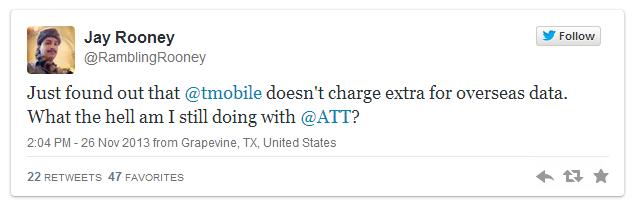
What occurred next was an all-out battle between AT&T and T-Mobile for Jay Rooney (and other customers) – both companies took to Twitter to try to convince Rooney that their company and service is the best. Rooney does a great job of summarizing the exchange:
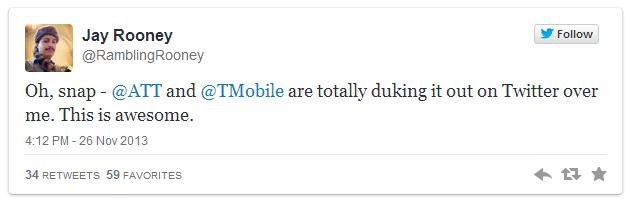
The battle for Rooney intensifies and T-Mobile’s Chief Executive John Legere jumps in the fray:
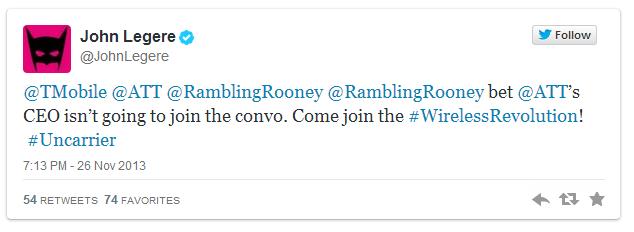
Impressed, Jay Rooney decides to make the jump to T-Mobile. What’s more, the conversation caught the attention of many others. In the end, the exchange netted customers for T-Mobile.
(For more on the exchange, check out ZDNet’s article on battle between AT&T and T-Mobile.)
Ready to take the plunge? Social Media Examiner has a great how to article on how to use Twitter for business and for marketing.
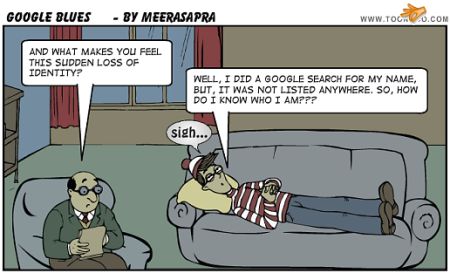
First impressions are no longer face to face. Rather, a first impression is now comprised of information which can be gathered via a quick search of the Internet. A first impression can be, for example, inclusive of your LinkedIn and Facebook pages, your personal blog, your Instagram page, your Twitter account, your Klout score, your pins on Pinterest, and anything else that may have made itself onto the Internet. Because of this, that 7 seconds you used to have to make a first impression when you enter the room is gone – chances are that the first impression was made long before you arrived. The reality is that when you walk into that room you are likely being evaluated against the first impression that was made prior to your arrival.
In today’s world you are a brand. Like it or not, if you want to be successful you need to not only recognize this reality, but you also need to take steps to build and enhance your brand. Here is how to brand yourself.
1. Define your brand
In short, a brand is a story. What is your story? Take the time to sit down and look at where you have been and where you are. Where you want to be? What is your skill set? What experiences do you have? How are you unique? Take all of this information and knowledge and define your brand – define your story. Be clear, be concise, and be direct. If you can’t define you as a brand in a sentence or two, you have lost an opportunity.
2. Take stock
What information is “out there”? Start by making a list of all the social media accounts you have – even if you no longer actively use them
Next, Google yourself. What do you find? As G.I. Joe says, “Knowing is half the battle.”
3. Define a strategy
At this point you have a brand and you know what information about your brand is publicly available. Is the information enhancing or hurting your brand? What steps can you take to strengthen your brand? For example, should you adjust your privacy settings on some of your accounts so that personal information and exploits are not available for all to see? Does your LinkedIn page need to be updated? If you don’t take the time to define your strategy you will not be able to execute it effectively.
4. Take action
Frank Cavallaro recently wrote about moving from strategy to execution. He wrote: “Strategy is about making choices. Execution is about getting down and dirty so that those choices can produce results.” Don’t stop at creating the strategy – execute. And remember, the Internet is not static. What information about you has been added? Furthermore, it is important to periodically look at your brand. Is it still representative of where are and where you want to be? If not, take the time to re-brand yourself.
When you take the time to brand yourself you have the opportunity to define that first impression.

Source: www.Chickenmaker.net
A 2013 study conducted by Deloitte found that 64 percent of the global executives surveyed reported they had a risk management program in place that is specific to the supply chain. That being said, 45 percent of the respondents said their programs were somewhat effective or not effective at all. Respondents — especially those in the technology, industrial products, and diversified manufacturing sectors — reported that supply chain disruptions have become more costly over the past three years. They also cited margin erosion and sudden demand change as two of the most costly problems. Moreover, the 2013 Global Supply Chain and Risk Management Survey conducted by the MIT Forum for Supply Innovation and PricewaterhouseCoopers found that in the last 12 months more than 60 percent of companies surveyed reported that their performance indicators had dropped by more than three percent due to supply chain disruptions. While there are many factors which are likely to contribute to the issues pointed to in these studies, I believe that one is that companies focus largely developing risk management strategies to mitigate and cope cataclysmic events and not the day-to-day bumps in the road. As such, companies tend to be ill-prepared to handle the day-to-day bumps.
Big events are outlier events
Because big events such as hurricanes, tornados, tsunamis, and terrorist attacks can have a long-lasting impact and often visual impact on the logistics and supply chain industries they tend to stay top of mind. That being said, these events are outlier events. “Outlier events have much more influence than they should,” Professor Ananth Raman of Harvard Business School told David Stauffer for an article for the school’s website. M. Eric Johnson, director of the Center for Digital Strategies at Dartmouth College’s Tuck School of Business, told Stauffer for the same article, “Managers will often consider the giant risk but ignore the smaller risks that create friction in the supply chain.” When companies ignore the smaller risks, they do so at their peril.
You can’t ignore the day-to-day
Creating risk management strategies that focus on the everyday events is critical. Dealing with these events in a reactive and piecemeal fashion is inefficient and ineffective and can significantly hurt your company. The following are some tips on what to consider when developing an effective risk management strategy which focuses on the everyday risks:
A big event might happen, but everyday events will happen… every day. Don’t give your company Chicken Little syndrome by focusing only on big events.

Source: Simply Silhouettes
Within the logistics and supply chain industries, the key to providing your client with an end to end valuable offering is providing the core value yourself and outsourcing the rest. Finding the right outsource partner is critical to success. Here are seven things you need to consider when choosing a new outsource partner.
1. Culture and values
Choosing the right partner goes beyond capabilities. You have to consider the corporate culture as well. In addition to being able to do the work, the ideal partner should be able do it seamlessly by fitting with your team and with your client’s needs.
When evaluating a new outsourcing partner, it is important to look at their mission or value statements. How do these hold up to your own company’s mission and value statements? Are they well aligned? If they are, move on and explore the company further. If not, walk away. Mission and value statements speak to the core culture of the company, so if you can’t find common ground here, it is unlikely you will be able to build a positive working relationship.
2. Standards and metrics
What standards of quality and delivery does the potential partner employ? Here it is important to look at their metrics and processes. How do these compare with the ones within your company? If they are similar, it is not only likely your systems will be able to work well together, but also likely that the two companies have a similar approach to standards of quality and delivery.
3. Investments
Next, take a look at where the potential partner has made investments. Has the company spent in similar areas to your company? Similar investments show business culture or strategy alignment. If the investments are different, find out why.
4. Financial stability
What is the financial health of the potential partner? You don’t want to enter into a partnership only to find out in a few months that the company is not financial stable. Entering into a partnership with a company that does not have its financial house in order is a costly mistake. Take the time to do your due diligence.
5. Where will you stand?
What will your relationship be? That is, will you be a small fish in a big pond or a big fish in a small pond? When times are good this doesn’t matter, but when there is a customer satisfaction issue, it can mean the difference between client retention or client attrition. It is essential to know where you stand inside your partner’s organizational priorities. If you are comfortable with where you will stand, that’s great. If not, find another partner.
6. Long-term strategy
It is also important to look at the long-term strategy of your company and your potential partner’s company. Does the service they will be providing on your behalf align with their continuing plans? And with your ongoing plans? Continuity and service development is important to your company and to your customers. The potential partner needs to be able to provide the specified service for the foreseeable future and also needs to be able to grow with your company’s strategic needs.
7. Credibility
Finally, look to social media. What are others saying about your potential partner in an unfiltered environment? Are people pleased with the service the company provides? Are there any red flags with respect to the company or the service they provide? Social media can help call attention to potential issues.
Also talk with others within the industry – especially people who have worked with the potential partner before. What was their experience? Again, look for red flags.
By following these steps, you’ll be able to better evaluate potential partners and identify partners that are a good fit from both a business and cultural perspective.