by Elizabeth Hines | Dec 25, 2014 | Blog, Content Marketing, Marketing, Strategy
Fronetics Strategic Advisors is a management consulting firm focused on strategy and inbound marketing. When it comes to inbound marketing we take a different approach than other firms. This is because of our business experience and background. We know ROI is important, so our approach is data driven and produces results.
What is inbound marketing?
Inbound marketing is very different from traditional, or outbound, marketing. Inbound marketing focuses on creating quality content that attracts people to your company and product. By aligning the content you publish with your customer’s interests, you attract the right traffic – traffic that you can then convert, close, and delight over time. Outbound marketing, in contrast, uses methods including: buying ads, buying email lists, and cold calling.
Inbound marketing works
Research conducted by HubSpot found that inbound marketing is more effective than outbound marketing:
- 200% average ROI;
- 62% lower cost head;
- 15% increase in top line revenue.
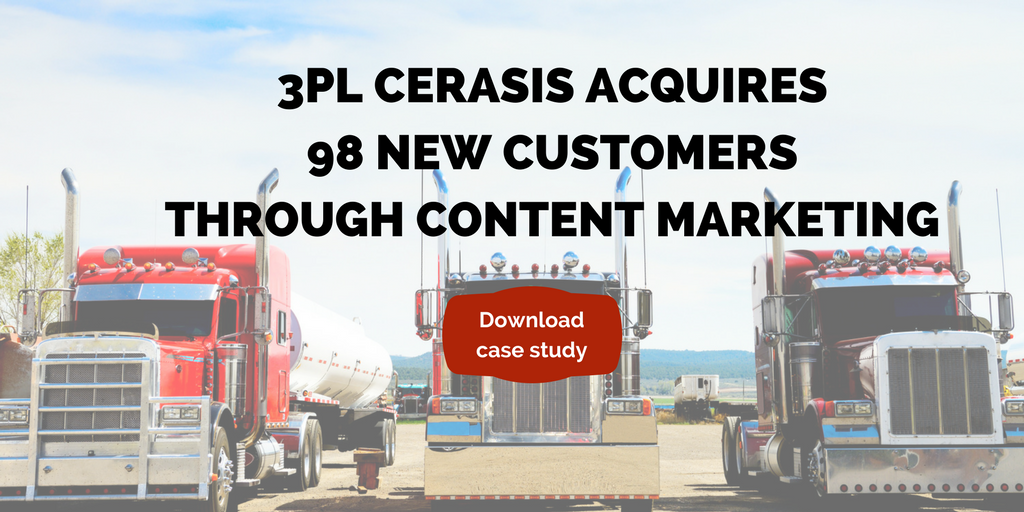
Freight logistics company Cerasis decided to make the switch from outbound marketing to inbound marketing. Within 25 months the company gained 98 new customers and increased revenue by 14%.
Our approach
Strategy matters. A 2014 study of B2B marketers found that companies who have a documented content strategy in place are more likely to consider their efforts to be effective than companies who do not have a documented strategy in place (60 percent vs. 11 percent). We work with our clients’ to develop a strategy that is right for their company. We then work with our clients’ to implement the strategy.
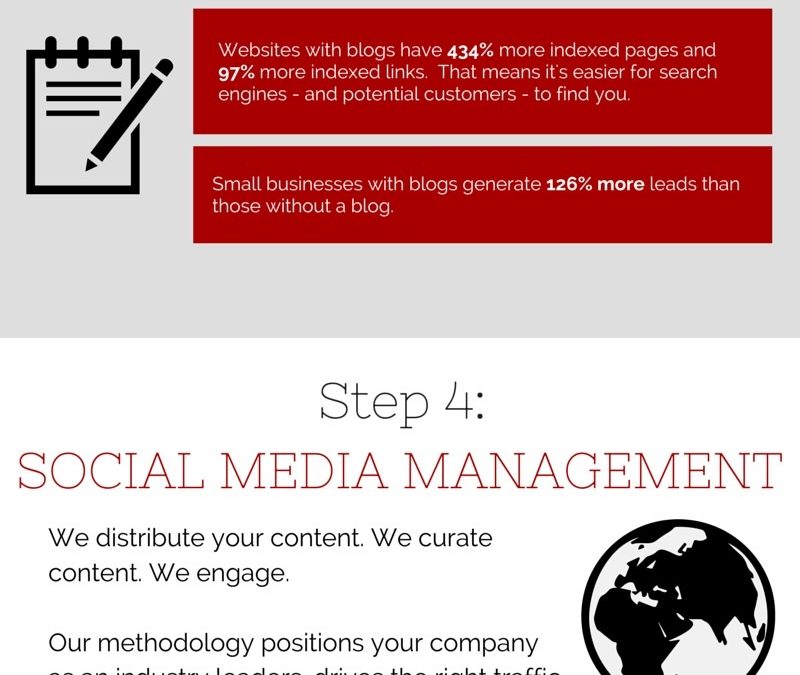
Here’s what we do:

What now?
We understand that developing and implementing an inbound marketing strategy can seem daunting. We are here to help. We are happy to take a few minutes and look at your current strategy and give you ideas on how to start, or suggestions on what you can do to make your current strategy more successful. We are also happy to talk with you about what we can do.
If you are, like many other people, stretched for time and also struggle with strategy and execution, we can also talk to you about what Fronetics does and how we can help. We know some people prefer to do it themselves, and others prefer to outsource.
We’d love to talk with you about how you can grow your business through inbound marketing.


by Elizabeth Hines | Sep 16, 2014 | Blog, Content Marketing, Marketing, Social Media, Strategy, Supply Chain
I work with companies from the supply chain and logistics industries to identify and execute strategies that will grow their business. Too often I see companies who have invested time and money into developing a B2B inbound marketing strategy and have fallen flat. Here are six reasons why inbound marketing strategies tend to fail:
The ideal customer is not being targeted
A successful inbound marketing strategy will attract and engage the “right people” – ideal customers. It is therefore essential that time is taken to understand who the ideal customer is, the needs of the customer, and the customer’s pain points. Your company’s website, social media presence, and email communications, should speak to your ideal customer.
Content is not published consistently
A common pitfall is establishing a blog, but only publishing content on a sporadic basis. To establish your company as an industry leader and gain leads, you need to publish content on a consistent basis. For example, your company needs to commit to publishing blog content every Tuesday.
Content is not quality content
All content is not equal. If you want your inbound marketing efforts to succeed, your content needs to be quality content. Your content should be well-researched, sourced, and edited. Grammatical errors and misspellings are inexcusable.
More isn’t always better
It is easy to sign up for a social media account. I’ve seen many companies who have decided to jump into social media feet first and have established many social media accounts, only to become overwhelmed. If you want your inbound marketing strategy to succeed, it is more important to be active on one social network than inactive on five.
Lack of strategy and commitment
A 2014 study of B2B marketers found that companies that have a strategy in place are more likely to consider their efforts effective than companies that do not have a stated strategy in place. Companies that do not have a strategy in place, and who do not have someone in charge of the strategy tend to fail.
A focus on sales
Content that informs and educates attracts and engages. Content that is “salesy” not only fails to attract and engage, it turns customers away.
Is your inbound marketing strategy falling flat? Assess your strategy – honestly. Has your company fallen prey to these common pitfalls?

by Elizabeth Hines | Sep 2, 2014 | Blog, Content Marketing, Data/Analytics, Marketing, Supply Chain

To grow your B2B business you need to take a comprehensive data driven approach to marketing. Metrics enable you to measure success, drive strategy, and demonstrate the ROI of your marketing efforts.
What metrics should you track?
Given that your objective is to attract, acquire, and retain customers, the most effective metrics to track are those where the unit of focus is the prospect, lead, or customer. These include the following:
Visits
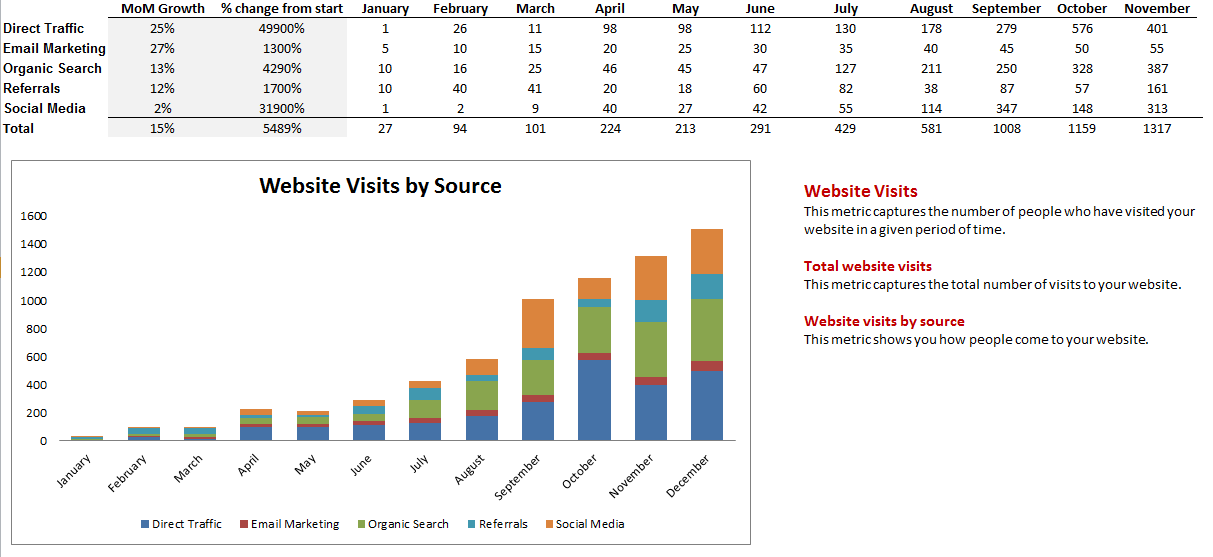
Visits capture the number of visitors to your company’s website in a given period of time. In addition to tracking the total number of visits, it is also important to track visits by source. That is, how visitors come to your website. Sources typically include direct traffic, organic search, referrals, social media, and email marketing.
Reach
Reach is the number of people who can be reached through your marketing channels (e.g. LinkedIn, Twitter, and Facebook). This metric is a good indicator of how well the content you are publishing attracts new people to your network, and how well the content engages people within your network. In addition to tracking your company’s total reach (the total number of people you can reach across all channels), you should also track reach by channel.
Leads
Leads are one of the strongest indicators of ROI. By tracking leads by source, you can identify where your marketing efforts are most effective, areas where you can improve, and areas you could eliminate from your strategy.
Customers
Customers are also a strong indicator of ROI. Like leads, customers should be tracked by source.
Conversion rates
Conversion rates measure the percentage of people who are moving from one marketing stage to the next. An increase in your conversion rates implies an improvement in the quality of your content and/or traffic. You should track the visit-to-lead conversion rate (How many of your website visitors are becoming new leads?) as well as the lead-to-customer conversion rate (Are you generating sales-ready leads?).
Ranking
Ranking matters. The top listing in Google’s organic search results receives 33 percent of the traffic compared to 18 percent in the second position. Two metrics you can track are your domain authority and your marketing grade.
Domain authority is a score ranging from 1 to 100 that represents how well a website will perform in a search engine ranking. The lower the score – the less likely it will be found. Marketing grade is a holistic measure of a site’s online presence as measured by HubSpot’s Marketing Grader on a scale of 0-100. A higher score is better.
How to track metrics for success
Having an established database to capture your marketing metrics is critical to success. We created a template that you can download and use to track your metrics, measure success, and drive strategy. One of the great features about this template is that it generates graphs that can be used in your reports and presentations.

by Elizabeth Hines | Aug 28, 2024
SUPPLY CHAIN MARKETING More leads. More business. Build brand authority and your sales pipeline Grow your supply chain business with a tailored B2B marketing strategy designed by an agency of industry experts. Here's what we do Our services Let’s grow your...

by Elizabeth Hines | Mar 20, 2019 | Blog, Logistics, Robotics & Automation, Supply Chain
With the power to drastically increase efficiency in all areas of the supply chain, it’s important brands are exploring the benefits of AI. Here are four examples of how AI can benefit your supply chain.
Highlights:
- It’s estimated that supply chain firms could gain $1.3 to $2 trillion a year from using AI.
- Machine learning has the ability to quickly discover patterns in supply chain data by relying on algorithms and constraint-based modeling to find the most influential factors.
- The increasing popularity of chatbots is making it harder to ignore how AI is helping shape not just the daily logistics but also the B2B marketing landscape and operational procurement for supply chain industries.
Artificial intelligence is not simply affecting supply chain management, it is revolutionizing it.
With the power to drastically increase efficiency in all areas of the supply chain, McKinsey estimates that firms could gain $1.3 trillion to $2 trillion a year from using AI in supply chain and manufacturing.
Here are 4 examples of AI and how it’s changing supply chain management for the better.
1. Autonomous transport
There’s nothing more exciting than the field of autonomous transport for SCM. We’ve all known for many years that driverless trucks have major potential to affect supply chain management and logisitics.
We aren’t there yet – and “anyone employed as a driver today will be able to retire as a driver” — but if autonomous trucking can be developed to its potential, the technology would effectively double the output of the U.S. transportation network at 25 percent of the cost.
The conversation is no longer simply talking about vehicles on the road either. Google and Rolls-Royce recently partnered to build autonomous ships too.
2. Final-mile delivery route efficiency
One doesn’t have to have a driverless vehicle, however, to use AI to optimize delivery logistics.
For example, in the “devilishly complex” task of delivering 25 packages by van, the number of possible routes adds up to around 15 septillion (that’s a trillion trillion).
That’s where route optimization software and AI-powered GPS tools like ORION — which UPS uses to create the most efficient routes for its fleet — are making their mark. With ORION, customers, drivers and vehicles submit data to the machine, which then uses algorithms to creates the most up-to-date optimal routes depending on road conditions and other factors.
And there are also other autonomous entities out there besides cars, trucks, and ships. Robots using LIDAR technology are now being used to deliver items in crowded city environments. For example, Marble’s robots deliver medicine, groceries, and packages, and they also track their routes and the condition in order to continuously improve delivery for the next time. Additionally, last-mile solutions with drones continue to be explored due to their ability to move quickly and bypass almost all ground-level obstacles.
3. Demand forecasting, particularly for warehouse management and SCM strategy
Machine learning has the ability to quickly discover patterns in supply chain data by relying on algorithms and constraint-based modeling to find the most influential factors. This ability to find data patterns without human intervention has applications in EVERY aspect of SCM, but demand forecasting is a particularly influential component beneficiary.
Warehouse management and SCM strategy rely heavily on correct supply, demand, and inventory-based management. Forecasting engines with machine learning offer an entirely new level of intelligence and predictive analysis of big data sets that provides an endless (and constantly self-improving) loop of forecasting, overhauling the way we manage inventory and the way we create new strategies for our industries.
4. Chatbots for marketing and operational procurement
The increasing popularity of chatbots is making it harder to ignore how AI is helping shape not just the daily logistics but also the B2B marketing landscape and operational procurement for supply chain industries.
A chatbot is a computer program that simulates human conversation using auditory or textual methods. It communicates with your customer inside a messaging app, like Facebook Messenger, and is similar to email marketing without landing in an inbox. Mimicking a human conversation, chatbots currently allow for increased customer engagement through messaging app technology that isn’t yet saturated with marketing. They are just one of the many ways to integrate AI and marketing.
There’s so much more than these 4 examples to consider when discussing AI and the supply chain: prediction of delivery arrival times to the warehouse and to the customer, cargo sensors, automated purchasing, financial applications…the list literally may be endless.
Choosing what to focus on for this article, and more importantly, for all supply chain and logistics businesses, is a tough decision, but one thing is clear: in the “arms race” to leverage AI in SCM, some will come out on top and some will be left behind.
This post originally appeared on EBN Online.
Related posts: