by Elizabeth Hines | Feb 25, 2016 | Blog, Content Marketing, Data/Analytics, Marketing, Strategy
https://www.flickr.com/photos/132604339@N03/22920388895/in/photostream/
The most efficient lead-generation strategy includes a way to capture potential customers’ information.
An effective lead-generation campaign requires several different strategic layers.
Firstly, you must entice potential customers with an exclusive, high-value offer — like ebooks, whitepapers, free consultations, product demonstrations, or discounts. A clear, highly visible call to action (CTA) or two can help ensure they know how to attain it and can encourage them to choose it over your competitors’ offers.
But you’re not done there. Unless you are capturing those quality leads effectively, you could be dropping the ball and missing out on potential customers.
Here are some tips for successfully capturing leads.
You absolutely need to have a landing page for your offer. Your CTA should not take the potential customer to your website’s homepage or anywhere else, but rather to a landing page, which provides your offer and captures the lead information.
Landing pages are one of the most important elements of lead generation and are effective for 94% of B2B and B2C companies, according to research done by MarketingSherpa. A great landing page:
- Describes the offer
- Does not include links to other things on your website that will distract the lead and perhaps send them elsewhere before you can obtain their information
- Is simple and not cluttered with information but emphasizes the benefits of your offer
- Has ways to share the offer on social media
- Has a form to capture the lead information
Capturing leads: It’s all in your form
The last point suggests the next step in your strategy: A good form is how you will successfully capture those leads. It is where your potential customers will provide their contact information in exchange for the special offer you have enticed them with.
So, what makes for a good form?
- Keep it short. The fewer fields you have in a form, the more likely you will receive conversions.
- Avoid using the word “submit” on your form. Nobody wants to submit their information, so use a phrase that demonstrates that they are getting something they want by supplying their information — something simple like “Get it free,” or “Download now.”
- Add a privacy message (or link to your privacy policy) that indicates their email or contact information will not be shared or sold.
Want more leads? Use multiple channels
To generate and capture the most leads possible, completing these steps in just one of your marketing platforms is not enough. Marketers should utilize multiple channels in order to maximize their lead-generation efforts.
The objective is to make it easy for buyers to research, evaluate, and purchase products in any way that is most appropriate for them. Some leads may find you through your blog, some through social media, and some through organic search (which is why all of your content should be SEO-friendly). Thus, you should make sure you are promoting your special offers, effectively placing CTAs, and properly using landing pages and forms in every facet of your digital presence.
Such an efficient, multi-layer lead-generation strategy can reduce your cost per lead while delivering higher quality prospects to your sales team.
Want to learn more? Download for a complete list of innovative tips and proven strategies to improve your lead-generation and -nurturing strategy.
Download guide
Related posts:

by Elizabeth Hines | Feb 15, 2016 | Blog, Marketing, Social Media, Strategy

When you are posting on social media could be as important as what you’re posting.
Timing is everything, and that statement especially holds true when it comes to posting content to social media. If you are sending out your message and nobody is there to see it, you are that proverbial tree falling in the forest; you did not make a sound. Your post had little to no impact.
So, even if you are putting in the time and effort to craft informative blog posts, tweets with just the right message, or Facebook posts that inspire more than just page likes, you still are not getting the most exposure you can out of social media.
Data that delivers results
According to research by social media scientist Dan Zarrella, when you are posting your content can be almost as important as what you are posting. Luckily, there is an ample amount of analytical data out there regarding optimal times to post on Facebook, Twitter, LinkedIn, Pinterest, and Instagram.
For example, looking at broad-based Twitter engagement, research suggests that users go up by 30 percent on weekends, speculatively because more people are on their computers, smartphones, and tablets during their free time. On weekdays, this peaks at 4 p.m. EST, perhaps as people check into social media as the workday begins to wind down and they are seeking a diversion.
Some studies suggest that Twitter use often peaks slightly earlier, between 1 and 3 p.m. on weekdays, and this might be attributed to people who take an extended lunch break.
LinkedIn studies show that the optimum times to post content are Tuesday through to Thursday during normal work hours. Also noted: Tuesday 10 to 11 a.m. is known to get the most clicks and shares.
When it comes to Facebook, another marketing study suggests that there is quite a wide range of variables, and it is really based upon your audience. But, in general, the best time to post on Facebook is 3 p.m. on Wednesday. Other popular times include 1 to 4 p.m. on Thursdays and Fridays, and lunchtime (12 to 1 p.m.) on weekends.
There are poor times to post on Facebook, too, such as weekends before 8 a.m. and after 8 p.m., according to SurePayroll’s research.
Research supports that B2B content generally performs 16% better during typical business hours, while B2C content performs 17% better on weekends.
Your (personal) optimal posting time
But, the problem with these suggestions is that they are just statistical generalizations of when might be the optimal time for posting content. What you need is analytics that are specific to your particular followers. Your audience maybe a different demographic than those represented in these studies, and when they are reading, sharing, or retweeting may actually surprise you.
You can access personalized data regarding the social media habits of your readers and followers through analytic programs like Google Analytics and sites like Tweriod. There are a wealth of available free tools, which provide valuable insight regarding your audience.
Here are a few to consider:
- Tweriod is a free Twitter tool that helps you know the best time to tweet. The free analysis will analyze up to 1000 of your followers. Tweriod is not part of Twitter but rather is something you may access to better understand your followers’ schedules and interests, like what they have retweeted.
- Followerwonk can help you to individuate your potential Twitter audience by learning not only who follows your competitors, but who commonly retweets their content. You can also look at your own personal audience and discover what content they like, share, and maybe even link to from other posts, as well as when they are most active on social media.
- Facebook Insights tells you the best times and days to post content by accessing your page’s insights in the posts sections. In the graph section for “When Your Fans Are Online,” you can see the days and times when your fans are using Facebook. This data is constantly updated.
- Google Analytics provides insights, analytics, and data regarding your website, and it lets you do more than measure sales and conversions. It also gives insights into how visitors find and use your site, what they are clicking on, and how to keep them coming back.
Many people still play a guessing game when it comes to deciding the best time to post their content for the most impact. But, studies suggest the average life of a tweet is only about 18 minutes. So, if you tweet something during an inactive period for your Twitter audience, you are probably wasting your time.
Posting the right content, at the right time, can make the difference between getting valuable comments, shares, and clicks on your links, and it can provide a myriad of valuable new leads.
Related posts:

by Elizabeth Hines | Feb 10, 2016 | Blog, Content Marketing, Marketing, Strategy
A good call to action will help potential leads feel compelled to choose your offer over your competitors’ offers.
 If you feel your marketing campaign falls short in generating quality leads, you are not alone. Typically one in 10 marketing professionals questions the effectiveness of their lead generation methods. While you may have some of the components of a strong campaign in place, it is possible that you are leaving out a very important ingredient for success: a call to action (CTA).
CTAs are vital in any tactical marketing campaign. This is where you actually ask for your potential customer or client to take some form of action that moves them one step closer to your objective: connecting them to your company.
Say that you offer potential customers a high-value offer — like an ebook, whitepaper, free consultation, or discount — as a lead nurturing tactic. If you do not include an actual call to action, the customers have no direction for obtaining the offer, and you are probably missing out on a myriad of quality leads.
What makes a good call to action?
Not all CTAs are created equal. You are competing with every other brand in a fight for the attention (and choice) of consumers, so it’s critical that prospects feel compelled to choose your offer over your competitors’.
- Calls to action are the secret sauce to driving people to your offers. If your CTAs aren’t effective at capturing people’s attention and persuading them to the click, then no matter how impressive your offer is, it is rendered useless.
- Typically, a good call to action can be used on product pages (non-landing pages), in display ads, email, social media, direct mail, and pretty much anywhere you can market your offer.
There are several tricks of the trade to creating a highly productive CTA:
Location, location, location
Just like with important news, the placement of your call to action should be “above the fold,” or, high enough on the page so the reader will not have to scroll to see it. It is also good to have a second CTA located further down within the offer.
Clarity is key
Do not try to be so clever with your words that your offer gets lost in translation. State the offer very clearly and be specific. Don’t just say “download now,” but rather, “Download you free e-book.”
Make the CTA stand out
Choose contrasting colors for your call to action so that it draws the attention of the eye and does not blend in on the page.
Link to a landing page
Send potential customers to a targeted landing page that is relevant to what they are looking for. Your call to action should send them to a page that will convert them into a lead. Landing pages are one of the most important elements of lead generation. In fact, according to MarketingSherpa’s research, landing pages are effective for 94% of B2B and B2C companies.
There are many innovative methods to increasing the number of quality leads a marketing plan generates. The trick is in knowing how. For more proven tips, download The 30 Greatest Tips & Tricks That Will Change The Way You Nurture Leads to learn the best ways to improve the productivity of your marketing strategies.
Download guide
Related articles:

by Elizabeth Hines | Feb 8, 2016 | Blog, Content Marketing, Marketing, Strategy
Enticing potential customers with exclusive, high-value offers is an important component of lead nurturing and lead generation.
Your strategic marketing objectives boil down to one basic mission: to generate a high volume of quality leads. This will drive tomorrow’s revenue and an increase in sales and profits. Yet, only one in 10 marketing professionals feel they have an effective lead-generation strategy in place.
Since a productive lead-generation campaign consists of many interconnecting layers, it can be hard to pinpoint what is limiting your success. But, if you are seeking more leads for your business (and who isn’t?), consider these proven tactics for achieving successful lead generation.
First, for tactical reasons, your overall campaign must contain these components:
- Something To Offer. An offer is content that is perceived to be high in value. Offers include ebooks, whitepapers, free consultations, product demonstrations, or discounts.
- A Call to Action. This is either a small paragraph of text, an image, or a button that links the potential customer to a landing page to download what you have to offer.
- An Awesome Landing Page. This is a specific page designed to allow the potential client to download your offer.
- Forms to Gather the Lead Info. Essentially, they get the download; you get their contact information.
These four valuable components set the stage for capturing exponentially more lead information than ever before to grow your business.
Creating the Most Inspiring Offers
Just because you have identified leads does not mean they will convert to customers. Lead nurturing helps build a relationship with your potential customers, gain their trust, and raise their awareness about your business and products. The four steps above are critical to the lead nurturing process. But, unless you offer something that your potential customers want, you will not get past the first one.
So, what entices people to click “yes” to an offer?
The majority of us want anything that is considered exclusive, scarce, or in high demand. Suddenly, something becomes more desirable if it appears like we are getting the scoop on a special deal or valuable information.
The higher the perceived value of your offer, the more irresistible it becomes. So, whether your offer is whitepapers, downloads, free trials, memberships, or sales promotions, these irresistible elements can overcome a lead’s typical friction, doubt, or concern.
The elements to creating a feeling of exclusivity and special value in your offer include:
- Limited-time offers. This creates scarcity to your offer.
- Limited quantities. What you are offering is unique and has exclusive value, and procrastination may mean missing out.
- “X number of people have seized this offer.” Human nature is to follow what others do. State how many people have downloaded your offer or benefited from your information to encourage others to do the same.
- Content that matches current news trends. Content tailored to whatever is trending in the news (or to whatever is in high demand at the moment) is more relevant and relatable to potential customers, who are likely engaged with those trends in other ways as well.
- A title that hooks interest. People actually do judge a book by its cover and will not want to see more if you bore them.
- Several Call to Actions, offered at different stages. Pursue buyers at different levels of readiness with different CTAs. People often do their own research before even engaging with a sales rep, and every prospect is at a different stage of exploration. Develop different offers at different stages in the buying cycle, and include a primary and secondary CTA to these offers on various pages throughout your site.
- Avoid professional jargon. Terms and phrases that have been over-used and abused are meaningless and won’t hook potential buyers. They include: groundbreaking, cutting-edge, scalable, flexible, and robust, just to name a few.
To further ensure enticing more leads, your offer should provide something that is considered of high-value. Not all offers are created equal. Some “formats” perform better than others at converting leads. Here are a few of the top-ranked offers, in order of performance, when it comes to generating leads:
- E-books or guides
- Templates or presentations
- Research and reports (e.g., State of Inbound Marketing)
- Whitepapers
- Kits (multiple offers packaged together)
- Live webinars
- On-demand videos
- Blogs (including offers in the nav or sidebar)
- Blog posts (if there is a CTA in the post)
There are many more ways you can capture successful leads and fine-tune your marketing plans in a way that turns leads into customers. For more proven tips, download The 30 Greatest Tips & Tricks That Will Change The Way You Nurture Leads, which offers dozens of other techniques marketers should follow to increase leads and revenue.
Download guide
Related articles:
by Elizabeth Hines | Feb 3, 2016 | Blog, Content Marketing, Marketing, Social Media
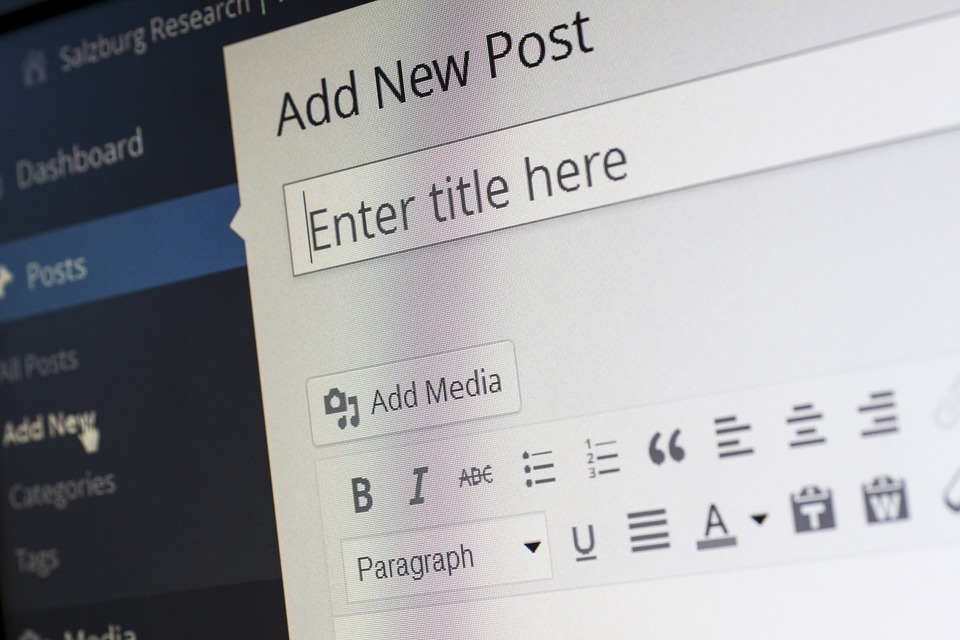
A blog post not only stays around longer than a print ad, it can better engage potential customers.
The 24-hour news cycle has evolved into the 24-second news cycle with the rise of online media outlets and social media. So, when it comes to advertising your business, generating leads, making sales, and being perceived as a thought leader, you must consider the lifespan of your print ad and its purpose, versus the lifespan of a well-orchestrated blog and its potential.
Though often confused, there is a distinct difference between advertising and marketing. With a print ad, you are obviously advertising your business concisely, with a limited number of words and images. But, this form of advertising has a limited lifespan (only as long as that piece of print media is in the hands of a reader). So, it should be only one small piece of your marketing puzzle.
In contrast, a blog bridges advertising with progressive marketing techniques. It reaches your target demographic in a different way by conveying knowledge and building trust. It works on improving your “image” as well as branding your company as a thought-leader. A blog makes a more personal connection with the reader, while an ad is very obviously trying to sell something — and consumers gravitate toward knowledge rather than a simple sales pitch.
Looking at Longevity
A blog can live on indefinitely. What you post today may still be relevant and a popular read several months from now. Because of this, your company can reach a larger number of consumers within its target demographic for a long period of time, surpassing a print ad’s capacity for results. A blog also reaches consumers in a more relevant, memorable way. Marketing experts would agree: Getting your clients or customers to remember you is half the battle.
Your company’s advertising can include the placement of an ad in print media like newspapers, magazines, or direct mail. Print ads through community newspapers or direct mail flyers are useful for specific purposes, like targeting customers in a localized area.
But, you will find that advertising of this kind comes with a sizable price tag and has limited benefits. According to a Marketing Profs digital report, print advertising ranks as the largest expense of most marketing plans, with public relations and marketing strategies rounding out the important trio.
So how long will a print ad live? According to a marketing study published by Fast Company, a newspaper ad has a maximum lifespan of 2-3 weeks, and an ad placed in a monthly magazine may live up to three months.
In contrast, when a blog post goes live, it may generate the most hits within the first week, but it will continue to serve as available content that consumers will access for months, or even years, down the road. If the blog is well constructed, you may find that a year later it is still ranking in the top five search results for certain targeted long-tailed keywords.
So, it is important to consider the “quality of life” of your blogs and print ads. A blog feeds consumers’ need for more information before they commit. In fact, prior to contracting your services or buying your product, your potential customers will research the topic online and read blogs posts that present information in a vendor-neutral format.
Successful businesses react to this by creating a constant stream of this fresh content, organized into a library of posts (that stand the test of time), then use that content as bait to attract potential prospects. One study revealed that when it comes to blogs, the combination of proper timing and useful insight can result in a 33% higher lead conversion rate and a 38% increase in revenue over the prior year.
Blogs’ Benefits and Social Media
When you publish a print ad, you’ll never really know what your readers think about it. With a blog, you get feedback and you engage the reader, who is also a potential customer. It creates a more viable connection and provides greater insight that you can leverage to garner more customers through:
- Tracking and analytics: Feedback is a powerful tool. Google Analytics can tell you what types of articles are capturing your readers’ attention. You can learn how much time they spend on a page and how they share it. You can leverage this information to determine what sort of content you need to create to reach more customers and generate more leads.
- Shares and comments: Readers love to interact with online content, reading and commenting to express their opinion or thoughts. The comment section of your blog can become a community of readers. If a reader found your blog insightful or inspiring, they may also share it with their contacts or friends through social media. Your business becomes a part of a larger community that is connected through dialogue.
Advertising in any form, digital or print, is only a single component of any complete, multi-level marketing process. Innovative marketing today must include several different components, like well-articulated blog posts that utilize SEO, and connect potential customers to your company by offering information they can use. Blogs are a long-lasting porthole to your business, the product or the services you offer, and your professional insight or vision.
Related articles: