by Elizabeth Hines | Sep 10, 2014 | Blog, Data/Analytics, Marketing, Strategy
Metrics matter. Metrics allow you to measure success, drive strategy, and demonstrate the ROI of your marketing efforts. Conversions are one of the most important metrics to monitor.
Why conversion rates matter
What is a conversion? A conversion means action. It means that someone took some action that entered them into your funnel or moved them further down your funnel. Examples of conversions are: downloading a white paper, filling out a form, requesting information, opening an email, and becoming a customer.
By monitoring and tracking conversions you can determine what marketing efforts are paying off. Additionally, by monitoring and tracking conversions you can identify which efforts need to be re-evaluated or even discontinued. In short, conversion rates can help you measure your ROI.
Why conversion rates don’t matter
Conversion rates are not the Holy Grail of metrics. Your website should be a magnet. It should attract and engage prospective customers and current customers. Your website should serve to educate and to establish your business as an industry leader. Eighty to 90 percent of prospects are not ready to make a purchase when they first engage with your company. Conversion rates don’t capture the amount of time people spend on your website, learning, exploring, and getting to know your business. Conversion rates also do not capture the amount of time current customers spend on your website – valuing your company as a resource.
While conversion rates are an important metric to measure, remember that they are not the end all be all.
Tracking conversion rates
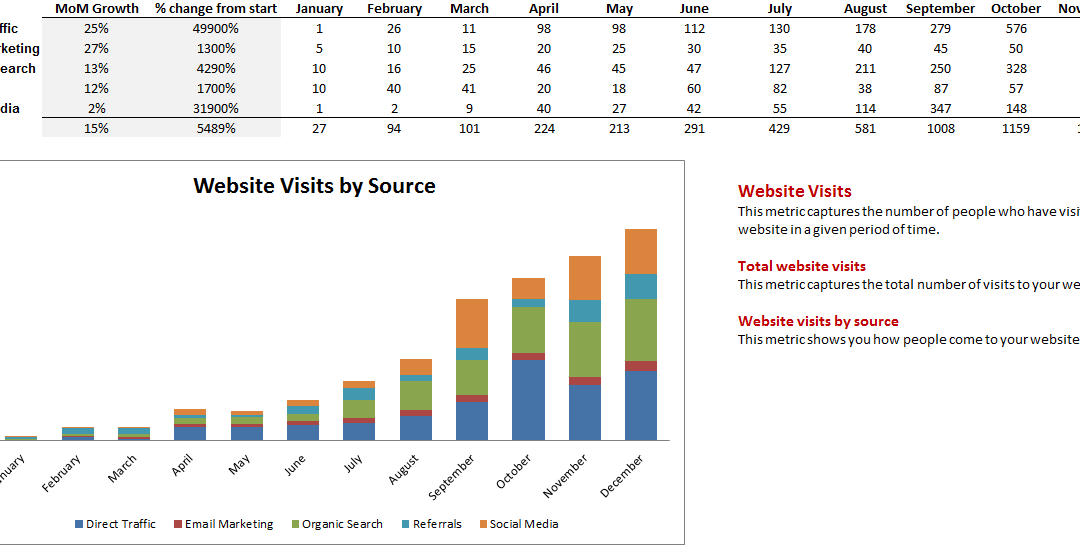
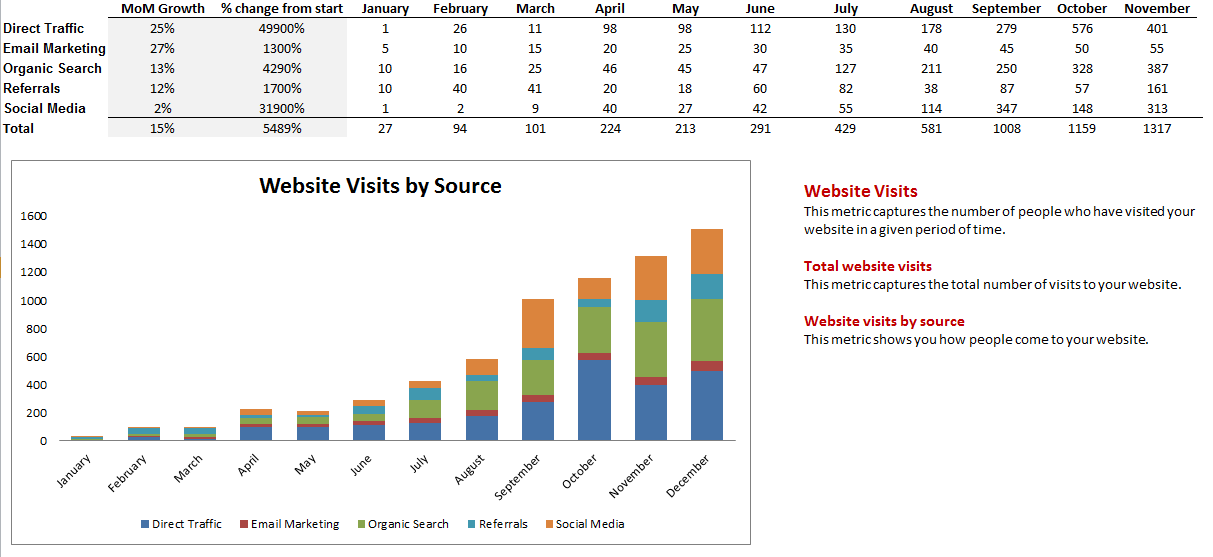
We created a template that you can download and use to track conversion rates and other critical metrics. While the template captures visitor-to-lead and lead-to-customer conversion rates, you can easily modify the template to include additional conversion rates that are useful to your business.


by Elizabeth Hines | Sep 9, 2014 | Blog, Marketing, Social Media, Strategy, Supply Chain
Many companies within the supply chain industry do not participate in social media because “they can’t get past the word ‘social’ and the perception it creates.” Companies with this mindset are at a disadvantage.
The supply chain industry is, by nature, an industry that is built on relationships, partnerships, cooperation, networks, and on communication. Being social is vital to the success of companies with the supply chain industry. Social media is a platform that is well poised to meet the needs and demands of the supply chain industry – and to help companies within the industry grow their business.
Social media is a tool that can be used be the supply chain industry for: risk management, business intelligence, recruitment, lead generation, engaging with current and prospective customers, attracting new customers, improving productivity, problem solving, and establishing your company as an industry leader. Moreover, social media can be used as the foundation for a new business model.
Clara Shih, CEO and Founder of Hearsay Social, and Lisa Shalett, Managing Director and Head of Brand Marketing and Digital Strategy at Goldman Sachs, write:
Social media is perhaps best thought of as a set of new and innovative ways for businesses and customers to do what they have always done: build relationships, exchange information, read and write reviews, and leverage trusted networks of friends and experts.
Similarly, Tony Martins, President of Tony Martins & Associates, notes that:
Supply chain executives should look at the social model of collaboration that can be enabled through social media as the most significant strategic weapon in supply chain optimization today. It liberates them from the rigid framework of functional structures and client-supplier relationships. It is the best way I’ve seen to keep the supply chain moving quickly, in spite of the many problems that will always occur.
Still skeptical? Look at companies who have successfully leveraged social media. Or, as Shih and Shalett suggest: “As you contemplate the risks and rewards of social media, we would suggest that the key ingredient for evaluation is simply to experience it for yourself.”
Interested in learning more about social media and the supply chain industry? Download our white paper: “Social Media and the Logistics and Supply Chain Industries: Why Not Participating is a Risk You Can’t Afford to Take.”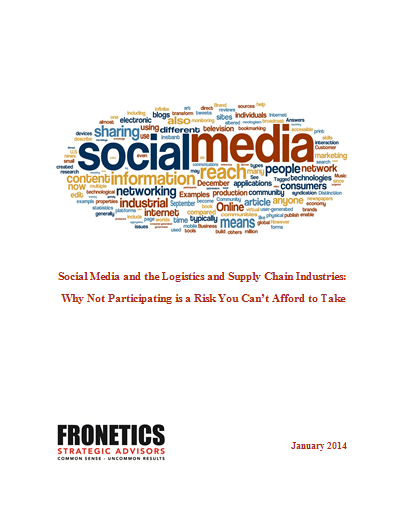

by Elizabeth Hines | Sep 4, 2014 | Blog, Marketing, Supply Chain
The temptation is obvious: You want to use your business blog to proclaim the virtues of your excellent products. You throw around words like “unique,” “outstanding,” “robust,” and “industry-leading.”
Perhaps you even add a blinking “Buy Now!” button at the end, convinced your reader simply can’t resist hitting it.
There is only one problem: Your sales pitch made your prospective customer tune out long before they reached the last paragraph.
Imagine the following scenario: You enter a car dealership and are greeted by an enthusiastic sales agent, grinning ear to ear. He launches into his pitch about mega sales and the best deal of the century. Any question from you is brushed aside as he has more to say about the car model that he has decided you must have. Turned off by his sales strategy, you make a quick exit.
Or think of another example: A sales representative from a company whose website you browsed a few days ago follows up with a call and leaves a voice mail. The message is friendly. She does her best not to sound pushy. She introduces her “leading” company, which offers “a wide range of services” and a “one-stop-shop” for all your needs. By the time she reaches, “I look forward to meeting you,” you’re still ready to hit the delete button. Again, the voice mail was loaded with sales lingo.
As strange as it may sound, being “salesy” is bad for business. HubSpot, a marketing consulting service and software developer, goes as far as calling it one of the “7 Deadly Sins of Inbound Marketing.”
It reads:
Sin 3: Gluttony – Don’t be gluttonous and stuff your content with information about your company products. Focus on solving problems and helping your customers and community first and not jamming your product pitch down their throats.
Let’s go back to the two examples above and transfer the line of thought to your blog. Rather than forcing your products on your prospective customers, take time to answer their questions. You are there for them. They may be in the beginning of their buyer’s journey and far from ready to sign off on a brand new car. Perhaps they entered that dealership to browse, to check out the view behind the steering wheel.
And what if that voice mail had been phrased differently? What if the sales representative had spent a moment talking about what your browsing history said about the problems you’re seeking solutions to and presented some real-life proof of how her company could help? Basically, she would have been more effective showing how her company can deliver value to you. The same goes for your blog.
Here’s what you should do:
- Stay informative and educational.
- Demonstrate market expertise.
- Sound like a business peer.
- Focus on topics and questions of crucial importance to your target audience.
The bottom line: If you want to make a sale, stop selling.

by Elizabeth Hines | Jul 24, 2014 | Blog, Leadership, Marketing, Social Media, Strategy, Supply Chain, Talent
The supply chain industry has a talent crisis. The question is: how can we solve this crisis? To answer this question I turned to Rodney Apple, founder of the SCM Talent Group. Apple has worked as a supply chain recruiter for the majority of his 19+ year career within the staffing industry and he has filled more than 1,000 positions within the industry ranging from executive-level in Fortune 500 headquarters settings to leadership and staff-level roles across large networks of manufacturing and distribution facilities within North America. Apple’s role affords him the ability to witness the talent crisis from the perspective of the industry, the company, and the job seeker.
Kate Lee: The supply chain talent crisis is a hot topic. Is the job market as crazy as it is being made out to be?
Rodney Apple: The job market has been hot for years and there is always a crunch to find and source top supply chain talent. Baby Boomers are retiring in droves and there just aren’t enough people with the necessary skills and experience coming in to fill that gap. With that being said, I don’t think the job market is as crazy as the media makes it out to be. However, we still need the media to continue researching and reporting on this critical topic as this builds more awareness and helps to generate new ideas and solutions for solving the talent problem.
Lee: When it comes to supply chain talent, what is the biggest challenge?
Apple: We don’t have enough students at the K-12 levels that are saying “when I grow up, I want to be a Supply Chain Manager.” Many students coming up through our educational ranks don’t even know what supply chain is or they perceive supply chain as a blue collar industry where you either drive freight trucks or load and unload them at a warehouse dock.
There needs to be big thinking and big solutions to change this image at the macro level. The industry needs to make a concerted effort to communicate to K-12 students what supply chain is and what the career paths look like. Ultimately, it needs to find a way to brand supply chain as a top career choice. Investing into K-12 outreach programs and mass media campaigns, similar to how our military branches advertise for recruiting purposes, could be a great way to educate the future workforce about the supply chain and get them excited about pursuing degrees and careers within supply chain.
Lee: What other challenges do you see?
Many companies haven’t taken the initiative to develop best-in-class talent acquisition resources and programs. Companies that perform the best are the ones that treat the recruiting department like a strategic, value-added program versus a low-level, tactical HR cost center.
In addition, many companies are being too strict and inflexible with their hiring requirements. Instead of defining the job when they write out their job descriptions, they focus on defining the candidate by listing out a ridiculously long and unrealistic list of skills and qualifications that the “ideal candidate” must have to be “qualified”. This antiquated technique usually ends up deterring top candidates from applying and disqualifies candidates that have what it takes to do the job.
Lee: What can companies do to attract top talent?
Apple:
- Develop a best-in-class talent acquisition strategy and program
o People – hire the best talent sourcers and recruiters that you can find and make sure you have a properly staffed department so they’ll operate in a “proactive” versus “reactive” capacity.
o Process –streamline the end-to-end talent acquisition process with the goal of alleviating administrative, burdensome tasks and unnecessary touch points.
o System – implement a robust Applicant Tracking System, one that integrates with the company career site and ideally the HRIS or ERP system.
o Employee Referral Program – referrals are typically the top source for hires so companies should invest into developing a best-in-class employee referral program. Get the CEO and all senior executives to champion the program so all employees are involved and incented to participate.
o College Recruiting Program – partner with supply chain universities and proactively recruit students from these universities, early and often.
o External Supply Chain Recruiting Partners – identify supply chain recruiting agencies that specialize in the areas where hiring help is needed the most.
- Upgrade Career Branding Materials – Develop attractive branding/marketing materials to include a separate company career website that highlights company culture, history, key stats, job opportunities, career paths, etc. Incorporate interviews from employees and testimonials that illustrate why your company is a great place to work. In addition, learn how to write job descriptions that attract top supply chain talent.
- Create a Supply Chain Leadership Development Program –This is a great and cost-effective way to attract top entry-level talent and aggressively train and ramp them up to speed by rotating them into different functional areas within the supply chain. GE is well known for having best-in-class leadership development programs.
- Be open-minded when it comes to considering top talent from other fields/industries. Many candidates in other professionals have very transferable skill sets for careers within supply chain.
- Develop a program for employing Veterans, candidates with disabilities and long-term unemployed.
- Invest more into job training and mentoring programs e.g. supply chain certifications and tuition reimbursement.
Lee: What is the role of social media in recruitment?
Apple: Companies and their recruiters need to be on social media to establish their employment brand, to attract talent, and to share job openings and upcoming recruitment events. Furthermore, social media can be leveraged by all employees as a talent acquisition tool. For example, companies could require all employees to distribute jobs out to their social media connections/networks.
Lee: What advice do you have for job seekers?
Apple: A job search should be conducted strategically, not haphazardly. It’s all about laying out a robust job search strategy with a corresponding action plan. In addition, networking is where job seekers should spend the bulk of their time versus applying online and waiting for the phone to ring.
Lee: Do you have any advice for job seekers trying to break into the supply chain industry?
Apple: Changing industries is tough to do but not impossible. Start by looking at what skills are transferrable and highlight these skills on your resume, LinkedIn profile, and in interviews. In some cases going back to school may be necessary. This may mean a degree program, or it could mean obtaining a supply chain certificate.
Networking is paramount. Join local chapters of supply chain associations, attend their meetings and network your butt off.
Finally, remember that it may be necessary to take a step back in both job level and compensation. Often times taking one small step back in your career could result in three giant leaps forward.

by Elizabeth Hines | Jul 23, 2014 | Blog, Marketing, Social Media, Supply Chain, Talent

With more than 300 million active users, LinkedIn is one of the largest social media networks. LinkedIn is an incredible tool for networking and professional development. LinkedIn is also an essential component in a job search strategy. Optimizing your LinkedIn profile is crucial to your success.
Here’s how to optimize your LinkedIn profile:
Look the part. Upload a photo. LinkedIn profiles with photos get viewed 14 times more than profiles without photos. When selecting a photo to use for your profile, choose one that is professional. A photo of you with your friends, children, or pets is not appropriate. And don’t fall victim to the cropped arm/hand – the photo should be of you, and only you.
Create a URL. LinkedIn allows you to customize your URL. Do it! A customized URL is easier to remember than the default, it makes your profile more searchable, and it just plain looks more professional.
Headline. By default most people have their headline as their current job title and employer. To optimize your profile don’t rely on the default. Why? As The Muse points out: “Because this little 120-character section is prime marketing real estate.”
Write headline that speaks to your audience, showcases your specialty/value, uses keywords, and is creative.
Summary. Your summary should be between 3 and four short paragraphs in length. When creating your summary use target job descriptions to your advantage. Use keywords that not only enable your profile to be found in searches, but will also catch the eye of recruiters and prospective employers. Keep in mind that keywords are not buzzwords. Steer clear of buzzwords.
Experience. This is the section where you showcase your skill set and achievements. Be precise and include detail that will add value. If appropriate, include rich media.
Like the summary section, your experience should include keywords that speak to your target industry and to the type of job you are hoping to land.
Skills. Profiles that include skills are around 13 times more likely to be viewed than profiles that don’t list skills. Include your skills and order them so that more important skills are listed at the top.
Education. Profiles that include education are 10 times more likely to be viewed than LinkedIn profiles that don’t include education.
Certifications. List certifications that you have received. Certifications not only show your commitment and drive, they can also increase the number of times your profile is found and viewed.
Volunteer experience and causes. Include your volunteer experiences in your profile. Forty-two percent of hiring managers surveyed by LinkedIn say they view volunteer experience as equivalent to formal work experience.
Samples of work, patents, awards, publications, etc. As appropriate, include samples of your work, patents awarded, awards received, publications, etc. Again, this speaks to who you are, your interests, skills, and what you can bring to the table.
Recommendations. Recommendations can be a great addition to your profile when done right. Want to know how to do it right? Check out Jörgen Sunberg’s piece on the Undercover Recruiter.
Groups. Join LinkedIn groups that are relevant to your interests and industry. Joining groups and becoming active in these groups have many benefits – optimizing your LinkedIn profile is just one of them.
Housekeeping. Make sure that your profile has no typos or mistakes. Make sure all dates align and are accurate. A sloppy profile will turn off recruiters and prospective employers.