by Elizabeth Hines | Jun 23, 2015 | Blog, Logistics, Marketing, Social Media, Strategy, Supply Chain, Transportation & Trucking
Drew McElroy, founder of the start-up Transfix, is no newcomer to the trucking industry. McElroy was born into the business; his parents owned and operated the freight brokerage Andrew’s Express, affectionately naming it after McElroy.
“I remember listening to my father structure deals. As a kid, it was all utterly confusing to me,” recalls McElroy. “I finally started to get my head around the economics of the business in my teens. From that point on, I became increasingly aware of the industry’s inefficiencies.”
Not long after McElroy graduated college, his father passed away unexpectedly. McElroy, already working for the family business, took over as president. In that time, McElroy successfully increased annual revenues from $4 million to $12 million. While impressive, McElroy still struggled with how the industry traditionally operated. “It was clear that our family business wouldn’t be the platform for world domination,” laughs McElroy. “But I believed that, fundamentally, there was a better way to get things done.”
Determined to build a new foundation based on his belief in “a better way,” McElroy left the family business and set out for San Francisco. He would spend the next year and a half couch surfing and networking in order to gain the expert business and tech insight he needed to plan what would become Transfix. “I knew logistics and I knew trucking, but I knew nothing about venture capital, or how to move from idea to implementation,” says McElroy. “I decided I should try – and try big. If I fail, I fail, but at least I tried.”
In 2013, McElroy was introduced to Jonathan Salama. Salama was among Gilt’s early engineers, and was pivotal in building the flash sale giant’s infrastructure and inventory software. McElroy knew Salama would be key in taking his idea to the next level; Transfix had claimed its co-founders, and its recipe for industry-leading success.
Transfix is a fully automated marketplace that is all about getting things from one place to another. What sets Transfix apart is the company’s platform and approach is vastly more efficient than the traditional approach, and it is much more user-friendly.
Transfix takes the industry’s inefficiencies head on. Transfix is a digital on-demand freight marketplace. It provides industry-leading mobile technologies and location-based jobs offers for independent over-the-road truck drivers, as well as cloud-based management platforms for small carriers and shippers
Here’s how it works:
A customer logs into the Transfix TMS and enters a new shipment. The platform automatically identifies the best driver depending on location, size of truck, etc., sending a load offer alert to the driver or company dispatcher by mobile SMS message or email. The load is accepted by electronic signature, at which point the customer receives automatic notification and the driver becomes fully visible within the customer’s real-time dashboard. Load management from that point on becomes “as simple as Tinder.” Transfix geofences the driver with a five mile radius, immediately alerting Transfix of any issues. Once the load is delivered, the driver is paid within 24 to 48 hours, significantly faster than the industry standard.
Transfix just launched an app (iOS and Android) that is focused on truck drivers. Transfix’s app integrates with the company’s digital marketplace and is driver-centric. The app gives drivers the ability to manage loads, map their itinerary, and manage payments. The app also provides truck drivers with trip planning essentials including the location of showers, ATMs, weigh stations, fuel prices, and weather. The app is free and can be used by anyone with a valid motor carrier number – the driver does not have to associated with Transfix. “Developing this app and making it freely available to all drivers is just the right thing to do,” says McElroy. “Without drivers, this industry would not exist. We need to do right by drivers by making their lives easier.”
Things are moving fast for McElroy and Transfix. Within 15 minutes of updating his LinkedIn profile, McElroy got a call from a logistics Manager at Barnes & Noble and, before he hung up, had freight loads to manage. Fast forward a few months – with Transfix, Barnes & Noble has realized improvements in their processes and has seen their deadhead runs (times driving without cargo) cut by at least 50%.
Transfix has raised close to $2.5 million to date and is already generating several thousand a month in revenue.
McElroy and Transfix are poised for world domination – mind you, a win-win benevolent hegemony – a la Uber.
Fronetics Strategic Advisors is a leading management consulting firm. Our firm works with companies to identify and execute strategies for growth and value creation.
Whether it is a wholesale food distributor seeking guidance on how to define and execute corporate strategy; a telematics firm needing high quality content on a consistent basis; a real estate firm looking for a marketing partner; or a supply chain firm in need of interim management, our clients rely on Fronetics to help them navigate through critical junctures, meet their toughest challenges, and take advantage of opportunities. We deliver high-impact results.
We advise and work with companies on their most critical issues and opportunities: strategy, marketing, organization, talent acquisition, performance management, and M&A support.
We have deep expertise and a proven track record in a broad range of industries including: supply chain, real estate, software, and logistics.

by Elizabeth Hines | Jun 10, 2015 | Blog, Logistics, Marketing, Social Media, Strategy, Supply Chain
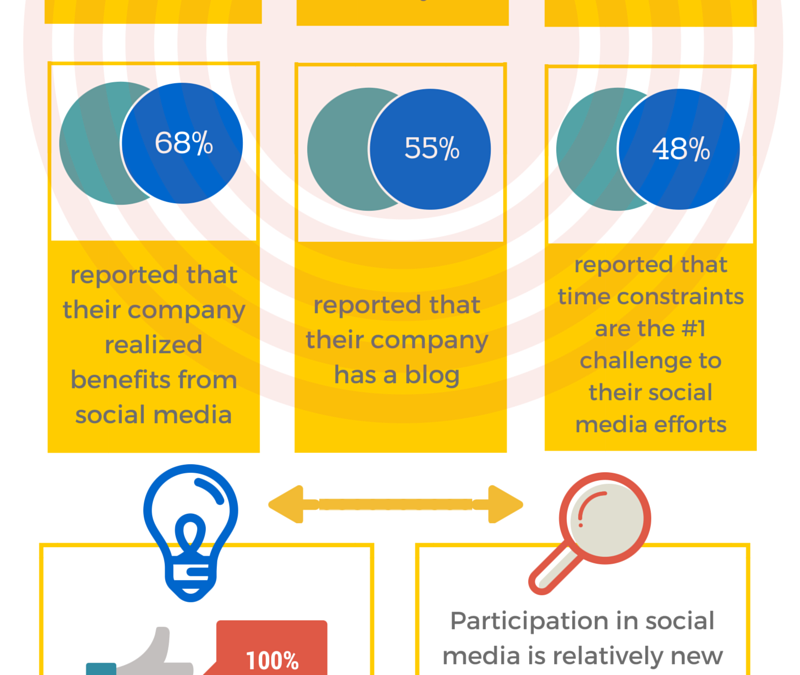
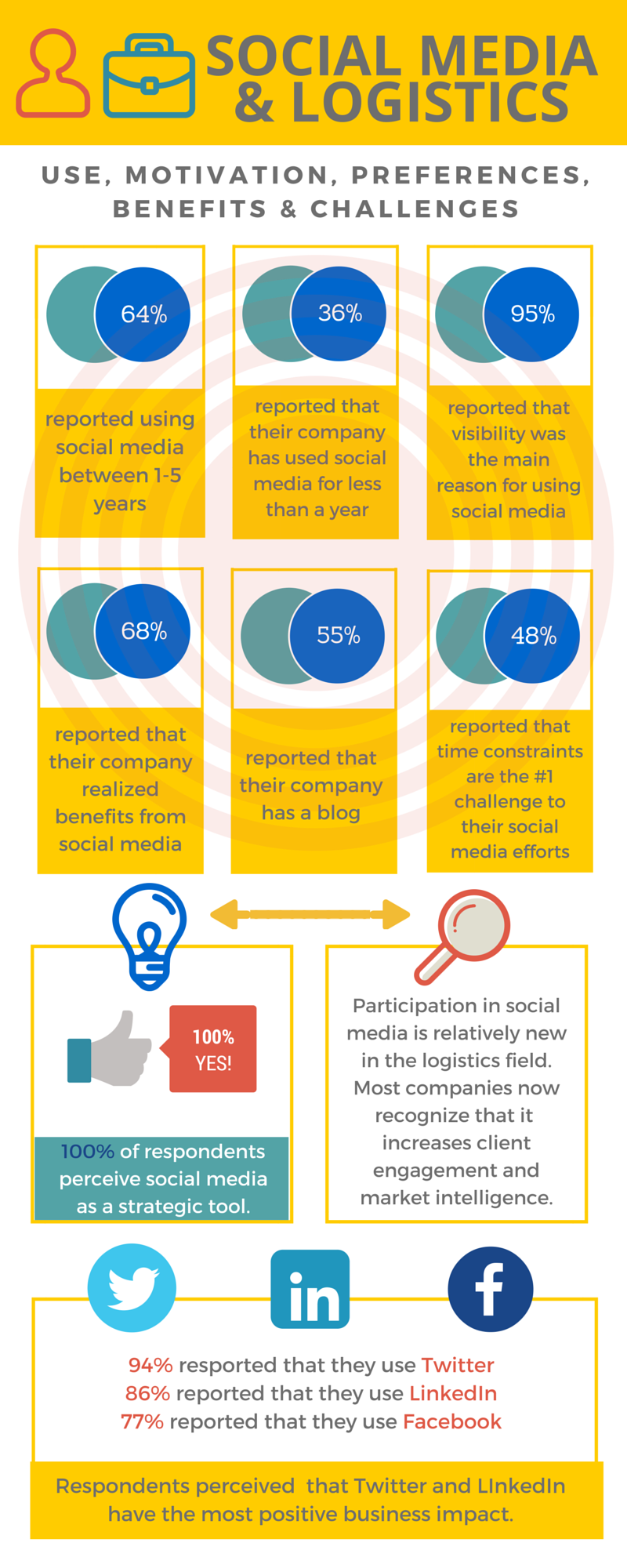
Fronetics Strategic Advisors conducted a survey focusing on social media and logistics and supply chain companies. Respondents shared information on their social media use, motivation, preferences, benefits, and challenges. One-hundred percent (100%) of respondents reported that they have used social media for five years or less, indicating that social media is a relatively new strategy for logistics and supply chain companies. Mirroring other industries, including those in Fortune 500 status, social media is playing an increasingly important role in company branding, marketing, and client engagement.
For the current state of social media and logistics, here is an infographic that summarizes many of the key points from the full report.

by Elizabeth Hines | May 4, 2015 | Blog, Marketing, Social Media, Talent
Here’s why your employees should use social media.
“Come here Mr. Watson, I want to see you.” Those were the words yelled by Alexander Graham Bell over the world’s first telephone connection. Bell had no way of knowing that a little more than fifty years later there would be more than 30 million telephones in use. To be sure, the telephone served as one of the greatest tools of business communication for over a century, but we are now in the midst of a new kind of technological revolution – one that puts social media directly in the spotlight.
The proliferation of social media has spilled into every facet of our daily lives, and the business implications are complex and far-reaching. Even though 74% of online adults are reported to use social media, a study commissioned by Robert Half Technology found that about half of companies block employees from using social media websites at work. Interestingly, 92% of companies indicated social media as a priority in a 2014 study by Social Media Examiner. With most companies managing all social media at the corporate level for functions like marketing and communications, businesses are missing an opportunity to empower employees to be strong brand advocates while making them more productive, more satisfied, and more connected. That’s why businesses should consider extending social media participation beyond their marketing departments.
Social media transforms communication into content, and vice versa. While email still remains a primary vehicle for the transmission of ideas and information for many workplaces, its very nature inhibits collaboration – it’s ideally used as a tool for private two-way communication. On the other hand, social tools capture ideas and conversations of employees and create a public database of employee-generated content. Openly sharing this content, which was previously hidden behind the privacy of email, fosters inclusion and creates a culture of connectedness.
Responding to a fundamental shift in buyer behavior, sales and marketing professionals are increasingly turning to social media to drive growth. No longer are buyers responding to interruption-based sales tactics; instead, they’re listening to online conversations, engaging with peers, and performing their own research to find solutions to their problems. Companies have taken note and in doing so have transformed the way buyers and sellers now connect. Underscoring the importance for companies to adapt to this new way of connecting to potential customers is HubSpot’s finding that 73% of sales professionals using social media outperformed their colleagues who were not on social media networking sites.
While social media has transformed marketing and sales functions, it’s rewritten the rules for human resource functions. Hiring managers now have public access to a wealth of professional and personal information about potential job candidates, making recruitment efforts more comprehensive than ever. Likewise, candidates are increasingly placing more value on soft compensation like social policies and work flexibility when considering employment offers. The parameters of work and personal life are becoming more and more blurred, and employees are finding companies that embrace their use of digital technology most attractive. Companies with rigid tech policies stand to lose out on top talent.
Social media is proving equally as powerful as a tool for employee retention. Employers that choose to ban social media risk alienating Millennials, a group for which oscillating between real life and the digital world comes naturally. Staying connected is so important to this group that a 2011 study by McCann Worldgroup found that 53% would give up their sense of smell rather than their phone or laptop. Considering the increasing number of businesses actively seeking to attract and retain employees from this generation, finding a way to incorporate and leverage social media would likely prove a much better strategy than blocking access altogether.
Businesses that permit – and even encourage – employee use of social media are able to innovate quicker by monitoring and engaging in the online conversations of customers and potential buyers. With over 58% of the entire U.S. adult population on social media, you can be sure there are conversations happening about brands whether or not they choose to participate in social media. Beyond just monitoring what’s being said about a company or brand, active participation in social media allows for nimble adjustments to marketing messages and potential new product development.
Of course, in order to derive value from employee participation on networks of social media, employers must thoughtfully consider the implications of providing access and set clear expectations for employees about its use (or misuse). Rather than arbitrarily opening access to social media, Cheryl Connor, business communications expert and author of Beyond PR: Communicate like a Champ in the Digital Age, recommends managers take a more thoughtful, structured approach. She suggests managers talk through the concept of open access to social media with employees. Knowing how employees feel about social media makes it easier to accommodate their needs. It’s true that unregulated workplace access to social media won’t work for every business or every employee, but companies that manage to find a way to integrate social media into functions where it makes sense will create value and drive profitable action.

by Elizabeth Hines | Mar 19, 2015 | Big Data, Blog, Data/Analytics
“[Companies] don’t know how to manage it, analyze it in ways that enhance their understanding, and then make changes in response to new insights… they don’t magically develop those competencies just because they’ve invested in high-end analytics tools.” –You May Not Need Big Data After All” Harvard Business Review, December 2013
Since the concept of big data became the buzzword du jour, big data has become big business. But a recent study by Harvard Business School suggests that many big-data investments fail to deliver because most companies can’t handle the information they already have. That’s why when it comes to big data, bigger is not always better, particularly for small to midsized companies. Lured by the promise of big payoffs, many companies have sunk millions of dollars into sophisticated data analytics software only to realize they did not have the capabilities to interpret the new insights nor the expertise to turn them into a competitive advantage. For some companies, focusing on small data often makes more sense.
It’s not hard to see why the temptation to jump headfirst into a big-data project can be strong. Giants like Amazon, Google, and Walmart showcase how an entire enterprise can be built around the interpretation of unfathomable masses of data. These companies have perfected the science of gleaning — and capitalizing on — detailed insights about customer behavior. (For example, Walmart was able to pinpoint something as specific as what kind of Pop-Tarts customers stock up on before a storm — strawberry.) With similar analytics tools now available to companies in all kinds of industries, the opportunity to turn hype into hope may be irresistible.

Companies within the logistics and supply chain industries don’t seem to be impervious to the draw of big data. In fact, a survey conducted by Supply Chain Insights found that one fourth of respondents had a big data initiative in place and 65% planned on launching one in the near future. A full seventy-six percent of survey respondents viewed big data as an opportunity. The promise of benefit from the theoretical application of big data no doubt sharpens its appeal. A supply chain company could on the demand side, for example, determine to use big data to map all the quotes and online searches that never became orders and change its marketing strategy based on a newfound understanding of how the purchase of one product leads to the purchase of another. On the supply side, big data could be used to measure the impact of a catastrophic event on suppliers abroad, and consequently, allow the company to plan in advance to mitigate the effects on American consumers. These big data benefit examples could lead to significant advantage for companies with the expertise, structure, and knowledge to collect, analyze, and draw strategy cues from large sets of raw data. Unfortunately, small and mid-sized companies usually aren’t well positioned to do so.
Start Small
Starting with small data, even if you want to eventually head into big data, is a solid strategy that will produce lasting results. To start, clearly articulate what kinds of data you want to collect and begin running a few simple analytics. Choose from which sources you’ll draw data, because randomly scanning everything between heaven and earth will do you no good. Align your goals with your business objectives and turn your analytics professionals loose on the data. If your company doesn’t have in-house analytics expertise, work to attract the appropriate talent; regardless of whether or not you have a new hire, integration and structuring of analytic personnel positions will be a more significant factor in your success than even your use of the most advanced statistical software program. Finally, spend some time determining how the findings should be presented. You’ll want them to be formatted in an understandable manner and to have a clear application for how they will improve your business.
For those of you working in small to midsized companies, what’s your take on big data? What kind of approach would make a successful small-data initiative?

by Elizabeth Hines | Mar 16, 2015 | Blog, Marketing, Social Media, Strategy
How your business can use social media to generate leads.
Leads are essential to the growth of your business, and your marketing strategy is built around finding and connecting with leads. So when 92% of all marketers indicate that their social media efforts have generated more exposure for their businesses, you should take note and make social media part of your prospecting strategy.
Building a network of online connections is an effective way to find new leads. And with social media, you can find new leads by doing something called social prospecting. Social prospecting is the art of searching the social web, identifying potential prospects for your business, and engaging them in a manner that draws them to your company’s website and through your funnel. At the core, social prospecting is about listening. It’s about listening to social media conversations in order to generate leads for your business. It goes beyond monitoring keywords to engaging people that may or may not know what your business can do for them.
As you build your social prospecting strategy and develop new approaches to connect with leads, keep these 25 handy tips close by to guide your efforts.
Twitter
- Post content that draws prospects back to your website.
- Aim to share useful content on Twitter two to three times per week.
- Make customers feel appreciated by prioritizing their questions.
- Keep prospects engaged by retweeting some of their organic content.
- Favorite tweets with content that leads share.
- Respond to and offer help to industry peers’ questions.
- Delight customers by replying or favoriting tweets when they mention your company.
- Engage with potential prospects by offering help using relevant content.
LinkedIn
- Post at least twice a week to your company’s LinkedIn page.
- Join five LinkedIn Groups that could connect you with potential prospects.
- Join conversations in the group where you can add value with your content.
- “Like” content that others are sharing in the group.
- Share your own content to the group.
- Use LinkedIn Answers to respond to questions posted by others in your industry.
- Make a habit of routinely reviewing the content posted within your groups.
- Comment and add value to posts from others in the group.
- Ask for an offline meeting with your most engaged prospects.
Facebook
- Link to your blog from Facebook.
- Add calls to action to posts.
- Promote a special product or service offer solely for Facebook fans.
- Create and post visual content, like infographics and videos.
- Share a quote or industry statistic with your fans.
- To draw more comments from fans, pose a question.
- Create a Facebook event to promote trade show appearances or webinars.
- Update your company’s profile and cover photos routinely.
Ready to build a more full-bodied social prospecting strategy? We’ve laid out the quickest ways for you to find more leads and prospects on Twitter, Facebook, LinkedIn, Pinterest, and Google+ in our social prospecting workbook. In a dedicated worksheet to each of those social media platforms, you’ll find every worksheet includes: a short preparatory work to make the actual prospecting easy; visual instructions on how and where to find prospects; pro tips that will help you get the best results; prescriptions (Marketing Rx) for success; and take-home exercises for follow-up prospecting. To get started growing your prospecting opportunities and building alternative lead generation and nurturing strategies, download our free workbook.
Curious about what we’re up to on social media? Find out.