by Elizabeth Hines | Nov 2, 2015 | Blog, Marketing, Social Media, Strategy
In mid-October, LinkedIn made some big changes: LinkedIn Groups are private and there’s a new, standalone LinkedIn Groups app for iOS users. Many LinkedIn Groups were used for the purpose of networking, research, and prospecting, however many people were misusing, and even abusing, the Group option. Rather than using groups properly, to form relationships, engage with industries that could supplement yours, and keep up with hot topics, the group option was often used for self-promotion.
The Changes
According to LinkedIn, these changes were spurred by consumer feedback. “Our research has shown that professional conversations are most effective in a private trusted space, so conversations in groups won’t be visible until you’ve joined the group. Joining a LinkedIn group now requires either an invitation or approval of your request. Our data has shown that open groups have historically attracted a larger percentage of low-quality conversations. Members-only groups have created significantly more participation and conversations than others (up to five times more), indicating that members feel more confident contributing in these types of groups.”
Some additional, prominent changes:
- Moderation: Conversations will be posted without the need for approval from a moderator, manager, or group owner, however those people can still remove off-topic conversations.
- Standard and Unlisted Groups: In an effort to simplify things for the consumer, groups will be either unlisted, meaning that they don’t show up in search results and only a manager/moderator can invite people members, or standard, meaning that groups do show up in search results and members can invite anyone with a 1st degree connection.
- Content Filtering: Filtering of spam and low-quality content to keep promotional material out of conversations.
- Subgroups: Subgroups will no longer exist to help clear up confusion. Any current subgroups will become their own, standalone groups.
- Mentions in Conversations: Like other forms of social media, the @ symbol will now be used before a name in order to reference someone and bring them into the conversation.
Other changes can be found at LinkedIn’s Help Center page.
Group Etiquette
If you’re already using groups in smart way, you’ll only see improvement from LinkedIn’s changes. Say goodbye to spam and relentless self-promotion. Groups may become more meaningful with a more exclusive approach. The people who are genuinely interested in having specific, topical conversations will. Here are some tips on how to navigate the new Groups:
-
Engage Don’t Enrage:
Keeping in mind that there’s a difference between narcissism and seeking feedback, wait a bit before you post your own blogs, articles, or other branded content. You may want a group of talented, knowledge people to review your writing, but you need to establish yourself as a valued member of the group first. Comment on and like others’ posts. Put in your time and build rapport.
-
Prudence in Posting:
When there’s a discussing going about a topic that speaks to you, you might feel anxious to jump in with a relevant article you’ve written, but consider your timing. Only after posting third-party articles and blogs, to show your support of others and breadth of knowledge, consider posting your own. When you do post your first article, it might be helpful to connect it to the groups’ influence. For example, Based on the recent, rich conversation about the engagement of Boomers and Millennials in the workplace, I gather my recent years of experience with this and wrote an article I though I’d share with you. I appreciate the fruitful conversations here that helped spur this article.
-
Connect Cautiously:
As with all etiquette, the idea isn’t to approach people with fear, but with respect. Sometimes, early on, respect can be established by being cautious in order to better understand individual and community needs and norms. Once you’re in a group, don’t be unknowingly creepy. Engage with people who might have similar interests or who you feel might be attracted to your brand. First comment on their posts, like an article, show that you’re engaged and have something to offer intellectually. Give them your thoughts before your products. Once some sort of engagement is established, then send a connection request.
The new changes to LinkedIn’s Group option is going to serve everyone well, whether you’re in marketing in or any other field. It means more meaningful engagement and less bothersome noise and chatter.
Fronetics Strategic Advisors is a leading management consulting firm. Our firm works with companies to identify and execute strategies for growth and value creation.
Whether it is a wholesale food distributor seeking guidance on how to define and execute corporate strategy; a telematics firm needing high quality content on a consistent basis; a real estate firm looking for a marketing partner; or a supply chain firm in need of interim management, our clients rely on Fronetics to help them navigate through critical junctures, meet their toughest challenges, and take advantage of opportunities. We deliver high-impact results.
We advise and work with companies on their most critical issues and opportunities: strategy, marketing, organization, talent acquisition, performance management, and M&A support.

by Elizabeth Hines | Oct 28, 2015 | Blog, Consumer Electronics, Data Security, Data/Analytics, Logistics, Strategy, Supply Chain
When it comes to IT Asset Disposal here are 5 must-ask questions for third-party providers.
When the industry thinks of data breaches it raises the specter of a savvy hacker lurking very far, and yet very close, intermingling with a larger organization of internet criminals, breaking into our technology and gathering most private information: credit card and bank account details, social security numbers, and personal health and income data. The recent breaches at Anthem insurance and the retail giant Target make users worry about the trail they leave when they swipe a card or populate a form with personal information. This is how individuals think identities might be exposed. Individuals often don’t think about what happens when a company retires old servers, computers, printers, copiers, and scanners. What happens to confidential data? This is something businesses must think about.
ITAD
Receipt, processing, destruction and disposal of hardware and software are a necessary and growing business. The Blumberg Advisory Group’s 2014 ITAD Trends Report shows that data security is the number one reason why companies implement an IT asset disposition (ITAD) strategy. News reports highlight examples of sensitive data being found on retired assets, frompersonal photos and information to matters of national security. The costs associated with data breaches and with the improper disposal of IT assets are great. They include financial implications such as penalties, the loss of customer loyalty, and the tarnishing of one’s reputation. To mitigate risk, asset recovery management is critical to companies operating in today’s global supply chain.
According to Transparency Market Research (TMR) as reported inElectronics Purchasing Strategies, ITAD represents an estimated $9.8 billion handling 48 million tons of discontinued or excess technology gear. According to TMR, by 2019 the predicted market will grow to $41 billion made on 141 million tons of used equipment. Concerns about data security have resulted in companies becoming more aware of the need for ITAD and the need to budget for it. In 2014, 87 percent of companies reported having an ITAD budget; 38 percent more than in 2012.
Outsourcing this complex work can be a necessity for many companies who don’t understand the intricacies, regulations, labor and cost of asset disposition. Electronically stored data is subject to stringent HIPAA/HITECH, FACTA, SOX, GLB, and FERPA regulations, complicating responsible disposal. Secure and thorough “wiping” of data is critical, and the environmental impact of retired assets is also a vital concern.
More and more companies, 65 percent of companies larger than 10,000 workers and up to one third of all businesses, are turning to 3rd-party service providers to manage end-of-life assets. The factors seen as most important in selecting a 3rd-party service provider include: adoption of industry-recognized compliance standards (97 percent); a well-documented and enforced chain of custody (95 percent); and high-quality, thorough client reporting (95 percent).
Reduce, Reuse, Recycle
ITAD is expensive and it can be risky. It is, therefore, important to find a 3rd-party service provider who can ensure as much safety and security as possible. Many ITAD companies have a split business model working with upstream partners to collect and process retired material, then turning to downstream partners who are looking to purchase used technology gear. Given this model, your server could be someone else’s server one day. Ensuring proper receipt and processing is critical.
Must-Ask Questions
These are must-ask questions businesses should ask 3rd-party providers before hiring them. Be certain these questions are answered thoroughly and confidently.
1. What is your specialization?
2. Is there uniformity in the process?
3. Who would manage our relationship?
4. How flexible are your operations?
5. What if something goes wrong?
Companies operating in today’s global supply chain need to take the necessary steps to mitigate risk when it comes to asset recovery management.
You may also like:
The importance of Asset Recovery Management in the Global Supply Chain
Content marketing ROI for reverse logistics companies
This article was originally published on Electronics Purchasing Strategies.
![Supply Chain: 4 Essential Year End Questions to Ask Yourself [Infographic]](https://fronetics.com/wp-content/uploads/2024/10/supply-chain-year-end-questions-900x675.jpg)
by Elizabeth Hines | Oct 27, 2015 | Blog, Data/Analytics, Leadership, Strategy, Supply Chain

As the new year approaches, don’t overlook the valuable information you can glean from conducting a year-end review.
Don’t start the new year without asking these 4 essential questions.
What were my biggest accomplishments this year?
Twelve months can seem like a long time when you consider everything that happened over the course of the last 365 days. Setting aside some time to review successful projects, notes of thanks from clients, or a particularly positive performance review reminds us what we’re capable of achieving and gives us a renewed sense of accomplishment.
Try this: Designate a file folder near your workspace to collect any materials or notes related to your successes as they occur. Doing so will make it easier for you to recall your accomplishments and provide quick access to a list of your achievements – helpful for a healthy dose of motivation or last-minute performance reviews.
How satisfied are you with the past year?
Were you successful in meeting the majority of your goals? Do you feel that you worked to your highest potential? Would you have done something differently? What about missed opportunities? Examining what went right and identifying areas for growth and opportunity are powerful exercises that both prevent the recurrence of negative behaviors and reinforce our commitment to priorities.
Try this: Thinking about your experiences of the past year in sum, try to assign a value to your entire year. How would you rate your year on a scale from 1 to 10? 1 to 100? Why? Adding some context to your experiences presents a more accurate picture of your year by tempering unusual highs and lows.
Is my current daily routine structured to make time for my priorities?
It’s easy to fall victim to time suckers, especially when they become ingrained into your routine. Has your daily 15 minute coffee break gradually morphed into 25 minutes? Are your 10 minute “headline scans” now closer to 30 minutes? These small, seemingly innocent extensions can snowball into major time loss, causing unnecessary panic as you scramble to meet deadlines.
Try this: The start of a new year is a great time to reset (or rethink) our daily routines. Build activities into your day. If you’d like to continue your now-daily 25 minute coffee break, think about extending your work day by 25 minutes. Feeling like you can’t absorb everything news-worthy in less than 30 minutes? Set your morning alarm 30 minutes earlier so you can arrive to work having already completed your scan of daily headlines. By taking a hard look at where your time is actually going and then spending a few minutes realigning your daily routine with your priorities, you’re intentionally and consciously assigning time to the things you find the most important.
What is it that I want to achieve next year?
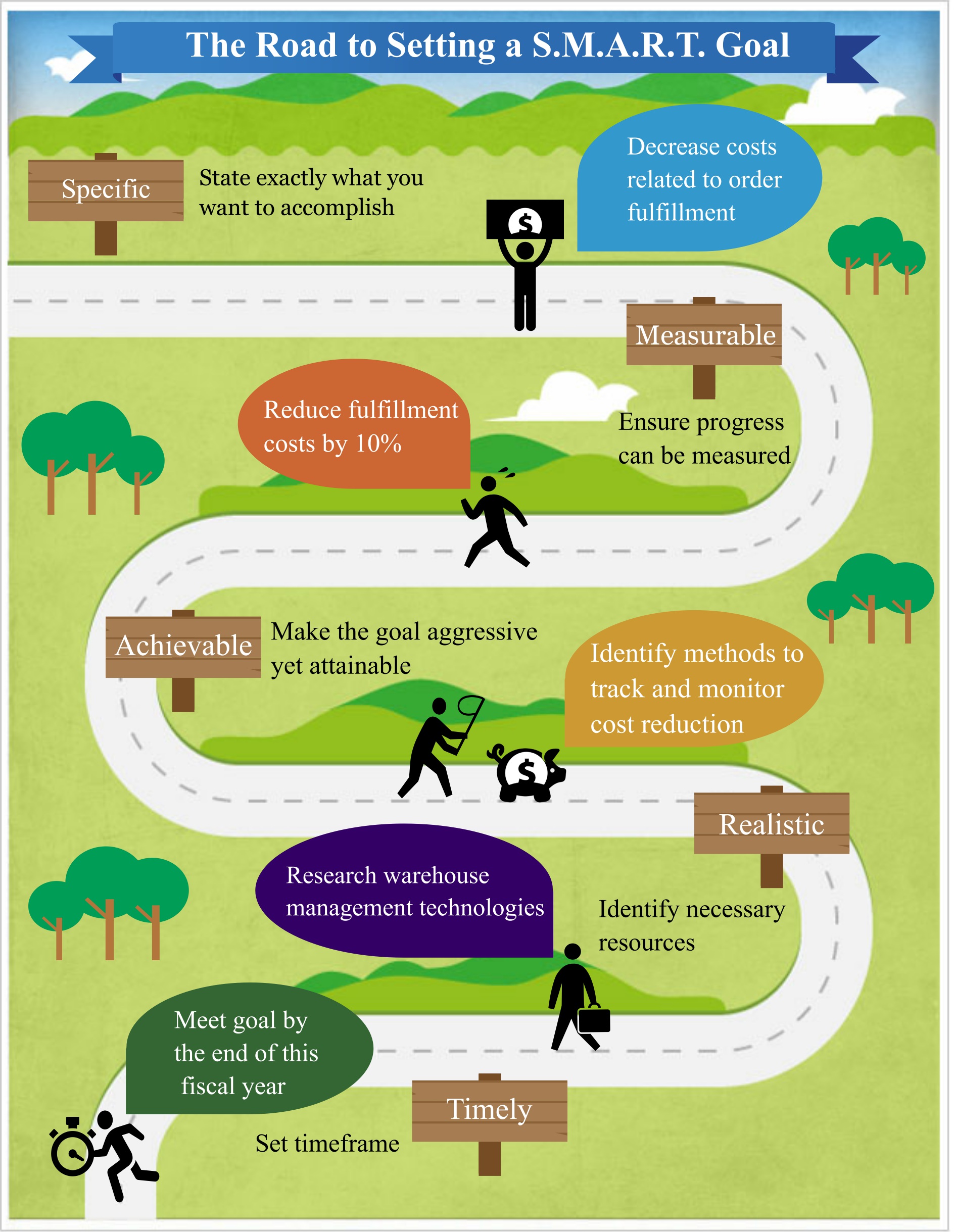
Each new year brings with it a renewed energy to being our best selves. In order to get started, we need to define our priorities and what our success will look like. Setting SMART goals, or goals that are specific, measurable, achievable, realistic, and timely, keeps us moving forward by providing accountability.
Try this: After reviewing your past year, set aside some time to consider what you’ll set out to achieve this year. Create a detailed roadmap to successful completion of your goals.
Use this infographic to help you set, and achieve your SMART goals.
How was your year in review? What were your biggest accomplishments? Are there any goals that you’ll carry over into the new year? Do you regularly set aside time at the close of a year to reflect? We’d love to hear what you do to reset for a new year.
Fronetics Strategic Advisors is a leading management consulting firm. Our firm works with companies to identify and execute strategies for growth and value creation.
We advise and work with companies on their most critical issues and opportunities: strategy, marketing, organization, talent acquisition, performance management, and M&A support.

by Elizabeth Hines | Oct 22, 2015 | Blog, Leadership, Strategy, Talent
Do we need to rethink the concept of happiness at work?
Do you like your job? It can be a complex question to answer when everything is taken into account. For some people that question is comprised of several other questions, many of which have different answers: If I could do anything with my life would I be working this job? Is this job my passion? Would I work as many hours if I didn’t have to? Do I feel productive? Is my work/life balance ok? Am I happy?
On average, Americans put in about 1,700 hours a year, which is much more than the French and Germans, but much less than the Koreans or Singaporeans. For Americans, this breaks down to 34.4 hours a week considering vacation time and holidays, however many adult, full-time employees report working more than 34 hours week. According to a Gallup poll, 4 in 10 workers reported putting in 50+ hours per week. So are all these hours bringing us happiness? First, let’s have a look at what happiness is.
People have always had a lot to say about happiness. Artistotle said, “Happiness depends upon ourselves.” Albert Camus said, “You will never be happy if you continue to search for what happiness consists of. You will never live if you are looking for the meaning of life.” The Dali Lama says, “Happiness is not something ready made. It comes from your own actions.” What is certain is that we seem to have a happiness obsession. We want it, we seek it, we’re told we need it so we believe we need it.
Harvard psychologist, Dan Gilbert, believes that happiness is not always entirely in our control and not entirely out of our control, and sometimes we feel it and sometimes we don’t. That’s ok, he says. In a TED Talk on happiness he says, “Happiness doesn’t last that long. Happiness is an emotion — it’s a feeling. The human brain isn’t built to sustain a feeling over the long term…Your emotions are a compass. They’re telling you which direction to go in. When you feel bad you turn left, you try something different in your life. When you feel good you keep on marching in the direction you’re going. What good would a compass be if it were perpetually stuck on north?”
So if we can’t feel happy all the time, and we don’t need to feel happy all the time, then why are we told we should feel happy all the time? Workplaces have been increasingly focused on employee happiness. Several studies have shown that happy employees are more productive and more loyal. Even tycoon Richard Branson is on board with this idea, “Your employees are your company’s real competitive advantage. They’re the ones making the magic happen—so long as their needs are being met.” How can the Virgin god be wrong?
A new article in the Harvard Business Review has gathered many studies and theories opposing the contemporary idea that happiness in the workplace is the key to success. The authors point to studies that show that people fail to feel happy when they are expected to be happy, that people can become emotionally vulnerable and needy when they expect their workplace to fulfill their happiness, that people may be more selfish when happy, and that people who value happiness often feel lonelier. The studies also pointed out that angry employees were better at negotiating than happy employees and better at intuiting actions of deception.
Perhaps our thinking about happiness needs to shift. Perhaps we don’t need employees bounding around the office with endless smiles. Perhaps the expectation we have for employees to be happy, and employers to be responsible for that happiness, is all too much. According to Dr. Vanessa Boute, a social psychologist, “One of the misconceptions about happiness is that happiness is being cheerful, joyous, and content all the time; always having a smile on your face. It’s not – being happy and leading rich lives is about taking the good with the bad, and learning how to reframe the bad.”
Fronetics Strategic Advisors is a leading management consulting firm. Our firm works with companies to identify and execute strategies for growth and value creation.
We advise and work with companies on their most critical issues and opportunities: strategy, marketing, organization, talent acquisition, performance management, and M&A support.

by Elizabeth Hines | Oct 21, 2015 | Blog, Content Marketing, Marketing, Strategy, Talent
If you watch enough romantic comedies, you’ll start to recognize a pattern. It goes something like this: Boy meets girl. Girl meets boy. Movie follows antics of girl + boy, winding its way through the (oftentimes hairy) narrative. Throughout the movie we see the main characters discover what’s attractive, appealing, or annoying about the other. Eventually, these main characters end up together at the end – well versed in one another’s attributes, nuances, and idiosyncrasies.
If you think about it, the storyline of our main characters’ isn’t that different from the parallel storyline that could be drawn about lead nurturing activity in B2B marketing. When you first meet your lead, chances are they won’t be ready to purchase right away (a Marketo benchmark survey says that half aren’t). But if you spend time establishing a relationship and building trust, the moment your lead is ready to purchase, you’ll be miles ahead of your competition.
As more and more buyers are engaging with brands before they are ready to purchase, an essential function of any marketing department is lead nurturing. That is, moving leads through the sales funnel by leveraging what’s known about their needs and online behavior. Congruently, marketing software company Marketo describes lead nurturing as being “personalized, adaptive, and able to listen and react to buyer behavior in real-time.” Using a true multi-channel approach allows us to accomplish this. In a recent publication, Marketo endorsed the use of this multi-channel strategy:
“A typical buyer moves quickly from email, to social media, to your website and then back to social media, in the blink of an eye. Marketers need to prepare their lead nurturing strategy for multi-channel engagement. Buyers need to see an integrated experience across every single channel.”
Considering the multi-channel digital activity of buyers, building a multi-channel lead nurturing strategy is essential for companies that are looking to create an optimal end-user experience. Here are four tools that will help you deliver a series of targeted messages across multiple touch points and platforms to help move your leads through the buyer’s journey.
Email
Presuming that your B2B leads are derived online, email seems like a natural channel to use to connect with and nurture your leads. And it is. Create opportunities to educate your leads by sending them targeted emails that contain informational content. You’ll have to take it further than that though, or your emails will come across as spammy and annoying. Build trust with your leads by reminding them they’ve met you before – use personalization tokens (contact name, job title, etc.) within your emails. Similarly, don’t just blast the same email to your entire contact database; take the time to segment your leads based on where they stand in the buyer’s journey. A lead nurturing email you send to a lead that has only downloaded a top-level white paper should look vastly different than the email you send to a lead that has downloaded a case study, a product brochure, and a pricing guide. Above all though, make certain that the content you’re sending is valuable, relevant, and of excellent quality.
Phone
“No other interaction is more influential in the path to purchase than a phone call.” – Invoca Call Intelligence Survey
Call intelligence company Invoca has strong feelings for the telephone – and for good reason. Their analysis of 32 million phone calls found that phone calls made after parties had first engaged online had an average conversion rate between 30% and 50%. Sure, a rejection by email is less painful, but when the conversion rates are that high, you can’t afford not to pick up the phone. There are some ways to make it easier, though. Start by promoting your phone number. It sounds simple, but for those of us who work largely in the digital world, it can be easy to forget. Display your phone number in your company’s website header and throughout your site’s landing pages and blogs posts. Ensure simplicity for mobile users by making your phone number clickable on your mobile site.
Social Media
It’s not enough these days to simply post and pray, particularly on social media networks. Social media lead nurturing includes monitoring, listening, and engaging. Give your leads some love. Look for opportunities to favorite, like, or retweet the content of your leads. Monitor LinkedIn, Twitter, and Facebook for mentions of your company, similar products, or industry and then respond with activated content using both social media and a longer form of correspondence, like email. Finally, don’t discount lead nurturing activities that use paid social media ads. These ads can be particularly successful when you are nurturing leads based on specific attributes such as geographic location or company size.
Dynamic Website Content
Displaying personalized web content for visitors helps to keep leads moving forward in their buyer’s journey. Let’s say you’d gotten a great email response from a lead when you shared your product brochure earlier in the week. Displaying complementary web content, like a pricing guide, to your lead the next time he’s on your website assures alignment between your content and your lead’s proximity to purchasing. You can also use dynamic web content to target various verticals, organizations, or buyer personas.
Multi-channel lead nurturing is really about using all the tools at your disposal to meaningfully connect with your leads in order to build trust and establish credibility as you guide them on their journey to becoming a customer. Building a winning strategy does require attention to detail as there are many moving parts, but at the end of the day, if your messaging is credible and consistent it becomes less about channel and more about content. And ultimately, high-converting lead nurturing campaigns are only as good as the content they’re built around.