by Elizabeth Hines | Apr 12, 2016 | Blog, Content Marketing, Marketing, Strategy
Content drives business growth, builds customer loyalty, and helps nurture leads.
One of the best ways to market your business today is to plant the seeds that will generate new customers tomorrow. Enter, content marketing: a long-term solution that helps businesses build brand awareness, grow their audience, and generate new leads and sales.
Most companies, more than 85% of them, realize that content marketing is a vital component to cultivating growth. But, according to the Content Marketing Institute, less than half of those who use it believe they do it well.
It may be particularly difficult for smaller businesses to justify allocating precious time and resources to a strategy that they are not sure is being executed properly. How can they compete against industry giants that have name recognition and massive budgets working for them already?
Medium-sized to smaller companies need to establish a relationship with their potential customers or clients and drive brand awareness, accomplishing this goal with far less resources. And content is the way a company makes that all-important connection.
With quality content, you become a source of knowledge and advice. Most importantly, it reaches potential customers where they most often look for new information: online. Whether a blog, white paper, webinar, video, or social post, you are creating brand awareness and building trust by distributing content. Establishing your company as a reliable source of knowledge is what makes a customer eventually choose to do business with you.
Content Works Overtime
Through your content strategies, you have an endless opportunity to provide potential customers with information about your business, your services, products, tips, or simply advice. The best part is as long as it is good, quality content, on topics that speak to potential customers’ needs and questions, it will continue to generate sales leads.
According to the Harvard Business Review article on the subject, “In both B2B and B2C businesses, customers are doing their own research both online and with their colleagues and friends. Prospects are walking themselves through the funnel (where they gain knowledge for buying decisions), then walking in the door ready to buy.”
Coined by McKinsey, the metaphor of a “funnel” describes where consumers start with a number of potential brands in mind then methodically narrow down their choices. At the end, they emerge with the one brand they chose to purchase from. With social media and digital marketing, content is now a huge factor in the “customer decision journey”.
Will Content Work for Me?
A successful content marketing allows your business to reach more and more potential new customers each week. However, there are some requirements for content to properly do its job.
- Content needs to be consistent (frequent, fresh posts)
- Content must be engaging (taps into what people really want/need to know)
- Content must be good quality (entertains and informs: potential customers should learn something from it and walk away feeling that your company knows what it is talking about)
According to Inc. magazine, it is best to take a holistic approach to your content marketing plan. First you must write down your strategy and be able to tie your overall business goals and objectives into your content calendar.
This is your path and serves as an ongoing content guide. Statistically, only 11% of companies without a documented content marketing strategy find their efforts to be successful, versus 60% of companies with a strategy in place. Designate someone to lead your strategy, and success rises to 86%. In fact, according to a survey by the Content Marketing Institute, the majority of the most effective B2B marketers (86%) have a designated person overseeing their content marketing strategy; versus the 46% of less-effective marketers who do not.
Also remember, content marketing’s main objective is lead nurturing, not producing instant results. You will slowly develop a loyal following of readers and content consumers who continue to return to you for knowledge and, ultimately, your product or services.
Related articles:

by Elizabeth Hines | Apr 6, 2016 | Blog, Content Marketing, Marketing, Social Media, Strategy

Fronetics Strategic Advisors helps clients increase brand awareness, foster meaningful customer engagement, and grow business.
Fronetics Strategic Advisors is a management consulting firm focused on identifying and executing areas for growth and value creation for our clients. We are unique in that we use a data-driven approach to align marketing programs with business objectives and to deliver results.
“Fronetics” is derived from the ancient Greek word fronesis, meaning wisdom or intelligence, and is translated as “practical wisdom.”
Our team of strategists, marketing professionals, writers, designers, and social media experts leverages industry experience to elevate our clients’ brand position within the industry. We work with you — getting to know your business, your target customers, your industry, and your competition — to create a digital and content strategy individualized for your specific situation and needs. We put metrics on all marketing activities and monitor them regularly. And then we identify challenges, trends, and opportunities and take action so that your content marketing program constantly evolves and delivers results.
Fronetics offers comprehensive digital and content marketing services, including: content creation, content curation, content distribution, social media management, email marketing, lead nurturing strategies, and pay-per-click. Learn more about what we can do for your business below.
Content Creation
There is a lot of content out there. If you want your content to stand out and drive profitable customer action, you need quality content. At Fronetics, we create quality content that drives results. Unlike other firms, we don’t outsource content creation. By keeping all content creation in-house we are able to ensure a quality product.
Our team creates the following types of content:
- Blog posts
- Articles
- eBooks
- Case studies
- White papers
- Newsletters
- Press releases
- Infographics
- Social media
- Custom content
Social Media
Social media is an incredible tool; however, for it to be effective it must be driven by strategy, be consistent, and must have someone managing the execution.
At Fronetics, our social media strategists distribute content, curate content, engage your target audience, and monitor your social networks. We develop a social media strategy that aligns with your company’s goals.
We analyze your competition, classify your target audience and cultural attributes, identify the influencers in your industry, recommend platforms, detail best-engagement practices, create social media schedules, and identify specific tactics that deliver results.
Through the proper execution of social media, your brand is given a voice and personality, and becomes more accessible to your target audience.
Strategy Workshops
To effectively attract target customers, generate leads, and establish your company and your brand within your industry, you need a digital and content marketing strategy; a piecemeal approach does not work.
At Fronetics we offer both half-day and full-day workshops to help your business create and execute digital and content marketing strategies that drive success and elevate your brand position within your industry. Our workshops are intensive and hands-on. By the end of the workshop you will have an actionable and sustainable strategy that is aligned with your company’s business objectives.
Following the workshop you will receive a full year of support from our expert staff.
Schedule a free marketing assessment
Related posts:

by Elizabeth Hines | Apr 5, 2016 | Blog, Content Marketing, Marketing, Strategy
The benefits of content marketing take more than a few months to come about.
Kate Lee, Senior Director of Strategy, recently wrote about a client who was disappointed in a newly adopted content marketing program and ready to quit — certainly they should be seeing more leads and more sales by now, right?! Since the company was just a few months in, the answer was no; that’s not how it works.
Content marketing is a long-term solution that helps businesses build brand awareness, grow their audience, and generate new leads and sales. But, like any good relationship, it takes time and effort to achieve results. You shouldn’t give up before the seeds you sow have time to bear fruit.
Just how long will it take for your content marketing strategy to yield results? Well, that really depends on your business and your goals, but you can count on at least six months. (Joe Pulizzi, founder of the Content Marketing Institute, says more like 18.) The point is, content marketing is not a magic, overnight solution. The reason reflects why content marketing is effective in the first place.
Let’s take a look:
Developing your strategy takes time.
Only 11% of companies without a documented content marketing strategy find their efforts to be successful, compared to 60% of companies with a strategy in place. (That number rises to 86% when the company designates someone to lead the strategy.) The significant increase in effectiveness can be attributed to the careful thought and research that goes into building a strategy.
You will need several months to build the foundation of your content marketing plan if it is to be effective. You need time to research the kind of content that resonates most with your audience and to truly understand the (very specific) demographic that finds value in what your company offers. Then you need time to determine and test which distribution channels will most effectively reach your target audience, to discern a plan for content production, and to build out an editorial calendar reflective of your strategy.
Without getting all of these pieces precisely right, you’ll waste an enormous amount of energy and resources working on an ineffective strategy. Take the time to evaluate the market for your business and its content marketing strategy, and you’ll realize results in time.
Becoming an authority takes time.
The goal of your content marketing efforts should be to be a consistent source of information and value to your audience, who gradually will come to trust your authority and reward you with their business when they are ready to make a purchase. And establishing yourself as an expert doesn’t happen overnight.
Consistency is key for two reasons. For one, the average B2B buyer consumes between two to five pieces of content before making a purchase decision. If your content is old, arbitrary, contradictory, or otherwise unreliable, buyers will chose a different vendor whose content is more trustworthy. Consistent and consistently good content keeps your target audience engaged and builds your credibility with them.
Secondly, search engines rank websites based on several factors, and one of the most important is consistency. If your company blogs every other month, compared to companies that post several days a week, your posts will be penalized in search results. And since very few readers click beyond the top five search results, you’re drastically reducing your organic search potential.
As a SumAll article put it, “Whether getting traffic to your blog or your content ranked in the search engines, it doesn’t happen overnight, but instead by repeatedly creating and distributing quality content on a frequent basis for the long-term.”
Building your audience takes time.
The B2B buying process is becoming longer and more complex because the majority of buyers (82%) are using more sources to research and evaluate products and services, and they are spending more time in the research phase itself. In fact, 71% of B2B researchers start with a generic search — rather than searching for a particular company — and do an average of 12 searches before even engaging with a specific brand’s site. They are 57% of the way down the sales path by this point, meaning they have already spent a fair amount of time educating themselves with the enormous amount of information available to them on the Internet.
This means you need to allow your target audience time to find you and complete thorough research about you and your competitors before you even realize that the lead exists. And likely there will be more time before a sale takes place.
Content marketing is much more about lead nurturing than producing instant results. As you build your reputation as a valuable source of information, you will simultaneously build a loyal following of readers and content consumers who continue to return to you for knowledge and, ultimately, purchases. Relationship-building is not a streamlined process, but it does foster the ever-valuable repeat business that will have a greater impact on your bottom line than a one-and-done sale.
Your sales cycle takes time.
Unfortunately, content marketing cannot decrease the length of your sales cycle. Thus, you can’t expect to see the fruits of your labors (in terms of dollars) until at least one cycle is complete.
There should be, however, hints along the way that your efforts are working. Metrics like increased website traffic, email registrations, and social reach offer clues that more potential customers are finding your business in their research. You should take these signs and continually evolve your strategy to accommodate what is working for your business.
Also keep in mind that while content marketing can have an enormous impact on generating and nurturing leads, it does not deliver sales on a silver platter. Sales teams still play a major role in building on those relationships and closing deals.
Give your relationship with content marketing time to play out, and don’t be afraid to adjust your strategy along the way if you find some things are working better than others.
Related posts:

by Elizabeth Hines | Mar 31, 2016 | Blog, Content Marketing, Marketing, Social Media, Supply Chain
Employ a content and social marketing strategy to nurture leads you meet during MODEX.
Hundreds of potential customers will be heading to Atlanta next week for MODEX, and you’re gearing up to gain lots of new business. That is, you and over 800 other exhibitors are hoping to gain lots of new business. So how do you plan to stand out among the competition?
Using content and social marketing to nurture leads surrounding the event will help maximize the benefits of attendance. You can bring more attention to your presence, which will help you find more new potential customers, and then you can increase your chances of converting them if you use these tools properly.
Here are some tips for before, during, and after MODEX for using content and social media to gain new business.
Before the show
1) Define your goals.
A trade show represents an opportunity to spread brand awareness, find new leads, and, of course, make sales. Decide what is most important to your business, and strategize around those goals. For example, if one of your goals is to increase your social following, make sure every handout, landing page, and face-to-face interaction includes a request to like you on Facebook (or elsewhere).
2) Promote your attendance.
With the trade show hashtag (#MODEX2016), use Facebook, Twitter, and LinkedIn to let your followers know that you will be attending and when and where they can find you. Engage with other attendees who are using the event hashtag. Offer teasers — such as photos of the freebies you’re bringing — to entice visitors, and provide any longer-form information (e.g., an excerpt from a presentation you’ll be giving) in a blog post, distributing it through your social channels.
3) Set up a landing page/landing pages.
Create an event-specific landing page that includes a call to action (CTA), like reserving a time to speak with you at the conference or downloading a coupon to redeem a free sample. Make sure to ask for some information (such as a name, company, or contact information) in exchange. Monitor traffic and keep a running list of leads who visit and provide their information.
4) Research the attendees.
Perform prospect research using the list of attendees, paying special attention to those who have provided their information on your landing page or connected with you on social media about the event. Check out their social pages to see what they’re saying about the event, and like or follow them. Connect with high-value prospects on LinkedIn and try to arrange a time to meet up during the show.
5) Prepare to nurture.
Draft content that you can distribute during and after the show. Examples include lead-nurturing email templates, slides from presentations you are giving, and other offers you plan to provide visitors. Create another landing page, which includes a special offer or specific information you’ll be providing during the show, to drive attendees to during and after the event.
During the show
6) Keep chatting.
Reach out to the people you meet during the show on their social media handles. A nice-to-meet-you tweet and/or an invitation to connect on LinkedIn shows that you remember and appreciate the potential customer. Send the lead-nurturing emails you prepared in advance.
7) Monitor social media.
Continue using the show’s hashtag to monitor the conversations that are happening online, and see if anyone is talking about your company. Like or reply to anyone who does to show you’re listening.
8) Generate content.
Trade shows are a great place to generate content. Post photos of your booth and attendees from your company, and create videos of product demonstrations, presentations, or customer testimonials. Share your thoughts on the issues being discussed, and keep track of those themes, as well as any recurring questions that attendees ask, for future content.
After the show
9) Plan out your editorial calendar.
Develop posts for your company’s blog over the coming months around the questions and issues that were raised during the show.
10) Keep up the conversations.
Continue to engage the people you met on Facebook, Twitter, and LinkedIn. Follow and like their pages, and invite them to connect.
11) Offer your leads something of value.
Make event presentation or speaking materials part of your lead nurturing activities by sharing them with prospects using Slideshare or email. Remind leads with whom you shared your special-offer landing page to visit. Make sure to segment your contacts based on their interests and send them only relevant offers.
How do you nurture leads around trade shows? Will you be attending MODEX this year?
Related posts:

by Jennifer Hart Yim | Mar 23, 2016 | Blog, Content Marketing, Marketing
Editor’s note: This is a guest post by Jennifer Cortez, Director, Marketing Communications, Transplace. Transplace is a North American non-asset-based provider offering manufacturers, retailers, chemical and consumer packaged goods companies the optimal blend of logistics technology and transportation management services.
Content has become a critical component of the modern marketing mix, but companies have to walk a fine line when it comes to the information that is being pushed out to the market. Too little and your audience will become bored and uninterested, and unfortunately, may look elsewhere for information (i.e., your competition). Too much and your audience may not know where to start (especially if it’s poorly organized). And if churning out too much content leads to a decline in quality, your audience may be left with dull, unremarkable content that, most importantly, is lacking in value to the industry.
When we’re creating content here at Transplace, (and I encourage others to keep this in mind) we ask ourselves this question: “Why should my customer care?” If you can’t answer that question, then it’s time to rethink your strategy. If you’re creating content just for the sake of it or because it’s something you know you need to do, you are most likely headed down the wrong path.
If you’re new to content marketing, first figure out what you want your content to solve before getting started. Do you want to increase brand awareness or drive more traffic to your website? Or maybe you’re focused on converting more leads into customers? Whatever it might be, each of your marketing goals will influence your content marketing strategy and therefore help you understand the audience you’re writing for, what channels you’ll share the content on, and how you’ll communicate key messages.
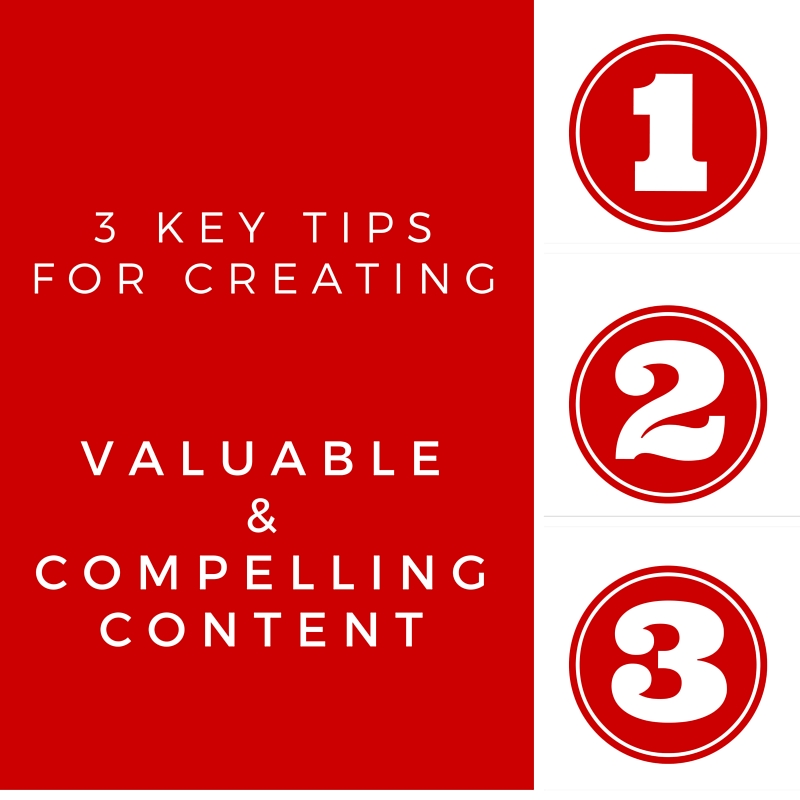
3 Key Content Considerations
Content is an extremely important part of our marketing and communications strategy and helps us continue to grow our brand awareness and thought leadership in the logistics and transportation industry. Our main objectives focus on three things: creating quality content that is relevant and helpful to the people in our industry, easy to understand and comes in a variety of formats. Let’s dig into these three areas a little further.
1. Producing helpful content
It’s easy to produce self-serving content such as sales pitches or a 1-pager on ‘Why you should pick our company,’ but let’s face it – tooting your own horn isn’t going to do much in terms of moving the needle closer to any of those marketing goals we mentioned previously. And most likely, these types of content pieces aren’t going to be searched for or probably even read by your target audience. One of two things occurs with standard sales slicks these days – they get deleted or physically thrown in the trash.
What is going to be helpful is producing content that becomes a useful resource for people in their day-to-day job. We want to keep them updated on trends, but it’s also important for us to keep in mind what we should be talking about that others aren’t. What are we foreseeing based on our unique position in the market that we can relay through content so our network is more prepared? If we can do a better job of talking to the buyer and figuring out what they want to hear about, then our content is only going to prove that much more valuable.
2. Content readability is key
Sometimes the topics in our industry can be complicated and it’s our job as the subject matter experts to make these complex topics understandable. It’s also important to not talk above your audience. You’ve probably heard of the Flesch readability score before, which indicates how difficult a reading passage is to understand. Content readability is powerful and your content marketing, website and SEO are dependent on it. Search engines like Bing and Google prefer readable content so when it comes to writing – keep it readable, compelling and easy to understand.
3. Content variety keeps things fresh
What I mean by this is have some fun with the types of content being created or reused for additional purposes. Did you conduct a survey and now have some great data points to share? Instead of housing this valuable information in a long article or whitepaper, you could highlight the research in an animated infographic. At Transplace, we’ve had great success at creating a variety of content pieces – from videos and podcasts to our TIP List and Q&As – we change up the types of content we’re creating to keep our audience coming back for more. You can also leverage existing content to create “new” types of thought leadership to push out. Nowadays there are several different ways people prefer to digest news and information, and we don’t have a crystal ball to show us these preferences, so you do typically need content in multiple forms in several different places whether that be print, online or social media. The permutations of content creation are endless if you tap into your creativity and keep things fresh!
Today, there is so much content out there that it’s become all too important for companies to truly create value in the information that they’re pushing out to the market. And when it comes to valuable content, keeping these three tips in mind will have you well on your way to creating content that is helpful to your audience and keeps them coming back for more!