by Elizabeth Hines | Mar 21, 2019 | Blog, Content Marketing, Logistics, Manufacturing & Distribution, Marketing, Supply Chain
When it comes to growing your material handling business, digital marketing can set your company apart, capture quality leads, and keep your sales pipeline full.
Highlights:
- Material handling is extremely competitive and faces challenges like rising interest rates, trade policies that are increasingly inhospitable, and a scarcity of skilled labor, among others.
- Blog posts, e-books, tip sheets, guides, case studies, videos, and other forms of content go a long way toward attracting prospects to your digital assets.
- Arming your sales rep with targeted content to share with prospects during specific moments of the purchasing process advances their reputation as a knowledge source.
Last year, the MAPI Foundation predicted an average of 2.8% growth in manufacturing over the next three years, as well as an increase in capital equipment expenditure by over twice that. For makers of material handling equipment like conveyers, lift-trucks, and handling structures, MAPI’s forecast is good news.
As with all aspects of the supply chain industry, material handling is extremely competitive and faces challenges like rising interest rates, trade policies that are increasingly inhospitable, and a scarcity of skilled labor, among others.
For your business to participate in the forecasted global growth, your best bet is a sales funnel that’s consistently filled with quality prospects. But how do you make that happen?
Here’s where content marketing can help.
Digital marketing keeps you visible to your highest quality prospects
In the fiercely competitive material handling landscape, in which potential customers have a wide array of options, marketers face the challenge of visibility within the industry. Setting your business apart from your competition is obviously crucial to cultivating and captivating leads.
Perhaps your best strategy for achieving this kind of visibility is content. Blog posts, e-books, tip sheets, guides, case studies, videos — all these forms of content go a long way toward attracting prospects to your digital assets, building trust, growing your reputation, and, ultimately, converting leads.
Generating leads with content
A content-rich site has great advantages in terms of SEO (for more on this, check out our four-part series on writing for SEO), which is key to visibility. Creating quality content and structuring your site effectively will help capture leads. As developing and sharing content attracts prospects to your site, effective calls-to-action (CTAs) drive prospects to share their contact information in exchange for information that has value for them.
Keep in mind when planning and creating your content that your goal is not to push your products — a mistake many material handling marketers make. Instead, use your content to demonstrate to prospects that you have a deep understanding of their business and the unique needs and challenges they face. Offer useful information for each stage of the buyer’s journey. Remember, the most valuable asset you have to offer is your knowledge and expertise.
Align content with sales
Keeping your sales pipeline full is your goal when it comes to competing in the material handling marketplace. Arming your sales rep with targeted content to share with prospects during specific moments of the purchasing process advances their reputation as a knowledge source. That can be the key to getting a foot in the door, advancing through the final stages of a purchasers’ decision, or closing the deal.
When digital marketing and sales work together, you’ll see the results hit your bottom line. Curating and creating great content will generate quality leads for your company. And it also empowers your sales force to build relationships with potential customers — and close the sale.
Related posts:

by Elizabeth Hines | Mar 20, 2019 | Blog, Logistics, Robotics & Automation, Supply Chain
With the power to drastically increase efficiency in all areas of the supply chain, it’s important brands are exploring the benefits of AI. Here are four examples of how AI can benefit your supply chain.
Highlights:
- It’s estimated that supply chain firms could gain $1.3 to $2 trillion a year from using AI.
- Machine learning has the ability to quickly discover patterns in supply chain data by relying on algorithms and constraint-based modeling to find the most influential factors.
- The increasing popularity of chatbots is making it harder to ignore how AI is helping shape not just the daily logistics but also the B2B marketing landscape and operational procurement for supply chain industries.
Artificial intelligence is not simply affecting supply chain management, it is revolutionizing it.
With the power to drastically increase efficiency in all areas of the supply chain, McKinsey estimates that firms could gain $1.3 trillion to $2 trillion a year from using AI in supply chain and manufacturing.
Here are 4 examples of AI and how it’s changing supply chain management for the better.
1. Autonomous transport
There’s nothing more exciting than the field of autonomous transport for SCM. We’ve all known for many years that driverless trucks have major potential to affect supply chain management and logisitics.
We aren’t there yet – and “anyone employed as a driver today will be able to retire as a driver” — but if autonomous trucking can be developed to its potential, the technology would effectively double the output of the U.S. transportation network at 25 percent of the cost.
The conversation is no longer simply talking about vehicles on the road either. Google and Rolls-Royce recently partnered to build autonomous ships too.
2. Final-mile delivery route efficiency
One doesn’t have to have a driverless vehicle, however, to use AI to optimize delivery logistics.
For example, in the “devilishly complex” task of delivering 25 packages by van, the number of possible routes adds up to around 15 septillion (that’s a trillion trillion).
That’s where route optimization software and AI-powered GPS tools like ORION — which UPS uses to create the most efficient routes for its fleet — are making their mark. With ORION, customers, drivers and vehicles submit data to the machine, which then uses algorithms to creates the most up-to-date optimal routes depending on road conditions and other factors.
And there are also other autonomous entities out there besides cars, trucks, and ships. Robots using LIDAR technology are now being used to deliver items in crowded city environments. For example, Marble’s robots deliver medicine, groceries, and packages, and they also track their routes and the condition in order to continuously improve delivery for the next time. Additionally, last-mile solutions with drones continue to be explored due to their ability to move quickly and bypass almost all ground-level obstacles.
3. Demand forecasting, particularly for warehouse management and SCM strategy
Machine learning has the ability to quickly discover patterns in supply chain data by relying on algorithms and constraint-based modeling to find the most influential factors. This ability to find data patterns without human intervention has applications in EVERY aspect of SCM, but demand forecasting is a particularly influential component beneficiary.
Warehouse management and SCM strategy rely heavily on correct supply, demand, and inventory-based management. Forecasting engines with machine learning offer an entirely new level of intelligence and predictive analysis of big data sets that provides an endless (and constantly self-improving) loop of forecasting, overhauling the way we manage inventory and the way we create new strategies for our industries.
4. Chatbots for marketing and operational procurement
The increasing popularity of chatbots is making it harder to ignore how AI is helping shape not just the daily logistics but also the B2B marketing landscape and operational procurement for supply chain industries.
A chatbot is a computer program that simulates human conversation using auditory or textual methods. It communicates with your customer inside a messaging app, like Facebook Messenger, and is similar to email marketing without landing in an inbox. Mimicking a human conversation, chatbots currently allow for increased customer engagement through messaging app technology that isn’t yet saturated with marketing. They are just one of the many ways to integrate AI and marketing.
There’s so much more than these 4 examples to consider when discussing AI and the supply chain: prediction of delivery arrival times to the warehouse and to the customer, cargo sensors, automated purchasing, financial applications…the list literally may be endless.
Choosing what to focus on for this article, and more importantly, for all supply chain and logistics businesses, is a tough decision, but one thing is clear: in the “arms race” to leverage AI in SCM, some will come out on top and some will be left behind.
This post originally appeared on EBN Online.
Related posts:

by Elizabeth Hines | Mar 15, 2019 | Blog, Marketing, Marketing Automation, Packaging, Supply Chain
Packaging industry marketers: check out these marketing automation tools for email workflows, social media scheduling, and customer relationship management.
Highlights:
- Customers increasingly expect packaging to be personalized to suit their needs.
- Personalize leads’ interactions with your business through automated processes.
- Get help with email workflows, social advertising, and customer relationship management.
Lately it seems like everyone is talking about marketing automation. As B2B buyers increasingly demand personalized experiences through the buyer’s journey, marketers’ jobs are getting tougher, as they need to provide custom lead-nurturing content to all prospects in their databases. This is particularly true for the packaging industry, as B2B customers expect that packaging will be highly personalized to suit their needs.
And that’s where automating marketing tasks can help.
The term “marketing automation” refers to a variety of tools used to automate the process of personalizing leads’ interactions with your business. The sheer variety of these tools can sometimes be overwhelming — so we’ve pulled a few of our favorites in the categories of email workflows, paid advertising, and customer relationship management.
6 marketing automation tools packaging marketers
Email workflows
1. Customer.io
This tool lets you send targeted messages to your customers, crafting them based on how they interact with your business and making personalized messages simple. You can also keep track of conversions and create customer profiles. Our favorite part? It integrates with your mobile app or website, letting you see data in real time and trigger actions by adding in predefined rules.
2. Constant Contact
This powerful tool has some features that are unique — and can take your marketing capabilities beyond the basics. Beyond setting up and managing an automated database, Constant Contact offers Facebook fan promotion, coupons and deals, and event management.
Paid advertising tools
3. AdRoll
This is an extremely effective tool for retargeting customers through re-engagement on Facebook, Twitter, and elsewhere on the web. It offers cross-device and cross-platform retargeting capabilities, as well as flexible segmentation, letting you provide customized experiences that dramatically improve your marketing efficiency. It also offers customized budgeting and full control over ad spend.
Customer relationship management (CRM)
4. Pardot
Pardot is an all-inclusive marketing automation suite, but it’s particularly strong for amping up your engagement with CRM integration. It’s a great tool for helping your sales team shorten the sales cycle. And, in addition to CRM integration, it offers email marketing, lead nurturing, lead scoring, and ROI reporting.
5. Marketo
This cloud-based marketing software lets you drive revenue with lead management and mobile marketing. It not only helps build customer relationships, but it helps you sustain them as well. Best of all, you can try it out for free until you’re sure it’s right for your business.
Bonus all-in-one tool
6. HubSpot
HubSpot is an inbound marketing tool that lets you generate leads, close deals, and manage your sales pipeline from start to finish. It integrates beautifully with a content marketing strategy, with the goal of turning outbound leads into inbound ones. It includes revenue reporting, custom-event reporting, custom-event automation triggers, predictive-lead scoring, contacts and company reporting, and event-based segmentation.
What marketing automation tools are you using to create efficiencies in your packaging business?
Related posts:


by Elizabeth Hines | Mar 6, 2019 | Blog, Content Marketing, Current Events, Logistics, Marketing, Supply Chain, Talent
Increasingly, women are pursuing careers in the supply chain. But they continue to face a salary gap — and the higher they climb, the wider it gets.
Highlights:
- Men in the supply chain industry earned an average of 29% more than women in 2017.
- Women perform at the same levels as men with the same job titles and expectations but may not be given the same opportunities to advance their careers.
It’s no secret that the supply chain and logistics sector is largely male-dominated. Over the past decade, women have increasingly pursued supply chain careers and assumed leadership roles. But according to a recent article in the Wall Street Journal, women in the industry continue to face a pay gap, and that pay gap widens as they rise through the ranks.
According to a recent study by the Institute for Supply Management, which surveyed 3,000 supply chain professionals, men in the industry earned an average of 29% more than women in 2017. Interestingly, in higher level positions, where there are still relatively few women, the pay gap was even wider — and it was wider still between workers with the highest levels of experience. Among those who had been in the supply chain for 15 to 19 years, the study found that men earned 48% more than women with identical experience levels.
Progress?
In her article, Wall Street Journal supply chain and logistics reporter Jennifer Smith points out that there has been some progress. “The gap has narrowed slightly since 2016,” she writes, “when the disparity in salaries was 31 percentage points.” But she goes on to detail the ways in which the industry lags behind when it comes to pay equity.
Smith quotes Cory Ann Holst, senior director of data and performance management for the global business services division of snack-food giant Mondelez International Inc. “Women haven’t made near the progress that the industry wants us to think we have,” says Holst. “We all know there is a glass ceiling.”
Echoing this sobering reality-check, a compensation survey by supply chain organization APICS found an overall pay disparity, albeit smaller, with women earning an average of 16% less than their male counterparts. Abe Eshkenazi, chief executive of APICS, told Smith that “women perform at the same levels as men with the same job titles and expectations but may not be given the same opportunities to advance their careers.”
Why the gap?
While the pay disparity in the supply chain is generally in-line with that of the broader U.S. labor force, it’s still striking. So, what causes the pay gap to persist? And why does it go from a gap to a gulf at higher-level positions and greater experience levels? “Experts say a range of factors play into the gender pay gap,” writes Smith, “including discrimination and different career choices. White-collar jobs often reward people who work long hours or change positions frequently, for instance, steps some women with families may be less likely to take.”
Smith points to the career trajectory of Sana Raheem, now head of operations at the Farmer’s Dog, a subscription-based healthy pet food company in New York City. Raheem worked her way up in logistics at Kraft Heinz Co and was a senior manager of logistics and supply chain at Mondelez International. It wasn’t an easy road. “Getting there meant taking jobs in remote manufacturing facilities with a mostly-male labor force and few female role models,” writes Smith.
“I had many moments early in my career where I was told to slow down, be less aggressive, and pay my dues,” said Raheem. “I saw a lot of women around me accept similar feedback and spend years making less than their male counterparts.”
According to Robert Handfield, professor of supply chain management and executive director of the Supply Chain Resource Cooperative at North Carolina State University’s Poole College of Management, “the industry is increasingly well suited for women. It involves identifying opportunities, thinking strategically, and working collaboratively.”
By every measure, the supply chain needs more women at all levels. It’s time to compensate them fairly.
Related posts:

by Elizabeth Hines | Mar 6, 2019 | Blog, Marketing, Supply Chain
Here are our picks for the best podcasts for the supply chain for industry insights, analysis, and conversation.
Highlights
- Professional content is now available via podcasts
- Listen to conversation on transportation, SCM, manufacturing, automation, and more
- Get timely information from knowledgable people in the industry
Back in the day, fighting traffic on the morning commute was generally accompanied by the radio. But these days, podcasts are taking over, as more and more people are catching on to the benefits of being able to choose exactly what content they want to hear and listening to it at their convenience.
[bctt tweet=”You’re probably already aware of smash hit podcasts like Serial or This American Life, but we’re giving you the scoop on the podcasts you should be listening to that pertain to the supply chain and logistics industry.” username=”Fronetics”]
You’re probably already aware of smash hit podcasts like Serial or This American Life, but we’re giving you the scoop on the podcasts you should be listening to that pertain to the supply chain and logistics industry. Why not feed your mind and get the inside track on industry happenings on your commute?
Here are 5 of our favorite podcasts for the supply chain and logistics industries this year.
5 podcasts for the supply chain
1) Supply Chain and Logistics Management
The official podcast from the Cranfield Centre for Logistics and Supply Chain Management brings knowledge and experience from 50 years of educating business leaders at Cranfield University. The podcast is free on iTunes, and covers topics such as logistics and transportation management, with great episodes on topics like “Supply Chain Resilience,” “Operating Supply Chains in China,” and a fantastic guide to the basics, “What is Logistics and Supply Chain Management?”
2) Talking Logistics with Adrian Gonzalez
Supply chain and logistics analyst Adrian Gonzalez’s conversational podcast is a perennial favorite. Talking Logistics is formatted as an online video talk show and blog, featuring interviews with industry thought leaders and newsmakers. The show has a friendly feel and is easy to follow. It features guests including supply chain and logistics executives from leading manufacturing and retail companies, professors from respected academic institutions, executives from third-party logistics and technology companies, and authors.
3) SupplyChainBrain
The SupplyChainBrain podcast features in-depth conversations with industry practitioners, academics, consultants, and other experts from every imaginable aspect of supply chain management and international trade. The podcast has updated weekly since its launch in 2013, an impressive feat, and features great episodes on robotics, including “The Future of Robotics in Logistics” and “Dancing with Robots on the Factory Floor.”
4) Marketing Over Coffee
While it doesn’t carry a specific supply chain focus, Marketing Over Coffee is a place to stay up to date with all things digital marketing — which is important for supply chain professionals sector-wide. Hosted by John J. Wall and Christopher S. Penn and recorded in a local coffee shop, each episode is an easily approachable 20 minutes long. It’s casual, conversational, and full of tips on social marketing, SEO, search marketing, copywriting, and affiliate marketing.
5) Robohub Podcast
Robohub is a non-profit online communication platform that brings together experts in robotics, research, start-ups, business, and education from across the globe. Robohub’s podcast is a comprehensive and engaging source for various perspectives in the robotics industry. It’s great listening for timely information presented thoughtfully by knowledgeable people in the industry.
Related posts:
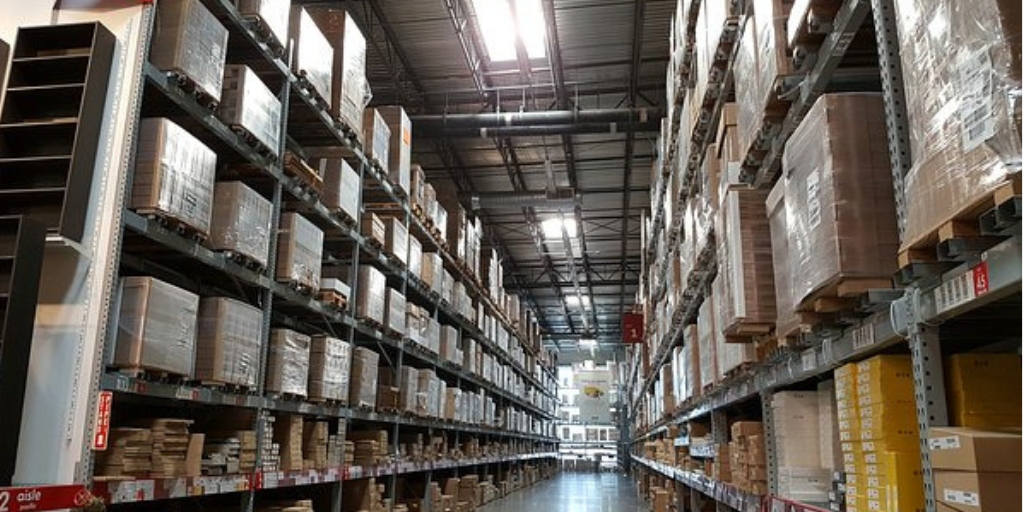
by Jennifer Hart Yim | Feb 28, 2019 | Blog, Strategy, Supply Chain, Warehousing & Materials Handling
If you want to keep your customers satisfied, you need to keep things moving in your facility. Use these tips to keep up the pace and increase warehouse and distribution center efficiency.
Highlights:
- Speed has become the name of the game when it comes to staying competitive in the global supply chain.
- Keep your priorities in mind when organizing your warehouse, including your fastest-moving products.
- Digital technology can take the guesswork out of inventory and warehouse management with employees scanning products every step of the way.
This guest post was written by David Madden for Argentus Supply Chain Recruiting, a boutique recruitment firm specializing in Supply Chain Management and Procurement.
Things can always be faster when you work in a warehouse or distribution center. Speed has become the name of the game when it comes to staying competitive in the global supply chain. Major players like Amazon and Walmart have distribution centers all over the world, pumping out packages at lightning speed.
If you want to keep your customers satisfied, you need to keep things moving in your warehouse or distribution center. Use these tips to keep up the pace and make your facility as efficient as possible.
1. Keep your warehouse organized
Nothing stymies operational efficiency like a poorly-organized warehouse. Your facility should have a thoroughly thought-out floor plan that your employees can navigate with ease. The space should be organized so that your staff members can access products and packages without getting in each other’s way. Your employees may need to process different orders simultaneously, so they should have plenty of space to avoid stepping on each other’s toes. Today’s warehouses are much larger than they were in the past, creating more space for speed and efficiency.
Items should be clearly labeled on the shelf and organized in a way that makes sense for your facility. You can group packages by their contents, destination or point of origin. This layout should make sense to your employees, so they’ll be able find the items they need without having to look at a spreadsheet.
2. Prioritize fast-moving products
Keep your priorities in mind when organizing your warehouse. Every element of your chosen layout should favor your fastest-moving products. Bestsellers don’t tend to sit on the shelf for very long, so make sure your employees can easily retrieve them at all times. Your employees shouldn’t have to go all the way to the back just to retrieve a product, especially if it’s one of your most popular items. You can help everyone save time by moving these fast-selling products to the front of your warehouse. They should be kept low to the ground and close to the loading dock.
Your entire warehouse layout should focus on moving better-performing products to the front, while keeping the less popular products at the back. Go over your inventory and rate your products based on how often your employees need to retrieve them. This should inform your thinking as you change the layout of your facility.
3. Automate the data collection process
Running a warehouse these days is all about data. Digital technology can take the guesswork out of inventory and warehouse management with employees scanning products every step of the way. Your facility should collect as much data on your products as possible, including where they’re coming from, when they arrive, what condition they are in, where they’re going and when they’re set to leave. You can use this data to keep tabs on the location of your products. At any given moment, you’ll know exactly how many products are being stored at your facility.
But in order to improve efficiency, you need to automate the data collection process as much as possible. Your staff members should automatically retrieve this data as they go about unloading and scanning items that have just arrived at the facility and getting them ready for the last leg of their journey. You can use handheld scanners and radio frequency identification tags to simplify this process. Automating data collection also reduces costly errors like inaccurate data entry.
Warehouse automation technology is already a $1.9 billion industry, and it’s expected to balloon to $22 billion by the year 2021. If you want to stay competitive, it might be time to invest in automation. You’ll have all the information you need at your fingertips without adding any additional steps to your operations.
4. Use inventory management software
As you collect all this data on the shipping containers and products moving in and out of your facility, you can save time by sending that info right to your company’s inventory management software. This technology helps you make sense of all the data in a matter of seconds. You can quickly see how many products are on the shelf, when shipments need to go out and when new shipments are due to arrive. Software programs are synced to your data collection devices, so you won’t have to worry about entering that information twice.
Certain artificially intelligent software programs can even help you anticipate future outcomes like inventory shortages, delivery delays and other potential problems. They keep a log of the history of your facility’s operations to help better predict what’s going to happen in the future.
5. Save time with cross docking
If you have fast-moving products coming through the door, you can save time with what’s known as cross docking. Instead of putting these products back on the shelf only to have your employees retrieve them hours later, direct them to a temporary staging area for scanning and inventory purposes. This temporary staging area should be close to the loading dock. When the products are ready for the next leg of their trip, your employees can quickly retrieve them and get them out the door without having to look for them on the shelf.
6. Increase visibility with better lighting
The key to operational efficiency isn’t always as complicated as it seems. Sometimes all you need is better lighting. Warehouses tend to have tall ceilings, and lighting the space, including all those individual shelves, can be a challenge. If you want to be speed up your warehouse operations, everyone should be able to see clearly as they go about their business. Staff members should be able to read labels and use containers without having to squint. Keeping the lights on also helps your employees stay awake, especially if they’re getting a shipment ready in the middle of the night.
Working towards warehouse efficiency
Making your warehouse more efficient starts with having the right layout in place. Your products should be organized according to their popularity. You should automatically collect data on your products as soon as they enter the facility. And always make sure your employees have enough space and light to do their jobs. Follow these steps and you’ll get orders out the door in record time.
Related posts: