![The Valentine’s Day Supply Chain [Infographic]](https://fronetics.com/wp-content/uploads/2024/10/Valentines-Day-Supply-Chain1-800x675.jpg)
by Elizabeth Hines | Feb 3, 2015 | Blog, Strategy, Supply Chain

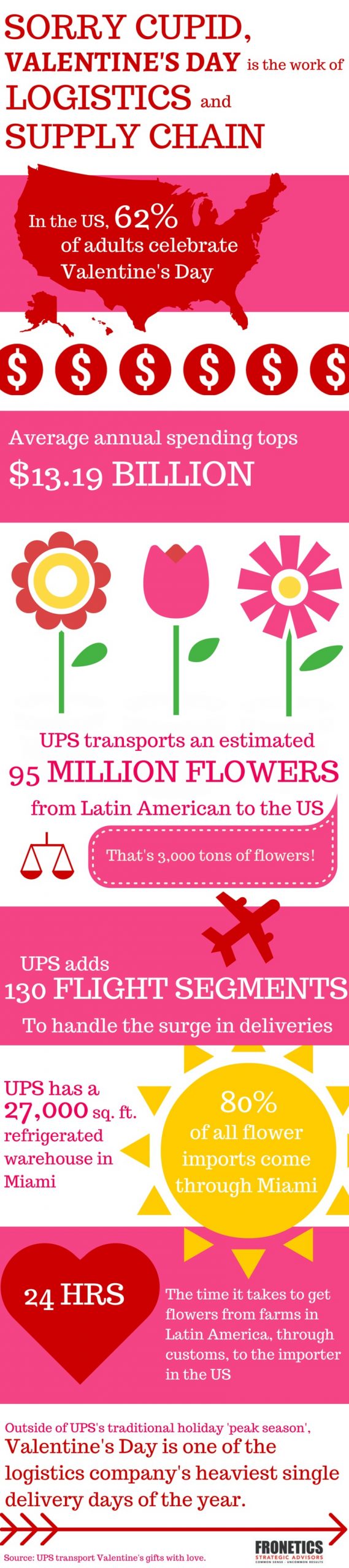
The Valentine’s Day supply chain by the numbers.
In the late 400s Gelasius declared February 14th as a day for honoring Saint Valentine. Over the years February 14th became associated with love and romance (1300s) and the exchange of cards (1600s). In the 1840s the first mass produced Valentine’s Day cards were sold in the US.
Over the years Valentine’s Day has become big business. 62% of adults in the US say that they celebrate the holiday. Spending for Valentine’s Day tops $13.9 billion. $8.9 billion is spent on sparkling wine (174,000 gallons are sold during the holiday week alone). The number of cards and gifts exchanged totals 150 million.
Cupid gets the credit for the holiday, but really Valentine’s Day is the work of logistics and supply chain. UPS alone transports more than 3,000 tons of flowers for Valentine’s Day – requiring the company to add an additional 130 flight segments.
Check out our infographic. You’ll see that Cupid really doesn’t play much of a role (sorry Cupid).
by Elizabeth Hines | Jan 21, 2015 | Blog, Logistics, Strategy, Supply Chain
Share your experience with the use of content within the logistics and supply chain industries.
The amount of content on the internet is astounding, and it is growing by the second (check out One Second on the Internet). 93% of B2B companies are using content marketing and are thereby contributing to the increasing amount of content that is out there.
How do companies within the logistics and supply chain use content? What do companies see as the most effective methods of content creation and content distribution?
Fronetics Strategic Advisors is conducting a brief survey focused on the use of content within the logistics and supply chain industries. The survey will take less than five minutes to complete. All data collected will be used in aggregate and no identifying information will be shared or reported.
A report focused on the survey results will be published in March 2015.
Thank you in advance for your participation.

![Supply Chain: 4 Essential Year End Questions to Ask Yourself [Infographic]](https://fronetics.com/wp-content/uploads/2024/10/SupplychainSMARTgoals-1080x675.jpg)
by Elizabeth Hines | Jan 14, 2015 | Blog, Leadership, Strategy, Supply Chain

Don’t start the year without asking these 4 essential questions.
Well, another year has come and gone. Out with the old, in with the new, right? Wait, not so fast. Don’t overlook the valuable information you can glean from conducting a year end review. Use these four questions as a guide to thoughtfully assess the past year. Then, read on to see how a few simple tasks can help shape your best year ever.
1. What were my biggest accomplishments this year?
Twelve months can seem like a long time when you consider everything that happened over the course of the last 365 days. Setting aside some time to review successful projects, notes of thanks from clients, or a particularly positive performance review reminds us what we’re capable of achieving and gives us a renewed sense of accomplishment.
Try this: This year, designate a file folder near your workspace to collect any materials or notes related to your successes as they occur. Doing so will make it easier for you to recall your accomplishments and provide quick access to a list of your achievements – helpful for a healthy dose of motivation or last-minute performance reviews.
2. How satisfied are you with the past year?
Were you successful in meeting the majority of your goals? Do you feel that you worked to your highest potential? Would you have done something differently? What about missed opportunities? Examining what went right and identifying areas for growth and opportunity are powerful exercises that both prevent the recurrence of negative behaviors and reinforce our commitment to our priorities.
Try this: Adding some context to your experiences presents a more accurate picture of your year by tempering unusual highs and lows. Thinking about your experiences of the past year in sum, try to assign a value to your entire year. How would you rate your year on a scale from 1 to 10? 1 to 100? Why?
3. Is my current daily routine structured to optimize time for my priorities?
It’s easy to fall victim to time suckers, especially when they become ingrained into your routine. Has your daily 15 minute coffee break gradually morphed into 25 minutes? Are your 10 minute “headline scans” now closer to 30 minutes? These small, seemingly innocent extensions can snowball into major time loss, causing unnecessary panic as you scramble to meet deadlines.
Try this: The start of a new year is a great time to reset (or rethink) our daily routines. Build activities into your day. If you’d like to continue your now-daily 25 minute coffee break, think about extending your work day by 25 minutes. Feeling like you can’t absorb everything news-worthy in less than 30 minutes? Set your morning alarm 30 minutes earlier so you can arrive to work having already completed your scan of daily headlines. By taking a hard look at where your time is actually going and then spending a few minutes realigning your daily routine with your priorities, you’re intentionally and consciously assigning time to the things you find the most important.
4. What is it that I want to achieve next year?
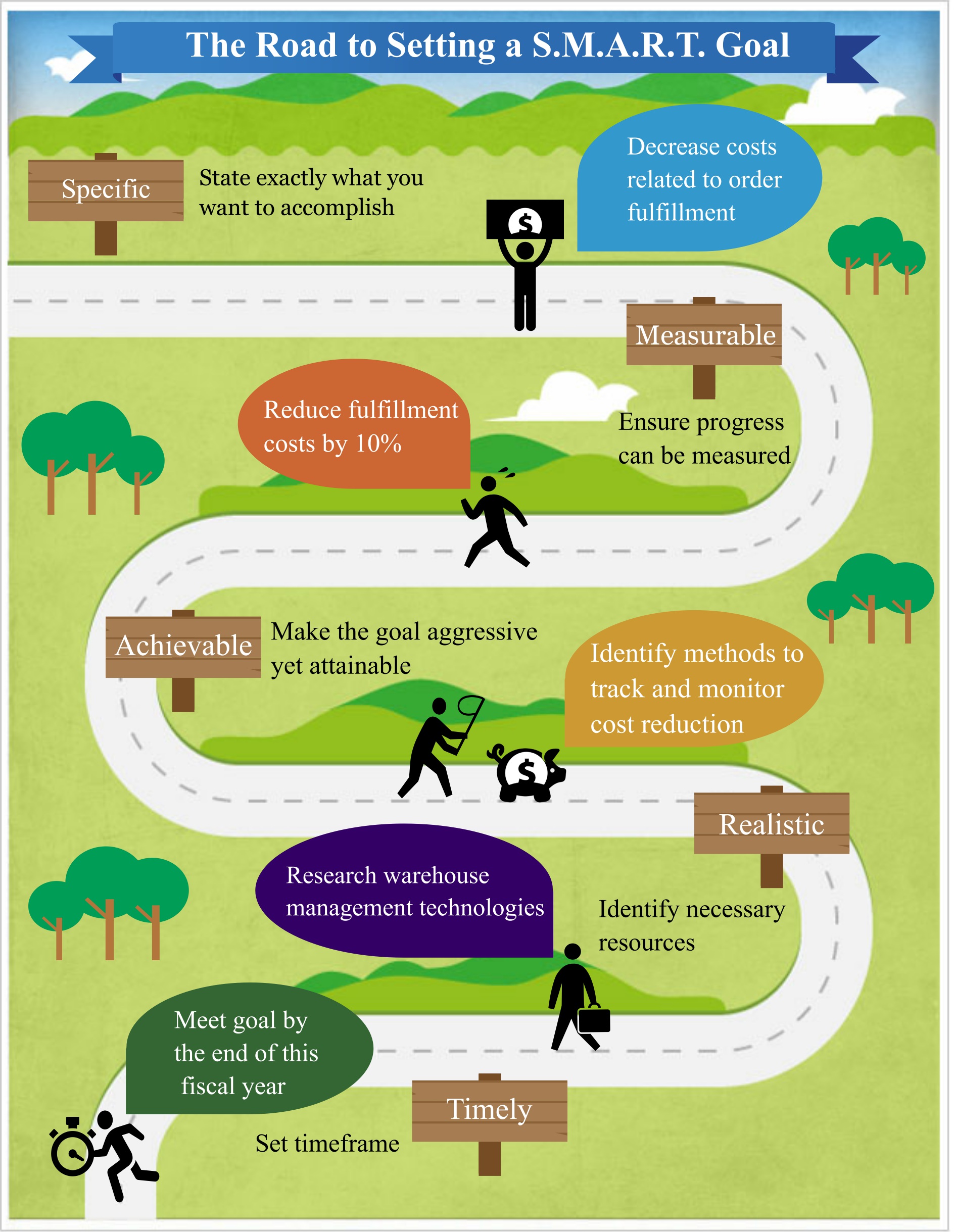
Each new year brings with it a renewed energy to being our best selves. In order to get started, we need to define our priorities and what our success will look like. Setting SMART goals, or goals that are specific, measurable, achievable, realistic, and timely, keeps us moving forward by providing detail and assigning accountability.
Try this: After reviewing your past year, set aside some time to consider what you’ll set out to achieve this year. Create a detailed roadmap to successful completion of your goals.
Use this infographic to help you set, and achieve your SMART goals.
How was your year in review? What were your biggest accomplishments? Are there any goals that you’ll carry over into the new year? Do you regularly set aside time at the close of a year to reflect? We’d love to hear what you do to reset for a new year.

by Elizabeth Hines | Jan 13, 2015 | Blog, Logistics, Marketing, Social Media, Strategy, Supply Chain
In December 2014 Fronetics Strategic Advisors conducted a survey to learn the favorite social media accounts of the logistics and supply chain industries.
Here are the Facebook accounts which survey respondents identified as favorites:
Cerasis is a top North American third party logistics company offering logistics solutions with a strong focus on LTL freight management.
The Supply Chain Blog covers the top trends surrounding the topics of inventory and supply chain optimization. It also provides a weekly news summary for the supply chain industry.
Transplace is a non-asset, North American based third party logistics provider offering manufacturers, retailers and consumer packaged goods companies the optimal blend of logistics technology and transportation management services.

by Elizabeth Hines | Jan 12, 2015 | Blog, Logistics, Marketing, Social Media, Strategy, Supply Chain
LinkedIn is a must for companies and for professionals.
Profiles, company pages, and LinkedIn groups each serve a purpose, and each are tools which can be used and leveraged by both companies and individuals. With more than 3 million company pages, more than 332 million users (and with an average of 2 users joining every second), and close to 2 million LinkedIn groups determining “the best” can be challenging.
In December 2014 Fronetics Strategic Advisors conducted a survey to learn which LinkedIn company pages and LinkedIn groups are the favorites within the logistics and supply chain industries. The results are in.
LinkedIn company pages
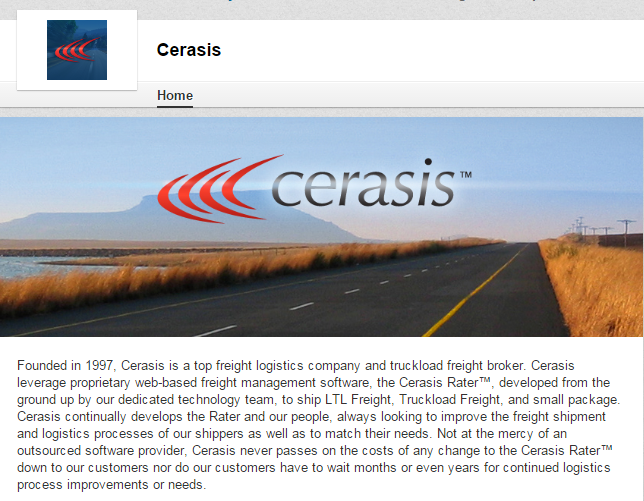
Cerasis is a top freight logistics company and truckload freight broker. The company consistently distributes valuable industry content via their LinkedIn page.
Note: Cerasis was also named the best blog of the logistics and supply chain industries.
Quintiq’s vision is to transform the world’s supply chains. One way the company does this is through their LinkedIn company page. The company’s LinkedIn page is updated regularly with content that is valuable and relevant to the logistics and supply chain industries.
Quintiq also uses LinkedIn to attract and identify new talent. There are currently 12 open positions posted via LinkedIn.
Note: Quintiq was also named a “must-follow Twitter account for those within the logistics ans supply chain industries.”
Transplace is a North American 3PL and technology company committed to helping manufacturers, retailers and distributors reduce costs and improve service. The company’s LinkedIn page is a wealth of information for those within the logistics and supply chain industries.
C.H. Robinson is one of the world’s largest 3PL providers. The company provides freight transportation and logistics, outsource solutions, produce sourcing, and information services to over 45,000 customers through a network of offices in North America, South America, Europe, and Asia.
The company’s LinkedIn page is a great resource of industry news and insight.
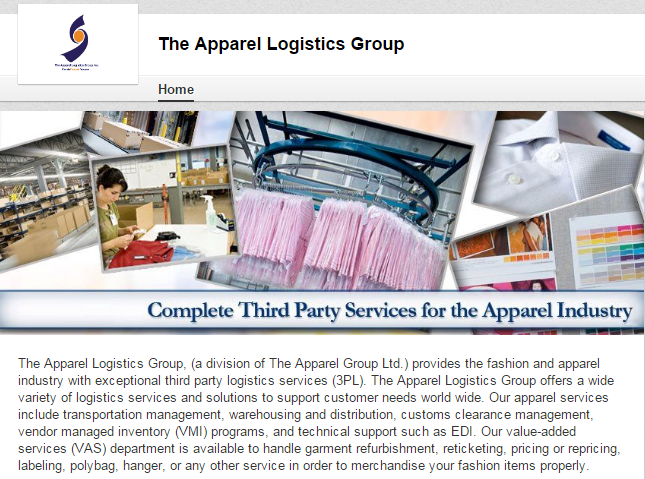
The Apparel Logistics Group, (a division of The Apparel Group Ltd.) provides the fashion and apparel industry with 3PL services . The Apparel Logistics Group offers a wide variety of logistics services and solutions to support customer needs world wide. The company’s apparel services include transportation management, warehousing and distribution, customs clearance management, vendor managed inventory (VMI) programs, and technical support such as EDI.
LinkedIn groups
Procurement Professionals is an open networking group. The group has more than 290,000 members and is one of the best and largest international networking group for all executives, directors, CFO’s, CPO’s, VP’s, procurement professionals, head hunters, job seekers, recruiters, consultants, financial managers, supply chain and sourcing specialists, and buyers and purchasers.
The Supply Chain Optimization Group is a global community, uniting all Supply Chain, Procurement, Logistics, Warehouse, Scorecard, SCOR, Auditors, Continuous Improvement experts, Management Consultants, Program Managers, Executives, Business Owners, Students, Professors, and Engineers.
The group is a central hub for authors books, articles, white papers, podcasts, blogs, events and conferences. Consultants, and thought leaders are visiting regularly to support members in projects, productivity, training, skills development, coaching, mentoring, financials, statistical software, simulation, teams, organizational development, and more.

The Reusable Packaging Association (RPA) is a collaboration between supply chain partners, including manufacturers, poolers, distributors, retailers, educators, and policymakers, to promote the environmental, safety, and economic benefits of reusable packaging.
The RPA leverages its collective voice of industry leading knowledge to advance the adoption of reusable packaging by clearly demonstrating supply chain efficiencies, environmental benefits, ergonomic improvements, and cost advantages to end users in all industries.
The LinkedIn group is a private group.


by Elizabeth Hines | Jan 8, 2015 | Blog, Leadership, Logistics, Strategy, Supply Chain
Social media is driving a business revolution. Companies within the logistics and supply chain industries are beginning to take part in the revolution. Companies within the logistics and supply chain industry are adopting social media as a business strategy – and reaping positive results.
In December 2014 Fronetics Strategic Advisors conducted a survey to learn which industry blog is your favorite. The results are in.
The number one blog within the logistics and supply chain industries is: Cerasis
As a third party logistics company, the Cerasis mission is to decrease freight management inefficiencies and to provide maximum hard and soft cost savings for our customers in the process of shipping LTL (less than truckload) or truckload freight and small package freight by providing logistics solutions through our powerful and proprietary web-based proprietary transportation management system, the Cerasis Rater, and integrated managed transportation services.
The Cerasis blog is a wealth of information for those within the supply chain and logistics industries. The blog covers industry trends, educates, explains rules and regulations, busts myths, and has awesome infographics.
Other valued industry blogs include: