
by Elizabeth Hines | Jul 28, 2015 | Blog, Leadership, Marketing, Strategy
Only 1 in 10 professional marketers describe their lead nurturing efforts as “highly efficient and effective.” For most businesses, that’s simply not good enough. We’ve compiled the 30 greatest lead nurturing lessons into a guide. In it, you’ll learn the secrets of how top companies generate leads and nurture them into customers.
This guide will teach you:
- What makes killer performing landing pages
- The best lead-generating content
- How to create offers that are impossible to ignore
- Secret website optimization tips with A/B testing
- …and more!
This is your guide to start generating more high-quality sales leads today. Learn the tricks and tips you can use to nurture leads. Download it now.
Fronetics Strategic Advisors is a leading management consulting firm. Our firm works with companies to identify and execute strategies for growth and value creation.
Whether it is a wholesale food distributor seeking guidance on how to define and execute corporate strategy; a telematics firm needing high quality content on a consistent basis; a real estate firm looking for a marketing partner; or a supply chain firm in need of interim management, our clients rely on Fronetics to help them navigate through critical junctures, meet their toughest challenges, and take advantage of opportunities. We deliver high-impact results.
We advise and work with companies on their most critical issues and opportunities: strategy, marketing, organization, talent acquisition, performance management, and M&A support.
We have deep expertise and a proven track record in a broad range of industries including: supply chain, real estate, software, and logistics.


by Elizabeth Hines | Jul 23, 2015 | Blog, Leadership, Strategy, Supply Chain
There are many companies in the supply chain that are good at what they do. However, not all companies “do well by doing good.”
Here are 6 companies who are doing well by doing good:
Lego: In a recent move to “significantly reduce [Lego’s] impact on the planet” the company is investing $150 million over 15 years to fund 100+ new employees to work at their sustainable material center in Denmark. The objective is to yield a more environmentally friendly material that will go into making Legos. The company has already been working with environmental groups, cutting packaging sizes, and investing in wind power.
Seventh Generation: In addition to LEED-certified offices, low-emission cars, and efforts to use renewable energy in its manufacturing, the Vermont-based company awards bonuses to employees who dream up more sustainable products for their lines of environmentally-friendly household and personal-hygiene products. They ranked at the top of B Plan’s “best for the environment” list in 2014. They are a company who self-identify as being champions of “honesty, responsibility, and radical transparency in commerce.”
Stonyfield Farms: In working with materials source and supply chain mapping company, Sourcemap, Stonyfield highlights the farmers who provide the main ingredients in their organic food products. By creating transparency in their supply chain, they empower customers to make healthy, informed decisions and they create stronger partnerships with suppliers.
Sustain Condoms: The company focuses on responsibility in more ways than one. They produce fair-trade, vegan condoms and organic, toxic-free lubricants. They concern themselves with social and health issues, as well as the environment: “When we think about sustainability, we don’t just think about the environment. “We think holistically about what is required for the planet and the people living on planet to live in harmony with nature and each other. So, with Sustain Condoms, we look at every aspect of condom manufacturing starting with the rubber tree plantation.” The company also donates 10% of their pre-tax profits to women who are unable to access the healthcare they need.
Patagonia: The large, high-end clothing and outdoor equipment company produces products that are “environmentally preferred”, in other words they are organic, recycled or environmentally sound. The company is utterly focused on being a responsible supply-chain-based company, ensuring safe, legal, fair, and humane working conditions through total transparency. They also give 1% of sales to environmental groups worldwide.
Coca-Cola: On the company’s website, just next to the first tab “Our Company”, you’ll find the tab “Sustainability”. The company claims to focus on three main tenants: “Designing consumer-preferred, resource-efficient packaging; eliminating landfill waste; and using recycled and/or renewable materials”. The company has worked hard to reduce use of plastics, aluminum and glass packaging, while working with such organizations and projects as the Bill & Melinda Gates Foundation, Water for People, Thailand Recovery, and the Little Red Schoolhouse Project to help provide water, shelter, education, and basic needs to people around the world.
The list of companies who do well by doing good is impressive, but certainly not long enough. The supply chain is “longer and more complex” than ever before and the impact on sustainability is massive.
Fronetics Strategic Advisors is a leading management consulting firm. Our firm works with companies to identify and execute strategies for growth and value creation.
Whether it is a wholesale food distributor seeking guidance on how to define and execute corporate strategy; a telematics firm needing high quality content on a consistent basis; a real estate firm looking for a marketing partner; or a supply chain firm in need of interim management, our clients rely on Fronetics to help them navigate through critical junctures, meet their toughest challenges, and take advantage of opportunities. We deliver high-impact results.
We advise and work with companies on their most critical issues and opportunities: strategy, marketing, organization, talent acquisition, performance management, and M&A support.
We have deep expertise and a proven track record in a broad range of industries including: supply chain, real estate, software, and logistics.

by Elizabeth Hines | Jul 22, 2015 | Blog, Current Events, Strategy, Supply Chain
We are increasingly seeing the impact of climate change. We are seeing the impact in the form of drought, wildfires, hurricanes, fires, rising sea-levels, record blizzards, and high temperatures.
The supply chain plays a significant role in climate change. Specifically, there is: damage to the ecosystem caused by industrial and commercial progress in the form of carbon emissions, improper waste removal, energy consumption, and fossil fuel extraction and processing. This damage comes full circle and poses ethical issues regarding business practices for those in the supply chain, and it also impacts business procedures when a climate-driven disaster occurs, such as flooding, drought, and hurricanes. Goods get damaged, deliveries are canceled or delayed, raw materials become inaccessible, energy sources become scarce. With one calamity alone, these can be billion dollar problems. Although overall financial losses from climate-based, weather-related disasters are difficult to measure on a global scale, according to the Intergovernmental Panel on Climate Change, “aggregate losses across the world economy have a more than 50 percent chance of being greater than 2 percent of global GDP.”
The Carbon Disclosure Project reported on a survey of more than 2,000 companies and found that “44 percent of them had suffered a disruption in production from rainfall or drought and 31 percent had experienced higher production costs.” A 2007 study led by the Organization for Economic Co-operation and Development (OECD) estimated that by 2070, seven of the ten greatest urban concentrations of economic assets that are exposed to coastal flooding will be in the developing world; none was in 2005. Assets exposed to such flooding will rise from 5% of world GDP to 9%.
In 2010, Russia’s severe heat wave caused a massive drought and spurred wild fires, ruining a huge swath of wheat crops. The losses were estimated to be $15 billion U.S. dollars. The world-wide impact was huge, as Russia’s exports were limited and global prices increased. In 2011, Thailand experienced some of the worst flooding it had ever seen. The death toll was nearly 900 people and financial losses were estimated at $5.7 billion U.S. dollars. When Superstorm Sandy hit the east coast in 2012 it caused devastating losses. The death toll was 72 and the financial toll was estimated to be in the tens-of-billions, up to $50 billion dollars. The supply chain was badly hit, especially for companies like FedEx, CSX, and many retail companies. Understandably, only Home Depot benefited from the disaster. Year after year we see huge human and financial losses, and incredible disruption to the supply chain.
Acclimatise CEO, John Firth, explains the reaction in the supply chain when disaster strikes, and the need for preparation and awareness of companies, “Pakistan’s 2010 floods caused rice production to fall, increasing crop prices. This prompted consumers to buy wheat, which increased the price of that commodity, and, in turn, the price of cookies in the U.K. In addition to identifying categories that are directly exposed, managers should think about the impacts caused by changes in the markets of substitutes.”
Companies have always had to manage supply and demand risks and supply chain disruption, but a new era is upon us. According to a PWC journal on climate change and supply chain risk, the author states, “the other major factor set to exacerbate supply-chain risk is climate change. Often overlooked, climate change adds to complexity. It amplifies or alters existing risks, for example raw material availability (e.g. water, energy) or transport disruption due to extreme weather events. The resulting shocks on the global supply chain can be severe and persistent.”
Many companies are readying themselves for disaster, and some are fighting back, and trying to reverse some of the damage to the climate.
Fronetics Strategic Advisors is a leading management consulting firm. Our firm works with companies to identify and execute strategies for growth and value creation.
Whether it is a wholesale food distributor seeking guidance on how to define and execute corporate strategy; a telematics firm needing high quality content on a consistent basis; a real estate firm looking for a marketing partner; or a supply chain firm in need of interim management, our clients rely on Fronetics to help them navigate through critical junctures, meet their toughest challenges, and take advantage of opportunities. We deliver high-impact results.
We advise and work with companies on their most critical issues and opportunities: strategy, marketing, organization, talent acquisition, performance management, and M&A support.
We have deep expertise and a proven track record in a broad range of industries including: supply chain, real estate, software, and logistics.
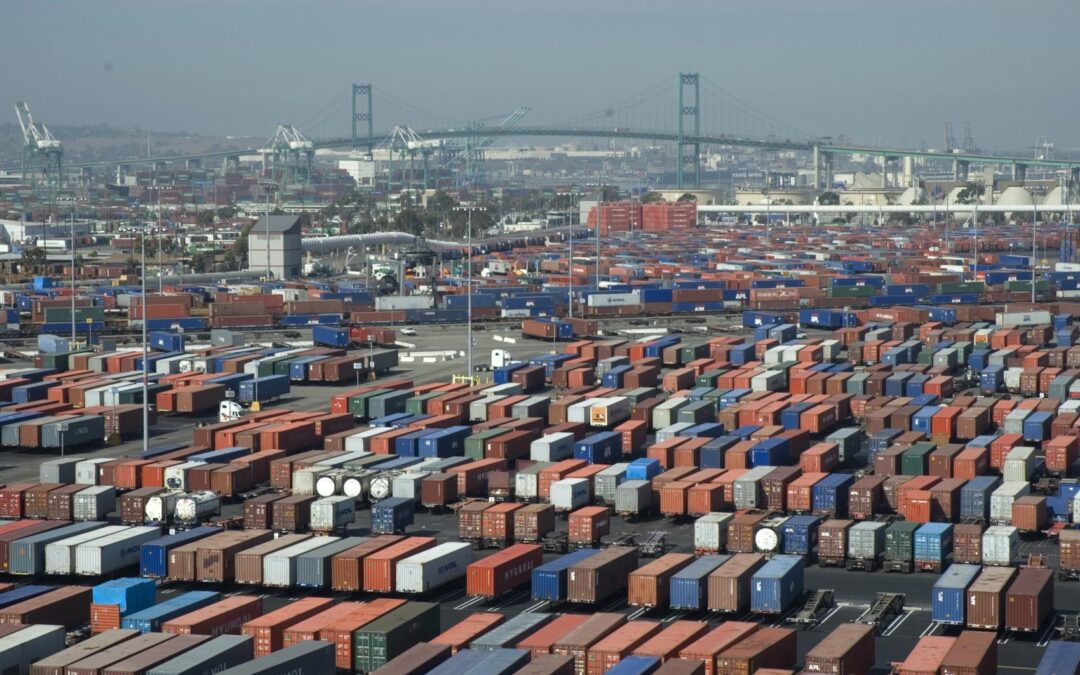
by Elizabeth Hines | Jul 21, 2015 | Blog, Leadership, Strategy, Supply Chain
A “revolution” is what Pope Francis recently called it – the necessity for humans to change attitudes, beliefs, and behaviors in order create a sustainable ecosystem and society. In his encyclical, entitled Praise be to you – On Care For Our Common Home, he called upon all people and organizations to push against the increasing drive for power at the expense of the earth and other human beings, stating, “We are not faced with two separate crises, one environmental and the other social, but rather one complex crisis which is both social and environmental.”
Pope Francis is one large voice in a sea of voices— secular and non-secular— who have been pleading for change for decades. Recent record-breaking temperatures, storms, and droughts cannot be ignored. What is the role of each person in these battles? What is the role of governments, NGOs, companies?
The supply chain impacts: water, environment, raw materials, energy, animals, humans – essentially the entire planet and those who exist on it.
Cathy Morris, senior vice president and chief strategy officer for Arrow Electronics, Inc., calls attention to the fact that “everything hinges on an effective supply chain.” Specifically: “Products can be made, money can be invested, ideas can be brought to fruition, but without the supply chain everything stops.” The scope of influence of this trillion dollar industry has a significant impact on our planet and our environment.
In an interview with the Harvard Business Review, Peter Senge states that the perception of sustainability must shift, “They might not say this, but most companies act as if sustainability is about being less bad. There’s certainly a need to reduce your carbon footprint. But people don’t get excited about incremental changes like that. They need a more ambitious vision.”
The supply chain holds within it the power to impact many things, from stocking your grocery and clothing stores, to making the cars you use to get to those stores, or the pieces of the computer you use to purchase those things online. The supply chain is also the packing and the raw materials to make the packing. It’s the boat, the truck, the train, and the plane to move the materials. From the products to the moving of products, there are few areas of daily living that does not involve the supply chain.
The supply chain also holds within it the power to impact the sustainability of the ecosystem. In the past several decades we have seen increasing evidence that human behavior is altering the state of the earth. According to PWC, “While climate change and increasing temperatures now seem inevitable, there are high levels of uncertainty about the manifestations and magnitude of their impact. What is certain, though, is that climate change will have a multiplier effect on supply chain risk.”
In the 1980s we saw that we, as individuals, were contributing to the hole in ozone layer by emitting man-made gases. Although the ozone appears to be slowly recovering, a larger issue looms: greenhouse gases. The three main gases that traps and heat the earth, Carbon Dioxide (72% of total), Methane (18% of total), and Nitrous Oxide (9% of total), come from our need for energy (power stations 21.3% and Fossil fuel retrieval 11.3%), products (industrial processes (16.8%), transportation (14%), and food (agricultural byproducts) 12.5%) rounding out the top emitters by sector.
In our contemporary pursuit for an easier life, people consume more products, energy, and water. We desire heat when it’s cold, air-conditioning when it’s hot. We want to travel in cars and planes. We want more, better, faster, cheaper. According to the NASA website, “In its Fourth Assessment Report, the Intergovernmental Panel on Climate Change, a group of 1,300 independent scientific experts from countries all over the world under the auspices of the United Nations, concluded there’s a more than 90 percent probability that human activities over the past 250 years have warmed our planet.” The same report showed that “climate change is a material risk to supply chains across industries, and according to the CDP, more than 50 percent of an average corporation’s carbon emissions typically come from the supply chain.”
According to BSR’s report, Business Action for Climate-Resistant Supply Chains, there are five areas of supply chain climate risks that require consideration by all companies:
- The physical risk to suppliers’ assets and operations
- The risk of reduced availability or increased costs of inputs
- The risk of changing regulations in sourcing or distribution markets
- The risk of climate-related disruptions in communities that impact supplier workforce availability and productivity
- Stakeholder, or reputational, risk
We know the facts, we know much of the damage, so now what? Humans contribute, the supply chain contributes. At this point people want to move beyond the blame game and work to improve and, in some cases, reverse the damage. There’s an expectation that individuals will help in this effort, driving more efficient cars, finding renewable sources of energy, and focusing on recycling, but companies are also being asked to do their part, particularly the vast world of the supply chain. According to the UN Global Compact website, “A company’s entire supply chain can make a significant impact in promoting human rights, fair labour practices, environmental progress and anti-corruption policies. However, UN Global Compact participants rank supply chain practices as the biggest challenge to improving their sustainability performance.”
Fronetics Strategic Advisors is a leading management consulting firm. Our firm works with companies to identify and execute strategies for growth and value creation.
Whether it is a wholesale food distributor seeking guidance on how to define and execute corporate strategy; a telematics firm needing high quality content on a consistent basis; a real estate firm looking for a marketing partner; or a supply chain firm in need of interim management, our clients rely on Fronetics to help them navigate through critical junctures, meet their toughest challenges, and take advantage of opportunities. We deliver high-impact results.
We advise and work with companies on their most critical issues and opportunities: strategy, marketing, organization, talent acquisition, performance management, and M&A support.
We have deep expertise and a proven track record in a broad range of industries including: supply chain, real estate, software, and logistics.

by Elizabeth Hines | Jul 20, 2015 | Blog, Logistics, Marketing, Social Media, Strategy, Supply Chain
Sourcemap: doing well by doing good.
Leonardo Bonanni’s company, Sourcemap, is doing well by doing good, and he’s helping companies to do the same. In working on his doctoral thesis at MIT, Leonardo Bonanni created a service that is good for the world on many levels – it saves companies money and it works towards sustainability through transparency. Bonanni is bringing the people what they want. Consider these numbers from recent surveys:
- more than 88% of consumers think companies should try to achieve their business goals while improving society and the environment
- 83% of employees would seriously consider leaving their job if their employer used child labor in sweatshop factories
- 65% would seriously consider leaving their job if their company harmed the environment
Bonanni’s innovative company, Sourcemap, helps clients visually map the supply chain route, from raw materials to end-users, providing unique and important visibility. Companies like Stoneyfield, Mars Chocolate, Fairphone, and Office Depot can see risks and disruptions in the supply chain in real time, act responsibly, promote sustainability, and please consumers who are increasingly curious and conscientious about materials sourcing.
The likes of the Wall Street Journal, Forbes, and The Guardian have taken interest in Dr. Bonanni and Sourcemap. Here he shares some insights with Fronetics on the growth of the company and how he won’t rest until mapping the supply chain is status quo.
What’s the most exciting thing going on at Sourcemap right now?
2015 is the year of supply chain mapping. When we started helping companies trace their products to the source, it was 2007 and the question was ‘why would we want to do that?’ Today it’s ‘how fast can we start?’ Whether it’s risk, sustainability, or simply finding more efficient ways to source products, companies need a big picture of the end-to-end supply chain. What’s exciting is how fast and far we help our clients get there – sometimes in as little as one day.
Tell me about how the maps are built. Are the maps on the free source platform built the same way as the maps on the enterprise platform?
Sourcemap started as a service for consumers to find out where products come from (free.sourcemap.com is still the only website where anyone can make a supply chain map, no training required). Users log in and map a supply chain – from raw material to end customer – as easily as drawing dots and lines on a Google map. Soon after the free website launched manufacturers approached us to see if we could help them figure out where their products come from. We had a lot of experience from serving millions of visitors through our free website, so we knew how to make a robust and intuitive interface for supply chain mapping. We adapted the technology to enterprise needs by adding company specific KPI’s, network analytics, and real-time reporting. The difference is that our enterprise users don’t draw the supply chains one link at a time. Their maps are automatically generated in near-real time from transportation, purchasing, and product lifecycle management databases.
Is it hard to convince businesses that there is an economic or competitive advantage to a utilizing a platform like Sourcemap?
It’s true that Sourcemap was originally built for sustainability, and it can be hard for companies to dedicate resources to long-term issues when short-term priorities come up every day. But our first success wasn’t helping companies be more sustainable in the long term. It was helping them tackle short-term crises, by developing a supply chain repository for emergency response and business continuity planning. Our clients were spending days and weeks to determine how a natural or human-made disaster was impacting any of thousands of suppliers worldwide. We brought that time down to minutes. Then supply chain managers started to see the benefit of knowing not just who they buy from, but who their suppliers buy from – and making decisions to consolidate or diversify supply, move inventories around, and decide when to in-source / out-source processes. These decisions represent huge savings in overall supply chain cost.
This is fantastic tool for companies who are proud of their supply chains, but what about those companies who aren’t, or who aren’t even fully aware of the steps and impact of their chain?
Over the years we’ve worked with companies big and small, with widely differing visibility into their supply chains. What we’ve seen is that the biggest benefit – the low-hanging fruits – are there for first-time supply chain mappers. These are companies that have expanded through acquisitions, are entering new markets or introducing new products – basically any organization that needs to account for a whole new way of doing business. Then, supply chain mapping is the easiest way to keep tabs on everyone in the supply chain and make sure that decisions are taken with an eye on the big picture.
In the years you’ve been doing this work have you seen a shift in consumer demand around the sourcing of materials and making of products? Is there increasing social pressure for companies to “do good”?
We’ve seen two drivers for supply chain sustainability and transparency: companies who want to attract the best talent, and brands looking to differentiate their product by providing information on its price, its composition, or its source.
Given that you teach at Columbia, I’m wondering if you see a difference in the passion, awareness, and attitude around sustainability with younger generations? Have you seen growth in the enrollment numbers in your classes?
I like to teach one or two evening classes a year (this Fall at NYU) to see how supply chain thinking is evolving as it becomes more mainstream. My class hasn’t changed much since it started in 2007, but the students have. Sustainability used to be a futuristic concern, and no one outside logistics departments ever talked about supply chains. Today there is a real desire among students to be social entrepreneurs, and part of that means thinking about products and services holistically – making sure that the social and environmental impacts are drivers of innovation, not just a nice-to-have. Enrollment has grown, and so has the number of departments where supply chains play a role: from engineering, architecture and design to business, public policy and international affairs.
Has social media played a role in the growth of the business and/or the operations of the business?
Sourcemap wouldn’t be here without social media. The fact that our supply chain maps can be embedded in other websites attracted over a million visitors in the first year. We saw brands embedding maps of their supply chains on their own websites, and we got a tremendous amount of traffic from being embedded and linked from the Huffington Post, Wired and Fast Company.
What are your ultimate goals for Sourcemap?
Supply chain mapping – knowing where products originate – gets easier the more companies do it. It requires information sharing, which means tighter collaboration between buyers and sellers. We’ve seen it become a requirement of purchasing departments: if you want to sell your products, disclose the raw material origins. That makes it easier to trust – and verify – the quality, the compliance, the sustainability of the product. Personally, I won’t rest until supply chain mapping becomes part of doing business as usual.
Dr. Leonardo Bonanni is Founder and CEO of Sourcemap, the supply chain mapping company. The New York-based startup offers enterprise software for companies to trace products, evaluate social, environmental and financial risks, and monitor improvements over time. One day soon you’ll be able to scan a product on a store shelf and be connected to the people who made it through the Sourcemap social network.
Leo is a supply chain transparency advocate named among the 100 Most Influential People in Business Ethics (2011) and America’s Most Promising Social Entrepreneurs (2012). He teaches sustainability at Columbia and at MIT, where he received his doctorate from the MIT Media Lab. He has a background as an architect, an inventor and a performer.
Fronetics Strategic Advisors is a leading management consulting firm. Our firm works with companies to identify and execute strategies for growth and value creation.
Whether it is a wholesale food distributor seeking guidance on how to define and execute corporate strategy; a telematics firm needing high quality content on a consistent basis; a real estate firm looking for a marketing partner; or a supply chain firm in need of interim management, our clients rely on Fronetics to help them navigate through critical junctures, meet their toughest challenges, and take advantage of opportunities. We deliver high-impact results.
We advise and work with companies on their most critical issues and opportunities: strategy, marketing, organization, talent acquisition, performance management, and M&A support.
We have deep expertise and a proven track record in a broad range of industries including: supply chain, real estate, software, and logistics.

by Elizabeth Hines | Jul 16, 2015 | Blog, Strategy
Remember the days when a rear-view mirror was all we needed to make business decisions? Now, predictive analytics appears poised to turn hindsight into a relic of the past.
Two Gartner analysts echo that sentiment, stating, “Few technology areas will have greater potential to improve the financial performance and position of a commercial global enterprise than predictive analytics.”
Executives are eager to jump on the bandwagon too. Although only 13% of 250 executives surveyed by Accenture said they use big data primarily for predictive purposes, as many as 88% indicated big data analytics is a top priority for their company. With an increasing number of companies learning to master the precursors to developing predictive models — namely, connecting, monitoring, and analyzing — we can safely assume the art of gleaning business intelligence from foresight will continue to grow.
Amid the promises of predictive analytics, however, we also find a number of pitfalls. Some experts caution there are situations when predictive analytics techniques can prove inadequate, if not useless.
Let’s consider three examples:
- Predictive analytics works well in a stable environment in which the future of the business is likely to resemble its past and present. But Harvard Business School professor Clayton Christensen points out that in the event of a major disruption the past will do a poor job of foreshadowing future events. As an example, he cites the advent of PCs and commodity servers, arguing computer vendors who specialized in minicomputers in the 1980s couldn’t possibly have predicted their sales impact, since they were innovations and there was no data to analyze.
- Bias in favor of a positive result is another danger when interpreting data; One of the most common errors in predictive analytics projects. Speaking at the 2014 Predictive Analytics World conference in Boston, John Elder, president of consulting firm Elder Research, Inc., made a good point when he noted that people “‘often look for data to justify our decisions, when it should be the other way around.”
- Mining big data will further do little good if the insights are not directly tied to an operational process. I’ve a feeling more companies than we realize are wasting precious time and manpower on big data projects that are not adequately understood, producing trivia rather than actionable business intelligence.
With the above challenges in mind, talent acquisition and thorough A/B tests will be key components of any predictive analytics project. What else do you think organizations need to do to use foresight effectively?
You may also be interested in:
Fronetics Strategic Advisors is a leading management consulting firm. Our firm works with companies to identify and execute strategies for growth and value creation.
Whether it is a wholesale food distributor seeking guidance on how to define and execute corporate strategy; a telematics firm needing high quality content on a consistent basis; a real estate firm looking for a marketing partner; or a supply chain firm in need of interim management, our clients rely on Fronetics to help them navigate through critical junctures, meet their toughest challenges, and take advantage of opportunities. We deliver high-impact results.
We advise and work with companies on their most critical issues and opportunities: strategy, marketing, organization, talent acquisition, performance management, and M&A support.
We have deep expertise and a proven track record in a broad range of industries including: supply chain, real estate, software, and logistics.
