
by Elizabeth Hines | Feb 15, 2017 | Blog, Content Marketing, Marketing, Strategy
Ask yourself these six questions to see if you could be attracting more leads by writing better content.
All too often, marketers fall into the trap of sacrificing quality for quantity in their content writing efforts. It’s an easy mistake to make — the pressure to produce a constant stream of content can naturally lead to a drop in quality. But if you’re not writing high-quality, substantive content, you’re wasting time and energy.
If you’re wondering whether your content might not measure up, ask yourself these six questions.
Do you need better content?
1) Is my content search-engine optimized?
Since over three-quarters of today’s buyers use Google to research products, a key to making sure your content is showing up in search results is search engine optimization (SEO). This means writing copy that will be prioritized by Google in web queries related to your business or products. For ideas on SEO optimization, check out these 3 Quick SEO Tips to Improve Your Blog Right Now.
2) Am I using the right channels to reach my target audience?
In order to answer this question, you first need to have a clearly defined idea of your target audience. Once you know who you’re trying to reach, evaluate where they’re active. Analytic programs like Google Analytics and sites like Tweriod can provide valuable insights on your followers’ social media habits.
3) Am I publishing content, or a sales pitch?
Remember that content marketing is about offering valuable, expert information to your audience — it’s not an overt sales pitch. Present your readers with this kind of expertise, rather than a repeated sales pitch, and you attract loyal customers, and associate your brand with quality and value. Anything you post should be geared to meet specific needs of your customer, rather than to bludgeon them with information about your products or services.
4) Am I providing a good quality user experience?
Pay attention to format, length, accessibility, and voice. Is your business’ website visually appealing and easy to navigate? People will read your content only if it’s visually accessible and engaging.
5) Have I paid attention to performance analytics?
Be aware that what worked last year may not work this year — pay attention to performance analytics to monitor what kind of content is successful and what is no longer generating and converting leads.
6) Is my content good?
This might seem like the most obvious question of all, but it’s important to ask it every time you post. Of course, determining what constitutes good and bad content is the key here. Are you producing writing that is original, substantial, and well written? A good tool to get you started is Fronetics’ On Writing Good Content: A Guide for the Logistics and Supply Chain Industries.
Remember, your content is a reflection of your company. When potential buyers come across your blog posts or other content online, that’s how they get to know you. If it’s poorly written with mistakes and blurry images, well — you look pretty sloppy.
Quality, substantive content shows that you are an authority in your field. It will let potential buyers know that you know what you’re talking about, that you run a polished business, and that they can trust you. So while quantity is important when it comes to content, quality should never be compromised.
Related posts:

by Jennifer Hart Yim | Feb 13, 2017 | Blog, Logistics, Strategy, Supply Chain
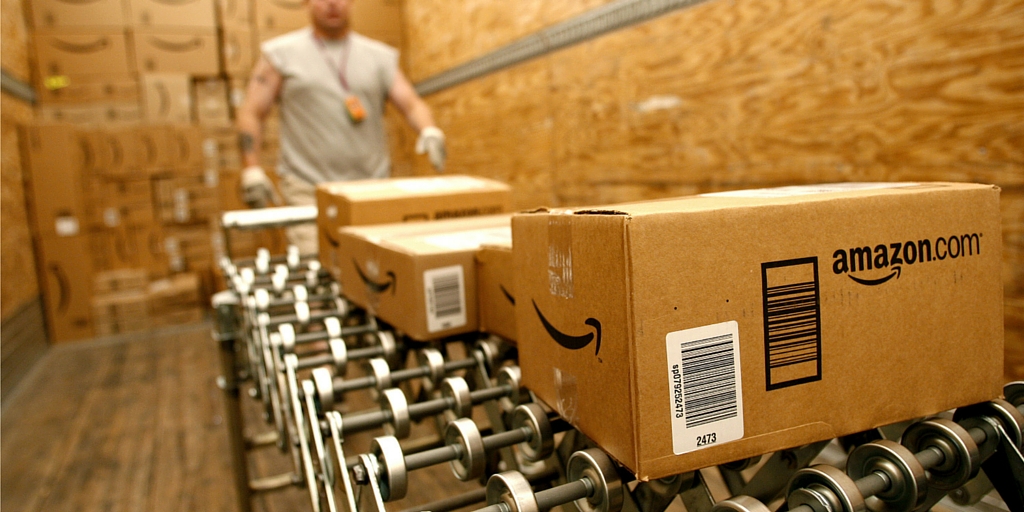
Supply chains must accept that they cannot equal the power of Amazon’s supply chain without embracing these new trends.
This guest post comes to us from Adam Robinson, marketing manager at Cerasis, a top freight logistics company and truckload freight broker.
Amazon’s supply chain continued push deeper into new and existing markets will define additional trends in the supply chain throughout the coming year. While supply chain entities struggle to stay competitive with the e-commerce giant, more organizations will look for ways to eliminate inefficiencies and boost operations. Fortunately, these five trends may alleviate some of the strains of competition by giving supply chain partners an advantage in the global market.
Top 5 Trends to Know to Compete with Amazon’s Supply Chain
1. Robotics Will Grow More Versatile.
Amazon’s purchase of Kiva Robots changed the landscape of robotics in the supply chain. However, new companies are being created and developed to fill the void. The robotics company Starship released a robot that delivers meals and groceries to people in Euro metro markets. Meanwhile, Lowe’s has created the LoweBot, which boosts customer service, explains Dan Gilmore of Supply Chain Digest.
More companies are turning to robotics to find new ways to bridge the divide between a dwindling number of customer service representatives, including store associates, and maintaining around-the-clock operations. Across the spectrum, robotics will become more versatile and accessible. In other words, robots will gain new movements, capable of picking items from shelves in warehouses and storefronts.
Per IDC Manufacturing Insights, the use of robotics will become more platform based through robot-as-a-service, reducing costs of deployment and maintenance. Furthermore, the speed of operation of robots will increase more than 30 percent by the end of 2017. Clearly, robotics will become more important in 2017 than during any previous year.
2. Technology Will Reshape Procurement Practices.
Better procurement practices translate into better overall sales, but the role of procurement in driving sales’ statistics will change throughout 2017. Today, procurement drives up to 67 percent of sales, explains Johnathan Webb of Forbes magazine, as procurement professionals look for innovative ways to produce effective, superior products.
For example, Johnson & Johnson procurement professionals actively review market trends before making purchases. Upon identifying these trends, a correct forecast of supply demands can be generated. Thus, the role of procurement has become more focused on being physically involved in market news and research, not just signing purchase orders in an office.
3. More Businesses Will Create E-Commerce Platforms.
Amazon’s supply chain empowered the e-commerce market by giving everyone an opportunity to sell their goods online, which has made competing with Amazon difficult at best. Amazon’s supply chain expansion culminated in more companies looking to enter e-commerce without giving shares to Amazon. Companies expanded e-commerce and omnichannel solutions simultaneously as well, reports Steve Banker of Logistics Viewpoints.
For example, Walmart and Kmart redesigned their mobile e-commerce interface for consumers, making shopping and purchasing online easier and integrated with major companies. A simple search for a product on Walmart.com reveals partnered listings with Wayfair and third-party sellers, much like Amazon’s current vendor options. Moreover, customers can make purchases online and have them shipped to the store or their home. At Walmart, customers can even pick up orders without ever getting out of the car now. Ultimately, more businesses will seek out partnerships with bigger companies to stay competitive with Amazon’s bare price points and ease of use.
4. User Preferences Will Enhance Mobile Management Systems.
Traditional warehouse management systems (WMS) lacked integration with other systems. Procurement strategy was not always evident. Accessibility of systems depended on in-house IT departments, and upgrading access terminals could cause extreme delays and problems in operations. However, newer management systems, such as a comprehensive transportation management system (TMS) that integrates warehouse management with transportation management, are starting to offer more accessibility and personalization options.
In other words, accessibility and personalization allow warehouse managers and staff members to define metrics relevant to new products and current operations, test new processes, and effectively manage the flow of goods. Similarly, new mobile options, ranging from Android tablets to compact barcode scanners, will reduce inconsistencies and errors across the supply chain, explains IRMS 360. Paired with the advancements of predictive analytics and the Industrial Internet of Things (IIoT), more data will result in more efficient processes, creating a positive feedback loop throughout an organization.
5. Contingency Planning Will Become a Standard Practice.
Amazon’s supply chain has proven that not planning will result in the failure of small and medium-sized businesses. Furthermore, natural disasters reap $211 billion from the global supply chain annually. Having a larger global footprint is how Amazon’s supply chain has been able to maintain operations in the face of natural or man-made disasters. This is contingency planning.
The IIoT empowers contingency planning by giving supply chain entities real-time data from an endless number of sources, which range from online browsing data to point-of-sale data. Consequently, supply chains can react appropriately and divert resources to maintain operations. But, the key to utilizing this information lies in knowing what to do and how to do it when an event occurs. In other words, more companies will diversify distribution, supplier and storage networks throughout 2017 to prepare for what might happen in the future.
The Big Picture.
Supply chains must accept that they cannot equal the power of Amazon’s supply chain without embracing these new trends. New technologies are great, but chances are Amazon has already implemented them. Rather than falling into despair, you can use these trends to re-evaluate processes and practices in your organization, which will help you stay competitive with Amazon.
The complexities of the global supply chain rely on your willingness to take advantage of new trends and technologies today, as well as tomorrow, so do not squander this opportunity.
Related posts:

by Elizabeth Hines | Feb 9, 2017 | Blog, Content Marketing, Marketing, Strategy
Time can be a blog’s best friend when it comes to gaining leads, but there are a few things you can do to accelerate lead-generation efforts.
Patience is a virtue, but it’s a particularly difficult one to mind when you’re trying to get your business off the ground.
Whether you are just starting out, are trying to turn things around, or are just looking to inject a little energy into things after some slow growth, your company has probably made an investment in your marketing efforts. Now comes the tough part, if you’re on the marketing team: The bosses are going to want to see results in the form of leads and sales.
Fair enough. Blogging is one of the best ways to boost your lead-generation efforts. The trouble is, however, that is normally takes some for those benefits to come to fruition.
I’m not going to say it’s a marathon…
But blogging is certainly not a sprint. Your posts need time to start drawing traffic — and then, from traffic comes leads. So the transitive property tells us that lead generation takes time. Here’s why.
As with many things, blog posts become more credible with age. That is to say, search engines value things that older content has had more time to accumulate, like social shares and referrals from other web pages. The more relevant a blog post proves itself to be to readers over time, the higher it will rank in search engine results.
On the other hand, new blogs without much content don’t have much to tell search engines. Search engines don’t trust them yet — and search engines’ algorithms are designed to avoid leading searchers down a stray path. So posts from new or young blogs are less likely to appear within the first page(s) of search results, which is key to sourcing organic traffic.
So what’s a marketer who is charged with generating leads to do?
Set realistic expectations
Be realistic about how quickly your blog will start generating leads when you first set your content strategy. Consider things like the length of your sales cycle. You can’t expect a reader to hasten down the sales funnel any faster than a normal prospect. And remember that the reader probably won’t catch your post on the first day it’s published. (More on that later.) So, if your sales cycle is 90 days, you might see a lead 90 days after you start publishing. But, in reality, it will probably take a little longer.
Instead of relying entirely on leads to define success, you should spend the first months focusing on the metrics that are precursors to lead generation. Increased web traffic and greater social reach and engagement, for example, are solid proof that the needle is moving in the early days of a new content marketing program. Set goals for these metrics, and communicate with leadership that they are all indicators that your content strategy is working, and that leads should follow in time.
But how can I get my blog to generate leads faster?
If you want to accelerate lead generation, it’s going to take a greater investment. But if you’re willing to commit more time and resources to speed things along, here are two things you can do.
1. Publish more frequently.
Search engines value posting frequency because it shows that your blog is a consistent source of content. The question is, how much can your organization publish without experiencing a decline in quality and relevancy? Those are other factors influencing search engine rankings, not to mention readership, leads, and conversions.
But “more frequently” doesn’t have to mean going from 0 to 60. Even publishing once more per week can make a dramatic impact. This story, for example, shows how publishing one more post per week helped a client’s web traffic increase by 23%, sales leads double, and a prospect convert to a customer — and that was just in just one month.
A HubSpot study showed a tipping point around 400 total blog posts — blogs with 401+ total posts generated twice as much traffic as those that had published 301-400 posts. And more specifically, B2B companies with 401+ total blog posts generated nearly 3X as many leads as those with 0-200 posts. The faster you can reach that 400 mark, the quicker your results.
2. Don’t neglect your old content
It’s important to keep in mind that the majority of your web traffic (aka potential leads) will first encounter your older content. Looking at Fronetics’ most-viewed posts last month, for example, 80% were published at least six months prior. In fact, 50% were more than a year old.
What does that mean? For one, you should keep tending to your already published content, particularly those posts that prove to be a consistent source of traffic. Update information; add links to new related posts or other relevant resources; and seek opportunities to insert or update calls-to-action to current offers and campaigns. Making sure those older, consistently popular posts continue to serve and engage your readers will increase your chances of conversion.
Secondly, it’s crucial that you look beyond how the posts you published recently performed. Something that doesn’t get a lot of views in the first week may be a huge traffic source and lead converter in a little time. Many content management systems, like HubSpot, can generate attribution reports, which tell you which web pages users most often visit before converting to a lead. Compare these pages with your high-traffic pages that don’t make the list to see how you can create more opportunities for lead conversion on the pages earning the most traffic.
Most importantly, if you invest the time and resources to run a blog, you owe it to yourself to see it through to success. Just because you don’t generate hundreds of leads in the first few months doesn’t mean you won’t eventually. It’s just going to take some time.
Related posts:


by Jennifer Hart Yim | Jan 31, 2017 | Blog, Content Marketing, Marketing, Social Media, Strategy
Rival IQ’s Danica Benson discusses the importance of social benchmarking and offers three steps for getting started.
This guest post comes to us from Danica Benson, marketing communications manager at Rival IQ.
Imagine you’re on a little league baseball team. You’re up to bat. You swing and hit, sending the ball far over the second baseman’s head. You take off to first, see the outfielders running to the fences, fly past second base and onto third. The center fielder overthrows the ball as you sprint toward home, kicking dirt into sky behind you. Everyone is screaming, clapping and shouting! A home run! You feel on top of the world!
No matter which league you play in, be it little league or the MLB, a home run is successful. But, what if the pitcher walked you? In little league nobody claps, screams, or cheers. The next batter comes up, and you feel bummed out. But, not necessarily in the MLB. A walk is a strategic move. You’re on base. It’s only one base hit away from scoring position. A walk has the potential to be a game-changer and is considered a success. How is this so?
The benchmark determining success is different in the MLB than in little league. It’s the same performance in both cases, but a different interpretation of success. The same idea applies when measuring your social media activity — what is considered a successful engagement rate, number of followers, or content in one industry isn’t the same as the next.
Benchmarks require context
Benchmarks are key when interpreting data. Organizations of all kinds — large corporations, small privately owned business, nonprofits, and even sports teams — need to measure their performance to see if they’re efforts are leading to success.
Key performance indicators (KPIs) like Net Promoter Score (NPS) at a company, number of clicks on a social post, or a player’s batting average tells someone a lot about what is happening as a result of their activities. But it tells them nothing in terms of whether their efforts are successful, failing, or where to focus to close up those gaps. Why? Because benchmarks are relative.
3 steps to successful social benchmarking
Establishing benchmarks relative to your top competitors, like audience size and engagement rate, are meaningful because you are comparing to others like you who are fighting for the attention of the same audience. Without context, your metrics are what we call a “so what?” metric. We have 1,500 followers on Facebook… so what? Do we need more? Is that a good amount? These numbers only mean something if you have a benchmark for comparison.
At Rival IQ, measuring digital marketing performance begins with setting competitive benchmarks. To develop an effective social media strategy, you need contextual data. Analytics are great, but not if you don’t have context to compare your data. There are a couple of ways to do this: by comparing your organization’s metrics to itself, or by keeping tabs on your competitors. Using these methods, you can compare apples to apples and see growth in your organization, as well as how well you’re doing compared to your competitors.
Step #1: Know YOUR organization’s internal benchmarks
First and foremost, get to know your numbers. Identify your metrics and compare them to how you did last month (MoM) or last year (YoY). You always want to outperform yourself, so these benchmarks give you a base to start from and allow you to see if your activities are resulting in growth. Benchmarks can help you understand where your performance has been in the past, and help you create realistic expectations for the future.
But, what do you do if you don’t have any historical data to work with because you’re just starting up your analytics? I recommend looking at industry benchmarks, which you can find on websites such as Kissmetrics and MailChimp.
Step #2: Know your competitive benchmarks
Measuring your performance against your competitors gives you business intelligence you can use to make better decisions — especially if you’re struggling to earn social media attention. It’s too easy to think that we can just type, “What’s a good engagement rate for Instagram?” in a Google search to find a benchmark that means anything. What you will find are general figures calculated using everyone who uses the platform, which is great if your target audience is everyone who uses Instagram (not likely).
Go deeper than your industry by building your social benchmarks from scratch. Hand-select your direct competitors and look at metrics, such as:
- Which social channels do they use?
- How does the content differ between channels?
- When and how often are they posting on social media?
- What type of content are they sharing? Are they posting updates, photos, videos, live video, .gifs?
- What do their engagement rates look like?
- How many followers do they have?
Setting your social marketing strategy using your own landscape of competitors will give you a realistic, attainable goal. Accurate, relevant benchmarks are the first step in paving the way toward gaining a competitive advantage.
Step #3: Track, test & tweak
Now that you’ve reviewed your organization’s performance and can measure if it’s trending upward (or not), and you have established your benchmarks relative to your competitors, you track, test and tweak.
Track performance
By tracking your performance over time, you will be able to see if your audience is getting bored with your usual posts and may need to change your tactics. By monitoring your competitors, you can learn what content works well and take advantage of opportunities they may be missing.
Never stop testing
Social media is a great place to test things out, like new ads, campaigns, copy, contests, surveys, images, etc. Secondly, they give you feedback, fast! Find out what your audience likes on social first, then learn from your wins and failures. Take what you learn about your audience on social media and apply it to other marketing activities.
Tweak for optimization
This goes hand-in-hand with testing. Once you’ve tested a few things and have identified what’s working, tweak it and test it again to optimize it. Find the sweet spot. Social media is always changing, so there will always be more work to do.
Just as with all good strategies, you have to continually measure success and adjust based on real-world results. Competitive analytics is a great way to set social media benchmarks by basing them on companies you aspire to beat. If you aren’t beating the competition, it might be time to go back to the drawing board.
Originally from the Portland Metro Area, Danica Benson migrated north to work as a marketer in the startup arena. As the marketing communications manager at Rival IQ, she’s bringing her passion to the tech world. Outside of the office, Danica spends her free time on outdoor adventures and exploring the great city of Seattle.
Related posts:


by Elizabeth Hines | Jan 31, 2017 | Blog, Content Marketing, Marketing, Social Media, Strategy
Sales teams can use social media to cultivate relationships with potential buyers, a process called social selling.
With the dawn of the social media age and the exponential increase in choices and information available to buyers, we’ve seen a massive shift in the way B2B sales occur. According to the Harvard Business Review, a striking 84% of B2B sales start not with a salesperson, but with a referral.
As outbound sales become decreasingly effective, peer recommendations are influencing more than 90% of all B2B buying decisions. So how do we make the shift from outbound sales to this new reality? One of the more popular answers is social media.
It’s likely that your organization has some sort of social media marketing strategy in place. But making full use of these platforms requires a more nuanced, well-rounded strategy than blanket social media marketing. It’s time to introduce the idea of “social selling.”
Social media as a sales tool
In a basic sense, social selling is the strategy of adding social media to the sales professional’s toolbox. This means using social platforms to research, prospect, and network by sharing curated educational content and answering questions. The key is building relationships until prospects are ready to buy.
So what’s the difference between social media marketing and social selling, and why is it important? While both are necessary to an integrated marketing and sales strategy, the former is about engaging many — with the goal of increasing brand awareness or promoting a specific product — by producing content that users will ideally share with their networks.
Meanwhile, social selling means producing focused content, and providing personal communication between the salesperson and the buyer. Again, the key is building and cultivating a relationship using social media platforms.
How to start social selling
The benefits of social selling are numerous and significant. For example, according to a LinkedIn survey, B2B buyers are five times more likely to engage with a sales rep who provides new insights about their business or industry. Social media is a powerful engagement tool, giving sales people a platform for sharing these insights.
Here are some steps your sales team can take to implement social selling.
1) Put it in your calendar.
Allot a small portion of your day for social media. It doesn’t take a big time investment to reap the benefits of regular interaction with your prospects.
2) Integrate sales and marketing.
Encourage collaboration between sales and social marketing departments, to make the most of both efforts. HBR suggests that “marketing can train salespeople in social media systems, processes, and best practices.” In addition, sales and marketing should be regularly sharing information to make sure their goals are aligned, and efforts are dovetailing. According to a study by Data Room and Marketo, “sales and marketing alignment can improve sales efforts at closing deals by 67% and help marketing generate 209% more value from their efforts.”
3) Prioritize relationship-building.
Focus your business’ ongoing efforts to building and cultivating quality relationships with prospects. This means building in time every day for personal communication. Make your prospects’ needs your priority.
The bottom line here is building and maintaining relationships. Social media — and social selling — are powerful tools for doing just that.
Related posts:

by Jennifer Hart Yim | Jan 26, 2017 | Blog, Strategy, Talent
The “Right to Disconnect” is combating round-the-clock email culture, but can better work/life balance help boost employees’ productivity?
This guest post comes to us from Argentus Supply Chain Recruiting, a boutique recruitment firm specializing in Supply Chain Management and Procurement.
Here’s a new frontier in work-life balance: For the past several years, work-life balance has been one of the biggest topics in employer and HR circles. Companies are recognizing the productivity benefits of flex time, childcare assistance, on-site stress workshops, and other initiatives designed to make employees happier. They’re also using work-life balance to help attract and retain the best candidates. Read any (good) modern job description, and you’ll see lots of language from companies recognizing the importance of having a life outside of work.
But anyone who’s worked at a few different companies knows that every company has a different track record in terms of actually implementing work-life balance initiatives, and not just paying lip-service to them.
The Right to Disconnect
So here’s an interesting solution from abroad: As of January 1, a new law in France affords workers the “Right to Disconnect” from their emails after hours. In France, a country long-associated with the development of rights, companies with more than 50 employees must now negotiate a new protocol with employees to make sure that their work obligations — like email — don’t carry over to after-work hours.
Europe has long been characterized in North America as laissez-faire when it comes to working hours, mandating more weeks of vacation than Canada (where 3 weeks is the standard) and the U.S. (which typically affords a stingy 2 weeks of vacation). There’s always been a stronger cultural attachment to leisure hours in Europe, where 35-hour workweeks are common, so it isn’t surprising that such a law comes from France.
It’s also not surprising that the idea of completely banning after-work emails has been ridiculed in North America, where many employees work long hours, take lunch at their desks, and answer emails around the clock to prove their value. But outlets like Time magazine have reported on how round-the-clock email culture has taken over France as well, which is part of what’s led to these guidelines.
Work/life balance = productivity?
The idea behind a “right to disconnect” is to restore some of the ever-blurrier boundary between work and life brought about by smartphones with email access. But the idea isn’t just to give workers a break — it’s that if you make sure people can turn off their phones when they leave the office, they’ll likely be more effective in the morning. In other words, a stronger boundary between work and life improves not only life, but work as well.
One interesting piece of Time’s reporting is that checking emails after hours isn’t always company mandated. It’s something that we all often know first-hand: In many cases, checking emails after hours is something we often bring upon ourselves — either out of a desire to get ahead, to be seen as busy and highly responsive, or, let’s admit it, out of boredom. But email begets email, and when everyone’s replying on an email chain after hours, suddenly you come into the office and you’re swamped. Time reports on how companies themselves are tackling the issue of after-work emails. Some companies are building time restrictions into their email clients. Others are formally discouraging using “reply all” to limit the number of unnecessary emails. Others are outright telling their employees not to email after hours.
So does the tendency to email around the clock begin with us, or our employers?
It’s a tough question. For our part, our policy as recruiters is that we should be responding to emails after work hours only for highly time-sensitive issues. We recognize the importance of downtime, even if it’s hard to mandate.
But what do you think? It’s unlikely that a law like this would catch on in the U.S., but is our after-hours emailing obsession making workplaces more productive, or is an always-on mentality leading to burnout and distraction?
Related posts:
