by Elizabeth Hines | Jun 14, 2017 | Blog, Current Events, Logistics, Strategy, Supply Chain, Transportation & Trucking
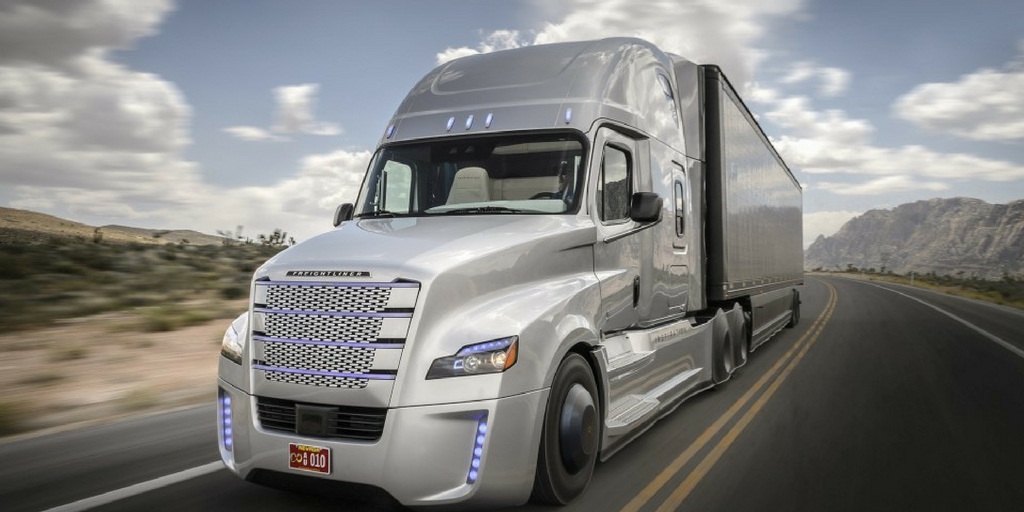
Startups and transportation juggernauts alike are entering the race toward the self-driving truck, but no two strategies look alike.
There will come a time in the not-so-distant future when — instead of using a CB radio to communicate with a freight driver — you will use a line of code. A recent study conducted by the White House concluded that at least 80% of trucking jobs will be lost to automated technology.
Companies such as Otto (Uber’s robot division), along with start-ups Starsky Robotics, Embark, and Drive.ai are championing the cause of self-driving trucks. These companies are hoping to capitalize on an industry that needs revitalization. With a shortage of about 75,000 jobs and a turnover rate that tops 90%, the current climate is ripe for change.
Self-driving doesn’t mean driverless
Trucking is a $700+ billion industry, with about a third of the costs going to driver compensation. It stands to reason that there is serious incentive to get this technology rolling out onto the highways, removing the need for drivers. However, so far, most plans don’t seem to involve going cold turkey.
Both Otto and Embark will have the automated system take over for the driver when the truck is up and running on the highway. Then once the truck exits, the driver returns to the controls. The benefit of this system is the ease of which the automated driver can navigate highways, as opposed to local roads. Additionally, this system will put less stress on the driver, who can rest while the truck is on the highway.
Starsky Robotics, while not looking to do away with drivers, wants to remove them from the trucks. Starsky’s trucks will be completely autonomous on the highway. Upon exiting, the job will be turned over to trained experts that remotely guide the trucks to their final destinations. Starsky believes by bringing the drivers off the road, and into offices, freights will run more efficiently and on time, while not putting undo stress onto drivers.
While the competition focuses on long-haul trucking, Drive.ai has begun testing automated freight services on around-town delivery vehicles, which it feels is an easier way to introduce its technology. The company says it is developing software to control trucks using a small computer that “learns” how to drive, rather than using complex computers programmed with every conceivable move the vehicle could make.
Bumps in the road
While testing is underway for many of these technologies, not every course has proved smooth sailing. Most notably, Waymo, Google’s self-driving car project, has filed a lawsuit against Uber, accusing the company of using trade secrets taken by Anthony Levandowski, after he left Waymo to found Otto.
Currently, it’s unclear which company will emerge as the leader in the race to automated trucking. What is apparent, though, is there’s no putting the genie back in the bottle.
Automation technology is only becoming more prevalent. With the trucking industry in its current state, it’s only a matter of time before self-driving trucks become the norm.
This article originally appeared on EBN Online.
Related posts:


by Elizabeth Hines | Jun 12, 2017 | Blog, Logistics, Strategy, Supply Chain
These podcasts bring the latest news and thought leadership in the supply chain and logistics industries right to your earbuds.
I used to think that podcasts were a hip form of new media that millennials used to further their iPhone addictions. Fast forward a few years, and the benefits of having news and entertainment in your earbuds has converted me to a podcast fan.
Podcasts are a series of digital audio files that listeners can subscribe to. Think of it as the DVR of your smartphone. Podcasts, like cable shows, come in all shapes and sizes. Their popularity has skyrocketed since the smartphone became as necessary as car keys, giving you to-the-minute facts and information, right in the palm of your hand.
If you’re looking to increase your podcast listening, here are five that highlight topics of interest to supply chain and logistics professionals.
5 supply chain and logistics podcasts

Talking Logistics is an online video talk show and blog featuring interviews with industry thought leaders and newsmakers by supply chain and logistics analyst Adrian Gonzalez.
Gonzalez runs the show like a conversation with smart friends, making it easy to follow. Featured guests include supply chain and logistics executives from leading manufacturing and retail companies, professors from leading academic institutions, executives from third-party logistics and technology companies, and authors. The show provides supply chain and logistics professionals an interactive and engaging platform to learn and network with other practitioners and thought leaders.
Supply Chain Insights, a research and advisory firm, hosts this weekly podcast that covers a variety of topics, from global thinking to voice of the customer. Many episodes focus on technology and innovation. Nearly all of Supply Chain Insights’ podcasts feature executives and experts sharing their logistics insights. Straight Talk focuses on delivering independent, actionable and objective advice for supply chain leaders.

The SupplyChainBrain podcast features in-depth conversations with industry practitioners, academics, consultants, and other experts from every imaginable aspect of supply chain management and international trade. New episodes of the podcast have been published every Friday since its launch in 2013, touching on important topics like retail shifts, blockchain innovations, labor shortages, and the Internet of Things.
A product of the leading magazine Inbound Logistics, this podcast provides relevant information within the supply chain management world, as told by influential thought leaders in the industry. Each episode features a different special guest, who brings his/her unique opinions regarding topics such as logistics, supply chain, cargo, freight, transportation, and education.
Cranfield University School of Management in Cranfield, England, has nearly 50 years of experience educating business leaders via masters, MBA, executive education, and consultancy programs. The Centre for Logistics and Supply Chain Management is celebrating 35 years of thought leadership in logistics, procurement, and supply chain management. The free podcast, Supply Chain and Logistics Management, covers topics such as logistics and transportation management.
Related posts:

by Elizabeth Hines | Jun 1, 2017 | Blog, Content Marketing, Marketing, Strategy
Today’s B2B buyer’s journey involves more research, more internet searches, and more social media.
We’ve said it before: The B2B buying process has changed, and you need to adapt. The vast amount of information available on the internet has afforded buyers a level of self-sufficiency that renders traditional sales models moot. It drives the need for new strategies, like content marketing and social media marketing.
How can supply chain and logistics businesses adjust to the new way of doing things? The latest B2B Buyer’s Survey offers insight into how B2B buyers are finding vendors, engaging with them, and — ultimately — deciding to work with one. Some of the statistics are very telling and give vendors a good idea about where they need to invest their time and money in order to get buyers’ attention
10 stats about the B2B buyer’s journey
1) Length of buying process
The B2B buying process is becoming longer and more complex because the majority of buyers (82%) are using more sources to research and evaluate products and services, and they are spending more time in the research phase itself.
2) Web search is first
62% of B2B buyers say that a web search was one of the first three resources they use to learn about a solution.
3) Online eventually
In fact, in a different study, 94% of buyers reported using online research at some point in the purchasing process.
4) Searching for what?
71% of B2B researchers start with a generic search — rather than searching for a particular company.
5) How many searches?
B2B researchers do an average of 12 searches before engaging with a specific brand’s site.
6) Self-sufficiency on the sales path
Buyers are 57% of the way down the sales path by the time they engage with a brand’s website, meaning they have already spent a fair amount of time educating themselves with the enormous amount of information available to them on the internet.
7) Social media plays a role
And content isn’t limited to your website: A vibrant social media presence helps buyers conduct their research. In fact, more than half (53%) of B2B buyers report turning to social media to make buying decisions.
8) (More than ever)
What’s more, more than a third (34%) say they are spending more time this year than last using social media to research vendors and solutions.
9) LinkedIn is B2B’s network of choice
LinkedIn is reportedly the most impactful to the research process. 81% of respondents said it was very important or somewhat important.
10) But don’t discount video
And, believe it or not, video sites like YouTube and Vimeo are playing an increasingly important role in the B2B buyer’s journey, with 60% of respondents ranking them very important or somewhat important.
Related posts:

by Jennifer Hart Yim | May 10, 2017 | Blog, Current Events, Logistics, Strategy, Supply Chain
Updated January 16, 2025
Starbucks’ closely managed supply chain may be the key to the premium coffee giant’s success.
Highlights:
- Starbucks attributes much of its success to its vertically integrated supply chain, managing every step from coffee bean sourcing to final cup, allowing for consistent quality control and ethical sourcing practices across its global operations.
- Unlike its competitor Dunkin’ Donuts, which outsources most operations, Starbucks directly manages relationships with 300,000 coffee growers worldwide through its Coffee and Farmer Equity (C.A.F.E.) standards, ensuring both quality standards and ethical practices.
- This supply chain strategy has contributed to Starbucks’ significant market dominance, with the company generating $32.2 billion in revenue in 2023 and operating nearly 37,000 stores globally, far outpacing Dunkin’ Donuts’ presence and revenue.
The Secret is the Supply Chain, According to Starbucks
The international coffee giant has widely studied and acclaimed supply chain management practices, which, according to some, make Starbucks’ coffee and customer experience superior to those of its competitors.
So, what exactly is Starbucks doing differently than other international coffee retailers? Is its coffee truly better?
The Standards
Starbucks uses a vertically integrated supply chain, which means that the company is involved in every step of its supply chain process, all the way from the coffee bean to the cup of coffee sold to consumers. The use of a vertically integrated system means that Starbucks works directly with its nearly 300,000 worldwide coffee growers. The company believes that interacting directly with farmers ensures that all of its coffee beans will achieve the same quality and flavor standards.
Starbucks also works directly with growers because the company is committed to only selling ethically sourced, Fair Trade coffee. The company even has its own Coffee and Farmer Equity (C.A.F.E) standards and Coffee Sourcing Guidelines (CSG), which require that all suppliers must meet certain ethical, sustainability, and quality standards. Starbucks uses a stringent vetting process to ensure its growers meet and adhere to these guidelines.
Not only do the C.A.F.E. practices and CSG benefit Starbucks, they also provide advantages for suppliers. The guidelines protect workers’ rights and ensure that all growers have safe and humane working conditions. Suppliers also must adhere to minimum-wage requirements and commit to not using child or forced labor.
Lastly, as a part of its C.A.F.E. guidelines, Starbucks commits to providing its suppliers with special training and education programs. Starbucks’ direct interaction with growers, along with their sourcing and social responsibility standards, make suppliers feel like they are integral parts of Starbucks’ corporation. The close relationship and frequent communication between Starbucks and its suppliers, therefore, make the company’s supply chain less susceptible to major disruptions, such as overplanting or worker shortages.
The Process
After the growers pick and package the coffee beans, truckers drive the unroasted beans to ocean liners that ship the beans to six storage sites in the U.S. and Europe. The beans are roasted in these storage facilities and then packaged for shipment to Starbucks’ eight central, and forty-eight regional, distribution centers. By only using a handful of storage facilities, Starbucks can closely manage the sites’ operations and guarantee that all beans are roasted and packaged in the exact same way.
The company’s close control over the roasting process also ensures that Starbucks’ coffee tastes the same in all of its retail locations. Starbucks’ active participation in the supply chain also ensures that the distribution centers receive the products they need so they can fulfill orders and make their roughly 70,000 weekly deliveries on time.
The size and scale of Starbucks’ operations should make its supply chain inherently complex. In 2008, however, Peter Gibbons, the Executive Vice President of Global Supply Chain Operations, overhauled the company’s expensive, ever-growing supply chain into a streamlined, cost-effective process that relies on simple operational structures and metrics.
First, he grouped all supply chain jobs into four categories: plan, source, make, and deliver. Next, he developed a highly centralized logistics system that allows the company to better manage and coordinate its global network. Lastly, he implemented a binary, 0 or 1 “scorecard system” to assess all supply chain activities on four metrics: safety in operations; service measured by on-time delivery and order-fill rates; total supply chain costs; and enterprise savings.
Along with the simple tools and processes that Gibbons created, Starbucks also relies heavily on digital technology to manage its supply chain. The company uses an automated information system that allows it to monitor demand, inventory, capacity, and scheduling in real time. Therefore, Starbucks can quickly adjust its plans and operations as needed. Starbucks’ simple structure and management tools, as well as its use of digital technology, allow the company to achieve a high level of efficiency and agility, both of which are key to organizational success.
The Market
Starbucks’ biggest competitor in the international coffee market is Dunkin’ Donuts. In contrast to Starbucks, which owns its entire supply chain, Dunkin’ Donuts outsources its production processes. Dunkin’ Donuts relies on a third-party intermediary, National DCP, to handle the company’s supply chain operations.
Dunkin’ Donuts also franchises its manufacturing locations, as well as nearly all of its retail spaces. Conversely, Starbucks franchises less than 50% of its retail locations, and, as of March 2016, was no longer accepting applications for new U.S. franchises. Starbucks also uses few to no intermediaries to carry out its supply chain operations.
Unlike Starbucks — which is committed to using 100% sustainably grown, Fair Trade-certified coffee beans — Dunkin’ Donuts promises to produce its coffee as “sustainably as possible.” The company works with Fair Trade USA and the Rainforest Alliance to implement sustainable sourcing practices, as well as training programs for farmers. However, Dunkin’ Donuts only offers two permanent menu items that are Fair Trade-certified: 30% Rainforest Alliance Certified™ Dark Roast Blend and 100% Fair Trade Certified™ espresso.
While Starbucks’ critics may try to argue that the company’s supply chain model and social responsibility efforts are not true differentiators, the statistics tell a different story.
Starbucks was founded roughly twenty years after Dunkin’ Donuts, but the company is already much larger than its rival. In 2023, Starbucks generated $32.2 billion dollars in revenue, while Dunkin’ earned only $1.4 billion. Starbucks also has a larger global presence, with nearly 37,000 retail stores in 80 markets worldwide, compared to Dunkin’s 13,500 locations in 40 countries.
Starbucks also primarily markets to higher-income customers looking for a premium coffee experience, while Dunkin’ Donuts has traditionally retailed to more blue-collar consumers who want coffee on the go. Therefore, Starbucks’ clientele is willing to pay more for coffee that they perceive to be made from higher-quality, socially responsible sources. It used to be that Starbucks’ customers would also pay more for coffee in order to enjoy the amenities offered in the company’s coffeehouses, but even with a consumer shift towards drive-thru and mobile pick-up preferences, Starbucks’ customers seem willing to pay more for convenience. Because Starbucks’ patrons generally have higher disposable incomes than those of Dunkin’ Donuts’ customers, they are less likely to adjust their consumption patterns during economic downturns. Thus, Starbucks is less susceptible than Dunkin’ Donuts to major fluctuations in revenues that could result from negative macroeconomic swings.
The Future
While Dunkin’ Donuts loyalists, particularly those in New England, may never accept the merits of Starbucks coffee, majority opinion argues that Starbucks offers higher-quality beverages and better customer experiences. Statistics show that Starbucks is outperforming its rival, which is evidence of the success of a simple and efficient global supply chain. In fact, Starbucks, which is already larger than Dunkin’ Donuts both domestically and abroad, plans to open more new retail spaces than its competitor over the next five years.
Therefore, one question remains for coffee drinkers and market analysts: Does America actually run on Dunkin’? Or is Starbucks’ coffee really the fuel running our caffeine-crazed country (and world)?
We love writing about all things related to the supply chain, including Starbucks’ supply chain. Need quality content written for your supply chain business? We’re a content agency focused exclusively on working with companies like yours. Let’s chat.
This article is part of a series of articles written by MBA students and graduates from the University of New Hampshire Peter T. Paul College of Business and Economics.
Related posts:

by Elizabeth Hines | May 1, 2017 | Blog, Leadership, Strategy
Companies usually try to understand failure, but what could they learn from analyzing their successes, too?
“Success is going from one failure to another without loss of enthusiasm.” Winston Churchill
Failure is said to be inevitable, and we all know it to be true. Any new venture is built on the hope of success. But accepting and managing failure is key to actually obtaining success.
Companies have a responsibility to ask the tough questions when things go awry. We have all been in these meetings: we diagnose failures, and we dissect the process, tools and staff involved to get to the root of the problem. Unfortunately, most companies only step back and really dive into what happened when something bad happens.
But what if companies took the same approach when something went right?
Focusing on the lessons in success
Companies are all a work in process. We learn as we go, and that learning should include understanding our successes. Shifting the focus from ‘what went wrong’ to ‘what went right’ creates a foundation for being able to recreate success in your organization.
Identifying and analyzing the components of a successful process can be the first step in moving into this new mindset. Paul Michelman, editor in chief of the MIT Sloan Management Review, experimented with dissecting his the publication’s successes and quickly discovered that their best processes start with transparency. Michelman wrote:
We plan a pipeline of content that is stored in a document accessible by the key participants. We track each content item’s progress on a shared project management platform. The few times we encounter bumps, a lack of information sharing is almost always at fault.
Though Michelman admits his research is unscientific, the key factors he has identified in their success stories has helped his business focus on what’s working, instead of waiting to dissect failure.
Technology can help
In today’s world, there is no end to the amount of data you can collect on your business. Your company’s digital presence is an easy place to start.
Tools like Google Analytics can give you advanced insight into how prospects are interacting with your company online. You can analyze how people are finding your business, and how they’re moving through your website all the way to making purchases. In other words, you can begin to analyze all of the little successes that make your business turn. How can you replicate that success on new projects and processes?
When things are going well, most companies don’t see the need to reflect on what happened, what went right. But don’t let this opportunity slip by. You should examine failures, but you should also look closely at successes. Take the time to brainstorm with your team on what you’re doing well and how you can keep up that success while you plan for future growth. —
Related posts:

by Elizabeth Hines | Apr 20, 2017 | Blog, Manufacturing & Distribution, Strategy, Supply Chain
Industrial product buyers are changing how, why, and where they buy. Are you prepared to accommodate their preferences?
Distribution has always been an industry built on relationships. The loyal customer favored companies where they developed strong working relationships with a sales representative.
But recently distributors have felt a shift in the tide. Buyers have grown impatient with one-on-one sales relationships and quickly embraced the convenience of buying directly from manufacturers, for one. Distributors are left scrambling to keep up with such trends.
So how do distributors stay ahead of the game?
UPS recently conducted a study of the behaviors, preferences and perceptions of industrial product buyers. It found four major market forces driving change: customer demands, direct-from-manufacturer purchasing, e-commerce, and millennials. Additionally, the study offered up a few interesting takeaways we thought were worth highlighting.
5 trends in industrial product buying
1) Purchasing drivers
The study asked for the top five factors that are most important when purchasing industrial supplies from buyers’ preferred distributor size. Though “best prices” was a top contributing factor across the board, as you can imagine, other answers varied from small distributors to large.
For those purchasing from smaller distributors, 58% of customers ranked personalized service as most important. Among those preferring large distributors, 61% of buyers wanted a wide selection of products.
Takeaway: There is a strategic opportunity for mid-size distributors to cater to both types of buyers. Mid-size distributors focusing on larger selection with personalized service can offer customers the best of both worlds.
2) Friends stick with friends
Word of mouth is still the top tool buyers use to research a new distributor. Studies have shown that consumers trust recommendations from people they know more than any other form of advertising, and the same is true for distribution. Personal references and word of mouth are heavily influencing buyer trends.
Takeaway: Distributors need to have their ears to the ground and really focus on what buyers are saying. If the word on the street is that your company needs to make changes, make them. You want to consumers raving about your company, so others will follow suit. Also, consider the value of review sites.
3) Internet is king
The importance of the internet is old news. But UPS’s study found a substantial jump in buyers’ going online to purchase industrial supplies. In 2013, 57% of buyers were hitting the web, and that number grew a significant 9% in just four years.
Takeaway: Suppliers need to make sure that their websites are a one-stop shop for customers. Buyers need to be able to find answers about products, confirm product details, and access their negotiated prices all online. Spending the time and money to update your website is key to giving buyers a preferred way to make purchases.
4) User-friendly everything
Along with wanting to make purchases online, industrial product buyers want the ease and convenience of user-friendly websites. 72% of buyers said they would shift their spending to a different distributor with a more user-friendly website, and that number increases to 85% with buyers age 21-30. These findings confirm the shift from relationship-based buying to the experience-driven trend.
Takeaway: Brand loyalty is no longer based solely based on product quality and personable sales staff. Distributors need to take into account convenience, speed, and a good customer experience. What appeals to customers is the ease of their online service. Staying ahead of trends will involve constant maintenance of your website and its usability.
5) Cross-channel consistency
Industrial product buyers may be making most of their purchases online, but they are definitely checking in with friends and social media before making any decisions. Oftentimes websites don’t provide enough information, and, by default, they rely on other channels to confirm details before making purchases.
Don’t let users find conflicting messages from different resources. Cross-channel consistency will give your company an edge on the competition.
Takeaway: Make sure that your off-site and onsite messages are clear across all channels. Examining the buyer experience on and offline — and making sure that all channels are communicating the same message — can elevate your company’s position among your competitors.
Related Posts:
