by Jennifer Hart Yim | Feb 14, 2019 | Blog, Content Marketing, Internet of Things, Logistics, Marketing, Supply Chain
Rogue Ales believes that their “Ground to Glass, Grow your Own Revolution” is a key tenet to their success. The company leverages the Internet of Things (IoT) to ensure that their supply chain is able to deliver the highest-quality ingredients to their breweries just in time.
Highlights:
- Consumer desire for freshness and high quality is influencing the beer brewing industry.
- Rogue Ales owns Rogue Farms giving the brewery a unique advantage in being able to produce specialty ingredients.
- The Internet of Things has enabled Rogue to capture and act on the data surrounding their supply chains.
Rogue Ales, headquartered in Newport, OR, is an alcoholic beverage company founded in 1988 that produces beer, wine, cider, and distilled spirits. Their ales have won over 1,800 awards at various brewing competitions.
Rogue’s brewing operation is unique in that the company’s subsidiary, Rogue Farms (founded in 2008), grows all of the ingredients used. The company believes that their “Ground to Glass, Grow your Own Revolution” is a key tenet to their success. Rogue Ales leverages the Internet of Things (IoT) to ensure that their supply chain is able to deliver the highest-quality ingredients to their breweries just in time.
The trend toward freshness
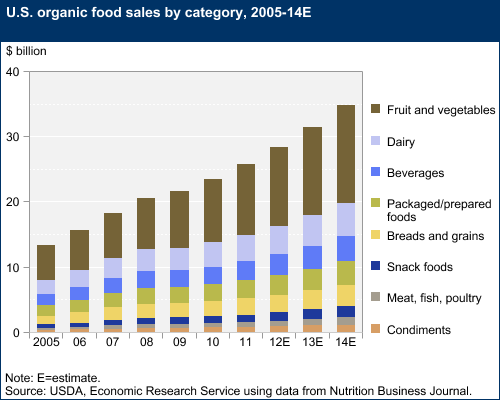
According to AT Kearney, 93% of consumers consider freshness to be the most important criterion when purchasing foods. According to the USDA, the sale of organic foods in the U.S. has more than tripled from approximately $12B in 2005 to over $35B in 2015 (data for 2016-2018 was not immediately available).
Consumer desire for freshness and high quality is influencing the beer brewing industry. According to the American Brewers Association, the number of craft breweries in the United States has increased from 122 in 1973 to over 6,300 in 2017.

As the competition between breweries intensifies, brewers are constantly looking for key ways to differentiate their beers from their competitors in this $111.4B market. Most beer sales are through microbreweries (defined as a brewery producing less than 15,000 barrels per year and at least 75% of beer sold off-site via distributors or wholesalers). Rogue Ales has made freshness a key value-add differentiator for its brand, selling over 325,000 gallons in 2016. In a Market Watch article, Rogue’s president, Brett Joyce, says:
What it means is that we have to get better all the way around. The quality has to go up. Just having products isn’t enough. You better have a strategic plan to go to market, retailer support, good follow-up and good sales people. It’s a real business now.
With the establishment of Rogue Farms in 2008, Rogue began producing their own ingredients, breaking tradition with most breweries, who acquire ingredients from traditional wholesalers. Rogue has a 52-acre hop farm, located approximately two hours from the brewery, where it produces its entire hop supply. Rogue states that:
Growing hops is an expensive and time-consuming endeavor, but it also helps to guarantee our supply and quality while allowing us to keep our Brewmaster, John ‘More Hops’ Maier, happy with unique, aromatic hops.
The control Rogue Ales has over Rogue Farms gives the brewery a unique advantage in being able to produce specialty ingredients for its core and specialty beers. At Rogue Farms, Rogue grows or produces:
- 10 varieties of hops
- Two varieties of malting barley
- Rye
- Pumpkins
- Marionberries
- Jalapeños
- Honey
The challenges of using fresh “wet” hops in beer
A basic beer recipe only has four ingredients: malted barley, water, hops, and yeast. Of these ingredients, hops are the most difficult to source, store, and transport due to their perishability. Most brewers use pelletized, dried, hop pellets. Rogue uses fresh (or “wet”) hops in their ales, harvested from Rogue Farms. Fresh hops give their beer a fresher taste, as the hops’ aromatic qualities are not damaged by drying and pelletization.
Fresh hops, once harvested, must land in a brew vat within 12 hours and cannot be exposed to excessive heat, air, or humidity during transport or their volatile aroma compounds will degrade and produce aromas of “skunk” and “compost”. To ensure the highest quality of hops, Rogue has turned to technology to ensure that its supply chain is delivering the freshest possible hops to the brewery.
Using the Internet of Things to build quality into Rogue’s supply chain
The vertical integration of Rogue Ales and Rogue Farms gives Rogue a unique advantage in being able to leverage new technologies to ensure it sources the highest quality ingredients possible directly from their farm to their brewery. Rogue Ales uses Intel’s Connected Logistics Platform to manage its hops supply chain. Intel’s platform is a logistics management solution that couples Internet of things (IoT) devices with a cloud-based data analytics system. These IoT devices are one-time-use sensor tags that attach to shipments and collect data (e.g. temperature, humidity, location, etc.). This data is sent over a proprietary wireless protocol to a central server where the data is aggregated and analyzed in real time.
The system tracks shipments and collects data during every facet of the supply chain, ensuring that quality thresholds are maintained and any problems with the shipped goods can be immediately corrected (for example, if one of the trucks runs into traffic, the others can be intelligently rerouted). It is estimated that 30% of all perishable products shipped in the United States become spoiled during their journey from the farm.
After the wet hops are picked, Rogue attaches three trackers to each shipment: at the top, middle, and bottom of the bale of hops. These trackers measure temperature, humidity, and location. Rogue can ensure that the hops have been kept in the proper environment and that they have not spent too much time in transit.
If a shipment does not meet quality standards, it can be discarded before it is used in a beer batch, reducing waste and ensuring that Rogue does not waste its precious brewing capacity brewing beer that will later need to be dumped for quality reasons. The location of the shipment is updated every ten minutes, and once the hops have reached the halfway point, Rogue starts the brewing process. This ensures that the hops arrive just in time and go directly from the truck into the brewing kettle.
The Internet of Things has enabled companies like Rogue to capture and, more importantly, act on the data surrounding their supply chains. Companies are able to make smart decisions that bring cost savings and flow directly to their bottom line.
This article was written by Zachary Richards, an MBA student at the Peter T. Paul College of Business and Economics at the University of New Hampshire. Zach is a Software Engineer at Pegasystems, Inc., where he specializes in back-end Java development, data structures, and agile development practices. He graduated from Worcester Polytechnic Institute in 2016 with a B.S. in Computer Science.
Related posts:

by Elizabeth Hines | Feb 13, 2019 | Blog, Content Marketing, Marketing, SEO
Search engines are constantly changing, but these 5 tips will ensure that supply chain marketers can boost SEO in 2019.
Highlights
- People are changing how they search, and search engines are adapting accordingly.
- Simple changes to the structure of your site can have a big impact on your search engine rankings.
- Sites rich in quality content, like blogs and video, are poised to rank high for relevant search queries.
If there’s one constant when it comes to writing to boost Search Engine Optimization (SEO), it’s change. As users change the way they search online, search engines are continually adapting their algorithms to meet their needs. While it’s easy to get overwhelmed, it’s important for supply chain marketers to stay up-to-date and adapt their content strategy to boost SEO.
The year is just getting into full swing, and it’s a great time for savvy marketers to look ahead and make strategic decisions for SEO in 2019. These five tips will help you get ahead of the curve.
5 ways to boost SEO in 2019
1) Cluster content
Gone are the days of keyword rankings. Rather than prioritizing keyword focus, search engines have shifted to rewarding sites that produce strong content and arrange it in focused, niche topics.
Cluster content, a method of on-site SEO, might sound daunting. But it doesn’t require reinventing the wheel, just changing the structure of your site. For a detailed look at topic clusters and pillar content, check out part three of our four part series on writing for SEO.
We’ll give you the short version here: Select several core topics that most closely align with your brand, and reflect the knowledge you have to share. Evaluate your existing content, and categorize it based on which core topic or topics it falls under. Going forward, keep these core topics top of mind when planning and creating content. Next, arrange your site to reflect core topics with content clustered and linked from pillar pages.
2) Use header tags
As they become more and more sophisticated, search engines increasingly mirror human preferences. It doesn’t take an expert to tell you that text is more accessible to the eye when broken up by relevant subheadings — and search engines are no different. Headings make your text easier to skim and allow search engines to pick out content relevant to search queries.
Subheadings make your site more visually appealing, orienting readers and providing structure within your content. Remember that you’re creating headings for the dual purpose of guiding readers and optimizing for search engines. For this reason, stick to headings that are short and informative, reflecting the content below them, rather than teasing your readers with click-baity phrases.
3) Blog
This one is evergreen. We’ve been writing for years about how blogging is crucial for supply chain companies, for all kinds of reasons — not the least of which is SEO. If increased lead generation and site engagement isn’t reason enough, you should know that blogging is one of the best ways to boost SEO.
A blog is your space for high-quality content that’s fresh, well-researched, and relevant. If you’re choosing your topics based on the needs and preferences of your target audience, chances are, you’re creating content that is perfectly aligned to search engine queries.
4) Make sure your page speed is high
Page speed is crucial for boosting SEO. If your page is loading slowly, Google logs it, and your ranking suffers. Not only that, visitors who do click on your site will be frustrated and turn away.
In fact, research shows that 40% of visitors will abandon sites where the page takes longer than three seconds to load.
One of the best ways to improve page speed is to switch to HTTP/2. If you haven’t already, switching your site from HTTP/1.1 (which has been the norm since 1999) is crucial. HTTP/2 was first published in 2015, with the goal establishing a faster, more secure internet. Search Engine Journal has published this great guide to HTTP/2, where you can learn more about the benefits, and how to switch.
5) Video
We’ve been talking about the benefits of video for a while now. Having video on your landing page will robustly improve your SEO. Video increases conversion rates, improves bounce rates, and boosts overall time on sites.
Search engines use bounce rate to rank pages — a low bounce rate and high user retention rate are indicators of strong content and high relevance to your target audience. Consequently, Google is strongly emphasizing these metrics in its ranking algorithm. Video keeps users on your site better than just about anything else and is therefore one of the most effective ways to boost SEO.
Related posts:


by Elizabeth Hines | Feb 12, 2019 | Blog, Marketing, Social Media, Supply Chain
Transparency in your supply chain through social media outlets can give a look inside your company in a way that your customers are craving.
Highlights:
- Customers have been demanding more visibility into supply chains of the products they purchase.
- Through social channels like Twitter , LinkedIn , and Facebook, companies are greatly enhancing their two-way communication with customers and sharing information with their stakeholders.
- The top reason that supply chain companies are choosing to participate in social media is to increase the visibility of their company.
Supply chain management is such a complicated web of factors that most companies choose to keep operations behind the scenes and unveil a finished product with an intense marketing roll-out.
But what if that’s backwards and an outdated approach to marketing? (Hint: It is.)
The complexity of supply chain management
There is no question that SCM can be deeply and frustratingly complex. Consider TechTarget’s definition of SCM: “the broad range of activities required to plan, control and execute a product’s flow, from acquiring raw materials and production through distribution to the final customer, in the most streamlined and cost-effective way.”
With so much intense analysis at every step, the details your supply chain management (SCM) team considers can seem endless, and the impressive knowledge they hold is certainly not something most people can understand.
Or can they? What if that mindset – the one that thinks that your SCM is so complex that it wouldn’t interest or be able to be grasped by your customers – is wrong?
In fact, what if it’s so wrong that you are missing something important? Customers today want to understand your supply chain.
Transparency in your supply chain
A common misconception is that most customers are interested in a final product. Of course, your final product better be outstanding, but there are other factors fueling today’s buyers, business-to-business (B2B) customers included.
For a few years now, customers have been demanding more visibility into supply chains of the products they purchase. For example, they want to ensure sustainable practices around the earth’s scarce resources, to know where their food is sourced, and to confirm ethical pay and conditions for any laborers involved. B2B buyers are no exception. They want their vendors to be more than just a final product too, and are constantly searching for value outside the sales funnel.
Transparency with social media
What if you shared what fueled your daily SCM decisions with your customers, stakeholders, and suppliers? Not every last complex detail…but some of them, and the intangibles too:
- What drives SCM decisions besides cost?
- Who is your SC team?
- Where are you sourcing?
- Why do you do things as you do during production?
Transparency of SCM through social media outlets can give a look inside your company in a way that your customers are craving. Through social channels like Twitter , LinkedIn , and Facebook, companies are greatly enhancing their two-way communication with customers and sharing information with their stakeholders.
Of course, the benefits of social media to SCM don’t stop there.The supply chain needs social media for enhanced customer communication, increased industry education, and an ability to socially monitor the market. Social media has the capability to empower your supply chain in multiple ways.
According to a survey we conducted, the top reason that supply chain companies are choosing to participate in social media is to increasing the visibility of their company (95%). Don’t simply focus on your final product(s) and leave out your supply chain! When you make your supply chain transparent to your customers and stakeholders, everyone wins.
This post originally appeared on EBN Online.
Related posts:

by Elizabeth Hines | Feb 7, 2019 | Blog, Content Marketing, Logistics, Marketing, Social Media, Supply Chain
Looking to boost followers on Instagram? These tips will help supply chain marketers grow their following, build brand awareness, and nurture a loyal audience base.
Highlights
- Instagram has over 500 million daily users.
- Fake accounts won’t help in the long run.
- Growing authentic followers requires commitment and strategy.
While it’s true that Facebook is a favorite for B2B marketing, don’t overlook Instagram. Over 500 million users browse the app daily — some of the most engaged audiences on the web. This is absolutely a powerful resource for supply chain marketers, and if you aren’t already, it’s time you start tapping into it.
But as with all social media platforms, there’s a right and a wrong way to go about using it. When it comes to Instagram, getting the most out of the platform has a lot to do with boosting followership.
Keep in mind that recent studies have shown that roughly 48 million Instagram users are fake. Inflating your audience with fake followers won’t serve you well.
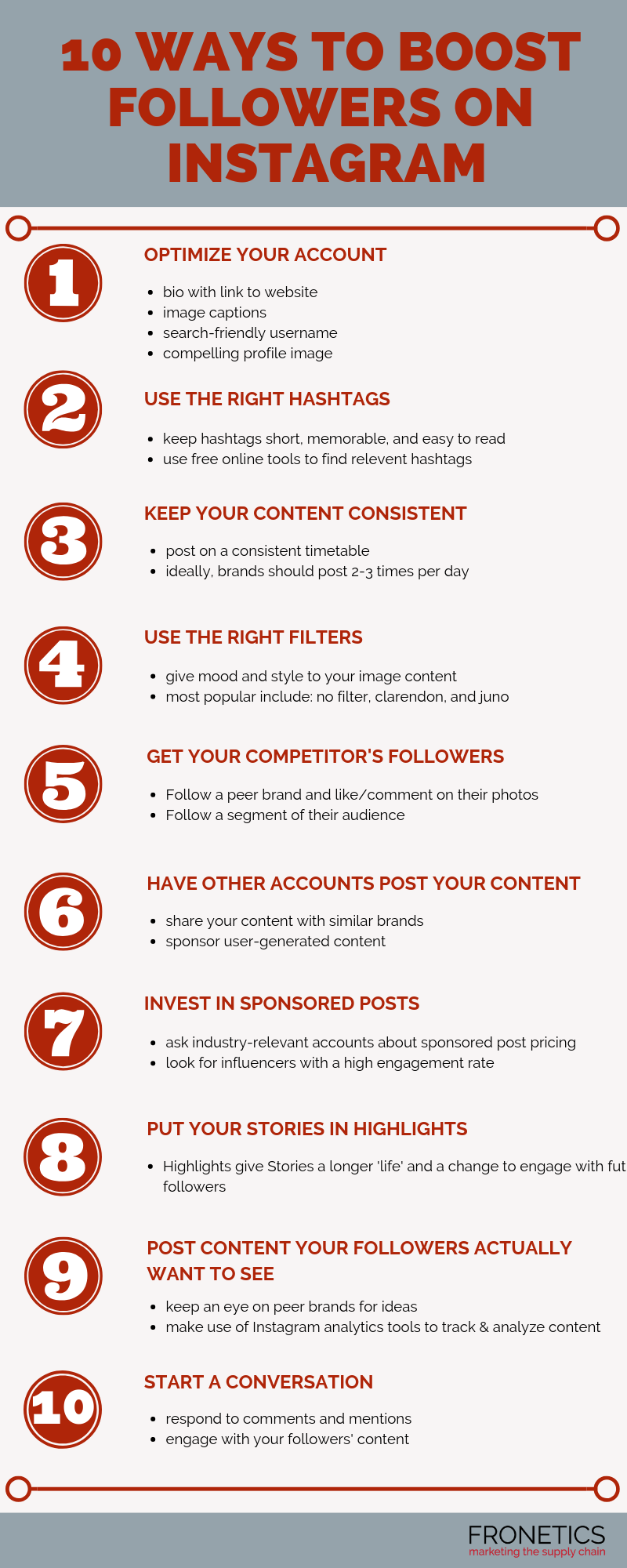
Boosting engagement and growing your following takes time and strategy. The 10 tips in our infographic below will help you get the most out of Instagram, building an authentic, engaged audience.
10 tips to boost followers on Instagram
(Made with Canva)
1) Optimize your account
Before we get to anything fancy, take a step back and make sure your Instagram account is fully optimized. This means you need:
- a bio with a link to marketing or product pages related to a specific keyword or hashtag
- image captions, which can reference the link in your bio
- a search-friendly username
- a compelling profile image that reflects your brand
2) Use the right hashtags
One of the most effective ways to grow your Instagram following is to use hashtags effectively. Since Instagram gives users the ability to follow hashtags that interest them, and they function as links to other relevant content, choosing the right hashtags is the ideal way to reach and engage your target audience.
Keep an eye on accounts of peer brands to stay up to date with the best hashtags to be using. The most effective hashtags are short, memorable, and easy to read. You can also use a free online tool like InconoSquare or Websta to find relevant hashtags for the supply chain and logistics industries.
3) Keep your content consistent
Posting on a consistent timetable is crucial to maintaining an active following. Posting irregularly means you risk your followers forgetting about you. And posting all at once can annoy and drive followers away. Ideally, brands should post 2-3 times a day. For more, check out our guide to when to post on social media.
4) Use the right filters
We all know that playing with filters is fun. These lighting and color presets offered by Instagram have the potential to create mood and style in your image content. According to Iconosquare, these 10 filters are currently the most popular on Instagram. And it turns out that the filters you choose really do have an impact on engagement.
- Normal (No Filter)
- Clarendon
- Juno
- Lark
- Ludwig
- Gingham
- Valencia
- X-Pro II
- Lo-fi
- Amaro
5) Get your competitors’ followers
Maybe it sounds like a dirty trick, but hear us out! Users who have already shown an interest in similar brands to yours are an ideal audience base. Engaging with them is a great way to grow your own following. Identify a peer brand with a healthy Instagram following; follow a segment of their audience; and like or comment on their photos. Keep track of how many users follow your brand back.
6) Have other accounts post your content
Operating on the principle that followers of similar accounts to yours are an ideal audience base, getting these accounts to post your content is a great way to boost your followership. One way to do this is to sponsor user-generated content to get your brand in customers’ feeds. For example, hold a photo contest related to your brand, encouraging followers to post and caption your content.
7) Invest in sponsored posts and product reviews
Optimizing your account and following Instagram best practices will go a long way toward getting authentic followers. But to really boost your followers on Instagram, it pays to take advantage of influencer marketing on Instagram. Create a list of large accounts in your industry, follow them, reach out to their marketing team, and ask about sponsored post pricing. Be on the lookout for influencers with a high engagement rate relative to number of followers.
8) Put your Stories in Highlights
In addition to its Stories feature, Instagram now lets users create a featured group of “Highlights” in various categories on their profile. Stories have only a 24-hour lifespan, so featuring your most effective Stories clips in Highlights gives them a second life and a chance to engage future followers. One of the best features of Stories and Highlights is that they allow brands to view and analyze how users have viewed and interacted with their content.
9) Post content your followers actually want to see
This one may sound painfully obvious, but it’s harder than it looks. Because brands need to publish content consistently to maintain an active Instagram following, it can be extremely difficult to generate fresh, interesting content consistently. There’s no easy trick to this one. Keep an eye on peer brands, and make use of Instagram analytics tools to track, analyze, and benchmark Instagram content.
10) Start a conversation
It’s easy to forget that the fundamental benefit of social media is that it’s social. Users want to be part of a conversation. Encourage your followers to interact with you on all your social media platforms, including Instagram. This means responding to comments and brand mentions, as well as engaging with your followers’ content.
Final thoughts
Instagram is an extremely effective tool for supply chain marketers. These 10 tips to boost followers on Instagram will help you create and nurture a loyal, engaged audience base. In turn, an effective Instagram presence has the potential to grow brand awareness, improve your reputation, and generate qualified leads.
Related posts:

by Elizabeth Hines | Feb 6, 2019 | Blog
Digital marketing has become essential to creating brand awareness, educating audiences and building credibility with customers. Here are the latest trends for 2019.
Highlights:
- Digital marketing has become essential to creating brand awareness, educating audiences and building credibility and trust with customers.
- Video is currently the most popular form of content being consumed online today.
- Peers and colleagues are the third most influential source of information for business to business (B2B) purchasing, right behind online searches and your website.
Video transcript:
Hi I’m Stacia Pathiakis. I’m an account manager at Fronetics and today I’ll going to be talking to you about six trends in digital marketing for the supply chain in 2019.
Digital marketing has become essential for creating brand awareness, educating audiences and building trust and credibility with your customers. Supply chain and logistics companies increasingly see the value in digital marketing. They’re increasing their budgets and it’s important to understand what the trends are for the upcoming year.
Here are six trends to consider when planning your 2019 strategy.
First, video. Video is currently the most popular form of content being consumed online today, and video marketing will continue to add substantial value in the upcoming year. Use video to teach your audience something that is worthwhile for them to know.
- Chatbots. Chatbots are automated messaging apps that simulate human conversation. They’ve become more popular in the past year than social networks.
- Voice search. Voice search is becoming an increasingly prevalent. It’s a means for people to search for the content they’re looking for using voice recognition. A good content marketing strategy should consider how your customers will be using voice search for information about in your industry.
Next is long-form content. Long form content includes such things as white papers, case studies, and longer form blog posts. Many industries, including supply chain and logistics industries, are saturated with short form content. Long form content provides a means of getting more in-depth information to your customers.
- Brand ambassadors. Peers and colleagues are the third most influential source of information for business to business (B2B) purchasing. And there’s nothing more credible than a friend who speaks highly of their company’s services and products.
- Market influencers. Market influencers is a form of marketing that focuses on individuals rather than the market as a whole. Basically, marketers identify individuals who would have influence over a larger group and target them specifically in their digital marketing campaign.
The beginning of the year is a great time to review your marketing strategy to make any changes for the upcoming year. For more tips on boosting your digital marketing strategy in 2019, visit us at fronetics.com.
Related posts:

by Elizabeth Hines | Feb 5, 2019 | Blog, Content Marketing, Logistics, Marketing, Supply Chain
Our readers voted Cerasis, Women in Trucking, and Hollingsworth as the top 3 logistics and supply chain blogs of 2019.
You voted, and the results are in! Cerasis is your number one favorite blog of the year, with Women in Trucking and Hollingsworth coming in second and third.
We love hearing what blogs you enjoy reading and find valuable. There are lots of great industry options, so we know it’s not easy to narrow down your favorites. We had lots of great responses, but only Women in Trucking held its spot on our list of the top logistics and supply blogs from 2018 and 2017.
Aside from Women in Trucking, what did remain consistent from previous years is the quality of the content and the consistency of posting by the three winners. These key components have remained invaluable across all successful logistics and supply chain blogs.
Here are the top 3 logistics and supply chain blogs of 2019.
1. Cerasis
As a third-party logistics company, Cerasis works to decrease freight management inefficiencies and to provide maximum hard and soft cost savings for their customers in the process of shipping LTL (less than truckload) or truckload freight and small package freight. The blog focuses on transportation industry trends and logistics solutions with relatable topics and insightful content.
2. Ellen’s Blog for Women in Trucking
The Women in Trucking Association is a non-profit organization focused on encouraging the employment of women in the trucking industry, promoting their accomplishments, and minimizing obstacles. President and CEO Ellen Voie’s blog offers thought-provoking insight on topics from best practices to becoming a thought leader in a mostly male dominated industry. Her years of experience and passion for advancing women’s positions within the trucking industry make her blog invaluable to readers. For the third year in a row, this blog has been one of our readers top favorites due to the relatable topics and insightful content, such as family problems stemming from job-related realities and assimilating to trucking culture.
3. Hollingsworth
Utilizing best-in-class warehouse management technology, Hollingsworth offers complete, real-time visibility of the supply chain. The blog focuses on topics ranging from complex order fulfillment strategies to best practices for optimizing supply chain management. Industry tips, new technologies, and the latest strategies are just some of the topics covered in the articles.
Runner up: Argentus
Argentus, a leading supply chain recruiting firm, pulls collective expertise to good use to ensure clients are provided with the best talent available at all levels. Argentus’ blog is a go-to source for posts on talent, leadership and supply chain employment trends. Whether you’re looking for tips on hiring industry leaders, retaining your top talent, or promoting professional development, Argentus’ blog has you covered. It also regularly features guest bloggers from verticals throughout the supply chain.
Related posts: