by Elizabeth Hines | Sep 5, 2019 | Blog, Logistics, Marketing, Social Media, Supply Chain
Instagram Stories offers paid advertising delivering targeted content to B2B buyers and building brand awareness with potential customers.
Highlights:
- As the number of people using stories has grown, so has the number of businesses using the format to connect with their audiences on social media.
- As more people browse Stories, you can show your ad to the maximum number of people possible using this format.
- You can get more eyes on your video content by posting videos on Instagram Stories.
Video transcript:
I’m Elizabeth Hines from Fronetics and today’s topic is paid advertisements on Instagram Stories.
Instagram Stories are the latest social media trend. As the number of people using stories has grown, so has the number of businesses using the format to connect with their audiences on social media.
Story ads represent an alternative to News Feed ads, which, though still effective, had lost a bit of novelty. Here are 3 reasons to start using Instagram Story ads:
1) Brand reach: As more people browse Stories, you can show your ad to the maximum number of people possible using this format.
2) Traffic and conversions: Send more people to your website, where they can convert to a lead.
3) Video views: Stories are a great platform for video. You can get more eyes on your video content by using it in this channel.
The rise in popularity of Instagram Story Ads tells an interesting, ahem…story. People are interacting more and more meaningfully with brands on their mobile devices and they increasingly want to do so in a format that is easy, convenient, and engaging.
If you want help setting up your Instagram Ads, visit us at fronetics.com to learn more.
Related posts:
by Elizabeth Hines | Sep 4, 2019 | Blog, Content Marketing, Marketing, Strategy
The biggest challenges for B2B marketing, according to a recent report? Finding leads that convert and engaging the right target audience.
Highlights:
- Measuring social media ROI is a challenge for 58% of respondents, and 39% report that proving ROI is the biggest hurdle to securing C-suite buy-in.
- Only 23% of brands have a dedicated social media team.
- 60% of marketers report content marketing is their most valuable technique for lead nurturing.
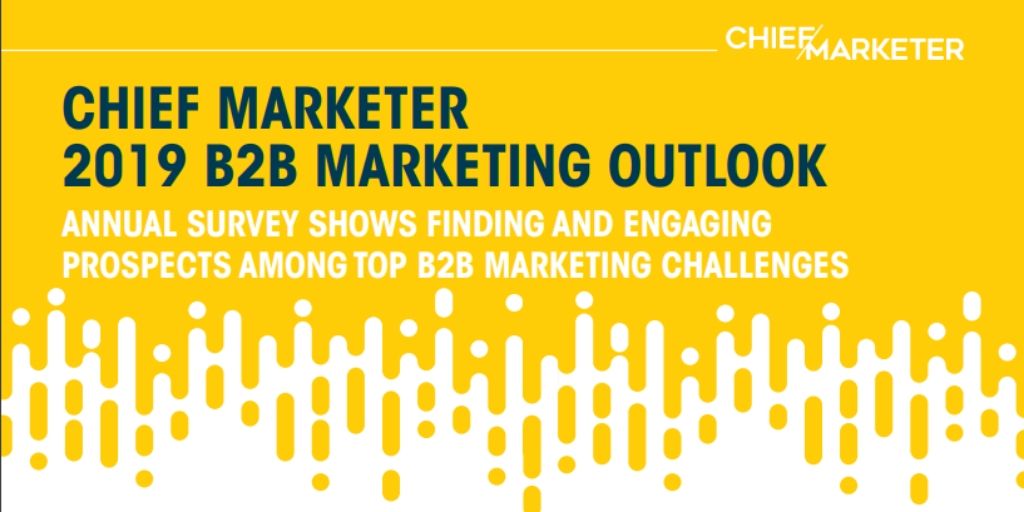
Chief Marketer’s 2019 B2B Marketing Outlook report is out, and it’s full of revealing statistics for B2B marketers industry-wide. The survey studied 209 B2B marketers in more than 20 verticals, getting a bird’s eye view of biggest challenges and trends in B2B marketing.
Here are the top 10 stats you need to be aware of.
10 B2B marketing stats from Chief Marketer’s 2019 report
1) For 58% of respondents, measuring ROI is the top challenge surrounding social media marketing.
Measuring social media ROI is notoriously difficult, though certainly not impossible. For well over half of the survey respondents, it proved the greatest challenge when it comes to social media.
65% of respondents reported engagement as one of their biggest social media challenge, while 45% cited the challenge of having enough content. Adequate bandwidth to respond to social followers and post frequently and inadequate social budget (24% each) were lower on the list of social concerns.
2) Only 23% of brands have a dedicated social media team.
We’ve written before about how social media management is a herculean task that falls all-to-often to an overworked marketing team. Chief Marketing’s survey found that, for a vast majority of B2B brands (75%), their marketing team is in charge of maintaining social media presence.
Even as social media is becoming increasingly effective at ushering leads through the sales funnel, only 23% of brands surveyed have invested in a dedicated social media team, while 15% are outsourcing their social media management.
3) Articles/blog posts and reviews/customer testimonials are tied as the two most effective types of content for moving prospects through the sales funnel.
45% of respondents reported that articles and blog posts, as well as reviews and customer testimonials, are the most effective content types for moving prospects through the sales funnel.
Following closely behind, 32% reported whitepapers and 31% reported video as most effective. Partner content, at 26%, came next, while social media is gaining efficacy, coming in at 22%.
Respondents reported that for all content types, the visual aspects were key. For Informa Engage, for example, more visual content is performing well, says Tricia Syed, Vice President for Marketing Strategy and Execution. “In some markets, traditional whitepapers and webinars are still hugely popular, but we’re getting more visual with e-books [to illustrate] data.”
4) 39% of survey respondents reported being unable to prove ROI to C-suite as the biggest obstacle for getting approval for marketing expenditures.
Just as proving social media ROI is a poses a challenge for B2B marketing, proving overall content marketing ROI to win C-suite buy-in can be equally daunting. 39% reported it as the biggest hurdle to getting marketing expenditures approved.
46% of respondents cited the challenge of budgets that are focused elsewhere, while 33% reported that executives still don’t understand the need for marketing expenditures.
5) For 60% of respondents, content marketing is the most valuable technique for lead nurturing.
Content marketing is reported by 60% of marketers as their most valuable technique for lead nurturing. Email marketing led the pack at 62%, while in-person marketing took a close third place at 57%. When it comes to lead nurturing for B2B marketing, social media was relatively low on the list, reported by only 20% of respondents as their most valuable technique.
6) Only 22% of respondents have an in-house editorial team dedicated to content creation.
While content marketing is overwhelmingly reported by marketers as being a highly effective technique for generating, nurturing, and converting leads, relatively few brands have chosen to invest in a dedicated in-house editorial team for content creation. Instead, a whopping 80% of marketers are charged with creating their own content.
“That’s a surprising disconnect,” says James Furbush, B2B marketing manager of Lord Hobo Brewing. “I’m not surprised marketing teams are creating content, but if you’re going to be that focused on content marketing, having an editorial team is an important investment.”
Perhaps even more surprisingly, only 23% of respondents are taking advantage of the opportunity to outsource content creation, an excellent alternative for companies who are unable to afford a dedicated in-house team.
7) 42% say that their organizations will increase martech budgets in 2019.
Martech, or the fusion of marketing and technology, is taking over B2B marketing. 42% of survey respondents reported that their martech budgets will be increasing in 2019, while 40% said that existing martech budgets will remain the same. Only 4% reported that they anticipate a decrease in martech budget.
When asked what types of martech they plan on investing in, 45% of respondents pointed to marketing automation, 43% to video, 40% to email, 38% to customer experience, and 37% to social media management.
Interestingly, despite all the discussion surrounding AI, only 9% of businesses surveyed report that they are considering investing in these technologies.
8) When it comes to generating new leads, 55% reported that finding leads that convert is their biggest challenge.
More than half of survey respondents pointed to the challenge of finding leads that ultimately convert as the greatest obstacle to generating new leads. 57% reported that their biggest challenge is getting targeted prospects to engage with their brands.
What’s interesting about these numbers is that, while marketers are reporting these issues as lead-generation obstacles, they are simultaneously pointing to content marketing as their most effective tool for lead nurturing and conversion.
9) For 44% of respondents, email is a top source of B2B leads.
When it comes to which channels are the largest sources of B2B leads, email leads the pack, with 44% of respondents putting it first. Online searches came in at a close second at 43%, and live events came in at 41%.
A respectable 36% of respondents cited content marketing as a top source of B2B leads, while 22% pointed to social media.
Knowing where leads are coming from is only part of the picture. Perhaps unsurprisingly, the channel that produced the leads with the highest ROI was email for just under half (49%) of survey respondents.
10) 56% say cost of conversion is the metric that matters most in marketing attribution.
When asked which metrics matter most in marketing attribution, cost of conversion topped the list at 56%, followed closely by amount of time to convert at 53%. Other important metrics included channel (34%), first click (29%), and last click (22%).
“At the end of the day, the most important takeaway when setting up campaign attribution is to think about your goal,” said one respondent. “Start with the end in mind, reverse engineer your marketing campaign, and set up ‘mile markers’ along the way to track trends in your prospects’ digital footprints.”
Related posts:


by Elizabeth Hines | Sep 3, 2019 | Blog, Current Events, Logistics, Supply Chain
The long-rumored launch of an Amazon logistics service is unlikely to be rumor much longer. Here’s what 3PLs need to know.
Highlights:
- Amazon recently invited select shippers to use a service called Amazon Shipping.
- The retail giant boasts a global logistics footprint that covers 243.5 million square feet – and counting.
- Amazon’s hiring plans offer insights into its plans for logistics services.
Rumors of an Amazon logistics service have been swirling for nearly two years. In February 2018, the Wall Street Journal predicted that Amazon was planning to launch a “delivery service that would vie with FedEx, UPS.”
In April of this year, Amazon re-stoked discussion of its long-rumored logistics service by inviting select shippers in three major U.S. cities to use a service called Amazon Shipping. While more recent reports indicate that this Amazon logistics service may not be attractive to all shippers, it’s time to consider the possibility that Amazon is about to become a player in the logistics sector.
The growth of Amazon Logistics
Shortly before the April 2019 reports surfaced, Amstrong & Associates Inc., a logistics industry research and consulting firm, published a detailed report on Amazon Logistics. Summing up the report’s conclusions, A&A President Evan Armstrong said, “Amazon is acting increasingly like a 3PL.”
Armstrong’s report estimates that Amazon provides logistics services for 12% of B2C shipments worldwide, noting that third-party sellers account for more than half of all units sold through the Amazon platform. Eytan Buchman, vice president of marketing at Freightos, points to Amazon’s massive logistics footprint at 243.5 million square feet.
The network of warehouses and distribution centers that make up Amazon Logistics comprises 386 facilities in the U.S. alone. That includes 159 fulfillment centers, 47 inbound and outbound sortation hubs, 52 Prime Now hubs, and 115 local delivery stations, according to data compiled by Montreal-based research firm MWPVL International.
Amazon CEO Jeff Bezos has often emphasized the importance of “how fast [a product] will ship or be available for pickup,” as in his 2017 letter to shareholders. As evidence of Amazon’s focus on logistics, Buchman points to the company’s 2018 competition assessment, identifying “companies that provide fulfillment and logistics services for themselves” as competition.
Yet experts remain divided when it comes to labeling Amazon outright as a 3PL. Armstrong, for example, doesn’t place Amazon in the same category as 3PLs because logistics “is just part of their business.” On the other hand, Satish Jindel of SJ Consulting Group estimates that Amazon generated $42.5 billion in gross revenue from logistics services worldwide in 2018, making it the world’s leading 3PL.
Hiring plans for Amazon Logistics
In doing a deep dive into the nearly 17,700 full-time vacancies listed on Amazon’s website, Buchman formed some interesting insights into Amazon’s plans. Here are the key points he found:
- 920 (or 5%) of the 17,700 jobs listed are in the logistics and transportation sector.
- About half of these logistics and transportation jobs are in the U.S.
- More than half of the vacancies require at least 4 years’ experience.
- More than 10% require at least 7 years’ experience.
- 14 jobs require more than 10 years’ experience.
Based on his analysis, Buchman believes that it’s “clear exactly where the company is moving – cross-border trade and international logistics, while improving courier delivery.”
What does Amazon Logistics mean for the sector?
The Amazon effect is the subject of much discussion, speculation, and anxiety for manufacturers and distributors, and Amazon Logistics is no exception. Other 3PLs, such as FedEx, have publicly insisted that Amazon poses no threat – despite statements to the contrary from Wall Street analysts.
In contemplating where Amazon logistics leaves other 3PLs, Buchman concludes that while “few operate at the same scope as Amazon’s level of business… most do already have the expertise, physical networks, and internal technological capabilities to differentiate.” He concludes on the relatively gloomy note: “Doubling down on improving user experience had recently become the way to stay ahead. But now, it’s looking like the way not to fall behind.”
At Fronetics, we’ve written before about the challenges that the Amazon effect poses for supply chain and logistics companies – and why it’s ultimately a net positive. Amazon’s disruptions to the sector are likely to continue, and, as they do, the rest of the industry has the opportunity to refine and sharpen its practices.
Related posts:


by Elizabeth Hines | Aug 29, 2019 | Blog, Content Marketing, Current Events, Logistics, Marketing, Social Media, Supply Chain
Also this month in social media news: Facebook adds Instagram scheduling to Creator Studio and Twitter launches 6-second video ad bidding.
Highlights:
- Facebook is adding an easy option for users to create a still-image slideshow in its Stories feature.
- LinkedIn’s new audience engagement insights will offer improved audience discovery, content recommendations, and industry benchmarking.
- Marketers can now use Facebook’s Creator Studio app to schedule posts on Instagram.
After a somewhat tumultuous July in the world of social media news, August has been calmer. Our updates this month are less concerned with reproaches of Facebook from the Fed and more with news that directly impacts marketers, particularly in the B2B sector. LinkedIn has partnered with third-party providers to offer a robust set of audience engagement insights, and Instagram made the welcome announcement that posts can now be scheduled the Facebook Creator Studio App.
As Stories’ popularity continues to grow, particularly on Instagram, Facebook is working diligently to make its native Stories feature an attractive place for users to post. As part of an ongoing series of updates, this month the social media giant rolled out two new Stories features geared to boost usage. Keep reading for more details on the social media news this month.
Facebook Announces Continued Updates to Stories
As the popularity of Instagram Stories continues to grow, Facebook remains tenacious in trying to encourage usage of its Stories feature. This month, the social network began testing a Stories update prompt displaying a split panel, encouraging users to share to their personal as well as business Page Stories.
Earlier in the month, Facebook added a slideshow option to Stories. The feature allows users to add a still image slideshow to their Story, providing a simplified way to add a stream of images that play out through Story frames. While it was previously possible to achieve the same result by selecting images one by one for each frame, the new option will make it easier.
Facebook believes that Stories are the future of social sharing. While reports indicate that Stories usage is growing, it remains to be seen whether the social media giant can position itself as the preferred platform for Stories content.
LinkedIn Adds New Audience Insights
As part of ongoing efforts by LinkedIn to develop more insight into central topics of interest among its users, the platform has rolled out a new expansion of its marketing partner program with new engagement insights. Responding to the challenge of “reaching and engaging the right audiences at scale,” LinkedIn is partnering with multiple third-party providers to offer a robust set of audience engagement insights.
According to the announcement from LinkedIn, “With these insights, you can better refine your content strategy and make smarter marketing decisions to help deliver better ROI for your LinkedIn ad campaigns and organic posts.” Benefits include audience discovery, content recommendations, and industry benchmarking.
LinkedIn has long been a preferred platform for B2B marketing, and this latest announcement strengthens the network’s credentials.
Facebook Adds Instagram Scheduling to Creator Studio
The latest addition to Facebook’s Creator Studio app is a welcome one for social media marketers. Earlier this month, users began to receive in-app notifications saying, “Instagram and IGTV publishing now available.” Since Instagram scheduling has proven a challenge for social media marketers, this update promises an improved experience.
The new option to schedule Instagram and IGTV posts through Creator Studio offers increased capacity, and it allows marketers to upload to Instagram from a desktop, rather than only through a mobile device. Needless to say, the new publishing and scheduling option will make Instagram marketing far easier. However, it remains to be seen whether posts coming through this process will receive less engagement, a concern in the past with third-party scheduling tools.
Twitter Launches 6-Second Video Ad Bidding
Twitter is launching a new video ad option, namely, 6-second video ad bidding. The ad bidding option means that advertisers will only be charged if their video ad is viewed for 6 seconds. According to the network, “With mobile video consumption at an all-time high, studies show brand impact happens almost instantaneously (within seconds) with video ads.”
Twitter cited the results of a study by EyeSee, which “determined short-form (under 6 seconds) sound-off videos with clear branding drive significantly better ad recall and message association on mobile than linear TVC style videos.” Advertisers will be able to publish on-platform video ads as in the past, but the new option means they can choose only to be charged when a video is viewed for 6 seconds.
Stay tuned for next month’s social media news.
Related posts:

by Elizabeth Hines | Aug 28, 2019 | Blog, Content Marketing, Marketing, SEO
Being aware of the marketing acronyms being discussed on the internet is key to staying up with the latest digital marketing trends and ideas.
Highlights:
- Key performance indicators (KPIs) are the metrics you determine to be most important in measuring the success of a digital marketing campaign.
- All-important search engine optimization (SEO) is what allows your page to rank high among search engine results.
- A positive user experience (UX) is crucial to converting leads.
If you’re not up on internet language, the profusion of acronyms can sometimes make it feel like an unbreakable code. Being aware of some key marketing acronyms can go a long way toward helping your business generate online leads and revenue.
There are a seemingly endless supply of acronyms being thrown around out there, from the general to the highly specialized. These eight marketing acronyms are the ones you need to know to help you navigate digital marketing language and be on the cutting edge of best practices for your business.
8 marketing acronyms you need to know
1) KPI: Key Performance Indicator(s)
Effective digital marketing campaigns start with documented goals, accompanied by the metrics you will measure to determine how successful you are at reaching those goals. KPIs are your most important metrics. Choosing the right KPIs for a specific campaign is critical to its success, since these metrics are how you evaluate and tailor your efforts.
2) CTA: Call-to-Action
Even if you haven’t run across this particular one of our marketing acronyms, you’re probably aware of what it refers to. Your CTA is the vital step in which you ask your audience to take an action that moves them one step closer to your objective of connecting them with your company. Creating effective CTAs is key to converting leads.
3) SEM: Search Engine Marketing
SEM refers to the type of advertisements that appear on search engines such as Google, Bing, or Yahoo among the sponsored results. These advertisements can be effective if you choose your keywords wisely.
4) SEO: Search Engine Optimization
SEO is one of the most important marketing acronyms you’re likely to run across. All of your digital assets, particularly all website content, should be geared toward ranking highly when prospects search for keywords relevant to your business. There are mountains of material written on SEO, as it’s a crucial topic for digital marketers. Our four-part series on writing for SEO is a good starting place.
5) CRO: Conversion Rate Optimization
CRO refers to the idea of increasing the percentage of website visitors that take the desired action on your page – or, more specifically, the visitors that convert into leads. Optimizing your conversion rate means ensuring that your website design, content, and functionality make it easy and attractive to navigate, as well as being persuasive.
6) CTR: Click-Through Rate
Your CTR is the number of clicks an advertisement or post receives divided by the number of times it has been shown or shared. This metric not only lets you determine how effective your content is, but it also helps you measure engagement on social channels. An engaged audience and a high CTR means more opportunities to convert leads.
7) CPL: Cost Per Lead
When you’re paying for leads to be delivered to you through an ad campaign, your CPL refers to the amount you pay each time a user fills out a form, subscribes to your blog, or provides an email address.
8) UX: User Experience
When it comes to digital marketing, user experience refers to the ease and navigability of your website and other digital assets. CRO, for example, is one of many aspects of UX, which also is affected by the overall architecture of your site, how quickly your page loads, the quality of your content, how your website interacts with your social media accounts, and more.
What other marketing acronyms have you found useful?
Related posts: