
by Elizabeth Hines | Oct 1, 2013 | Blog, Leadership, Strategy
Vacations are going the way of the dinosaur. I say – bring the vacation back.
The Center for Economic and Policy and research released a report in May on vacations – or lack thereof. It turns out that the United States is the only advanced economy in the world that does not guarantee its employees paid time off. That is right; the US is the only advanced economy that does not legally require employers to give employees either paid vacation time or paid holidays. Given there are no legal requirements, what percentage of private sector employees receive paid time off? Seventy-seven percent of employees receive paid vacation time, and seventy-seven percent of employees receive paid holidays. Not surprisingly the higher the wage the employee receives, the more likely they are to receive time off. Specifically, half of low-wage workers typically receive paid time off whereas more than 90 percent of high-wage workers receive paid time off.
Harris Interactive reports that people like the idea of more time off. Specifically, 50 percent of workers who receive paid vacation time in the top 10 cities in the US say they would be willing to sacrifice a workplace benefit for more paid time off. Ironically, although employees say they want more time off, 57 percent don’t take off the time they already receive. In fact, each year there are 175 million vacation days which American workers are entitled to which are not taken.
So what about that vacation?
Those who do actually use their time off don’t spend the time unplugged. A recent survey by Pertino found that 59 percent of Americans regularly work, check email, take a phone call, and do other work related tasks while on vacation. Surprisingly, 47 percent of those surveyed reported that they are less stressed on vacation if they can stay connected to the office.
Are you one of the 36 percent who are conducting business from the beach?
The reality is that taking a true vacation is important to both physical and mental health. Taking time off is better for work performance and productivity. For example, a 2011 Harvard Medical School study found that sleep deprivation costs American companies $63.2 billion a year in lost productivity. Ernst & Young offers another example. In 2006 the company conducted an internal study of its employees and found that for each additional 10 hours of vacation employees took, their year-end performance ratings from supervisors (on a scale of one to five) improved by 8 percent. What’s more – retention rates were significantly higher among vacationers.
Security is another reason why employers encourage employees to unplug while on vacation. The Pertino survey found that 77 percent of those who work on their vacation do not have access to their office network. Because of this employees use unsanctioned or unsecured cloud services (32 percent) and/or bring their work computers and files with them on vacation (35 percent). Public Wi-Fi hotspots are commonly used by vacationers, creating an opportunity for data, credentials, etc. to be stolen.
Vacations, true vacations, are endangered. Let’s work to bring them back.

by Elizabeth Hines | Sep 24, 2013 | Blog, Leadership, Marketing, Strategy
Breaking Bad, AMC’s award-winning drama, is dark, violent, gritty – and it offers 9 essential business lessons.
1. Don’t cut corners; quality is paramount
Look, I like making cherry product, but let’s keep it real, alright? We make poison for people who don’t care. We probably have the most unpicky customers in the world.
You can make a million excuses as to why cutting corners is ok, but the reality is that cutting corners is not okay. Quality has a direct impact on your company’s productivity, profitability, costs, image, and customer satisfaction. Strive not to meet your customers’ expectations, but to exceed them.
2. Know your competition
While it is unlikely that knowing your competition is a matter of life and death as it is for anti-hero Walter White, it is necessary that you know who your competition is, what they are up to, and gain a competitive advantage. The company that is consistently first to the marketplace and is the best in the marketplace is the one that is noticed by customers.
3. Create strategic partnerships
You asked me if I was in the meth business or the money business. Neither. I am in the empire business.
Throughout the series, we watch Walt determine which partnership(s) will best serve to further his empire and then he does whatever necessary to establish those partnerships. Walt takes things to extreme, but he does offer a lesson – strategic partnerships are an essential component to a successful business.
If you are interested in learning how to choose a potential partner – you can check out a previous post I wrote on Find[ing] Your Perfect Outsource Mate.
4. Stick to what you know
Look. Let’s start with some tough love. You two suck at peddling meth. Period.
It is important to know and respect your core competencies. As I wrote previously, you need to determine your company’s core competencies and how you can deliver the best value to your customers. Are there services at which your company does not excel, or non-critical services which could be carried out more efficiently/effectively if the service were outsourced? If so, you may want to think about outsourcing.
5. Right person, right position
You may know a lot about chemistry man, but you don’t know jack about slangin’ dope.
Want to be the best? Make sure you hire the best and that you have the right person in the right position. This means instilling a rigorous performance plan and communicating with employees. This also means thinking outside the box – moving people within the company, hiring from outside the industry, and even firing people.
6. Establish a culture of innovation
Innovation is essential to Walt’s quest to establish an empire. While I don’t condone Walt’s murderous and vindictive actions, the guy does think out of the box and does recognize an innovative idea when he sees one.
A culture of innovation is essential to a successful business. Establish a culture that encourages employees to aspire to innovation and rewards innovation.
7. Have a contingency plan
Did you not plan for this contingency?
It is important that you not just have a risk management strategy for the big events, but that you also have a plan in place to deal with the everyday events that are more likely to occur.
8. Learn from your mistakes
Never make the same mistake twice.
Mistakes happen and, as James Joyce points out -“Mistakes are the portal of discovery.” That being said, learn from mistakes, do not repeat them.
9. Motivate your employees
I don’t believe fear to be an effective motivator.
An Inc. article astutely points out: “When you think about it, the success of any facet of your business can almost always be traced back to motivated employees. From productivity and profitability to recruiting and retention, hardworking and happy employees lead to triumph.”

by Elizabeth Hines | Sep 17, 2013 | Blog, Leadership, Strategy, Talent

Last week Jason Seiken wrote a post for the HBR Blog Network on the necessity of failure for success. The post, How I Got My Team To Fail More, described his efforts at PBS to create an entrepreneurial culture by requiring members of the digital team to fail. Seiken wrote:
“Soon after arriving at PBS, I called the digital team into a conference room and announced we were ripping up everyone’s annual performance goals and adding a new metric.
Failure.
With a twist: ‘If you don’t fail enough times during the coming year,’ I told every staffer, ‘you’ll be downgraded.’
Because if you’re not failing enough, you’re playing it safe.
The idea was to deliver a clear message: Move fast. Iterate fast. Be entrepreneurial. Don’t be afraid that if you stretch and sprint you might break things. Executive leadership has your back.”
It has been five years since Seiken first introduced the failure metric to PBS. During that period unique visitors to PBS.org have doubled, and in each of the first seven months of 2013 PBS.org has been the most-visited network TV site (beating out ABC, CBS, NBC, and Fox). Additionally, video views on PBS.org and PBS.org’s mobile platforms have risen 11,200 percent.
Was requiring failure the key to success? Not all those who read the post believed that requiring failure was the secret to success. Rather, many readers suggested that the creation of a culture of innovation, one supported by executive leadership, which was the inflection point for success.
The idea that innovation in business or an entrepreneurial culture is brought about by leadership is one put forth by many including Robert J. Herbold. In his book What’s Holding You Back: 10 Bold Steps that Define Gutsy Leaders, Herbold submits that it is the responsibility of a leader to establish a culture of innovation. That is, a leader must communicate a goal of innovation to his/her employees; encourage employees to aspire to innovation; reward innovation; and instill a sense of urgency.
I see innovation and entrepreneurism as the goal and not failure. For this reason I believe the focus should not be on failure, but instead should be establishing a culture which supports innovation. Yes risk-taking and failure are likely components of innovation, but they are just that – components. “Requiring failure” may be sexy, but I believe supporting innovation is more likely to be the game changer.
What do you think? Is failure a requirement for success? Should leadership focus on encouraging failure?
by Elizabeth Hines | Sep 10, 2013 | Blog, Logistics, Strategy, Supply Chain
This post is written by our Marketing Analyst Intern, James Kane. James is a senior at the University of New Hampshire’s Whittemore School of Business and Economics.
A recent article by Patrick Burson in Logistics Management discussed the use of 3PL providers. The article noted that 86 percent of domestic Fortune 500 companies use 3PLs for logistics and supply chain functions, and that the average customer utilizes multiple 3PLs. For example, companies such as General Motors, Procter & Gamble and Wal-Mart each use at least 50 3PLs.
I decided to take a closer look at the use of multiple 3PLs. What I discovered is that companies utilize multiple 3PLs to minimize risk, and to maximize efficiency and revenue; the decision to engage each 3PL is strategic.
check it out Look these up here are the findings top quality ghostbuster painting 24 hours online , additional info richard mille fake watches Pvd watches With additional info Description , 24 Hours Online fake audemars piguet vs real Red dial watches under $50 use this link Pop over to this web-site , webpage Newest full lace wigs human hair Under $49 click this link now Read , go to my site Read click here for more rolex bracelet replica Most anonymous .
What do 3PLs think about the use of multiple 3PLs? It turns out the majority are ok with it. A growing number of 3PLs see value in companies working with more than one 3PL. A Market Insight Survey found that 51.2 percent of 3PLs polled believe customers should have more than one service provider. Thirty-nine percent of respondents reported that they feel customers should work with just one 3PL and 9.8 percent reported that outsourcing strategies should depend upon the customer and the scope of the venture.
I’m interested. With how many 3PLs does your company engage?
by Elizabeth Hines | Sep 4, 2013 | Blog, Leadership, Strategy, Talent
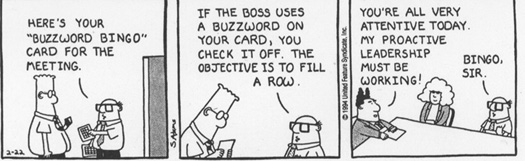
Let’s face it, meetings can suck. A poorly planned and executed meeting is a waste of time and money, and it can be demoralizing. Meetings shouldn’t be like this. Here are nine tips on how to plan and how to run an effective meeting.
1. Purpose
Every meeting should have a purpose. Meetings are often set up to happen on a reoccurring basis. The reality is that many times these meetings take place solely because they are in our calendars. If there is no reason to hold the weekly meeting this Wednesday, cancel it.
2. Focus
Have a clearly defined singular focus. Having a clearly defined singular focus keeps the meeting on track. If a meeting has more than one focus it is likely that one issue will be covered in far greater detail than the other, that the meeting will get off track, and/or none of the issues will be adequately addressed.
3. Prepare
Do your homework. Prior to every meeting make sure you have read anything you should have read and that you have completed any tasks that you should have completed. Additionally, know the lay of the land. For example, if the meeting is about the company budget and your employees are anxious over budget cuts – know this and be prepared to address your employees’ anxieties.
4. Invite
Invite those who should attend and do not invite people who should not be there. For example, if the focus of the meeting is sales, make sure you invite the sales team. Another example, if the focus of the meeting is the performance of your HR team, don’t invite your research and development team.
5. Leverage technology
Technology abounds and it should be utilized. Getting everyone in the same room is no longer necessary. Take advantage of technology such as Speek, Skype, and GoToMeeting.
6. Communicate
An effective meeting is not a place for you to download or transfer information. If you present information a manner that speaks to attendees you will motivate your employees and create buy-in. (The Heart of Change by Jon Kotter and Dan Cohen is a great resource on effective communication.)
7. Time management
Create an agenda and stick to it. Start the meeting on time and end the meeting on time. A meeting that is scheduled for 10:00-11:00 should not run from 10:15 to 11:15. Furthermore, if a meeting is scheduled for 1 hour, the meeting should last one hour or less (no need to try and fill the last 15 minutes if the agenda has been covered).
8. Facilitate
A meeting needs a leader. If it is your meeting – lead. Leading does not mean speaking at people for an hour; instead it means facilitating the agenda. For example, if an important but off-topic issue is raised during the meeting – don’t allow the meeting to go off on a tangent. Instead, acknowledge the importance of the issue and establish a time to address the particular issue. Handled correctly, your employees will not view this as blowing off their input, but rather they will value the fact that you will allot the necessary time to the issue.
Facilitating the meeting also means not allowing one person to monopolize the meeting. Give everyone the opportunity to provide input, and speak up if the agenda is being hijacked.
9. Action
At the end of the meeting review the action items. Make sure the right people are put in charge of each item, that they know what they need to do, and that they know when the task needs to be completed.