by Elizabeth Hines | Feb 4, 2015 | Blog, Data/Analytics, Marketing, Social Media, Strategy

Inbound marketing costs less than outbound marketing. And it works.
The internet has empowered customers. It has provided customers with new methods for finding and researching companies. It has also provided customers with new methods for finding, researching, and buying products.
The internet has changed marketing from a one way street to a two way street.
Customers no longer rely solely on TV/newspaper/magazine ads, billboards, direct mail, email, banner ads, and other traditional outbound marketing channels to learn about new products. These methods are now viewed as too intrusive, especially among younger consumers who regularly tune out the tactics.
Customers want to find YOU (not the other way around)
A study conducted by the Corporate Executive Board’s (CEB) Marketing Leadership Council found that the average customer progresses nearly 60 percent of the way through the purchase decision-making process before engaging with a sales rep. How are they able to do this? By going online. Customers are using websites, blogs, and social media.
A study by Pardot found that 72 percent of B2B buyers begin their research with Google. Other starting points for research: personal networks (15.58%), Yahoo (5.53%), Bing (2.76%), LinkedIn (2.51%) and social networks (2.01%).
What is inbound marketing?
Inbound marketing focuses on consumers finding you.
Inbound marketing meets your customers and prospects where they are, with the information for which they are looking, and at the right moment. Inbound marketing provides value, builds trust and authority, which ultimately result in increased leads and higher conversion rates.
The components of inbound marketing are pretty simple: Create and distribute fresh, relevant, targeted content specifically designed to reach a target audience.
Strategies include:
- Social media marketing
- Blogging and content marketing
- Podcasts
- White papers
- ebooks
- Infographics
- Search engine optimization (SEO)
- Case studies
What is outbound marketing?
In contrast, outbound marketing focuses on paying to broadcast your message to find consumers who will listen to you.
Outbound marketing is a value-driven numbers game. The more banner ads, print ads, and direct mailings you pay for, the more people see your product, and the more sales you’ll make. However, it is costly. Outbound marketing costs 38% more than inbound marketing. The average cost per lead using outbound marketing is $373. The average cost per lead using inbound marketing is $143.
Outbound marketing strategies include:
- Print ads
- TV ads
- Banner ads
- Telemarketing
- Cold calling
- Press releases
- Trade shows
- Email marketing
- Direct mail
Inbound marketing makes sense
Inbound marketing just makes sense. It is a proven methodology and it costs less. Isn’t it time to meet your customers where they are? Get online. Create content. Distribute content. Engage with customers. Optimize your website.
Fronetics Strategic Advisors is a management consulting firm focused on strategy and inbound marketing. When it comes to inbound marketing we take a different approach than other firms. This is because of our business experience and background. We know ROI is important, so our approach is data driven and produces results.
We understand that developing and implementing an inbound marketing strategy can seem daunting. We are here to help. We are happy to take a few minutes and look at your current strategy and give you ideas on how to start, or suggestions on what you can do to make your current strategy more successful. We are also happy to talk with you about what we can do.
We’d love to talk with you about how you can grow your business through inbound marketing.

by Elizabeth Hines | Dec 25, 2014 | Blog, Content Marketing, Marketing, Strategy
Fronetics Strategic Advisors is a management consulting firm focused on strategy and inbound marketing. When it comes to inbound marketing we take a different approach than other firms. This is because of our business experience and background. We know ROI is important, so our approach is data driven and produces results.
What is inbound marketing?
Inbound marketing is very different from traditional, or outbound, marketing. Inbound marketing focuses on creating quality content that attracts people to your company and product. By aligning the content you publish with your customer’s interests, you attract the right traffic – traffic that you can then convert, close, and delight over time. Outbound marketing, in contrast, uses methods including: buying ads, buying email lists, and cold calling.
Inbound marketing works
Research conducted by HubSpot found that inbound marketing is more effective than outbound marketing:
- 200% average ROI;
- 62% lower cost head;
- 15% increase in top line revenue.
Freight logistics company Cerasis decided to make the switch from outbound marketing to inbound marketing. Within 25 months the company gained 98 new customers and increased revenue by 14%.
Our approach
Strategy matters. A 2014 study of B2B marketers found that companies who have a documented content strategy in place are more likely to consider their efforts to be effective than companies who do not have a documented strategy in place (60 percent vs. 11 percent). We work with our clients’ to develop a strategy that is right for their company. We then work with our clients’ to implement the strategy.
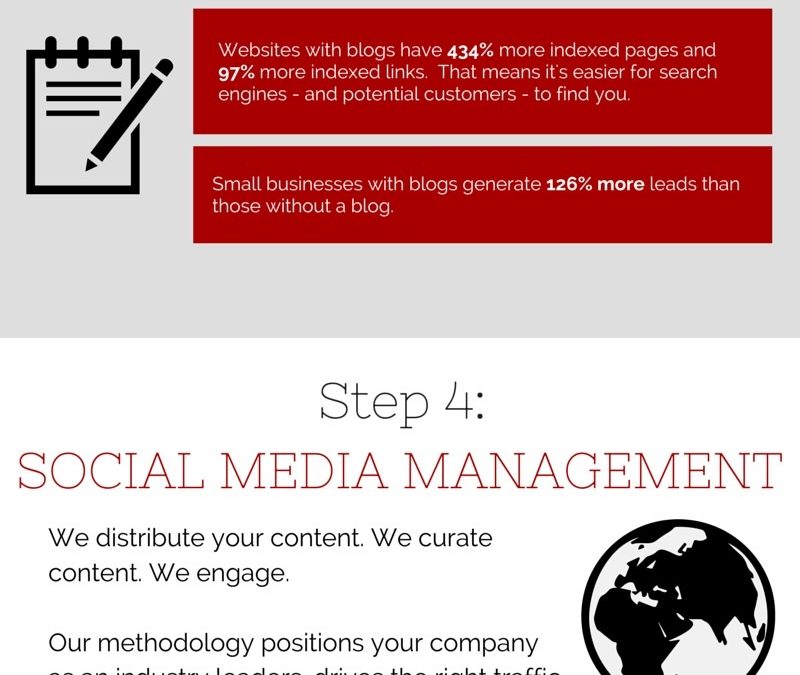
Here’s what we do:

What now?
We understand that developing and implementing an inbound marketing strategy can seem daunting. We are here to help. We are happy to take a few minutes and look at your current strategy and give you ideas on how to start, or suggestions on what you can do to make your current strategy more successful. We are also happy to talk with you about what we can do.
If you are, like many other people, stretched for time and also struggle with strategy and execution, we can also talk to you about what Fronetics does and how we can help. We know some people prefer to do it themselves, and others prefer to outsource.
We’d love to talk with you about how you can grow your business through inbound marketing.
by Elizabeth Hines | Nov 18, 2014 | Blog, Logistics, Marketing
 Cerasis is a top North American third party logistics company offering logistics solutions with a strong focus on LTL freight management. In 2012 the company decided to move from a traditional approach to marketing (ads in print publications and a heavy reliance on referrals) to a digital strategy – inbound marketing.
Within 25 months:
- Visits to the Cerasis website increased by 1,141%;
- Visits to the company blog increased from zero to 46,404;
- Traffic driven by social media increased by 376,150%;
- Organic traffic increased by 4,066%.
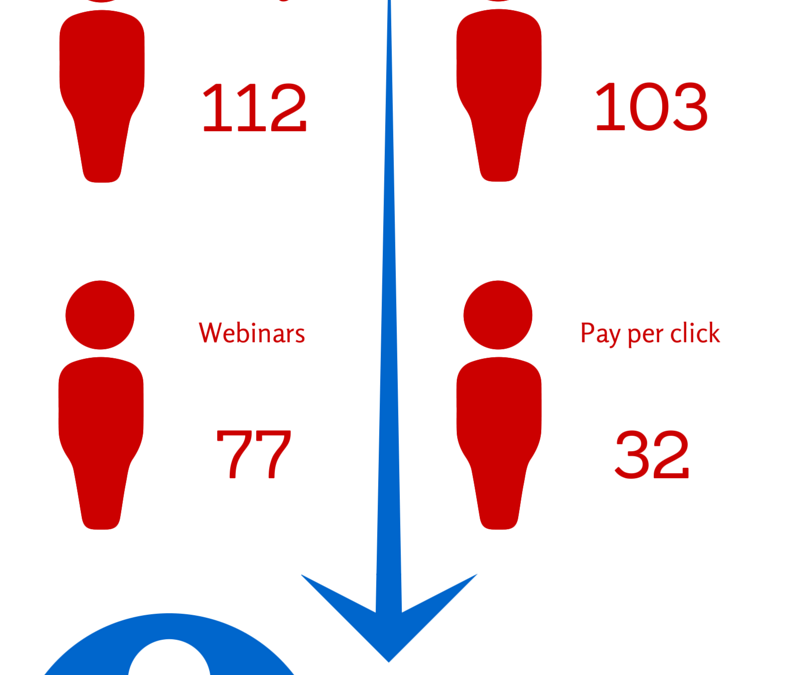
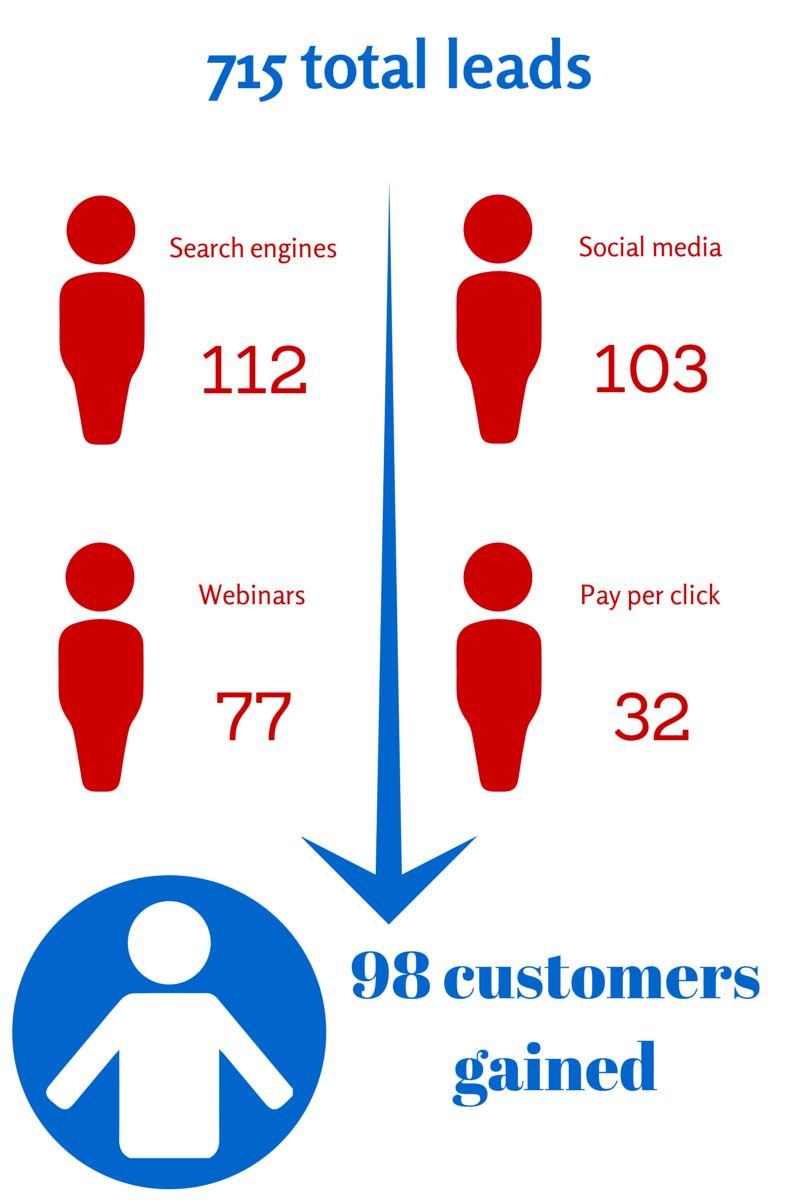
Moreover, Cerasis gained 715 leads. Fourteen percent of these leads converted to customers. The 98 new customers Cerasis gained through their inbound marketing efforts generated a 14% increase in revenue.
To learn more about Cerasis’ approach to inbound marketing and for more results, download the case study: 3PL company Cerasis acquires 98 customers through inbound marketing.

by Elizabeth Hines | Nov 13, 2014 | Blog, Marketing, Social Media, Strategy, Supply Chain
Founded in 1997, Cerasis is a top North American third party logistics company offering logistics solutions with a strong focus on LTL freight management. For 15 years the company utilized traditional marketing strategies – placing ads in glossy industry publications (print) and relying heavily on referrals. This strategy was effective. The company acquired new customers, retained current customer, and realized positive growth. However, Cerasis was not attracting larger and more sophisticated shippers, and brand awareness was low. Moreover, Cerasis was not perceived as a leader within the industry. The company recognized that in order to catch the attention of their preferred customers, increase brand awareness, and be perceived as a leader within the industry they needed to make substantial changes to their marketing strategy. To overcome these challenges Cerasis decided to shift from their traditional approach to an inbound marketing strategy.
Strategy matters
Understanding that strategy is critical to success, Cerasis took the time to put a strategy in place. Taking a research-based approach to strategy development, Cerasis studied internal company data, trends, and metrics and conducted market research. Using this information Cerasis determined the type of messaging it wanted to share, identified their target audience (buyer persona), and identified the platforms it felt would be the most effective.
Adam Robinson, Director of Marketing at Cerasis, notes that the company took a measured approach:
“Once we had a strategy in place we needed to execute it. We started simply – we posted one piece of content each day.”
Revenue matters
Cerasis’ strategy paid off. Within 25 months Cerasis realized a 14% increase in revenue. This increase was directly attributable to inbound marketing. In addition this stream of revenue, the company’s sales team was able to generate revenue totaling $20 million during this period – more than double the previous two years combined. This can also be linked to the company’s inbound marketing efforts as they increased the company’s brand awareness and positioned Cerasis as a leader within the industry.
To learn more about Cerasis’s approach to inbound marketing and the results realized, download the case study: 3PL Cerasis acquires 98 new customers through inbound marketing.
by Elizabeth Hines | Sep 24, 2014 | Blog, Marketing, Social Media, Supply Chain, Talent
“Practice makes perfect.” This is what we have been told by our parents, our teachers, Malcolm Gladwell, and researchers. And, as pointed out by Fast Company, “There’s even a Macklemore song about it, so that makes it real.”
Here’s the problem – it’s not real. A 2014 study found that practice doesn’t make perfect. Instead, reaching a mastery level of whatever it is that you are trying to reach is dictated by your personality, intelligence, and a number of other factors.
Where does that leave us? For business it reaffirms the adage: “Do what you do best, and outsource the rest.”
During a Small Business Week panel discussion Gene Marke, Inc. columnist and owner of the Marks Group, discussed the importance of strategic partnerships and outsourcing:
“One of the smartest things I’ve been seeing companies do is that they do what they do best and outsource the rest. Companies are now thinking more about partners they can work with to provide the type of technologies, services, and solutions they cannot do or don’t have time to do.”
Dan Leberman, the vice president and general manager of PayPal’s North American online small and medium business unit, expressed similar sentiments:
“It’s all about knowing your company’s core competencies. As a small business, you need to decide what you’ll build and what you’ll give to a partner.”
The supply chain and logistics industries have been slower to adopt social media and inbound marketing than other industries. Reasons for this include: a lack of understanding of the benefits, lack of experience, and both time and budget constraints. In short, inbound marketing and associated activities including content creation and social media management are great examples of what companies within the supply chain and logistics industry should consider outsourcing.
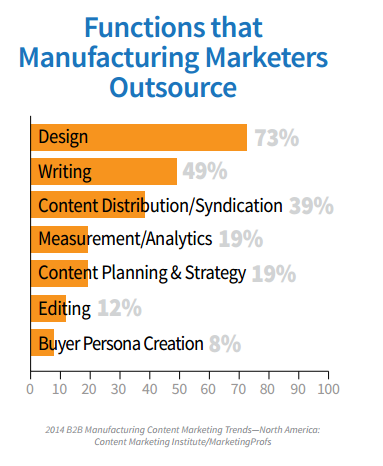
A 2014 study found that 86 percent of manufacturing marketers have adopted content marketing and that the majority (55 percent) of companies look to outsource partners for help.
As shown below, manufacturing marketers outsource a variety of content functions including writing, distribution, design, and editing.
Now that we know practice doesn’t make perfect – play to your company’s strengths and considering outsourcing the rest.