by Fronetics | Jun 29, 2015 | Blog, Content Marketing, Marketing

In real estate sales, you want people to find your properties, like what they see, and ultimately be moved to purchase. In other words, you want to attract visitors, convert visitors to leads, and convert leads to deals. Innovative luxury real estate firms are finding ways to leverage digital tools to guide more buyers down that path to purchase.
Without a doubt, luxury real estate buyers are a diverse bunch. “One day I have to know all about feng shui, and the next I have to be able to talk to a pig farmer from Iowa,” says one luxury real estate sales executive. “I’m like a chameleon.” And luxury buyers are trending even more heterogeneous – both geographically and demographically. What’s more, they are more connected than ever before due to the proliferation of digital technologies that enable buyers and properties to connect with one another in new and different ways. It’s clear that technology is a strategic way for properties to get in front of more potential buyers; moreover, it creates competitive opportunities for luxury real estate firms that are prepared to adapt to this new landscape.
Many luxury real estate firms are already using digital and social media to carry the lifestyle brand they’ve built around their properties into the online world. With the use of inbound marketing – think of it as the intersection of valuable content, social media, and lead generation – they are creating new virtual “touch points” to connect with affluent, hyper-connected luxury buyers.
What we know about luxury buyers is that they are likely to do purchasing research online; they are influenced by peers and their interactions with websites, mobile apps, and social networks. We also know that 93 percent of all online experiences begin with a search engine, and that 75 percent of searchers don’t move past the first page of search results. Through publishing relevant, quality content, inbound marketing gives luxury real estate marketers the tools needed to make certain their properties are being found online.
According to Sprout Social’s Consumer Engagement Index, which ranks industries by which ones receive the most engagement from customers on social media, the real estate industry is second overall in terms of inbound engagement relative to audience size. But how exactly, are real estate firms using inbound marketing to sell luxury properties? The majority of real estate firms, through the use of social media and blogs, are seeking to draw visitors to a property’s website. Others are putting social media to use for functional purposes such as communicating real-time updates to potential buyers about project timelines or changes in sales office hours.
Of their recent inbound marketing efforts, the New York City-based Corcoran Real Estate Group says they have realized significant benefits. A spokesperson for the company says, “The main thing we’ve seen is that the quality of the referral traffic back into our main website has significantly improved. And not only are we seeing more traffic coming in, but visitors coming in from social media sites are staying longer and looking at more things — something we had also seen with search engines, but not in such large numbers.”
Corcoran isn’t alone in their use of emergent technology and social media strategy to ensure maximum exposure for their luxury properties. Long & Foster’s Luxury Homes e-magazine showcases luxury properties through an extensive online campaign targeting luxury clients. The online campaign drives traffic to the e-book and the website. Similarly, residential homebuilder Polygon Homes currently connects their available luxury properties to over 6,000 people through a multitude of social media platforms. The company’s social followers are linked to relevant articles, outside press coverage, and traditional marketing resources that serve to build on the lifestyle brand of each property.
Real estate firms are also recognizing value in blog content as way to attract visitors and nurture leads. For example, One Riverside Park, a newly-constructed New York City building with luxury condo units for sale, uses their blog to highlight not only their property, but also additional relevant information such as neighborhood amenities, seasonal local weather, and area restaurants.

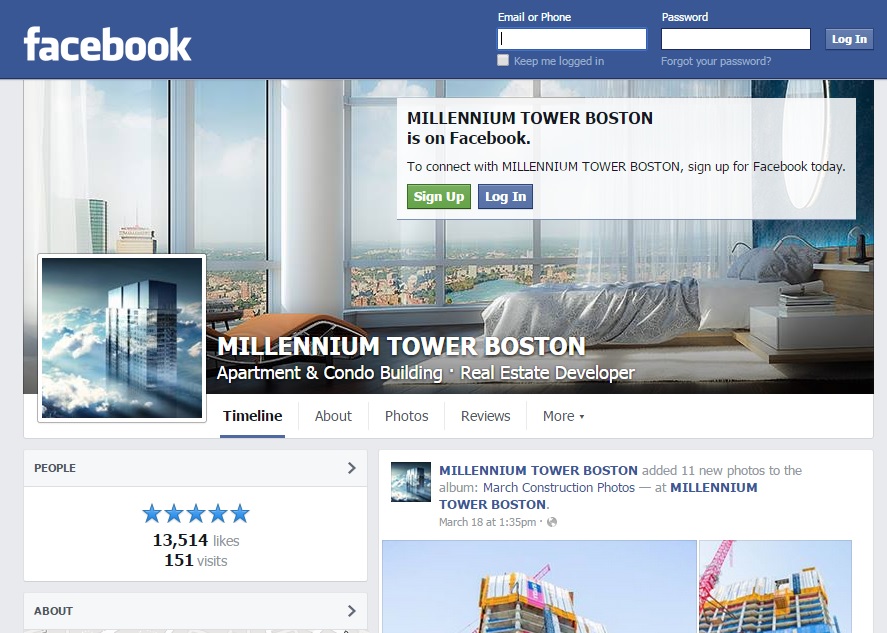
Boston is experiencing a substantial upsurge in construction of high-end luxury residential units. The Boston Globe reports that “more than 8,000 luxury residential units are expected to be built in Boston during the next three years, doubling the supply of units built in large, luxury complexes since 1960.” And local real estate firms are using inbound marketing to sell those luxury units. Seventy percent of the luxury units at the 60-story Millennium Tower under construction in Boston’s Downtown Crossing neighborhood have been sold. Millennium Partners, the firm responsible for the marketing and sales of the luxury units, has embraced inbound marketing as part of their overall marketing strategy. The firm currently has over 13,500 likes from users on social media. Millennium Tower’s Facebook page not only shares construction progress, sales information, and related press coverage, but neighborhood amenities, industry trends, and an array of visual content that’s more often than not shared widely by followers.
Beyond increased prospect engagement and driving more traffic to their websites, other firms are using inbound marketing as a way to gauge market reception of traditional print marketing materials and the general perception of properties; knowing what resonates online through focus group-like participation is valuable information that marketers are finding bolster their offline marketing efforts. In that same vein, while real estate marketers are realizing value from creating and sharing content, they’re also recognizing the importance of analytics and measurement.
Real estate marketers are using inbound marketing metrics to determine what type of content is inspiring current customers and pulling in new leads. These firms are looking at how their online numbers compare daily, weekly, and monthly and planning content accordingly. Specifically, they’re monitoring measurements like page views, video views, document views, content downloads, and social conversations. They’re examining how sales are impacted by social media and digital content by tracking metrics such as referrals from Facebook, Twitter, Pinterest. Knowing all of these metrics allows for a more nimble real estate marketing strategy– one that’s able to rapidly adapt and engage potential buyers in real-time.
Inbound marketing is a new approach to an old strategy – one that’s putting real estate marketers in charge of the way potential buyers interact with their properties. These marketers are guiding prospects down the road of purchase through lead generation campaigns – capturing emails and other contact information through blog subscriptions and form completions for content downloads. They’re strengthening branding efforts for their properties by building robust online social communities and employing previously untapped sources of referrals. Real estate marketers who use inbound marketing are seeing their properties rank higher in search engine results pages, experiencing a steady increase in their website visitors, and increasing conversion rates of leads and sales. Taking into consideration the changing demographics and increased digital connectedness of luxury real estate buyers, firms that seek to broaden the reach of their marketing efforts through new and emergent technologies will aggressively position themselves as strong competitors in an increasingly competitive luxury property market.


by Fronetics | Mar 16, 2015 | Blog, Marketing, Social Media, Strategy

How your business can use social media to generate leads.
Leads are essential to the growth of your business, and your marketing strategy is built around finding and connecting with leads. So when 92% of all marketers indicate that their social media efforts have generated more exposure for their businesses, you should take note and make social media part of your prospecting strategy.
Building a network of online connections is an effective way to find new leads. And with social media, you can find new leads by doing something called social prospecting. Social prospecting is the art of searching the social web, identifying potential prospects for your business, and engaging them in a manner that draws them to your company’s website and through your funnel. At the core, social prospecting is about listening. It’s about listening to social media conversations in order to generate leads for your business. It goes beyond monitoring keywords to engaging people that may or may not know what your business can do for them.
As you build your social prospecting strategy and develop new approaches to connect with leads, keep these 25 handy tips close by to guide your efforts.
Twitter
- Post content that draws prospects back to your website.
- Aim to share useful content on Twitter two to three times per week.
- Make customers feel appreciated by prioritizing their questions.
- Keep prospects engaged by retweeting some of their organic content.
- Favorite tweets with content that leads share.
- Respond to and offer help to industry peers’ questions.
- Delight customers by replying or favoriting tweets when they mention your company.
- Engage with potential prospects by offering help using relevant content.
LinkedIn
- Post at least twice a week to your company’s LinkedIn page.
- Join five LinkedIn Groups that could connect you with potential prospects.
- Join conversations in the group where you can add value with your content.
- “Like” content that others are sharing in the group.
- Share your own content to the group.
- Use LinkedIn Answers to respond to questions posted by others in your industry.
- Make a habit of routinely reviewing the content posted within your groups.
- Comment and add value to posts from others in the group.
- Ask for an offline meeting with your most engaged prospects.
Facebook
- Link to your blog from Facebook.
- Add calls to action to posts.
- Promote a special product or service offer solely for Facebook fans.
- Create and post visual content, like infographics and videos.
- Share a quote or industry statistic with your fans.
- To draw more comments from fans, pose a question.
- Create a Facebook event to promote trade show appearances or webinars.
- Update your company’s profile and cover photos routinely.
Ready to build a more full-bodied social prospecting strategy? We’ve laid out the quickest ways for you to find more leads and prospects on Twitter, Facebook, LinkedIn, Pinterest, and Google+ in our social prospecting workbook. In a dedicated worksheet to each of those social media platforms, you’ll find every worksheet includes: a short preparatory work to make the actual prospecting easy; visual instructions on how and where to find prospects; pro tips that will help you get the best results; prescriptions (Marketing Rx) for success; and take-home exercises for follow-up prospecting. To get started growing your prospecting opportunities and building alternative lead generation and nurturing strategies, download our free workbook.
Curious about what we’re up to on social media? Find out.
by Fronetics | Mar 16, 2015 | Blog, Marketing, Social Media, Strategy
How your business can use social media to generate leads.
Leads are essential to the growth of your business, and your marketing strategy is built around finding and connecting with leads. So when 92% of all marketers indicate that their social media efforts have generated more exposure for their businesses, you should take note and make social media part of your prospecting strategy.
Building a network of online connections is an effective way to find new leads. And with social media, you can find new leads by doing something called social prospecting. Social prospecting is the art of searching the social web, identifying potential prospects for your business, and engaging them in a manner that draws them to your company’s website and through your funnel. At the core, social prospecting is about listening. It’s about listening to social media conversations in order to generate leads for your business. It goes beyond monitoring keywords to engaging people that may or may not know what your business can do for them.
As you build your social prospecting strategy and develop new approaches to connect with leads, keep these 25 handy tips close by to guide your efforts.
Twitter
- Post content that draws prospects back to your website.
- Aim to share useful content on Twitter two to three times per week.
- Make customers feel appreciated by prioritizing their questions.
- Keep prospects engaged by retweeting some of their organic content.
- Favorite tweets with content that leads share.
- Respond to and offer help to industry peers’ questions.
- Delight customers by replying or favoriting tweets when they mention your company.
- Engage with potential prospects by offering help using relevant content.
LinkedIn
- Post at least twice a week to your company’s LinkedIn page.
- Join five LinkedIn Groups that could connect you with potential prospects.
- Join conversations in the group where you can add value with your content.
- “Like” content that others are sharing in the group.
- Share your own content to the group.
- Use LinkedIn Answers to respond to questions posted by others in your industry.
- Make a habit of routinely reviewing the content posted within your groups.
- Comment and add value to posts from others in the group.
- Ask for an offline meeting with your most engaged prospects.
Facebook
- Link to your blog from Facebook.
- Add calls to action to posts.
- Promote a special product or service offer solely for Facebook fans.
- Create and post visual content, like infographics and videos.
- Share a quote or industry statistic with your fans.
- To draw more comments from fans, pose a question.
- Create a Facebook event to promote trade show appearances or webinars.
- Update your company’s profile and cover photos routinely.
Ready to build a more full-bodied social prospecting strategy? We’ve laid out the quickest ways for you to find more leads and prospects on Twitter, Facebook, LinkedIn, Pinterest, and Google+ in our social prospecting workbook. In a dedicated worksheet to each of those social media platforms, you’ll find every worksheet includes: a short preparatory work to make the actual prospecting easy; visual instructions on how and where to find prospects; pro tips that will help you get the best results; prescriptions (Marketing Rx) for success; and take-home exercises for follow-up prospecting. To get started growing your prospecting opportunities and building alternative lead generation and nurturing strategies, download our free workbook.
Curious about what we’re up to on social media? Find out.
by Elizabeth Hines | Sep 6, 2024
Website Design + Development We build stunning websites that drive search traffic and conversions. Contact us Take a look at our website development services in action. Fronetics specializes in website design and development for companies in the supply chain,...

by Fronetics | Jul 14, 2020 | Blog, Covid-19, Marketing, SEO
Updated 1/21/25
Revitalizing Your Blog Archive: Modern SEO Strategies for 2025
Your company blog remains a valuable asset for search visibility, but the rules have evolved. Here’s how to breathe new life into your old blog posts using current SEO best practices — without overwhelming your team.
Why Update Old Content?
Search engines, particularly Google, have become increasingly sophisticated in evaluating content quality and relevance. While freshness remains important, it’s now just one factor among many. Google’s helpful content system and AI-driven algorithms prioritize comprehensive, authoritative content that genuinely serves user intent.
Our own data supports this evolution: a 2018 post about corporate social responsibility continues to perform well not just because it’s regularly updated, but because it thoroughly addresses the topic from multiple angles, matching the depth that today’s search engines expect.
The Modern Benefits of Blog Post Updates
Updating old blog posts delivers several key advantages in today’s search landscape:
- It signals to search engines that your site is actively maintained and authoritative in your field.
- It allows you to align content with current search intent patterns and semantic search capabilities.
- It helps maintain E-E-A-T (Experience, Expertise, Authoritativeness, and Trustworthiness).
- It provides opportunities to optimize for voice search and featured snippets.
- It enables you to incorporate new media formats that modern search engines favor.
Identifying High-Potential Posts for Updates
Rather than randomly updating old content, focus on posts with these characteristics:
Strong Existing Performance Signals
- Posts that already rank on page 2-3 for valuable keywords (these often have untapped potential)
- Content with high dwell time but low conversion rates
- Pages that earn consistent backlinks despite their age
- Posts that generate significant social engagement
Strategic Value Indicators
- Topics that align with current business priorities
- Content that addresses evergreen industry challenges
- Posts that target high-commercial-intent keywords
- Pages that compete with outdated competitor content
Modern SEO Update Strategies
1. Optimize for Search Intent
- Use tools like Google Search Console‘s search queries report to understand how users actually find your content
- Analyze the “People Also Ask” boxes for related topics
- Structure content to directly answer common user questions
- Consider adding FAQ schema markup for enhanced SERP visibility
2. Enhance Content Depth and Authority
- Expand sections that address key user pain points
- Include expert quotes and current industry statistics
- Add real-world examples and case studies
- Lnk to authoritative sources using targeted anchor text
3. Improve Technical SEO Elements
- Implement proper header hierarchy (H1, H2, H3)
- Optimize for Core Web Vitals (loading speed, interactivity, visual stability)
- Add structured data where appropriate (Article, HowTo, FAQ schemas)
- Ensure mobile optimization meets current standards
4. Enhance Media and Interactivity
- Add high-quality, original images with descriptive alt text
- Include interactive elements like calculators or assessment tools where relevant
- Embed relevant videos with proper schema markup
- Consider adding infographics or data visualizations
5. Internal Linking Strategy
- Create topic clusters linking related content
- Update anchor text to reflect current keyword targeting
- Remove links to outdated or redirected pages
- Add links to newer, relevant content
6. User Experience Optimization
- Break up long paragraphs for better readability
- Add table of contents for longer posts
- Include clear calls-to-action
- Optimize for featured snippet opportunities
7. Content Consolidation
- Identify and merge similar posts to create comprehensive resources
- Implement proper redirects for consolidated content
- Update internal links to point to new consolidated pages
- Maintain URL structure of the strongest performing page
Technical Implementation Best Practices to Update Old Blog Posts for SEO
When updating posts:
- Maintain the original URL to preserve link equity
- Update the “last modified” date in your CMS and XML sitemap
- Consider adding a “Last Updated” note for transparency
- Use proper schema markup to indicate the last update date
- Monitor Core Web Vitals before and after updates
Measuring Success
Track these metrics to evaluate the impact of your updates:
- Organic search traffic changes
- Featured snippet acquisition
- Position tracking for target keywords
- User engagement metrics (time on page, bounce rate)
- Conversion rates
- Core Web Vitals scores
The Bottom Line
While it’s valuable to update old blog posts for SEO, success in 2025 requires a more nuanced approach that considers user intent, content quality, and technical excellence. Focus on creating comprehensive, authoritative content that serves your audience’s needs while adhering to modern technical SEO best practices.
Regular content audits and updates should be an integral part of your SEO strategy, but remember that quality trumps quantity. Prioritize updates that add genuine value for your users and align with current search engine capabilities.
Read more: