by Fronetics | Mar 18, 2015 | Blog, Strategy, Talent

Here’s why paying out actually pays off.
Contract buyouts within the sports and business worlds aren’t exactly a novel approach to making personnel changes. But what about paying employees — employees who don’t have contracts and haven’t yet earned further compensation — to quit? It’s a move that’s finding ground in the business world.
Take Zappos for example. The company pays employees $4,000 to quit. Yes, the company shells out $4,000 to employees who say just two words: “I quit.”
Here’s why it is a great idea.
All Zappos employees must participate in a four-week training program when they are hired. When they complete the four weeks, they are given a choice: They can continue to work for Zappos, or they can quit. Those who quit will be paid a bonus of $4,000.
Essentially, Zappos is putting their money where their mouth is when it comes to cultivating its company culture. Zappos leadership believes an employee who is not happy after participating in the training program or is not excited about the company and its culture won’t be a good match. By offering such employees an out, Zappos can quickly and effectively weed out employees who are not a good fit within the company’s culture.
This may seem crazy, but the reality is that when unhappy employees leave the company within their first four weeks of employment, the financial implications are much, much lower than the cost of unhappy employees who are likely to be uninspired at work and quit in less than a year.
Why does Zappos do this?
It wants to attract and retain great talent. In his book Delivering Happiness: A Path to Profits, Passion, and Purpose, Zappos CEO Tony Hsieh says: “Your personal core values define who you are, and a company’s core values ultimately define the company’s character and brand. For individuals, character is destiny. For organizations, culture is destiny.” In short, Zappos is big on company culture. This focus has made it successful — very successful.
So how many Zappos employees take the money and run? You might be surprised to learn that only between 2 to 3 percent of people quit and take the $4,000.
Another example of front-end hiring processes from eBay
During his time as the COO of eBay, Maynard Webb also employed front-end hiring processes to determine if a candidate would be a good fit within the company’s culture. To assemble a solid team, he recommends asking the right questions during the hiring process. He gives as an example of a question he would routinely ask job candidates to determine fit at eBay. “If something breaks at 2 a.m. but miraculously resolves itself before anyone understands it, is it okay to unplug and go to sleep? The answer should be no.”
With the U.S. Department of Labor currently estimating the average cost of a bad hiring decision to be as much as 30% of an individual’s first-year potential earnings, a single bad hire with an annual income of $50,000 can equal a potential $15,000 loss for a company. It might actually pay to create a company payment system that is designed to weed out new hires who reveal themselves to be less-than-stellar prospects for long-term employment.
What do you think about the idea of paying your employees to quit? What processes do you have in place to detect personnel issues up front?
Related posts:
by Jennifer Hart Yim | Jan 8, 2025 | Marketing, Packaging
We’re showing you exactly how packaging companies we’re working with are using account-based marketing (ABM) to increase market share, shorten sales cycles, and win more strategic accounts. Consider this a packaging professional’s blueprint for target account success.
What is Account-Based Marketing for the Packaging Industry?
Account-based marketing is a strategic approach that focuses marketing and sales resources on specific high-value accounts rather than broad market segments. This means targeting key accounts with personalized campaigns that address their unique packaging challenges, sustainability goals, and innovation needs.
Here’s an example of what that could look like for a packaging marketer:
If consumers in Brazil begin demanding smaller milk carton sizes to reduce food waste, packaging companies might use traditional marketing to broadly promote “flexible filling solutions” to all dairy manufacturers. Instead, an aseptic packaging provider could use account-based marketing to stand out and create a highly targeted campaign for Nestlé. This campaign could specifically address Nestlé’s need to fill multiple carton sizes (500ml, 750ml, and 1000ml) for their Molico and Ninho UHT milk brands on a single production line.
Unlike traditional marketing, ABM delivers:
- 2x higher engagement rates with technical decision-makers
- 42% reduction in packaging qualification cycles
- 27% increase in contract values
- 35% improvement in customer retention
How to Build a Winning ABM Strategy
1. Define Your Ideal Customer Profile (ICP)
Success in ABM starts with identifying the perfect packaging customer. Here are some ways you can start to categorize their characteristics:
Industry Focus:
- Food and beverage manufacturers
- Pharmaceutical companies
- Consumer packaged goods (CPG)
- Industrial products
- Chemical companies
- E-commerce retailers
- Automotive suppliers
Operational Characteristics:
- Production volumes and capacity
- Geographic footprint
- Technical requirements
- Regulatory frameworks
- Sustainability commitments
Business Indicators:
- Annual packaging spend
- Growth trajectory
- Innovation appetite
- Quality standards
- Compliance needs
2. Select and Prioritize Target Accounts
Develop a tiered approach to account selection:
Tier 1: Strategic Accounts
- Major CPG companies
- Global pharmaceutical manufacturers
- Leading food and beverage brands
Tier 2: Growth Accounts
- Regional packaging buyers
- Emerging brands
- Contract manufacturers
Tier 3: Scale Accounts
- Local manufacturers
- Specialty product makers
- Start-up brands
3. Map the Packaging Decision-Making Unit
Here’s where you’ll determine who you’ll be targeting. Identify and engage with those key stakeholders. They could be part of any of the following functions:
Technical Team
- Packaging Engineers
- R&D Directors
- Quality Assurance Managers
Commercial Team
- Procurement Directors
- Supply Chain Managers
- Sustainability Officers
Executive Level
- Operations Directors
- Innovation Leaders
- C-Suite Decision Makers
Content for Account-Based Marketing for the Packaging Industry
Technical Content
Develop materials that showcase your packaging expertise:
- Barrier performance studies comparing EVOH vs. metallized films for snack packaging
- Technical specifications for child-resistant pharmaceutical blister packs
- FDA compliance guides for direct-food-contact packaging materials
- Innovation roadmaps for smart packaging with NFC technology
- Sustainability impact reports on PCR content in HDPE bottles
Commercial Content
Create content that drives packaging business decisions:
- Cost calculators comparing glass vs. PET bottles for beverage lines
- Production efficiency studies for servo-driven cartoning machines
- Risk analyses of aluminum foil supply chain disruptions
- Market trends in mono-material flexible packaging adoption
- Benchmarks of European vs. US sustainable packaging regulations
Implementing Your Packaging ABM Program
Essential Tools and Technologies
Invest in the right technology stack:
- ABM platforms for account targeting
- CRM systems for relationship management
- Marketing automation for personalization
- Analytics tools for performance tracking
- Technical collaboration platforms
Multi-Channel Engagement Strategy
Coordinate your outreach across channels:
- Technical consultations
- Innovation workshops
- Sustainability forums
- Digital demonstrations
- Industry events
- Direct mail campaigns
Measuring the Success of Account-Based Marketing for the Packaging Industry
Key Performance Indicators
Track these critical metrics:
- Account engagement scores
- Technical trial conversion rates
- Sales cycle duration
- Contract win rates
- Customer lifetime value
- Innovation adoption rates
ROI Calculation Framework
Measure your ABM investment returns:
- Cost per account engagement
- Revenue per target account
- Marketing qualified account (MQA) conversion
- Technical qualification success rates
- Long-term contract values
Common ABM Challenges (+ Solutions) Packaging Professionals Face
Challenge 1: Long Technical Qualification Cycles
Example solutions:
- Provide rapid prototyping of thermoformed packages using 3D-printed molds
- Offer accelerated shelf-life testing for new barrier materials
- Supply preliminary migration testing data for food-contact materials
- Create digital twins of packaging lines for virtual testing
Challenge 2: Multiple Stakeholder Alignment
Example solutions:
- Develop sustainability scorecards that satisfy both procurement and ESG teams
- Create ROI models that connect packaging automation with labor savings
- Build material transition roadmaps that align with corporate sustainability goals
- Provide comparative LCA (Life Cycle Assessment) data for different packaging options
Challenge 3: Complex Approval Processes
Example solutions:
- Map decision workflows
- Create milestone-based content
- Offer phased implementation plans
Top Tips for ABM Success
- Start with a pilot program focusing on 5-10 key accounts
- Invest in technical expertise and support
- Align sales and technical teams early
- Focus on sustainability and innovation
- Measure and adjust continuously
How to Get Started
- Assess your current account relationships
- Identify your top 10 target accounts
- Map stakeholders and decision processes
- Develop your technical content strategy
- Implement tracking and measurement systems
Questions We’ve Gotten from Packaging Professionals About ABM
Q: Can you give me an example of how ABM is different from traditional packaging marketing?
A: While traditional marketing might broadly promote your shrink sleeve capabilities to all beverage companies, ABM would create a targeted campaign specifically for Coca-Cola’s Southeast Asia expansion, addressing their specific need, sustainability, and localization requirements. This focused approach delivers personalized engagement at every level of their decision-making process.
Q: What budget should packaging companies allocate to ABM?
A: The most successful ABM programs are funded at about 15-25% of the total marketing budget. For example, a flexible packaging manufacturer might allocate $200,000 annually to target 10 key CPG accounts, with roughly $20,000 per account for technical content development, prototype creation, and specialized testing programs.
Q: How long does it take to see results?
A: You’ll start to see the needle move within 3-6 months. For example, you might notice increased participation in packaging innovation workshops or material qualification trials. Significant revenue impact typically occurs within 9-12 months, as seen in new packaging format adoptions or multi-year supply agreements.
Q: Which metrics matter most?
A: Focus on account engagement scores, technical qualification rates, sales cycle duration, and contract values.
Q: How can smaller packaging companies implement ABM?
A: Start with a focused program targeting 3-5 key accounts and leverage digital automation tools for efficiency and AI tools to scale.
Want to change how your packaging company targets high-value prospects and land major accounts? We’re happy to help you get started. Get in touch.
Read more:
by Jennifer Hart Yim | Dec 5, 2024
work with a logistics marketing agency Skip the learning curve. Work with an agency who will hit the ground running from day one. We get logistics—really get it. When you say LTL, WMS, or SKU, we don’t need to Google it. Unlike general agencies, we bring...
by Jennifer Hart Yim | Sep 13, 2024
A SUPPLY CHAIN marketing agency Don’t waste time getting a general agency up to speed We’re a supply chain marketing agency focused solely on marketing for the supply chain industry. Get thoughtful, compelling campaigns created by a team who understands your...
by Elizabeth Hines | Sep 4, 2024
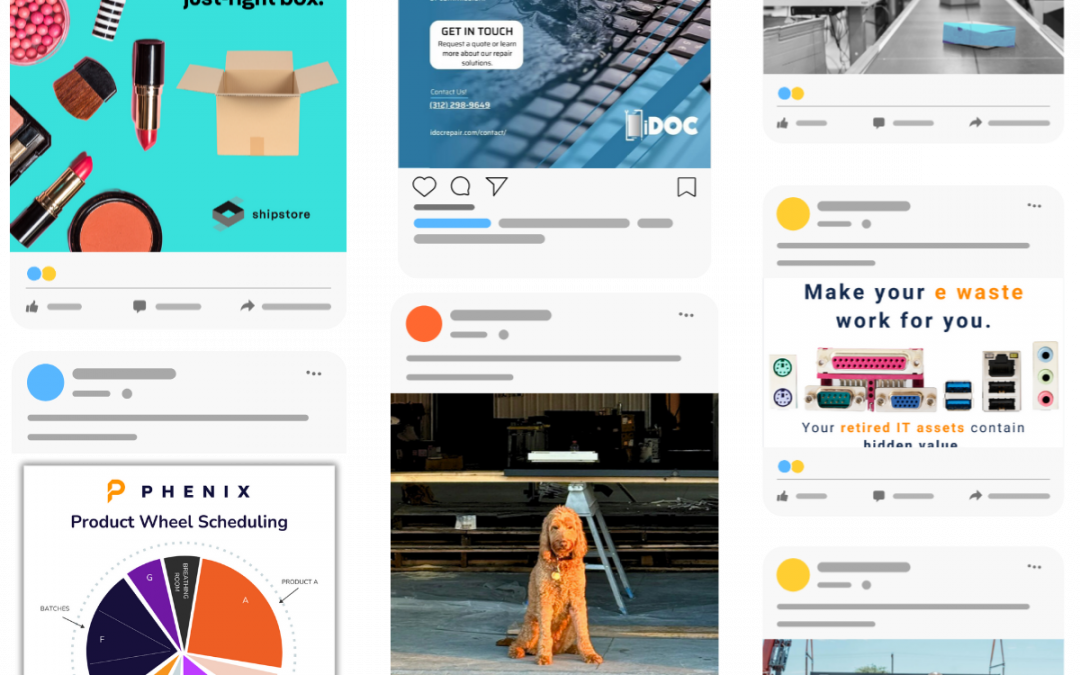
Supply chain marketing examples We turn bright ideas into powerful deliverables We don't just promise the moon to our supply chain clients — we deliver it. Peek behind the curtain at some of our work. Spoiler alert: We crushed it. Let's work together OUR WORK B2B...