by Elizabeth Hines | Jun 23, 2014 | Blog, Logistics, Marketing, Social Media, Strategy, Supply Chain
Many companies within the logistics and supply chain industries are stuck on the social media starting line. The reason – “they can’t get past the word ‘social’ and the perception it creates.” The reality is that social media is a tool that can be utilized to create value and grow your business.
This is the fourth in a series of articles that provides examples of companies within the logistics and supply chain industries who have moved beyond the social media starting line and have realized the business value of participating in social media.
Cerasis is a top freight logistics company and truckload freight broker. During the company’s first 15 years it focused on traditional sales and marketing strategies and relied heavily on referrals. This strategy worked. Cerasis acquired new customers, retained current customers, and realized positive growth. However, Cerasis was not viewed as an industry leader, and brand awareness was low.
In 2012 Cerasis decided to participate in social media and launch a content marketing strategy.
Cerasis began actively blogging, and began using Twitter, LinkedIn, Facebook, Pinterest, and Google+. The company quickly became seen as a leader within the industry, and brand awareness increased dramatically.
Within 15 months the company received 71 leads from search engines, 65 leads from social media, and 52 leads from webinars. Even more impressive, within 15 months the company gained 35 customers (one customer within the freight logistics industry can mean a lot of revenue).
The results show that Cerasis is no longer on the social media starting line – rather, Cerasis is now a leader, not only in the freight logistics industry, but also in using social media as a business tool.

by Jennifer Hart Yim | Jun 19, 2014 | Blog, Logistics, Manufacturing & Distribution, Strategy, Supply Chain

Entrants to the market need to understand the barriers to entry and problems with management and transparency within the pet food industry supply chain.
This article is part of a series of articles written by MBA students and graduates from the University of New Hampshire Peter T. Paul College of Business and Economics.
The pet food industry is a market that boasts $21.57 billion dollars in sales in the United States (2013). With 95.6 million cats and 83.3 million dogs owned in the United States, it is no wonder that there is such a large market for the food that the self-proclaimed “pet parents” feed them. However, it isn’t all good news for aspiring entrants, as they must first understand the supply chain that dictates this growing industry.
To manufacture, or not to manufacture
When a pet food company chooses to produce a product, they essentially have three options: 1) manufacture it themselves, or choose a co-packer who will either 2) use a private label or 3) manufacture the food to the specifications of the brand.
A contract packer (co-packer), otherwise known as a contract manufacturer, is a company that manufactures and packages foods for their clients. The manufacturer works under a contract with the hiring company to manufacture the pet food as though the hiring company was doing it themselves.
Co-packers can manufacture several different brands and for several companies at once. An example of a co-packer would be C.J. Foods, Inc. with manufacturing plants in Bern, Kansas, and The Pawnee City, Nebraska. According to C.J. Foods Inc., the company produces over 300 varieties of animal foods, including dog, cat, reptile, and exotic bird.
Companies typically outsource to another entity for production due to cost savings, rather than building their own plant. Additionally, they can focus on their own core competence, whether it is marketing, sales, etc. The manufacture’s core competency is production, and they have the experience and knowledge to produce the pet foods already. However, there can be many challenges associated with the management of pet food supply chains and co-packers in particular.
The challenges with co-packers
As the pet food market grows and becomes more complex, the sourcing of ingredients becomes more complicated.
Foreign suppliers source products from numerous small farms, and identities become lost and commingled. Unfortunately, brands are relying on these suppliers to meet food-safety criteria.
Additionally, these brands typically rely on audits of suppliers by private third-party companies that carry no guarantee. An example of this would be Kellogg and Peanut Corporation of America (PCA). Kellogg had PCA audited by AIB international, and PCA passed with a superior rating. However after the recall (explained in detail below), the FDA found leaks and rodent infestations within the plant.
Pet food industry product recalls
There have been two major recalls within the pet food industry in recent years.
One, the largest in history, was the ChemNutra recall in 2007. Two Chinese export firms sold wheat gluten bags tainted with melamine to Las Vegas-based ChemNutra, “the Chinese ingredient specialist importer.” ChemNutra then sold the tainted wheat gluten to pet food makers under false certificates of analysis. As a result, 5,300 pet foods were recalled, and thousands of cats and dogs were injured/killed. Owners of both the Chinese companies and ChemNutra pleaded guilty to various misdemeanors involving the mis-branding of food and conspiracy to commit wire fraud.
The second recall involves a 2009 salmonella outbreak in the Peanut Corporation of America’s plant in Blakely, Georgia. PCA knowingly shipped salmonella-tainted products across the country to many manufacturers, including those in the pet food industry. Along with the shipments, they sent certificates of analysis that indicated the product contained no salmonella, but they had yet to receive the test results (which were positive). This resulted in 3,200 pet food products being recalled, 8 deaths, and 500 illnesses. A 76-count indictment charged four former officials at PCA with numerous infractions relating to salmonella-tainted peanuts and peanut products.
These two examples are the horrific results from a lack of control over the supply chain within the manufacturing of pet foods. The consequences of these recalls, first and foremost, can cause the injury and death of both pets and people. Beyond that, there is implicit lost brand trust, consumer demand decrease, headaches for retailers/wholesalers, and severe cost increases for the company.
Solution: Improving supply chain management
Given the information above, it is essential that companies proactively work to avoid recalls through better management of the supply chain.
Co-packers become problematic when an ingredient or plant is infected because that trickles down to the many different brands and companies for whom they manufacture. That is not to say that pet food companies should never use a co-packer, especially because the cost-saving benefits can be so great. Pet food companies, however, should do their research prior to choosing a co-packer.
If you are using a private label, know where the co-packer is sourcing its ingredients. If you are not using a private label, you need to ensure you know the suppliers with whom the co-packer is working. The same rule applies if your pet food company has its own manufacturing plant, as well.
Secondly, pet food manufacturers can supplement third-party audits of co-packers’ plants with their own inspection and testing of ingredients and plant surfaces.
As a consumer purchasing these foods off the shelf, attempt to do your research, too. Although you may not be able to see exactly where products are coming from due to confidentiality of competitive sourcing, you can choose brands that have a commitment to transparency and educating the consumer on where their ingredients are sourced from. An example of this would be Natura Pet Products, which launched its “See Beyond The Bag” campaign. This part of their interactive website allows consumers to click on any product and view where in the world any specific ingredient in the product is being sourced from. Additionally, consumers can educate themselves on how Natura ensures a quality manufacturing process.
In conclusion, pet food manufacturing can be a difficult industry if a company is not well versed in the associated challenges. If a tight reign is held over the supply chain and quality manufacturing follows, the pet food industry is a growing market with a bright outlook for companies vying to do business within it.
Mikayla Cadoret recently completed her MBA at the University of New Hampshire – Paul College of Business and Economics. She is an experienced sales representative and is interested in pursuing a career in marketing or supply chain management. She can be reached at [email protected].

by Elizabeth Hines | May 25, 2014 | Blog, Logistics, Marketing, Social Media, Strategy, Supply Chain
Some companies within the logistics and supply chain industries have chosen to participate in social media while others have not. Why have some companies chosen not to participate while others have decided to participate? What social networks do companies within the logistics and supply chain perceive to provide the most value to their business? What challenges do companies face with respect to social media?
Fronetics Strategic Advisors aims to gain insight into these questions and more. We are conducting a survey on social media within the logistics and supply chain industries. The objective of the survey is to learn about the participation and use of social media within the logistics and supply chain industries.
The survey is aimed at companies within the logistics and supply chain industries, and takes only about 5 to 10 minutes to complete.
This survey is confidential. Responses will be reported in aggregate and no individual- or company-identifiable information will be shared with anyone.
If your company is part of the logistics or supply chain industries please take the time to take the survey.

by Elizabeth Hines | May 1, 2014 | Blog, Content Marketing, Logistics, Manufacturing & Distribution, Marketing, Social Media, Strategy, Supply Chain

By launching a new digital, social media, and content marketing strategy, Cerasis saw a big, positive impact on its bottom line.
Companies within the manufacturing, supply chain, logistics, transportation, distribution and freight industries have been slow to create and execute digital, social media, and content marketing strategies. The primary reason: a lack of understanding of the business case or value.
These strategies utilize platforms that many within these industries perceive to be for socializing, sharing photos, and connecting with friends (e.g., Twitter and Facebook), and they turn the sales process on its head. Content marketing strategies are fundamentally different from traditional strategies employed by businesses to attract new customers, foster relationships with current customers, and grow their bottom line. Because of this, companies do not recognize how these strategies can positively impact their bottom line and therefore decide to steer clear — they feel engaging is too risky.
The reality is that not participating is risky. Like it or not, things have changed. The internet and social networks are where customers are. Content is how you can establish your company as a thought leader within the industry, and how you can attract and retain customers. If you want to grow your business you need to participate.
Looking at the manufacturing, supply chain, logistics, transportation, distribution and freight industries, there are a few companies that have emerged as leaders — companies that exemplify the business value of creating and executing digital, social media, and content marketing strategies. Cerasis, a freight logistics company, is one of them.
How Cerasis acquired 98 customers through content marketing
Cerasis was founded in 1997. For 15 years the company utilized traditional sales and marketing strategies: placing ads in industry print publications, and relying heavily on referrals. This strategy worked. The company acquired new customers, retained current customers, and realized positive growth.
There is a saying: “If it ain’t broke don’t fix it.” Cerasis ignored these words of wisdom.
In the fall of 2012, Cerasis launched a digital, social media, and content marketing strategy. The results have been impressive. For example, visits to the company website have increased by close to 670 percent, and search visits have increased by close to 2,190 percent. The company boasts an impressive number of Twitter followers, Facebook fans, and LinkedIn followers.
The business value of the strategy? Cerasis has acquired 98 customers. For the freight logistics industry, one customer can generate significant revenue; 98 new customers has a positive impact on the company’s bottom line.
Cerasis will be guest blogging for Fronetics for the next three weeks. The three-part series will begin with an overview of the company’s strategy and will discuss the results the company has realized through the execution of the strategy. The next two articles focus on how to create and execute a strategy.
When looking for best practices, Cerasis is a clear example. For companies within the manufacturing, supply chain, logistics, transportation, distribution and freight industries these articles are a great opportunity to learn why (and how) your company should create and execute a digital, social media, and content marketing strategy.
Download the case study to learn more about how Cerasis’ content marketing strategy helped the company acquire new business and increase sales.

Related posts:

by Elizabeth Hines | Apr 29, 2014 | Blog, Content Marketing, Logistics, Marketing, Social Media, Supply Chain

Content will help you grow your business; by creating and distributing valuable and relevant content in a strategic and consistent manner you can drive profitable customer action. But, it’s not all about you. It’s not all about the content you and/or your business creates. Here’s why content curation is an essential component of a successful content strategy.
The internet is a fire hose stream of content. Being able to navigate the deluge of content and identify the content that is valuable to your customers and to your business is essential. The process of identifying and sharing this content is content curation.
By consistently being able to identify, make sense of, and share content that is important and relevant to your customers and to your industry you will establish your business as a thought-leader and a trusted resource.
A 2014 survey found that 76 percent of respondents reported that content curation positively impacted their business goals in 2013. Ninety percent of respondents predicted that content curation will have a positive impact on their business goals in the upcoming year.
This article was originally published on DC Velocity.
by Elizabeth Hines | Apr 23, 2014 | Blog, Content Marketing, Logistics, Marketing, Supply Chain
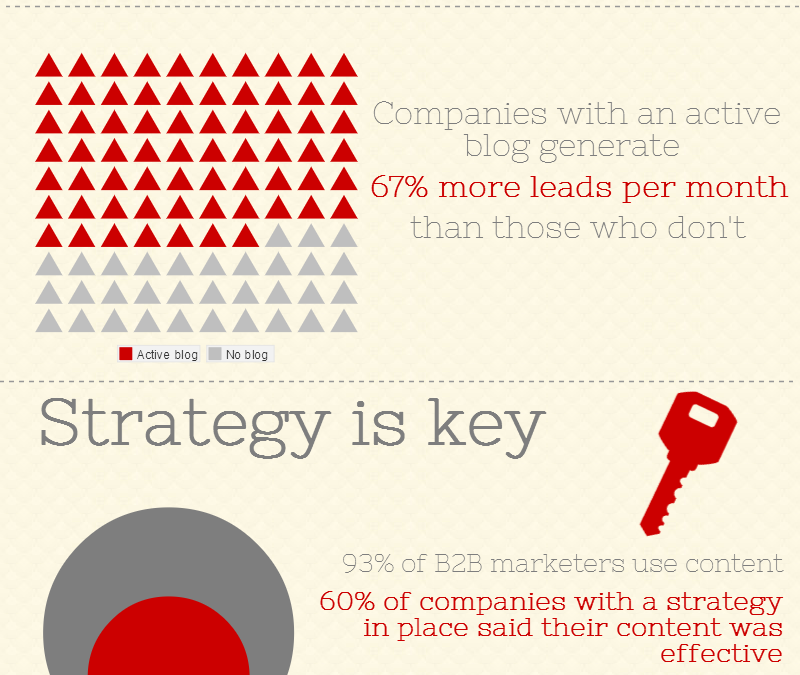
Content infographic: how to grow your business with content