by Fronetics | Dec 23, 2014 | Blog, Manufacturing & Distribution, Supply Chain, Talent
As of late June 2014 there were 302,000 manufacturing job openings that were unfilled. These job openings are unfilled because employers cannot find qualified workers.
Pipe fitters, mechanical engineering technicians, welders, machinists, electronic assemblers, and operators of computer-numeric-controlled machines are the workers that are most needed. The problem is workers with these skills tend to be older and are at, or nearing retirement. According to Ben Dollar of Deloitte: “As workers retire, it’s becoming harder to find people with these traditional skills.” The Boston Consulting Group predicts that the number of job openings requiring these traditional skills will increase to 875,000 by 2020.
Companies with positions related to IT, software development, software engineering, and computer science are also struggling to fill positions (and get current employees up to speed). In an effort to help train the next generation of manufacturing talent, Siemens USA has donated more than $3 billion worth of manufacturing software to colleges over the past 18 months.
Eric Spiegel, Seimens USA CEO:
The digital world is coming very fast. There will be jobs. People may not count these jobs in IT and software development as manufacturing jobs, but they really are related to manufacturing.”
Seimens plans to fill 7,000 more people for these positions by 2020.
What positions is your manufacturing company struggling to fill?
What manufacturing job are you searching for?
by Fronetics | Dec 18, 2014 | Blog, Marketing, Social Media, Strategy
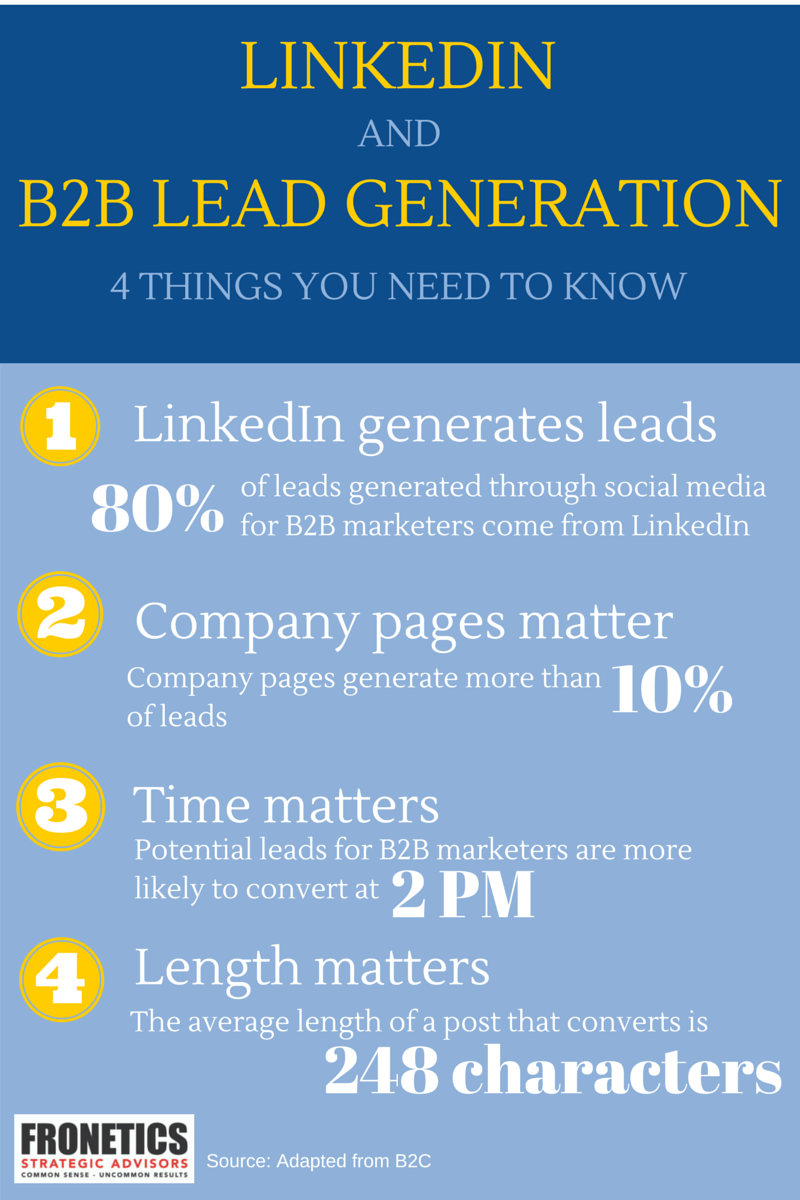
Oktopost, a social media marketing platform, analyzed over 100,000 posts on four different social networks (LinkedIn, Twitter, Facebook, and Google+) and found that LinkedIn is the most effective social network for B2B.
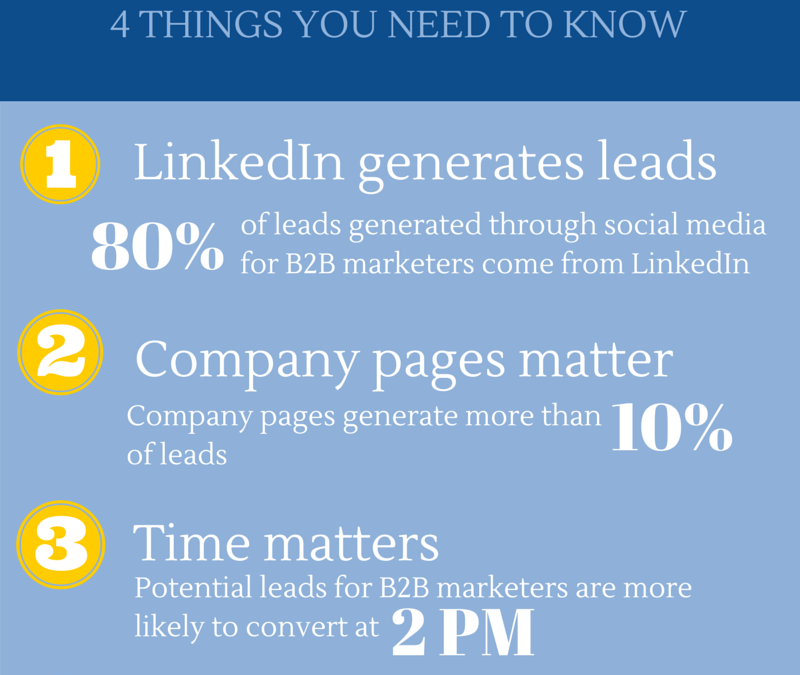
Oktopost found that more than 80% of B2B leads were generated through LinkedIn. Lead generation through other social networks paled in comparison:
- Twitter: 12.73%
- Facebook: 6.73%
- Google+: 0.21%
We’ve put together an infographic that outlines four things you need to know about LinkedIn and lead generation.
by Fronetics | Dec 17, 2014 | Big Data, Blog, Data/Analytics, Internet of Things

The Internet of Things (IoT) is ubiquitous. Because of this it can seem abstruse. Puneet Mehta does a great job of putting the concept in layman’s terms: “[A] plethora of “dumb” objects becom[ing] connected, sending signals to each other and alerts to our phones, and creating mounds of “little data” on all of us that will make marketers salivate.”
The mounds of data created by the advent of the IoT does not just make marketers salivate. Gartner predicts that the IoT will add $1.9 trillion in value to the economy by 2020. Looking ahead, Cisco estimates that the IoT will create over $14 trillion in value over the next 10 years.
In 2003 there were 500 million connected devices. Cisco estimates that this number will increase to 50 billion by 2020. Morgan Stanley believes this number will be higher – it estimates there will be 75 billion IoT devices by 2020.
“Dumb” objects are becoming connected; the physical and digital worlds are converging. Mounds of data are being collected.
IoT and Big Data
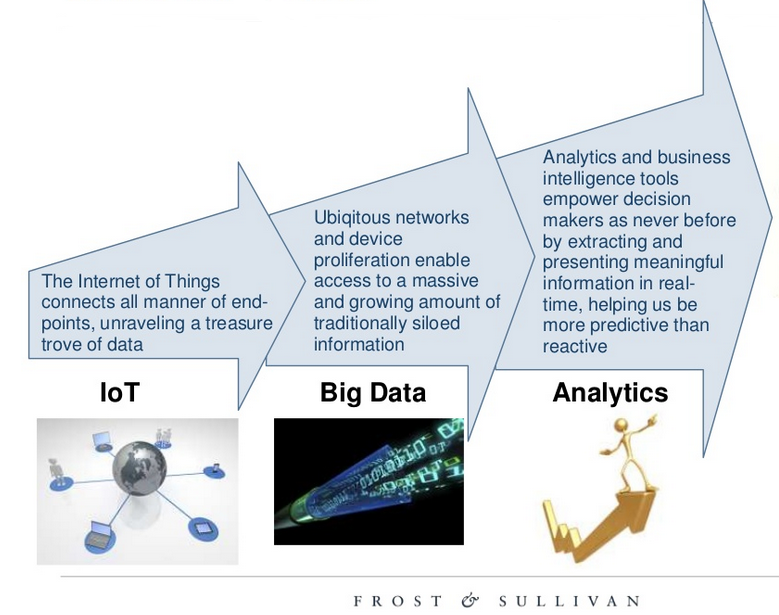
Mukul Krishna, from Frost & Sullivan, presented a simple incremental view of the relationship between the IoT and big data. In short, IoT devices can be thought of as data sources. These data sources generate an incredible amount of data – much of which was previously not accessible. The information and insights from big data allow for better decision-making.
The amount of big data created each day in 2012 was 2.5 exabytes (2.5×10¹⁸). In 2014 the amount of data were created each day was 2.3 zettabytes (2.3×10²¹),
An IDC forecast shows that the Big Data technology and services market will grow at a 27% compound annual growth rate (CAGR) to $32.4 billion through 2017 – or at about six times the growth rate of the overall information and communication technology market.
The need for a plan
McKinsey & Company offer sage advice: put a plan in place.
The payoff from joining the big-data and advanced-analytics management revolution is no longer in doubt. The tally of successful case studies continues to build, reinforcing broader research suggesting that when companies inject data and analytics deep into their operations, they can deliver productivity and profit gains that are 5 to 6 percent higher than those of the competition. The promised land of new data-driven businesses, greater transparency into how operations actually work, better predictions, and faster testing is alluring indeed.
But that doesn’t make it any easier to get from here to there.
So how does one get from here to there?
The answer, simply put, is to develop a plan. Literally. It may sound obvious, but in our experience, the missing step for most companies is spending the time required to create a simple plan for how data, analytics, frontline tools, and people come together to create business value. The power of a plan is that it provides a common language allowing senior executives, technology professionals, data scientists, and managers to discuss where the greatest returns will come from and, more important, to select the two or three places to get started.
What impact has the IoT and big data had on your company? Does your company have a plan in place?
by Fronetics | Dec 16, 2014 | Blog, Supply Chain
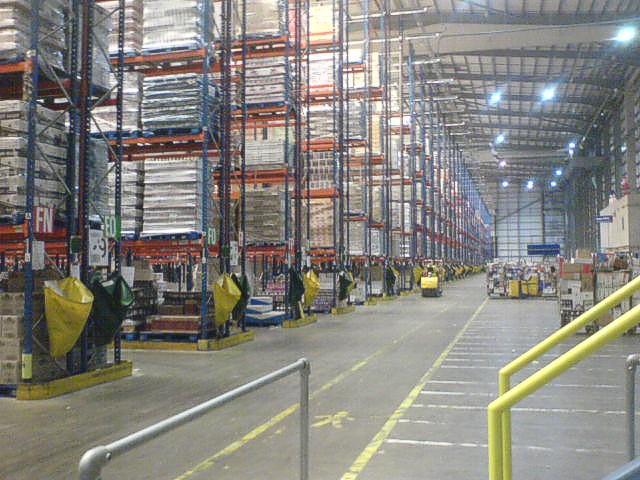
Is your distribution center proving to be a cost center? Looking to increase profits while reducing cost? Here’s how you can transform your distribution center into a profit center.
Synchronize
Anemic communication and fractured messaging within and across departments can be very costly. Build a culture in which exceptional communication in and between departments is a central component. Establishing clearly defined expectations and promoting openness will benefit your employees and your bottom line.
Optimize space
Take advantage of your distribution center. Every single inch should be used in a strategic manner. Empty or poorly used space will quickly transform your distribution into a cost center. Inspect your distribution center with a fine-toothed comb and a healthy dose of honesty. Identify obsolete inventory and work to eliminate it. Inventory that’s not necessarily obsolete, but might not be ideal for your company, should be matched with channels that will generate revenue for these products. Ensuring the optimization of space by eliminating unused and/or outdated inventory will play a significant role in turning your distribution center into a profit center.
Embrace technology
While the cost of purchasing technology may seem insurmountable, often the cost of not adopting specific technologies is even greater. Technology can serve to increase productivity, reduce error, and improve safety. Your customers will notice and appreciate it, too.
Invest in your employees
Attract excellent employees and cultivate them. Be willing to devote time and resources to your employees. Employee turnover is expensive. The cost of replacing an employee can range from 50 to 400% of their annual salary; it will serve you well to create an environment in which your employees want to stay.
Be flexible
Flexibility isn’t just essential to growth, it’s one of the vital elements to ensuring efficient day-to-day operations of your distribution center. When your distribution center is equipped to be able to process a wide variety of goods and SKUs, your distribution is more likely to be a profit center than a distribution center, which can process only a limited number of SKUs.
Scrutinizing every aspect of your distribution processes – from the buildings to what’s in them, and from the workers to how they work – will prove to be worth the investment of time and effort as all your hard work begins to pay off, and pay out.
Let us know what strategies have worked for you.

by Fronetics | Dec 10, 2014 | Blog, Leadership, Strategy, Talent
 Kate Lee, the senior director of research and strategy at Fronetics Strategic Advisors, has been named by Procurious as one of the 24 Most Influential People in Procurement.
The online business network for a new generation of procurement and supply chain professionals compiled the list to show who “you should be connecting with.”
Kate said she was “honored” by the recognition.
“The network and its members are not only industry leaders, but also leaders in innovation,” Kate said. “Procurious has more than 2,000 members from more than 70 countries and I’m thrilled to be part of such a niche social network.”
For the past 20 years Kate has worked with a range of people from senior executives at Fortune 500 companies to academics to refugees. At Fronetics Strategic Advisors, a management consulting firm focused on strategy and inbound marketing for the logistics and supply chain industries, Kate said she has been able to build a strong team which provides clients with unmatched service and value.
“I am proud of the team and our efforts in helping companies develop and implement inbound marketing and strategies that create results,” Kate said.
Kate is a newcomer on the Procurious list that also includes profiles such as ‘Local Producer’ AKA Brian Heinen, a driving force behind LinkedIn biggest groups for supply chain and sourcing professionals; Paul Snell, managing editor of Supply Management and Supply Business magazines; Hal Good, another LinkedIn power player in procurement with 13.5K followers on Twitter; and Tim Hughes, a top 35 UK blogger with 81.9K Twitter followers.
Procurious also cited the Fronetics Twitter account as a reason to welcome Kate into the mix.
The recognition of Kate read, in part: “The Fronetics’ Twitter account is both super-active and full of fascinating insights related to the profession.”
Kate again credited her team for the success:
“It comes down to the wonderful team at Fronetics,” she said. “We are committed to providing the industry with industry news as well as information on how to create and implement strategies that will create value.”
She continued:
“Additionally, we love engaging with individuals and companies within the industry via LinkedIn, Twitter, and our blog.”